Thomas Merton on Noise
3 days ago


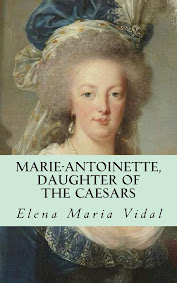
 Melanie has some posts about two ladies who reigned at the French court, one preceding Marie-Antoinette and the other following her. I speak of Madame de Pompadour and Empress Josephine, both of whom are documented as spending much more freely than Marie-Antoinette ever dreamed of. Indeed, the Queen was stingy by comparison. The pictures collected by Melanie are quite remarkable. While Madame Pompadour favored blues and greens, Josephine was famous for her love of white. Both had exquisite taste and great charm, qualities which they shared with Marie-Antoinette.
 Share
Share
The Night's Dark Shade explores the passions of the human soul, the danger of heresy and religious fervor, and the heady enchantment of courtly love. In the wake of the untimely deaths of her family and her betrothed, Lady Raphaëlle, Vicomtesse de Miramande, is delivered into the custody of her uncle, the Baron de Marcadeau, during the height of the Albigensian Crusades. Innocent and brave, the Lady Raphaëlle is thrust into the midst of the heretical Cathar sect, falling prey to the machinations of her aunt, the Lady Esclarmonde, a Cathar Perfecti. Aided by her cousin Bertrande and the dashing Sir Martin, a Knight Hospitaller whose love for Raphaëlle challenges everything she knows about herself, Raphaëlle seeks the aid of the crown to nullify her betrothal and protect her ancestral home from an unholy alliance that will prove advantageous to the Cathari.Share
Torn by duty, honor, and love, Raphaëlle is a woman bound by the rules of medieval society. Unwilling to compromise her virtue, Raphaëlle stands firm, remaining true to her faith and enduring unspeakable hardships with spirit and grace. A gripping tale filled with danger, intrigue, and adventure, The Night's Dark Shade is a fast-paced romance that recalls the tradition of the troubadours and the lais of old. The narrative is compelling and Vidal’s treatment of the moral and spiritual concerns of the time drive the story and illustrate the female experience of thirteenth-century Christianity. Raphaëlle also emerges as a well-rounded and likeable character, making this an enjoyable and highly readable novel.
ShareAmong their many nutrition benefits, olives contain important amounts of carotenoids. Carotenoids are naturally occurring, fat-soluble pigments that give many whole, natural foods their distinct yellow and orange colors. The best-studied and most famous of the carotenoids is beta-carotene, but hundreds of carotenoids have been identified by scientists and many are also important to our health. Some of the other well-researched carotenoids include alpha-carotene, lycopene, lutein, zeaxanthin, beta-cryptoxanthin, and canthaxanthin.
Lutein and zeaxanthin are especially plentiful in olives with 3.5 ounces of canned ripe olives containing over 500 micrograms of these carotenoids. Beta-carotene is also plentiful in olives, with this same amount containing between 225-250 micrograms.
Because carotenoids are fat-soluble, they are able to be carried along in olive oils when those oils are being extracted from the olives. However, methods of extraction, temperatures used during extraction, and sequence of extraction can all make significant differences in the final carotenoid content of the oil. It can be difficult to predict the exact amount of carotenoids in olive oil due to these processing differences. However, extra virgin olive oil (EVOO) is better able to maintain the original carotenoid content of the olives than other extractions since EVOO is derived from the very first pressing of the olives. This carotenonid benefit is one of the reasons we recommend extra virgin olive oil (EVOO) as your olive oil of choice.
In addition to providing you with its own carotenoids, olive oil may be able to help you absorb carotenoids from other foods. Researchers at Iowa State University looked at carotenoid absorption from salads dressed with fat-free dressings and compared it to carotenoid absorption from the same salads dressed instead with full-fat dressings. Salads are not only popular in a wide range of diets but are also high up on our recommended list at the World's Healthiest Foods. Many of the World's Healthiest Foods-including tomatoes, carrots, romaine lettuce, and baby spinach-make great salad components and are also great sources of beta-carotene.
In their research, the Iowa State scientists used canola oil in their full-fat dressing, and they discovered that beta-carotene from the salad ingredients listed above was better absorbed when a full-fat (versus non-fat) salad dressing was included. While we are not opposed to the use of canola oil in salad dressings or other recipes, we think it makes more sense to use extra virgin olive oil in this situation. That extra virgin olive oil will give you the same enhanced beta-carotene absorption since it will provide the additional fat needed to boost absorption. But at the same time, it will provide you with carotenoids of its own! In addition, it will give you several other key phytonutrients (like phenolic antioxidants) and, of course, a great-tasting dressing!
WHFoods Recommendations
Inclusion in a salad dressing is a perfect use for extra virgin olive oil. By avoiding heating of the oil, you are helping to protect its full spectrum of nutrients, and by including it along with a host of carotenoid-rich vegetables, you are increasing the bioavailability of those carotenoids at the same time.
 Linda has a lovely post about the American Impressionist artist, Mary Cassatt.
Born into a prominent and wealthy family near Pittsburgh, Pennsylvania, Mary began her education at the age of six in Philadelphia where her family had moved. At the age of 15 she began to study art at the Pennsylvania Academy of Fine Arts with a determination to become a professional artist. Although her family did not agree with Mary's commitment to becoming a professional, they nevertheless did everything to support it. Her mother went with her on European tours--an obligatory part of every wealthy young American's education at the time--but in Mary's case, this meant long stays in Spain where Mary studied and copied great works in the Prado, such as those of Velasquez, in Italy where she studied the great artists of the Renaissance, and to the Netherlands, where she studied the works of the Dutch Golden Age, such as Vermeer and Rembrandt. This immersion in great classical art shows in Mary Cassatt's paintings.Share
 Eleanor Beardsley of NPR was present at a requiem Mass for King Louis XVI last month at the Basilica of Saint Denis in Paris. One can listen to or read the following transcript. (Via Seat of Wisdom)
ShareSTEVE INSKEEP, host:
Every January the Royalists of France, or is it that the Royalists de France, gather to mark the date when King Louis XVI was beheaded. His death marked the beginning of the French Republic. Yet many who remember the kings death hope that France will some day restore the monarchy.
Eleanor Beardsley sends this report.
(Soundbite of music)
ELEANOR BEARDSLEY: Organ music thunders through the stone cavernous basilica of Saint Denis on the northern outskirts of Paris. More than 800 people have gathered here, not just to pay homage to King Louis XVI, but to mourn the death of the French monarchy. Saint Denis is the necropolis of the French royal family. More than 50 monarchs, including Louis XVI and his queen, Marie Antoinette, are buried here.
Unidentified Man #1: (Latin spoken)
BEARDSLEY: The mass is in Latin. The priest swings a censer of incense on a chain. The somber service in this stone-cold Seventh century church resonates with regret for a France that lived 16 centuries in the Catholic monarchy. The priest describes the day it all came to an end when Louis XVI was led to the guillotine.
Unidentified Man #2: (French spoken)
BEARDSLEY: They came at night with their torches and clubs, he says, to carry out the most abominable of sacrileges. Harold Hyman, a long time journalist who takes a special interest in the French Royalists, says the group has no chance of bringing back the monarchy.
Mr. HAROLD HYMAN (Franco-American Journalist): So they take this weird political posture - a sort of anti-progress protest against the modern world and mass culture and television and American influence, and this is, I think, what unites them all.
BEARDSLEY: Royalists say the French Revolution was ruthless, not glorious, and that Louis XVI was a progressive king with vision. After all, he did send his general, the Marquis de Lafayette, to help some unruly colonists throw off their British oppressors. Retiree Marie-Noelle Erre(ph) explains why shes a monarchist.
Ms. MARIE-NOELLE ERRE (Royalist): Its the monarchy that built the country. If it hadnt been for the revolution, there would have been an evolution with time. Beside that, King Louis XVI was a very good king.
BEARDSLEY: The Royalists are deeply divided over who is the legitimate successor to the French throne. But that question is not pertinent, for now anyway, says Dominique Emele(ph), the director of the Alliance Royale, the monarchist political party. The Royalists have practically no political support and no members in parliament, but Emele believes that one day the Party will be able to convince the French to restore a constitutional monarchy.
Mr. DOMINIQUE EMELE (Alliance Royale): (Through translator) One of the biggest problems in France today is that our president is the head of a political party. So he doesnt represent all the French. Only a king can truly represent the people, unify the nation, and solve the long-term problems of France.
(Soundbite of music)
BEARDSLEY: Back at the Basilica of Saint Denis, the mass closes with a requiem. The church where Joan of Arc once prayed now lies in the middle of a gritty immigrant suburb. Sixty five-year-old Michel Simoneaux(ph) emerges from the 18th century atmosphere inside the Basilica and comes face to face with modern day France.
Mr. MICHEL SIMONEAUX: (French spoken)
BEARDSLEY: The revolution was a cataclysm from which France will never recover, Simoneaux says. Everything we admire is from before the revolution. Just look at this marvelous cathedral, and look at this town. Its the symbol of everything France has become.
For NPR News, I'm Eleanor Beardsley in Paris.