Saturday, January 31, 2026

A Purple Staircase

The staircase painted a deep magenta boldly cuts across the putty pink walls with hints of pastel green.

 In the living room wood paneling painted in sea foam green creates a soothing atmosphere. A Galerie Glustin coffee table...

They call it burgundy but it looks purple to me. From Home and Garden:

Pink, in a palette that ranges from the most delicate powder to a saturated magenta, runs throughout the house, telling a story of intimacy and femininity. The homeowner, with a background in fashion and an innate sense of beauty, had envisioned a cozy sanctuary for herself, her family and her lively dog, Rodeo; interior designer Tracy Simmons brought that vision to life through a carefully considered mix of materials, shapes and inspiration. The result? A vibrant, sensory, deeply lived-in space, with a decidedly feminine touch.

 At this California home, colour is not mere decoration: it offers a narrative structure. In the dining room, saturated walls and Stella McCartney's Fungi wallpaper for Cole & Son create a theatrical atmosphere that's warm, immersive and impactful. Vintage A. Suman seating, upholstered in Métaphores fabrics, adds tactility. The deep pink tones of the wallpaper drench the ceiling, and all manner of window and door frames, culminating in colour-matched curtains that elegantly gather round the openings to gently let in natural light.

 Pink walls continue, in even more playful iterations, in the girls' bathroom with Kelly Wearstler's signature blush tiles, in the velvet armchair in the living room and right through a selection of vibrant Pierre Frey fabrics. ‘I wanted each room to convey a story about the owners,’ the designer says, ‘and colour, for me, was a way of whispering these emotions.’ Indeed, this house is more than an explosion of tones and patterns, it is a masterclass in how to work with colour such that it excites without tiring the eye. Tracy achieved this by tackling the project room after room and allowing each space to take on its own character. (Read more.)

 In the kitchen the natural stone backsplash with its striking veining creates a dramatic focal point while the leather...

pink dining room with colour drenched interiors. The vintage seats by A. Suman upholstered in Mtaphores fabric add...

In the second bedroom a canopy bed covered in fabrics by Studio Temple and Pierre Frey is paired with vintage brass wall...

Share

Leftist Hysteria in Minneapolis Is About Votes, Not Immigrants

 From Chronicles:

President Trump’s opponents are betting heavily that the political fallout from the thoroughly well-organized anti-ICE demonstrations by largely white residents in Minnesota’s Twin Cities will advance their aims. In response to what authorities have described as the largest anti-illegal immigrant operation in American history, tens of thousands of protestors were in the streets over the weekend, braving persistent subzero temperatures to make their voices heard.

Some hopeful leftists are already describing these localized events as the turning point in stopping Donald Trump. Others, including former Democratic Presidents Bill Clinton and Barack Obama, who themselves presided over millions of deportations at a time when their party still took our country’s immigration and border control laws seriously, are full of apocalyptic rhetoric about the future of democracy and suggest that the very ideals of America are at stake.

Some protestors are visibly following a detailed playbook shared on Signal group chats, which were exposed and published on X by independent journalist Cam Higby. This playbook offers instructions on coordinating activists to harass, frustrate, and disrupt ICE actions as they unfold. Higby released a list of the Signal chat’s administrators, and he and others also speculated that an admin on the Signal chats named “Flan” is Minnesota’s Lieutenant Governor Peggy Flanagan. Flanagan has released a statement denying those allegations. FBI Director Kash Patel said he has opened an investigation into the Signal chats.

According to media reports, the Minnesota National Guard was under orders to provide the protestors with coffee and donuts, while local law enforcement appears either under orders or unwilling to assist federal agents. Egged on by state and local politicians to be confrontational, many of the protestors have become violent, attacking businesses where ICE agents eat and sleep and harassing these agents and, in some cases, civilians who simply look like they might be ICE agents, in public places. (Read more.)

Share

The Transformation of the Roman Empire Into Byzantium

 From The Greek Reporter:

The transformation of the Roman Empire into what modern historians call Byzantium was not a single event but a gradual process, reaching a profound turning point in the 7th century. By this time, the Roman state had changed in territory, culture, language, religion, and political structure, becoming something new—yet it continued to call itself Roman. The 7th century marked the moment when the Ancient Roman world evolved into the medieval Byzantine Empire, which had previously been known as the Eastern Roman Empire.

Although Hellenistic culture had long prevailed, cemented by the founding of Constantinople in 330, the Eastern Roman Empire retained the core elements of imperial Rome. Its administration remained rooted in Roman institutions, its cities preserved Classical urban culture, and its emperors regarded themselves as heirs of Augustus and Constantine. Latin was in decline, however, even as it remained the official language and the emperors claimed dominion over the entire Mediterranean.

 The transformation was inevitable: Constantinople was emerging as the center of the empire while Rome’s influence waned. As historian Peter Brown observed, Byzantium represents continuity: “The Roman Empire did not fall in the East. It was transformed.” Centered in Constantinople, the Eastern Roman Empire remained a powerful and sophisticated Roman state but with a distinct Byzantine character—while still seeing itself as Roman. (Read more.)


A Byzantine princess in Kyivan Rus. From History of Royal Women:

As the sister of the Byzantine Emperor and as a princess born in the purple, Anna was a highly desirable bride. In 972, the Holy Roman Emperor, Otto II, married Theophano, a relative of the Byzantine Emperor, after requesting an imperial princess. Sometimes Theophanu is thought to have been a sister of Anna, but she was probably related to her more distantly. It is possible that Otto may have wanted to marry Anna instead. In 986, a Bulgarian prince appears to have asked Basil for his sister’s hand in marriage, but this was rejected.

In 988, the new French king, Hugh Capet, sent a letter to Basil, asking him to find a bride for his son, the future Robert II, of equal rank. It was likely Anna, who he was asking for. This arrangement did not go through either. It is believed that all of these proposals were turned down because, at the time, Byzantine princesses born in the purple were considered too important to marry foreigners, even if they were kings or emperors. The Byzantines at this time were also said to have still considered the Western Europeans as barbarians. Everything changed in 988 when Vladimir, Grand Prince of Kyiv, wished to marry Anna. (Read more.)

Share

Friday, January 30, 2026

Execution of Charles I


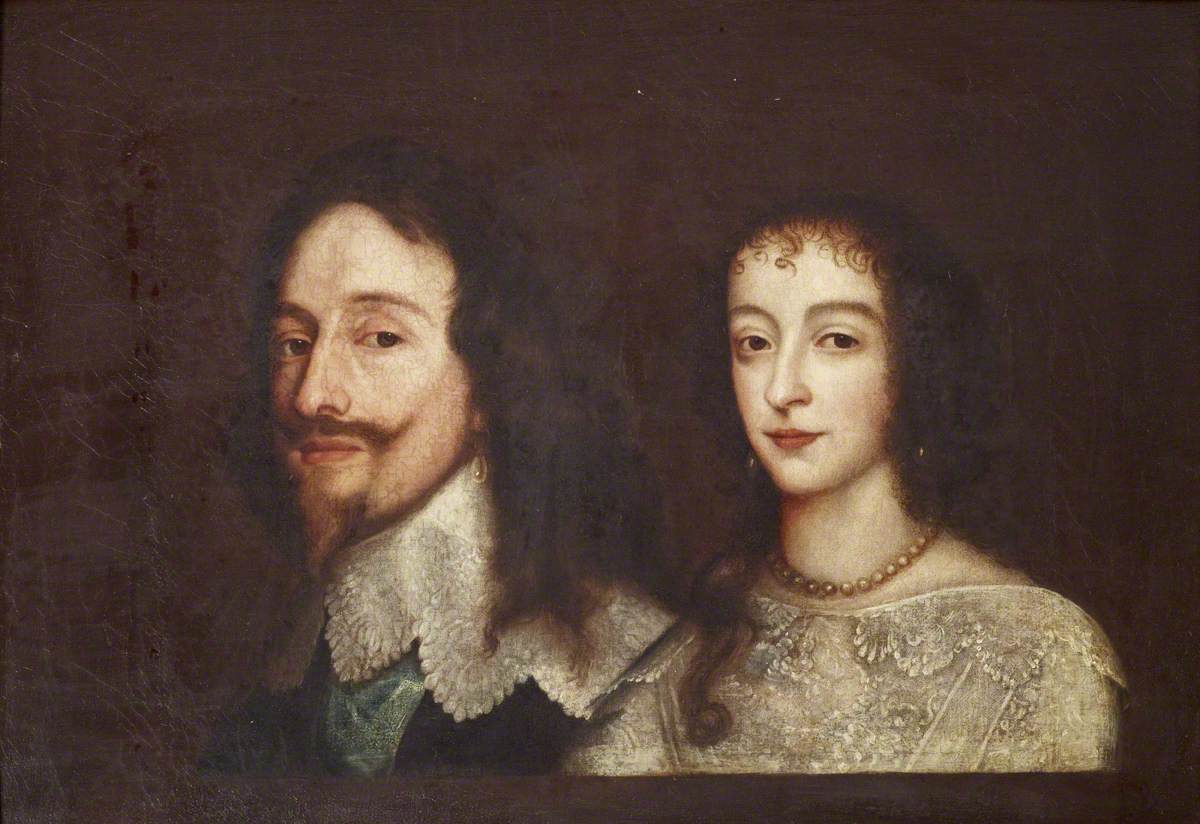
He conducted himself with composure and gave his cloak to Dr Juxon, the Bishop of London, saying,“I go from to corruptible to an incorruptible crown where no disturbance can be.” He lay full length, placed his head on a low block and with one strike the executioner severed his head from his body.When he died a great groan went through the crowd.“Such a groan by thousands then present, as I never heard before and I desire I may never hear again.” (Read more.)


More HERE

On Charles' widow, HERE. My novel on the royal couple, HERE. Share

SignalGate and the Myth of the Peaceful ICE Protester

 From Amuse on X:

Based on what is now known, it is far more accurate to say that Alex Pretti functioned as an active participant in the ICE Watch insurgency in Minnesota. He was not a bystander. He was not merely present. He was trained, coordinated, armed, and operational. He provided actionable intelligence. He accepted assignments. He moved toward enforcement scenes in response to real time direction. And on the day of his death, he inserted himself physically into a confrontation with federal officers while carrying a loaded firearm and additional magazines, in violation of Minnesota law, after being warned by his own parents not to engage officers because of his anger.

To see this clearly, it helps to distinguish protest from direct action. Protest expresses opposition. Direct action seeks to obstruct. Protest communicates. Direct action intervenes. Protest attempts to persuade an audience. Direct action attempts to impose costs. ICE Watch was not organized around persuasion. It was organized around disruption. Its purpose was to locate, track, and interfere with immigration enforcement operations in real time.

Alex Pretti attended ICE Watch training. He participated in Signal groups used to coordinate these operations. He did not merely observe these channels. He contributed to them. He provided location updates. He responded to calls for support. He moved to spot ICE vehicles. He accepted assignments to go to enforcement scenes. That is not expressive dissent. That is operational participation. (Read more.)

Share

The Potato Famine: A Modern Catastrophe

 From Chronicles:

Sometimes great matters depend upon… vegetables. Ancient civilization was founded on the simple discovery that grasses could become grains, reliable and storable, allowing the emergence of fixed Fertile Crescent cities with rulers and philosophers. But vegetables can also yield disaster. The failure of the Irish potato crop in the mid-1840s not only brought terrible suffering to that island but has blighted Anglo-Irish relations ever since. Few other episodes have left such a toxic aftertaste, with over 100 memorials around the world and countless cultural references.

Canadian historian Padraic X. Scanlan has Irish antecedents, and generally left-of-center views. Still, he writes a careful analysis of an episode that is far from England’s finest hour. He has steeped himself not only in the cultivation, mythology, and natural history of the potato, but also in the cultural, economic, industrial, mercantile, and political currents which together heaped horrors on the Irish. He shows that what is often portrayed as a medieval-style catastrophe was in fact a modern one, a predictable product of the dynamic 19th century—and, furthermore, offers insights for our world regarding economic insecurities, environmental destruction, and ever-evolving pathogens. 

Sometime in 1844 or 1845, a cargo of seed potatoes from America was offloaded somewhere in Europe. Unfortunately, that cargo contained an unobtrusive mold called Phytophthora infestans, which launched itself onto the Old World with alacrity. Potato crops from Spain to Sweden were affected, causing dearth and deaths, but the direst effects were felt in Ireland, where the population was uniquely dependent on the potato. In 1841, there were some 8.2 million people in Ireland; by 1851, that number decreased to 6.5 million, through death by starvation or disease, or forced emigration. Such was the culture shock that for almost a century afterwards the population of Ireland would continue to decline. The Irish government still issues annual warnings to farmers about the likelihood of blight. 

Although Ireland had much fertile land and was famous for dairy and meat products, millions had been perilously reliant on the potato as early as the 1730s. There had been crop failures before; in 1740–41, the harvest was ruined by weather, and 300,000 died, a proportionally higher number than would die during the famine. Since its arrival in Tudor times, the potato had proved its worth as a cheap, easily cultivated, and highly nutritious staple. Grown and eaten close to home, the potato was largely insulated from market vagaries that were just becoming important with the rise of industry and commodity capitalism. Landlords encouraged it because it could feed more workers on less land, leaving acreages open to more lucrative grain or livestock. (Read more.)

Share

Thursday, January 29, 2026

Marie-Antoinette Was NOT a "Feminist"

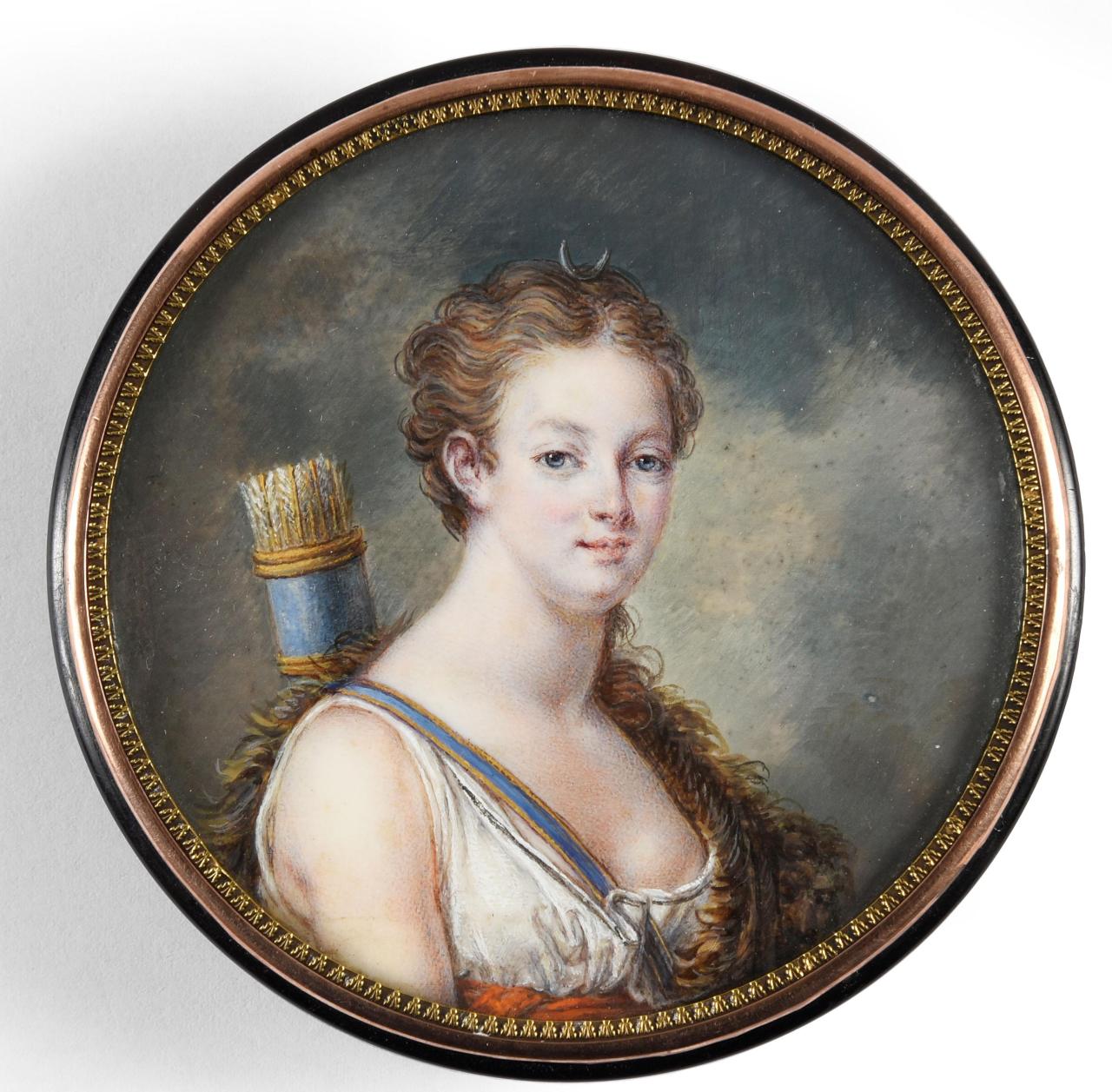
Marie-Antoinette as the Virgin goddess of the Hunt

 The PBS Marie Antoinette is the typical British propaganda about French royals being sex-crazed and decadent. But the ridiculous notion about it being a "feminist" interpretation is anachronistic, showing a complete misunderstanding of the historical role of women. From What to Watch:

Perhaps not surprisingly, since she takes the title role in the historical drama, Marie Antoinette, Emilia Schüle has a different opinion from most on the much-maligned last Queen of France.

"Marie Antoinette is framed in this one very particular way, but there was so much more to it," says the German actor. "Having played her, I think she’s a very inspiring, even feminist, human being who was fighting for her personal freedom and for her family." As the 18th-century period drama returns for Marie Antoinette season 2, Marie and her husband, King Louis XVI (Louis Cunningham) are in the Palace of Versailles and at the height of their power and popularity. (Read more.)

There actually were "feminists" around in Marie-Antoinette's lifetime, such as Mary Wollstonecraft, who did not see Marie-Antoinette as one of her number at all. Mary Wollstonecraft, called the "Mother of Feminism," saw the Revolution as the dawn of a glorious new era, as she describes in an excerpt from her book An Historical and Moral View of the Origin and Progress of the French Revolution; and the Effect it Has Produced in Europe. When the book was published in 1795, thousands of people had already been killed; the genocide in the Vendée, including the torture, rape and murder of women and children, was at its height.

Yet Mary Wollstonecraft dismisses the mass murders and extreme violence to be merely the result of "
the desperate and engaged factions." Otherwise, she lauds the "grand theatre of political changes" which were leading France "from a state of barbarism to that of polished society...hastening the overthrow of the tremendous empire of superstition and hypocrisy, erected upon the ruins of gothic brutality and ignorance." (I have no doubt that by "empire of superstition and hypocrisy" she was referring to the Catholic Church.) She rejoices that the French were at last to "grasp the sentiments of freedom" while being delivered from the "servility and voluptuousness" of the ancien régime.

Mary Wollstonecraft, unfortunately, was not herself unfamiliar with "voluptuousness and servility," as she later became as famous for her stormy love affairs as for her writings. Why certain women turn to feminism has always interested me; Mary's case is especially sad. Mary was the brilliant and sensitive daughter of an abusive and improvident father; she had to protect her mother and sisters from beatings and heaven knows what else. She later became involved with men who used her then abandoned her, contributing to her struggle with depression and suicidal tendencies.

Mary criticized Edmund Burke's lament for the death of Marie-Antoinette and the end of chivalry; she hated chivalry and thought that women should be able to take care of themselves. Poor Mary, however, could barely support herself and the child she had by one of her lovers. Finally, she found a man who loved her, William Godwin, and they married; their happiness was short-lived. She died as so many other woman died in those days, from complications in childbirth. Nevertheless, before her death she found great satisfaction in her motherly roles that she may not have found in other areas of her life. The child she brought into the world amid such great suffering became the gifted writer Mary Shelley, author of Frankenstein and wife of Percy Bysshe Shelley. All of which, of course, is a story in itself....

As for Marie-Antoinette, to the horror of feminists everywhere, she was taught to be obedient to the men in her life, beginning with her husband's grandfather Louis XV and secondly to her husband Louis XVI. She disobeyed only when she thought the law of God was being compromised, as when as a fifteen-year-old dauphine she refused to speak to the king's mistress Madame du Barry. Later, she refused to accept as a confessor any priest who had denied the papal supremacy. At her trial she declared that she was merely the wife of Louis XVI, and had been bound to conform to his will. It was the way she had been brought up, as were all women and girls just about everywhere. This does not mean she was not high-spirited and mischievous, but everything she did was done with her husband's permission. The idea of herself making decisions on her own would have been seen by her, as by most women of her day, as being unwomanly. Marie-Antoinette was not a great intellect like Mary Wollstonecraft or Catherine II or Madame de Staël. She read Rousseau but other than him she enjoyed novels, plays, histories and prayer books. While she believed in the reform of family life, with women taking care of their own children instead of farming them out to wet nurses, and had a great many charities to aid mothers and their children, she was in no way what anyone then or now would regard as a feminist.

Share

Hate Hoax? The Omar Attack and the Case for a Federal Investigation

 From Alexander Muse on Amuse on X:

A hate hoax, properly defined, is not a mere misunderstanding or a mistaken report. A hate hoax is a false or staged claim of a hate crime or bias motivated incident, in which the alleged victim fabricates, exaggerates, or materially misrepresents events to suggest they were targeted because of race, religion, ethnicity, sexual orientation, or political identity. Unlike misreporting caused by confusion, a hate hoax involves intentional deception and is often revealed through evidence such as surveillance footage, digital records, forensic analysis, or confessions. The concept matters because it names a distinct phenomenon, one that has predictable features and predictable effects.

One defining feature of hate hoaxes is immediate media amplification. Allegations of hate crimes fit powerful moral and political narratives, so major outlets often report them rapidly and uncritically, framing claims as established facts before investigations conclude. This amplification creates instant reputational harm to accused individuals or groups and embeds the story in public consciousness. Closely tied to this is the political utility of the allegation. Hate claims are frequently used to validate broader arguments about systemic oppression, political movements, or social decay. This gives activists, institutions, and commentators incentives to promote the story quickly. When evidence later contradicts the narrative, coverage is often delayed, muted, or buried. By that point, the correction rarely travels as far as the original claim. Accountability is minimal, and the original targets of the accusation often suffer permanent damage that is never repaired.

These dynamics are not theoretical. They have played out repeatedly in recent American history. In January 2019, actor Jussie Smollett claimed he was the victim of a racist and homophobic assault in downtown Chicago. He alleged that attackers yelled ‘this is MAGA country’ while beating him and placing a noose around his neck. The story dominated national headlines and was framed as proof of rising hate crimes. Within weeks, Chicago police concluded the attack was staged by Smollett himself, who had paid two acquaintances to carry it out. Prosecutors argued the motive involved career leverage and attention. The case became the most notorious modern hate hoax, and it permanently altered public trust in high profile hate claims.

In June 2020, NASCAR announced that a noose had been found in Bubba Wallace’s garage stall at Talladega Superspeedway. Media outlets and political leaders treated it as a modern lynching symbol. The FBI later determined the rope was a garage door pull that had been in place since 2019, before Wallace was assigned the stall. No criminal intent existed, but the narrative had already traveled the world. The episode demonstrated how institutional panic and narrative momentum can outpace evidence. (Read more.)

Share

What Europeans Found on the Most Isolated Island in the World

 From Literary Hub:

Europe came late to Rapa Nui, two centuries after Magellan led a pioneering Spanish expedition across the Pacific in 1521. Many of the statues were probably carved in those eight generations. When ships finally arrived—eight in all between 1722 and 1786, from Holland, Spain, England, and France, bringing a total of around 1,400 men—the visitors saw things they found hard to believe. There was a long tradition in Europe of representing named individuals realistically in stone, whether known persons or mythical beings or gods. The statues on the island were much larger, and far more numerous, than any standing at typical installations in Europe. And they seemed identical, anonymous, stylized, and alien. From the Islanders’ point of view, the visitors were equally strange, as they appeared and vanished overnight, over sixty-four years spending a total of no more than a week ashore. We may imagine that Islanders found it hard to stop talking and thinking about what had happened. But there must have been many who never saw a European.

Such brief and intermittent encounters had profound consequences, for the Islanders and for our understanding of their story, even now. It began on the Easter day when the Africaansche Galey signaled land. The Dutch West India Company had sponsored an expedition to search for a southern continent, which was thought necessary to balance all the land north of the equator. Jacob Roggeveen, a lawyer turned explorer, had wandered about the Pacific with three ships and found nothing. His crews were beginning to lose faith till they spotted a turtle and floating vegetation, and birds overhead. There was great joy, Roggeveen wrote in his log: They were about to discover Southland. But the imagined continent soon revealed itself as no more than a low, flat island. Rising plumes of smoke showed it was inhabited. Weather marked the occasion: They waited at a distance for thunder, lightning, heavy rain, and winds to clear.

The pioneer encounter occurred 3 miles offshore. The Dutch, spotting an old man approaching in a canoe, sent out a sloop to investigate. This unceremonial meeting was the first contact between people whose ancestors had parted tens of millennia ago in Asia, and whose experiences, cultures, and beliefs separately reflected that distance. It was an innocent event played out repeatedly around the world in various forms. A marker of unity. A harbinger of change and loss.

The naked man put up a good fight, but was overpowered and brought to the Arend, Roggeveen’s flagship. Curiosity trounced the Islander’s fears, and he seemed delighted by what he saw, taking a special interest in the ship—how it was made, the masts’ great height, the sails and the thickness of the ropes, and the guns, to which he gave particular attention. The sound of the ship’s bell and the sight of himself in a mirror scared him, and he appeared to be ashamed of his nudity. Offered a glass of liquor, he poured it down his face and tried to rub it out of his eyes. He put his arms and head on the table, and repeatedly raised them toward the sky, shouting loudly as he “addressed his gods.” (Read more.)

Share

Wednesday, January 28, 2026

The Wildest Adaptation Yet

two figures in historical attire standing in a moody landscape The costumes are deliberately inaccurate. The story begins in the 1780's but the costumes have no connection to the era. The chunky jewelry is of the sort which may have been worn in Imperial Russia but are out of place in a film about Yorkshire gentry. As for the casting, Margot is lovely but too old to play teenaged "Catherine Earnshaw," the "Edgar Linton" character is too dark for Catherine's pallid husband. I do think Jacob Elordi is perfect for "Heathcliff." Having an Asian actress for the part of Ellen is odd since the whole point of Ellen is that she is a tough, no nonsense Yorkshire woman, the same age as the protagonists but reared to be a servant. Ellen as principle narrator has a decidedly unromantic view of the characters as expected of a person with such a background. Replacing her with an Asian adds an air of exoticism to the Earnshaw household, which was a place of dreary abuse and harsh fanaticism. From Country Living:

Our first clue that Fennell’s version might be unlike any that came before it is the quotation marks around the title: “Wuthering Heights”.

It’s a subtle typographical choice that has sparked intricate discussion online – from TikTok speculation to serious cultural debate. Some fans on social platforms posited that this punctuation choice hints at a narrative choice – that someone from a later period is reading the book or imagining themself within it.

But in a recent Fandango interview, Fennell herself put these theories to rest and explained her reasoning: that a novel as "dense, complicated and difficult" as Brontë’s resists a straightforward cinematic translation – you simply can’t adapt it faithfully scene by scene.

“I can’t say I’m making Wuthering Heights," she explains. "It’s not possible. What I can say is I’m making a version of it. There's a version that I remember reading that isn't quite real, and there are things I wanted to happen that never happened.

"So, it is Wuthering Heights, and it isn’t – but really I'd say that any adaptation of a novel should have quotation marks around it." (Read more.)

Share

Crackdown in Minneapolis

 From Mr. Snerdley:

A crackdown on protesters in Minneapolis appears to be underway following “good talks” President Donald Trump had with Minnesota Gov. Tim Walz and Minneapolis Mayor Jacob Frey.

The crackdown came as Border Czar Tom Homan was set to arrive in the city amid growing tensions between anti-ICE protesters and federal immigration officials, leading to two deaths in recent weeks.

Trump has characterized the calls as being positive, while reiterating his administration’s demands that the city and state turn over criminal illegal aliens.

It’s unclear whether the calls prompted what appeared to be a crackdown by local law enforcement, clamping down on protesters congregating outside a hotel suspected of housing ICE officials.

However, the Department of Homeland Security posted a video on X showing law enforcement going after “rioters.”

“Local Minnesota Police arrested violent rioters last night. Glad to see some state and local government cooperation. It’s a start,” DHS posted.

Earlier on Monday, the president announced that Walz had reached out to him, requesting the two work together.

In Trump’s Truth Social post Monday announcing Homan’s impending arrival in Minneapolis, the president said the border czar would be reaching out to Walz in an effort to obtain “criminals that they have in their possession.” (Read more.)


Share

The Lost Tomb of Thutmose II

 From Earth:

Archaeologists from Egypt and Britain are credited with identifying the tomb of King Thutmose II, the last Eighteenth Dynasty ruler whose burial place had never been located. Crews traced an entrance marked Tomb C4 into a valley 1.5 miles (2.4 kilometers) west of the Valley of the Kings. Survey maps from the University of Cambridge helped guide the mission across Luxor’s west bank. Fieldwork was led by Piers Litherland, an honorary research associate whose excavations track early royal burials outside the main valleys. Careful digging mattered because the first cleared corridor ended in collapse, giving no quick name for the owner. Location near tombs of royal women made the burial look like another consort’s chamber, not a king’s. Archaeologists treat the landscape as evidence, since builders often grouped wives, children, and officials in separate parts of the cliffs.Nearby openings include burials linked to wives of Thutmose III and an intended resting place for Queen Hatshepsut. That context shaped early expectations and delayed a royal claim until later fragments provided a clearer signature. (Read more.)

Share

Tuesday, January 27, 2026

'Priceless' Medieval School Text Found to be Unique

Shrewsbury School The 14th Century manuscript with Latin text lies open and has a white rope book mark inside one of its pages 

The book was written in the 14th century. From the BBC:

A "priceless" manuscript held in a school library has been confirmed as the only surviving complete version of a work by an early medieval writer. Shrewsbury School said it was gifted a copy of Richard Rolle's Emendatio vitae - or The Emending of Life - in 1607 and it had been kept in its Ancient Library ever since. Dr Timothy Glover, a specialist in medieval literature, said he was the "only person since the Middle Ages to have read [the book]" knowing that it was Rolle's original. The discovery provided "fresh insight into the development of medieval Christian writing and English literary culture," said the school. (Read more.)


From the University of Cambridge:

How does a hermit become England’s most widely-read author in a period sandwiched between the Great Famine and the Wars of the Roses?

It’s a question many scholars have considered but a once-in-a-lifetime discovery by Dr Timothy Glover brings us closer than ever to the enigmatic author Richard Rolle.

In a study published in Mediaeval Studies, Dr Glover, a medieval literature researcher, demonstrates that manuscript ‘MS 25’ in Shrewsbury School’s Ancient 'Taylor' Library contains the only complete surviving copy of Richard Rolle’s original draft of Emendatio vitae (The Emending of Life).

He also shows that all other copies known to survive actually contain an abridged version made by someone else. This makes the manuscript one of the earliest surviving collections of Rolle’s work in Latin. The priceless text offers unique insights into how Rolle worked, disseminated his writing and who his initial reader was.

“I'm the only person since the Middle Ages to have read this knowing that it’s Rolle’s original,” Dr Glover says. “It's such an important manuscript and it offers a direct connection with an author who deserves far greater recognition.”

“Medieval people struggled with distractions as we do today. They were trying to still their wandering minds. Rolle offered practical strategies to help, and some people treated him like a saint for it.”

Dr Glover published his findings while working at Corpus Christi College, following a Research Fellowship at Emmanuel College. He recently moved to the University of Bergen.

Leo Winkley, Headmaster of Shrewsbury School, said: “This is an extraordinary discovery for Shrewsbury School. We are honoured to be the custodians of the original and only surviving complete version of Richard Rolle’s Emendatio vitae since it was gifted to the School in 1607. The manuscript reveals the text as it was actually written by one of the most influential English authors of the medieval period.

“It is also a powerful reminder of the depth and continuity of our Ancient 'Taylor' Library, founded in 1606 as a place of universal learning for the pupils of Shrewsbury School. The Library holds an exceptional range of material, including medieval manuscripts, incunabula printed before 1500, Newton’s Principia, and books and manuscripts associated with figures such as Samuel Butler and Old Salopian Charles Darwin." (Read more.)


More on Richard Rolle, HERE.

Share

The Terrible Price America Will Pay Because Liberals Believe the Rules Don’t Apply to Them

 From Culturcidal:

You see this repeated endlessly in the way that liberals behave. They don’t see the need to have one set of standards for everyone and ALWAYS seem to have completely different standards for liberals and non-liberals.

They held the police back and allowed left-wing riots all over the country in 2020. They allow their liberal compatriots to break the law at will in places like Portland and Minneapolis. They literally support mobs tearing down statues of people it’s trendy to dislike on the Left. They support sanctuary cities and oppose deporting even rapists, pedophiles, and wife beaters who are illegal aliens because they’re a favored class on the Left. They demand an open border because too many Americans don’t support them, and so, they need to bring in new voters who will support their agenda.

In professions they dominate, they openly despise and discriminate against people who have political differences with them. Even if you argue that some of the prosecutions of Trump were legitimate, there’s no question that all the prosecutions in NYC were purely driven by politics.

Every single story in the media they control tilts in one direction or another based on what liberal narratives they’re trying to push or protect. They’ve hijacked our schools and funneled tens of billions of taxpayer dollars into funding and promoting their agenda. They support judges who rule based on politics, not the Constitution. They’re openly trying to make elections less secure to make it easier for their liberal compatriots to cheat.

When they get back in power, they’re talking about doing away with the filibuster, expanding the Supreme Court, and adding new states to pad their Senate margins, all of which are highly likely to destabilize the whole country. Of course, we also can’t forget that we just had one of the most shameful incidents in all of American history, when a liberal assassinated Charlie Kirk and millions of other liberals publicly celebrated it and declared that he deserved it for disagreeing with them. (Read more.)

Share

When Was Catherine Howard Born?

 From Gareth Russell:

Henry’s fifth wife Catherine Howard had, at one point, a date of birth that was almost as imprecise as Anne Boleyn’s. In Catherine’s case, the traditional date was c. 1522, but this was contested by later generations of historians until, by the twentieth century, there was a nine-year window between 1518 and 1527.[3] This would have made her in her early twenties or twelve-thirteen at the time of her marriage to Henry VIII in 1540 and about twenty-three or fourteen when she was executed in February 1542. An argument will be made here that the traditional date of birth for Catherine is almost certainly the correct one and that she was born in c. 1522-1523, making her about seventeen at the time of her marriage and about nineteen when she was executed.

The mystery of Catherine’s age is, to some degree, perplexing, in that, unlike Henry’s other three English wives, we do have a specific statement on the subject from a contemporary, who met Catherine on numerous occasions. Charles de Marillac, who served as the French ambassador to England throughout Catherine’s time as queen, wrote that Catherine was eighteen.[4] The letter’s utility is admittedly complicated by the fact that de Marillac was referring to an incident earlier in Catherine’s life, before he knew her. We know that the referenced incident occurred in late 1539, but de Marillac, writing in 1541, seemed to think it had happened in 1540. This places Catherine’s birth to 1521, if de Marillac was correct about the timing of the incident, but to 1522 if, as seems likely, he had misdated the incident to a few months later.

The incident in question – Catherine’s alleged betrothal to Francis Dereham – was something about which de Marillac heard for the first time in late 1541. While it is understandable that the rumours he was hearing were incorrect in their details, it is not credible that de Marillac would have stated that Catherine was eighteen when it happened, if she was in fact several years younger. De Marillac had spent weekends as Catherine and Henry’s guest in 1540 and 1541, he knew her personally, and it stretches credulity that he could have gotten wrong such a basic fact as the Queen’s age, particularly by such a margin.

​Another specific complicated by context are the details of Catherine’s debut at the Tudor court in late 1539. She joined the royal household as a maid of honour to Henry’s fourth wife Anne of Cleves, whose arrival in London was anticipated in late 1539, only to be delayed to January by the weather. Maids of honour were a queen’s unmarried ladies-in-waiting and fourteen was too young to serve. Even young women from prominent and well-connected families were not permitted to take their oath as a maid of honour until they were sixteen.[5] When the household was reconvened in 1539 for Anne of Cleves, we know that it stuck rigorously to the rules about composition.[6] This would date Catherine’s year of birth to 1523, likely in the second half of the year. (Read more.)


 My review of Gareth's book on Queen Katherine, HERE.

Share

Monday, January 26, 2026

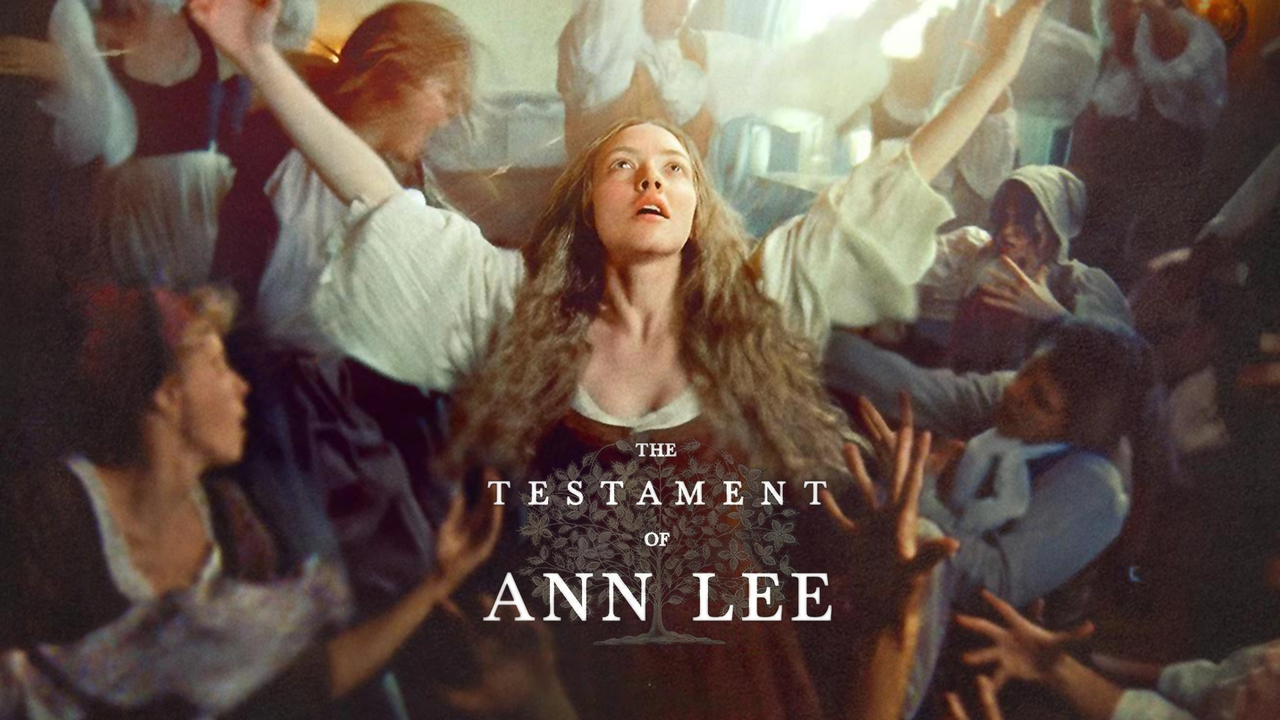
The Testament of Ann Lee (2026)

The Testament of Ann Lee - Movie 

 From Mark Judge at Chronicles:

The Testament of Ann Lee, a new film by Mona Fastvold and Brady Corbet, is a bold example of what I have come to call Hollywood’s retroactive repression.

Retroactive repression is when the film industry, eager to virtue signal and punish historical America for its unenlightened ways, makes a movie depicting our past as a hellscape of racism, sexism, homophobia, and the usual catalogue of our supposed original sins. Examples abound: The Help. Mississippi Burning. The Long Walk Home. Men of Honor. Mona Lisa Smile. Pleasantville. Remember the Titans. 

Retroactive repression is the artistic cousin of “punitive liberalism,” a term coined by James Piereson, which describes the left’s desire to punish America for her sins.

Retroactive repression films can be technically quite good, even as their plots can be plodding and annoying as they put America in the stockades, every time.

Such is the case with The Testament of Ann Lee. Amanda Seyfried stars as Lee, a real person who was born in 1736 in Manchester, England. Lee loves God and works hard, but she is put off by the number of babies her mother is having. Lee eventually marries a blacksmith (Christopher Abbott’s Abraham), but she feels called to celibacy and to expressing the charisma of God through dance and movement. The high mortality rate of newborn children at the time in Ann Lee is depicted in gruesome, horror-movie detail. Lee herself loses four children in childbirth. She begins to think she is being punished by God for ignoring her belief that celibacy is the path to true holiness.

Disillusioned, Lee joins a group of “Shaking Quakers,” whose services are akin to what we might associate with hippie ecstasies of chanting, ululating, and dancing. Lee is so charismatic that she attracts her own followers, who will come to be known as Shakers.

She becomes known as Mother, and her brother William (Lewis Pullman) helps her run the new sect. The Shakers suffer persecution in England and, in 1774, they came to North America, settling in upstate New York. 

Technically speaking, Ann Lee is a fantastic film. The movie is narrated by one of the film’s secondary characters, Mary Partington (Thomasin McKenzie), who makes it authentic and easy to follow. Cinematographer William Rexer shoots the early part of the film set in Manchester as crowded, claustrophobic, and dirty, then opens the lens to reveal the gorgeous vistas of rural New York, a land that represents freedom.

In parts of the film the characters sing and dance, and the repetitive, trancelike effect is transporting. Amanda Seyfried is fantastic in the lead, at once vulnerable, inquisitive, and infused with the kind of confidence characteristic of the spiritually zealous. “For those who confess, shams are over, and reality has begun,” a religious leader tells them. They truly believe they are building a Utopia. Soon, they are declaring “Mother” Ann Lee the second coming of Jesus Christ.

Of course, Utopia on Earth is not possible, and the New World turns out to be a place with its own repressions. Lee is called a witch. Her preaching is considered blasphemous—and not without cause, as she claims to be the second coming of Jesus Christ. Ann’s sermons are violently disrupted. Of course, according to the rules of retroactive repression, this must end badly. In the end, Lee is deified by the filmmakers as a woman far ahead of her time, a rebuke to wallflowers and patriarchal America.

The writing and directing team of Fastvold and Corbet is the married couple whose last film was The Brutalist (2024), a film that had a similar theme of a dreamer who comes to America only to tumble headlong into prejudice and corruption. I remember being excited to see The Brutalist, the story of a great architect who arrived in America after World War II. I thought it would be an ode to America’s creative post-war boom. Instead, it was a long gripe about how the evils of capitalism destroyed a gifted artist’s dreams and work.

There’s nothing wrong with being reminded of the mistakes of previous generations, of course. Indeed, in many cases, it is perfectly legitimate for a movie to use retroactive repression to show us what we can learn from the past about what we hope to avoid doing in the future. But it would be so much better if that device were used more often to blast  communists and left-wing bigots, or at least treat these right-wing boogeymen characters with more complexity. (Read more.)


Share

Minnesota as a Systems Failure

 From DataRepublican:

The current unrest in Minnesota is an example of an order that has reached equilibrium through mutual dependency between antagonistic subsystems.

After the Cold War, the Western world organized itself around a single moral injunction: Never again. Never again fascism. Never again totalitarianism. Never again a unified ideology capable of subordinating it to a single vision of man.

To prevent another Nazi Germany or another Soviet Union, the post–Cold War order built immunity to totalitarian ideologies.

Grand narratives were treated as dangerous. Politics was re-engineered away from totalizing visions and towards norms and institutional mediation.

For a time, this worked.

But Marxism could not simply vanish in the West. It was too culturally embedded, too intertwined with labor and academia. At the same time, the system could not tolerate permanent insurgency. Thousands of bombings, riots, and underground cells per year were incompatible with stability. That level of disorder threatened the system’s own survival.

An honest reckoning with Marxism as a coherent rival risked reopening the same ideological conflict the post–Cold War order had been designed to avoid.

So, instead of crushing Communist subversives, the system adapted.

Dissent was absorbed into civic infrastructure: NGOs, foundations, advisory boards, grant programs, legal advocacy, compliance regimes, and professionalized activism. Radical energy was translated into careers and metrics.

The result is a structural inversion. The Western order that was constructed to neutralize Communism now depends on its managed presence to generate legitimacy. At the same time, contemporary revolutionary movements depend on the same institutions they once sought to overthrow; for funding, protection, and survival. (Read more.)

Share

Hijacking America’s Story

 From The Claremont Review of Books:

Upon his death in 1799, George Washington was hailed as “first in war, first in peace, and first in the hearts of his countrymen.” It is no wonder, then, that a statue of the “Father of His Country” has stood in front of Independence Hall, our country’s birthplace, since the mid-19th century. It is here, after all, that Washington was unanimously chosen in 1775 as commander-in-chief of the fledgling Continental Army, which he led to an upset victory at Yorktown six years later that “turned the world upside down.” It is here that he was unanimously chosen by his fellow delegates to be the president of the Constitutional Convention. And it is here that, having been the presidential electors’ unanimous choice as the nation’s first chief executive, he served the bulk of his two successful terms, guiding the new government through its crucial early years and setting well-considered constitutional precedents at every turn.

And yet, visit Independence National Historical Park as run by the National Park Service and its allies, and you’ll find that Washington is more heavily criticized now than King George III. He is an irredeemable slaveholder, a hypocrite for the ages, his actions characterized as “deplorable,” “profoundly disturbing,” and as having “mocked the nation’s pretense to be a beacon of liberty.” He stands accused, with other founders, of “injustice” and “immorality.”

Authorized by an act of Congress in 1948 and officially established in 1956, Independence National Historical Park is tasked with “preserving for the benefit of the American people as a national historical park certain historical structures and properties of outstanding and national significance…associated with the American Revolution and the founding and growth of the United States.” Covering about 50 acres in the middle of historic Philadelphia, the park includes a variety of buildings familiar to lovers of American history, such as Carpenter’s Hall (where the First Continental Congress met), the First and Second National Banks, and replica versions of the Declaration House (where Thomas Jefferson wrote his draft) and City Tavern (where statesmen met throughout the founding period), both of which were (re-)built for the Bicentennial.

The most frequently visited portions of the park are the two square blocks framed by Market Street, Walnut Street, and 5th and 6th Streets. Of these two blocks, the southern one is Independence Square, which features Congress Hall, where the House of Representatives and Senate met for most of their first decade in existence; Old City Hall, where the Supreme Court met over that same span; and Independence Hall itself, where American independence was declared and our Constitution framed. The northern block includes the Liberty Bell Center, where the famous bell hangs, and the President’s House Site, which features the ruins of where Washington and John Adams each lived and worked during most of their presidencies.

The National Park Service’s “interpretations” at these sites leave much to be desired. The President’s House exhibit, at which visitors will read sign after sign suggesting how selfish and unprincipled Washington was, opened in 2010, during the Barack Obama presidency, at the beginning of the woke era. As with many deleterious shifts in our society, however, the change in the park’s tone actually began during George W. Bush’s presidency, if not earlier. The Park Service’s “Long-Range Interpretive Plan,” released in 2007, repeatedly emphasizes “diversity.” It bizarrely characterizes our national motto, E pluribus unum—out of many, one—as meaning that diversity is our strength; inanely juxtaposes Benjamin Franklin’s signing of the Declaration of Independence with “his attempt to control his children’s choices,” and views the world through the lens of “class, religion, ethnic[ity], rac[e], gender,” and “haves” and “have nots.”

At least there are no longer big video screens in the windows of the Declaration House, filled with the much-larger-than-life eyes of the descendants of Monticello slaves, as was the case in the summer of 2024. That display was a product of the National Park Service’s partnership with the Thomas Jefferson Foundation (which maintains Monticello) and artist Sonya Clark, whose works “address race and visibility, explore Blackness, and redress history,” and who said that the eyes were “bearing witness. (Read more.)


Share

Sunday, January 25, 2026

Churchill on Nicholas II

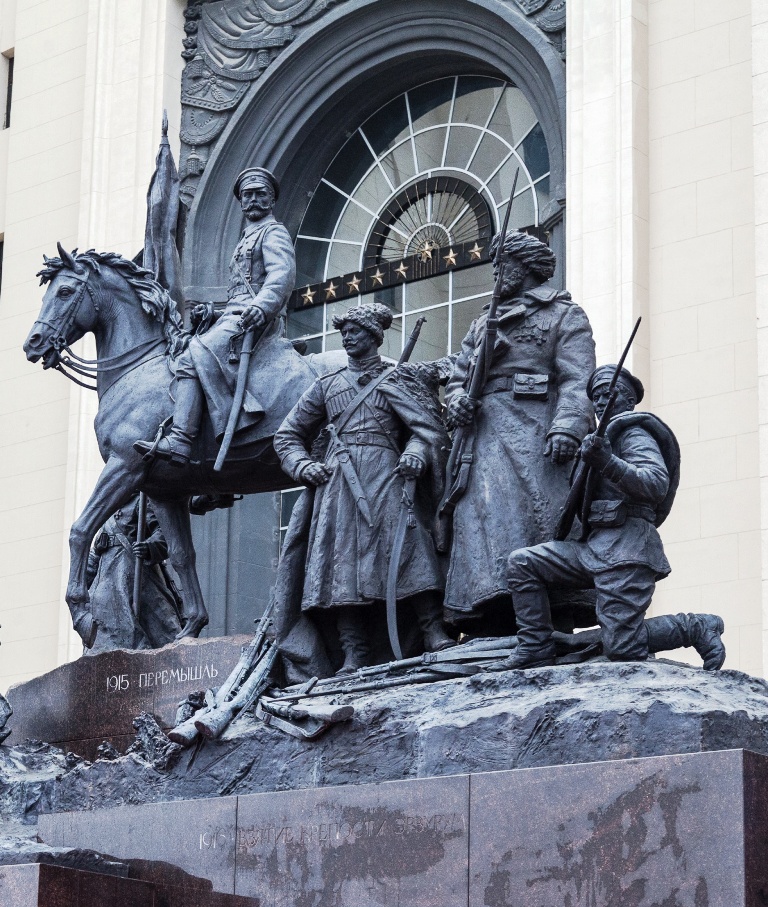
247a 

From Paul Gilbert:

Today – 24th January 2025 – marks the 60th anniversary of the death of Sir Winston Churchill (1874-1965). In 1929, Winston Churchill wrote his assessment of Emperor Nicholas II, which, though not uncritical, is a much fairer one than that customarily given by Western historiography. They are among the most succinct and powerful English words in defense of Nicholas’ character — in part because Churchill does not depend upon the “well he was a good husband and father” strategy. He also addresses some of the questions that still exist in Russia today (democratize or hold firm). Many voices remain critical of Nicholas II’s refusal to democratize (although he did create the Duma, and think how long ago Magna Carta was written), herewith is Winston Churchill’s verdict:

It is the shallow fashion of these times to dismiss the Tsarist regime as a purblind, corrupt, incompetent tyranny. But a survey of its thirty months’ war with Germany and Austria should correct these loose impressions and expose the dominant facts. We may measure the strength of the Russian Empire by the battering it had endured, by the disasters it had survived, by the inexhaustible forces it had developed, and by the recovery it had made. In the governments of states, when great events are afoot, the leader of the nation, whoever he be, is held accountable for failure and vindicated by success. No matter who wrought the toil, who planned the struggle, to the supreme responsible authority belongs the blame or credit.

Why should this stern test be denied to Nicholas II? He had made many mistakes, what ruler has not? He was neither a great captain nor a great prince. He was only a true, simple man of average ability, of merciful disposition, upheld in all his daily life by his faith in God. But the brunt of supreme decisions centred upon him. At the summit where all problems are reduced to Yea or Nay, where events transcend the faculties of man and where all is inscrutable, he had to give the answers. His was the function of the compass needle. War or no war? Advance or retreat? Right or left? Democratize or hold firm? Quit or persevere? These were the battlefields of Nicholas II. Why should he reap no honour from them? The devoted onset of the Russian armies which saved Paris in 1914; the mastered agony of the munitionless retreat; the slowly regathered forces; the victories of Brusilov; the Russian entry upon the campaign of 1917, unconquered, stronger than ever; has he no share in these? In spite of errors vast and terrible, the regime he personified, over which he presided, to which his personal character gave the vital spark, had at this moment won the war for Russia. (Read more.)


Share

A Haunt of Demons Shuts Its Doors …The Fall of Margaret Sanger’s ‘Clinic’

 From Paul Kengor at The American Spectator:

As we left Little Italy and headed up the street, I took a right onto historic Bleecker Street. I knew what was around the corner. For years, I shuddered every time I walked by it. I was always particularly appalled because the “it” was attached (in a cruel irony) to the Fulton Sheen Center, where I had spoken and stayed on several occasions. When I did, I never ceased to marvel that the “it” abutted this center named after the greatest figure in American Catholicism. The only solace that I took was that perhaps the folks visiting the Sheen Center would pause to pray for the end of the “it” next door.

The unspoken “it” was the infamous original Planned Parenthood “clinic” founded by none other than Margaret Sanger herself. In fact, it sat on a corner that bore the name Margaret Sanger Square. It was here that the racial eugenicist pondered her craft of “breeding a race of thoroughbreds,” of “race improvement,” and ridding the gene pool of its “human weeds” and other “defectives,” “morons,” “imbeciles,” and “idiots” that she strove to ensure never left their mothers’ wombs.

Sanger died several years before Roe v. Wade was passed on Jan. 22, 1973. Once that landmark court case was issued, Maggie’s heirs got to work. Truly only God knows how many unborn babies were killed inside that building that became a haunt of demons. We know only that it was a ghastly, unholy number.

I’ve written about my face-to-face encounters with that building several times before. Those encounters were always one on one, man versus bricks. I would stand in silent, solemn prayer that the place would be shut down one day. I got some dirty looks, especially from the abortion “escorts” who wanted no one like me in their way as they grabbed the arms of mostly black women to hastily shepherd them inside to kill their unborn children. (Read more.)

Share

Why Did the Inca Empire Fall So Quickly?

 From How Stuff Works:

The Inca Empire once controlled much of western South America, stretching from modern Ecuador to northern Chile. Its fall was not the result of a single battle but of a deadly combination of internal conflict, disease, and the arrival of Spanish conquistadors. The Inca Empire was the largest empire in the Western Hemisphere before European contact. Ruled by the Sapa Inca from the capital city of Cusco, the empire relied on a sophisticated Inka administration, vast road networks, and a powerful Inca army.

The Inca civilization united millions of people across the Andes, including regions near Lake Titicaca, the Ecuadorian coast, and present-day Peru. When Inca emperor Huayna Capac died, likely from a European disease brought indirectly through Central America, a power struggle erupted between his sons. The resulting Inca civil war between Atahualpa and his brother devastated the empire. Although Atahualpa won the civil war, the conflict fractured Inca leadership and drained military strength. (Read more.)

Share

Saturday, January 24, 2026

Pius VI: Quare Lacrymae

Louis XVI by Johann Heinrich Schmidt

The Sovereign Pontiff explains why both Louis XVI and his ancestress Mary Queen of Scots can be considered Catholic martyrs, for ultimately they were killed out of hatred for the Faith. From The Josias:

Quare Lacrymae is mainly concerned with showing that King Louis XVI’s death was a martyrdom. Pius VI can appeal to Louis XVI’s moving last will and testament, but in order to prove the point he has to show that the cause of his death was odium fidei. In order to prove this, Pope Pius argues that the main thrust of the revolution was against the Catholic religion. In the course of his argument he makes a bold claim about the connection between Calvinism and Enlightenment philosophy—anticipating in certain respects recent arguments by the likes of Brad Gregory. (Read more.)

Share

America’s Top Retired Generals In Beijing Conference

 From Natalie Winters:

The most consequential name on the participant list was Admiral Mike Mullen, the former Chairman of the Joint Chiefs of Staff and once the highest-ranking officer in the U.S. military.

From a United Front perspective, Mullen is the ideal validator. He no longer sets policy, but his stature remains intact. His participation in a CUSEF-supported forum allows Beijing to project an image of strategic parity — suggesting that even America’s former top military commander views engagement on CCP-curated terms as legitimate.

This is not about what Mullen said in the room. It’s about what his presence communicates. United Front work operates on symbolism and access. A retired four-star admiral in Beijing signals credibility to Chinese audiences, international partners, and wavering elites abroad. (Read more.)

Share

The Triumph of German Industrial Modernism

 From The Palladium Newsletter:

Germany entered the twentieth century as an industrial giant but a cultural latecomer. Its artistic inheritance remained rooted in regional craftsmanship and medieval revivalism. Albeit beautiful in isolation, these traditions offered little guidance for a rapidly growing nation competing with the disciplined cultural machines of France and England. Germany produced enormous quantities of goods, yet lacked the institutions needed to give them a coherent visual or moral character. In the hierarchy of European taste, France still dominated luxury and refinement, while England retained prestige in craftsmanship and the decorative arts. German manufacturers, in contrast, filled markets with imitative ornaments and sentimental novelties. Public taste deteriorated. Reformers feared that industrialization had eroded the very ability to judge quality, creating a visual environment disconnected from any shared cultural purpose.

The German architect and author Hermann Muthesius diagnosed the crisis with clarity: German manufacturers, he argued, had abandoned their cultural responsibilities. Cheap, derivative goods did more than weaken taste. They threatened “the national character through pollution of the visual environment.”] Germany could not rely on imported styles, nor accept a reputation for shoddy production. A new domestic standard was required—one rooted in simplicity, integrity, and an honest expression of industrial reality.

The Werkbund emerged as the institutional answer. Its founders rejected the nostalgic escape into handicraft promoted by the English Arts and Crafts movement. They embraced the machine as a cultural fact. Modern life would not be redeemed by retreat, but by disciplined cooperation between artists and industry. Mechanization could produce beauty, but only if aesthetic judgment shaped its direction.

Central to this project was education. The Werkbund believed that a modern society needed perceptual training as urgently as technical skill. Reformers like Muthesius and Georg Kerschensteiner pushed to overhaul the school system, arguing that aesthetic judgment could not be left to habit or chance. Muthesius had already modernized the Prussian Arts and Crafts Schools, insisting that “art is an indispensable complement to life.” Kerschensteiner championed manual training as a foundation of ethical and civic development. Educators such as Ludwig Pallat, Hermann Obrist, and Franz Cizek used the Werkbund to promote methods that would “stimulate the creativity of the child, preserve his innate imaginative powers, train his eye and hand as well as his brain, and inculcate respect for manual skill.” Their goal was not simply to produce designers, but to produce citizens capable of sustaining a higher national culture. Taste itself was civic infrastructure. (Read more.)

Share

Friday, January 23, 2026

The Widow Capet

Above is a posthumous portrait depicting Marie-Antoinette in the Temple prison after the murder of her husband. A bit idealized (I doubt that she had a bust of Louis XVI at hand) it is nevertheless based upon a Vigée Le Brun portrait. The queen did have her missal with her, because it is recorded that the Revolutionaries later took it away when she was sent to the Conciergerie. Antonia Fraser mentions in Marie-Antoinette: The Journey that the queen would ask her sister-in-law Madame Elisabeth to read the words of the Mass to her from the missal. (In the Temple prison they were forbidden to receive the sacraments.)

Here are the statements of Louis XVI concerning his wife from his Last Will and Testament:
I commend my children to my wife; I have never doubted her maternal tenderness for them. I enjoin her above all to make them good Christians and honest individuals; to make them view the grandeurs of this world (if they are condemned to experience them) as very dangerous and transient goods, and turn their attention towards the one solid and enduring glory, eternity. I beseech my sister to kindly continue her tenderness for my children and to take the place of a mother, should they have the misfortune of losing theirs.
I beg my wife to forgive all the pain which she suffered for me, and the sorrows which I may have caused her in the course of our union; and she may feel sure that I hold nothing against her, if she has anything with which to reproach herself.
Share

Lying about the Goods

There are those of us who believe same-sex marriage is impossible. But it seems in the case of the Goods it was not even attempted. From Declassified with Julie Kelly:

Following the anti-Trump resistance fashion of resigning from the Department of Justice as a sign of protest against their higher-ups and the president, six prosecutors at the U.S. Attorney’s Office for the District of Minnesota quit earlier this week rather than pursue an inquiry into the woman described as the “widow” of Renee Good, the anti-ICE activist shot and killed on January 7.

One of the departing lawyers, Joseph Thompson, had led the office’s multi-billion dollar fraud investigation into several Medicaid-funded organizations in Minnesota. But he left his post on Tuesday—not before allowing a New York Times photographer into his government office for a photo shoot, it appears—rather than follow orders to do his job. “Mr. Thompson’s resignation came after senior Justice Department officials pressed for a criminal investigation into the actions of the widow of Renee Good,” the Times reported on Jan. 13. “Mr. Thompson, 47, a career prosecutor, objected to that approach, as well as to the Justice Department’s refusal to include state officials in investigating whether the shooting itself was lawful.”

But if Thompson and his colleagues indeed resigned over plans to investigate Good’s “widow,” they may soon regret their decision. (Or not. Either way, good riddance.) An attorney representing Renee Good’s estate acknowledged in an interview with the Washington Post that Becca Good was not her wife. Antonio Romanucci, the Chicago-based attorney who also represented the family of George Floyd and succeeded in winning a $27 million settlement for the Floyd family, said Renee’s “partner, parents and four siblings want ‘to honor her life with progress toward a kinder and more civil America.” Romanucci further confirmed the pair “were not married.”

On Friday, just a few days after publishing the story about Thompson, the Times had to admit in a separate story that Becca and Renee “were not legally married.” But a review of Times articles published since the shooting does not show that the paper has corrected any previous articles describing Becca Good as the “wife” or “widow” of Renee Good. (Read more.)

Share

Is Alexander the Great’s Tomb Hidden in Venice?

They think Alexander is buried in San Marco instead of St. Mark. It is an interesting theory but I doubt it because of the care the Early Christians took with the bodies of saints like St. Mark. From The Greek Reporter:

The true location of Alexander the Great’s tomb is considered to be one of the great mysteries of the ancient world. After going missing in antiquity, researchers are still trying hard to find it. One modern theory asserts that Alexander the Great’s real tomb is actually in Venice, at St Mark’s Basilica. Why is the tomb of Alexander the Great a mystery in the first place? After he died in 323 BCE, Ptolemy stole his body and took it to Memphis, Egypt. That was the site of Alexander’s first burial. However, Ptolemy’s son then moved Alexander’s body to a different location in Egypt. He had the body buried in Alexandria, which was a fitting location as that city was named after the king himself.

There are several records of important historical figures visiting Alexander the Great’s tomb over the centuries. For a long time, its location was certainly no mystery. However, the last reliable mention of his tomb being visible and recognised in Alexandria comes from the Sophist teacher Libanius, writing in 390. After this, in about the year 400, John Chrysostom visited Alexandria with the intention of visiting Alexander’s tomb. However, by that time, the tomb was lost. (Read more.)

Share

Thursday, January 22, 2026

"Generalissima"--Queen Henrietta Maria and the English Civil War

From author Stephanie Mann:

This is the second volume in a trilogy of historical novels about Queen Henrietta Maria, the wife of King Charles I; mother of Kings Charles II and James II and therefore grandmother of the Old Pretender and great-grandmother of the Young Pretender and the Cardinal Pretender.

In this book the author traces the lives of the Queen and her family from 1640 to 1644, from the Royal palaces of Saint James, Wimbledon, Whitehall, Hampton Court, to The Hague in the Netherlands, the battlefields of the English Civil War, through betrayals--especially by Lucy Fairfax, one of her ladies-in-waiting--and attacks on Henriette (as she is called throughout the book) because she is a Catholic; storms and battles at sea, the death of her mother, pregnancies, separations, her efforts and love for her husband and her disappointments that he has not always fulfilled the promises of their marriage contract, times in York, Oxford, Cornwall, and France!

Throughout all these conflicts, dangers, and adventures, Vidal's narration, use of dialogue, and description are vivid, personal, and often poignant. (Read more.)


Share