Sunday, May 24, 2026

L'Ordre du Saint-Esprit

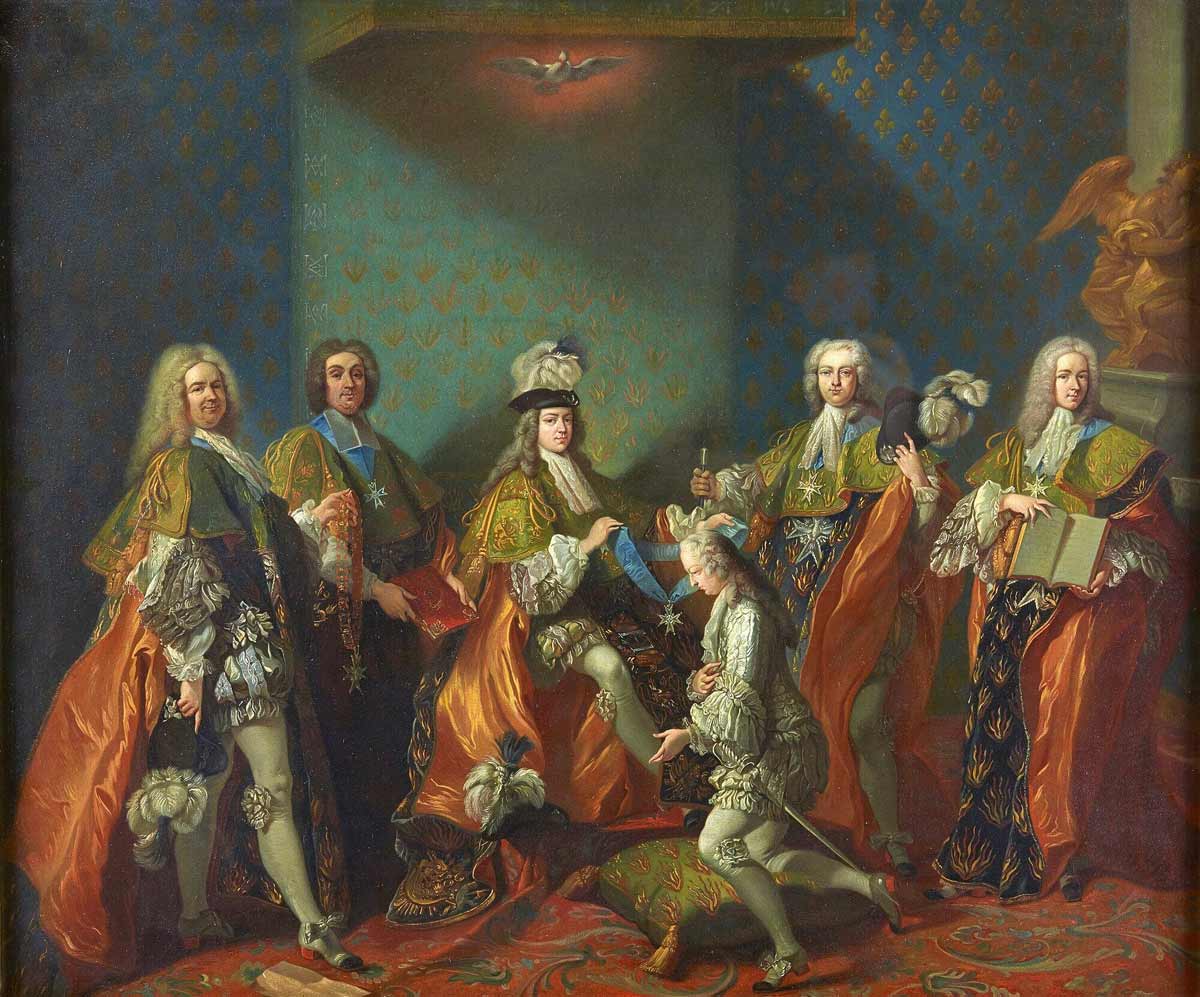
Louis XV conferring the cordon bleu

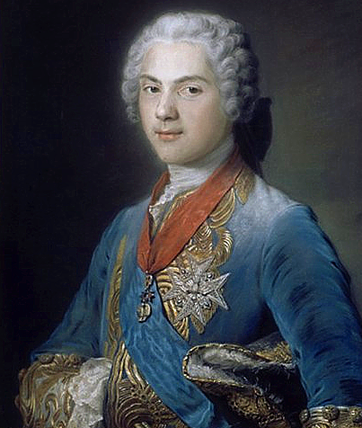
Louis the Dauphin wearing the Saint-Esprit

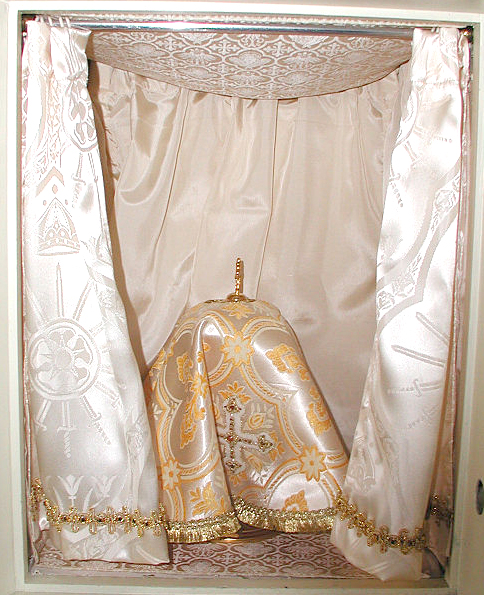
No photo description available.
The Pentecost, depicted in the Royal Chapel

 The Order of the Holy Spirit was the highest of French orders of chivalry. The Ordre du Saint-Esprit was founded by Henri III in 1578 to celebrate his succession to the throne on Pentecost Sunday. According to Heraldica:

The main [orders of chivalry] under the Old Regime were the Ordre de Saint-Michel (created in the 15th c. by Louis XI) and the Ordre du Saint-Esprit (Holy Ghost), created in 1578 with a limit of 100 on the number of knights: it was the most prestigious order in France, usually forbidden to foreigners (but the Spanish Borbons were often made knights in the 18th c.). Both were abolished in 1789, recreated in 1815 and abolished in 1830. A recipient of the Saint-Esprit always received Saint-Michel at the same time (they were collectively known as les ordres du Roi) though the converse was not true, of course. There was no requirement of nobility for Saint-Michel, but there were stringent ones for Saint-Esprit. The pendant of the Saint-Esprit was a Maltese cross azure, bordered argent, with a dove displayed pointing downward, and fleurs-de-lis between the branches of the cross. The necklace is made of alternating elements all shown surrounded by flames: the letter H surrounded by royal crowns (for Henri III, founder), a fleur-de-lis, and a military trophy. The sash of the Saint-Esprit was blue, and it was called in French le cordon bleu, though how the expression came to mean a first-rate cook I do not know.

Princes of the royal family were given the cordon bleu at birth but were not formally received into the Order until age twelve. The King of France was the Grand Master; below is a picture of young Louis XVI receiving the homage of the Chevaliers du Saint-Esprit, among whom unfortunately were his Orleanist cousins. How ironic, since the purpose of the Order was to unite the princes to their king.
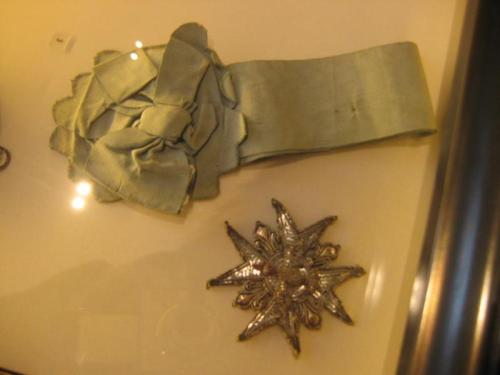
The sash and badge of the boy-king, Louis XVII.

Share

The Thucydides Trap

 From Alexander Muse on Amuse on X:

There is a particular kind of intellectual fraud that flourishes only when no one with the relevant expertise is paying attention. The “Thucydides Trap,” a phrase invented by Harvard political scientist Graham Allison and elevated since 2015 to the status of a scientific law of international relations, is exactly that sort of fraud. Earlier this week, Victor Davis Hanson, the classicist who edited the standard scholarly English edition of Thucydides used in American universities, The Landmark Thucydides, finally said the quiet thing loudly. “There is no Thucydides Trap. If there were, it would not apply to us. If it did apply to us, we would not start a war. The entire notion that Premier Xi suggested is bankrupt.”

Three sentences. The mainstream international relations field will not recover from them, and it should not.

To understand why Hanson’s intervention matters, consider the scene that prompted it. On May 14, 2026, Xi Jinping sat across from President Donald Trump in Beijing and invoked the Thucydides Trap. A Communist autocrat, sitting atop a one-party police state, cited a Harvard political scientist to lecture an American president on a Greek text written by a man Xi has almost certainly never read in the original. The premier of a regime that censors its own historians reached for the authority of the Greeks to instruct the leader of the free world about the dangers of confronting authoritarian power. The inversion is so total that it borders on satire, and yet the press dutifully reported it as wisdom.

The reader will reasonably ask: why would Xi do this? Why would the head of state of a rising, or formerly rising, China reach for an obscure academic framework to explain his position to an American president? The answer is the entire argument of this essay. Xi reached for Allison because Allison’s thesis serves Beijing’s purposes. It is, and has always been, propaganda disguised as scholarship, and its function is to teach Americans to accept their own decline as a structural inevitability rather than a policy choice. (Read more.)

Share

Did the Apostle Thomas Travel All the Way to India?

 From The Collector:

The New Testament’s depiction of Jesus’s disciple Thomas has given him the nickname “Doubting Thomas.” Yet, ironically, according to church tradition Thomas’s faith in the risen Christ drove him to evangelize a greater distance from Palestine than even the Apostle Paul reached in his storied missionary journeys in Anatolia and Europe. Thomas may have gone as far as South India with the Christian gospel, establishing multiple churches along the way and eventually dying as a martyr on Indian soil.

When reconstructing the histories of ancient Christian figures like Thomas, historians often must rely on sources that contain legendary material. This is partly why it is customary to qualify historical claims with phrases like “according to tradition.” 

A key source for the life of Thomas is an early third-century work entitled The Acts of Thomas. This work is counted among the many pseudepigraphical narratives about the infancy years of Christianity, which tend to contain accounts deemed unreliable by modern historiographical standards. While The Acts of Thomas’s historical value is compromised as a result, the fact that a document about Thomas’s activities in India was being read in the third century suggests that both Thomas’s ministry and the backstory of the church in India were of interest to Christians in the early church. Ancient Christian writers from diverse areas also wrote of Thomas’s ministry in India. (Read more.)

Share

Saturday, May 23, 2026

What Does St. Paul Say About Veils?

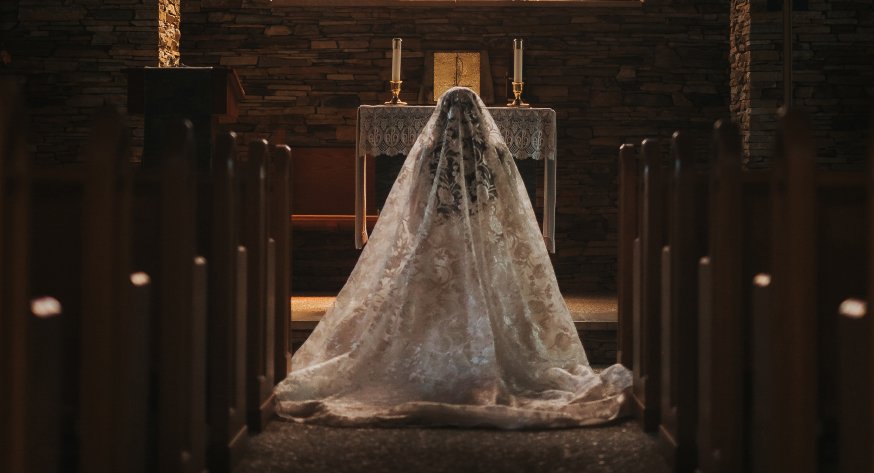
https://fssp.com/wp-content/uploads/Wedding-Veil-Cropped-1.jpg 

Charlene, Princess of Monaco

 I have worn hats or veils in church my entire life, except for a few confused years in the late seventies and early eighties. I have repeatedly had women say to me: "I wish we still did that" or "I wish I was brave enough to do that" or "I would wear one but I don't want to appear holier-than-thou." To the first objection, my response is that no one ever came down from heaven and began ripping women's veils off; if you want to wear a veil or a hat at Mass, then wear one. To the second objection, I say that it requires courage to shed one's blood for the Gospel; it does not require courage to wear a scrap of lace on your head. To the third objection, I can merely shake my head and query: "Holier-than-thou?" In seventh grade, at a Catholic school, I remember going into Mass with a gaggle of twelve-year-old veiled damsels who spoke in such a way that would make Cheech and Chong blush. I grew up seeing femmes fatales such as Jackie Kennedy, the Duchess of Alba, and Marlene Dietrich wearing mantillas, which speedily disabused me of the notion that wearing a veil confers automatic holiness. Not to mention the variety of feisty and eccentric characters among my own family and friends, and in my parish, who wore an expansive collection of veils and hats over the years, featuring everything from threadbare polyester lace to Parisian couture. None were angels, except perhaps the little girls and the nuns. I remember when one of my aunts was an unmarried expectant mother, wearing a cute headscarf at Mass over her stylish bob. I loved how her scarf and dress matched and wanted the same look. (I was five.) My overall impression, which led to my own decision to veil, was that it is not a matter of conforming to what people might think, but a matter of devotion to God, according to the teachings of both Scripture and Tradition.

From Father Mike Johns at Word on Fire:

The practice of wearing a veil during Mass has seen a bit of a revival among Catholic women in recent times. Find a Catholic parish at random in which to attend Mass, and odds are that at least some of the women present will be wearing a veil. A quick internet search about veiling during Mass results in many articles and videos from both secular and religious outlets commenting on the practice. Some Catholic outlets even go so far as to recommend the use of the veil as a necessary outward sign of a wife’s submission to her husband.

St. Paul’s words in 1 Corinthians 11:3–16 are often at the center of such discussions. In this chapter of his letter, Paul is concerned to correct numerous liturgical abuses taking place among the Corinthians, and the subject of head coverings is at the top of his list. In the words of one Scripture scholar, “Women in Corinth, at least some of them, had stopped wearing head coverings in worship, and that bothered Paul.” In 1 Cor 11:3–16, Paul tackles this issue.

The Catholic Church, however, clearly teaches that the use of the veil is no longer obligatory for women. Under Pope St. Paul VI, the Church maintains that veils “no longer have a normative value” since in passages such as 1 Cor 11:3–16 Paul is addressing “disciplinary practices of minor importance.” In addition, the current Code of Canon Law has also lifted any obligation concerning the use of the veil for women in church. In classifying the use of the veil as a disciplinary practice of minor importance, the Church sees it as on par with other devotions, or perhaps even as a sacramental. That is, it can perhaps aid in the expression of Catholic piety but is not an essential component of faith.

At the same time, Paul’s arguments in 1 Cor 11:3–16 (and his letter as a whole) ought to be taken seriously. The letters of St. Paul are among the most beautiful and rewarding pages of the New Testament. This is especially true of the First Letter to the Corinthians, which has been called “Paul’s most practical and contemporary letter.” (Read more.)


More discussion from The Missive:

We receive Tradition as a holy gift, treasure it, and pass it on to those who come after us. We realize, in humility, that in the long run, Tradition will judge us and that it is really not for us to pass judgement on Tradition. Traditio sacra sacrorum tuitio. Sacred tradition is a safeguarding of sacred things, and more importantly, of being safeguarded by them. For those who are still being formed by Tradition – a formation that can indeed fill a lifetime – it may be hard to understand why it is so important for women to wear veils in church.

Let me begin with an experience that occurred to me some years ago now. Once, when I stopped for gas at a roadside convenience store, the attendant at the cash register saw me in my cassock and asked, completely at a loss, “What’s with…???” and motioned up and down with her hands to indicate that she was referring to my garb. She didn’t even know what to call it. At that time I was still a seminarian, and I explained to her that I was hoping to become a priest.

When we see a policeman or a soldier or a nurse, for example, we know who they are by the way they are dressed. And I hope that when you get ready to come to church, you dress with church in mind: you realize a distinctiveness in being in church. It is not like going anywhere else.

Proper attire for a woman, according to the Tradition given to us clearly by St. Paul in 1 Corinthians 11 and confirmed by Pope St. Linus, who was the second pope, right after St. Peter, is to wear a veil or head covering while in church. I have noticed that men tend to be good in observing the rule that applies to them, namely, that they should not wear a hat in church. I hope that if you saw someone wearing a baseball cap or a fishing hat in church, you would realize that this is not appropriate and indicate in some way to him that he needs to take it off.

Now, you might be wondering why a priest wears a biretta in church and could wear one even during the sermon. Some Fraternity priests do. The answer is that the biretta is a sign of office; a much more striking sign of a higher office is the bishop’s mitre, which he does wear when he preaches.

Dear faithful who are ladies, what I hope you will find in wearing the veil is that you have a particularly strong awareness of where you are, that you are focused completely on Our Lord and not worried about external appearance. (Read more.)

Tea at Trianon has has several posts on headcoverings, including HERE and HERE. A fabulous post, HERE.

Share

They Stole My State — America Is Next If We Don’t Wake Up

 From Tierney's Real News:

Some people keep telling me to lighten up and stop obsessing over politics. I can’t. I’m from Minnesota — and I’ve watched my home state turn into something I barely recognize. I finally had to leave because I couldn’t bear it any longer.

This isn’t abstract for me. Minnesota is where I grew up and lived ALL my life. And now it’s run by saboteurs like Tim Walz, Ilhan Omar, and Keith Ellison, alongside networks of CCP-linked operators, Muslim Brotherhood affiliates, and Somali pirates.

How did they get there? The open-border Koch Libertarians worked hand-in-glove with Democrats to embed America’s enemies in Minnesota politics — and then perfected election fraud and cheat-by-mail over the past 20 years to keep them there. It was a coup, plain and simple.

On their watch, my birth state was turned into a filthy mess where criminals and gangsters roam free and demons are promoted and rewarded. Massive welfare fraud schemes have drained billions of dollars from taxpayers. And, even worse, many conservative Minnesotans are too afraid to say anything for fear they’ll be called racist!

“Minnesota nice” isn’t just a slogan - it’s a death sentence! Everybody is walking around wearing “BE KIND” t-shirts while their enemies are picking their pockets, jacking their cars, stealing their dignity, defacing their neighborhoods and churches and endangering the future for their children! INSANE.

Minnesota was once known as one of the most beautiful and vibrant states in America. No more. Now it’s a global laughingstock! Now it’s the place where they launched the George Floyd color revolution that helped usher in nationwide Islamo-Communism. (Read more.)

Share

Boring but Helpful Advice

From Of Home and Womanhood:

  1. Go to bed early

Seriously, stop scrolling, stop distracting yourself with mindless unimportant things and go to bed. It is such painfully boring advice which is reason why nobody wants to hear it, but an embarrassing amount of human suffering is made worse simply because you are tired. Parents, how many times do you not see your child extra fussy, crying, throwing an extra fit and you say “they are just tired”, and you think you’re that different? No my dear friend, you are not, you don’t just need a snickers for your hanger, you need a nap and an early bedtime.

Going to bed early will not solve every problem in your life, but it will make you more capable of facing them like a sane person. When you are well rested you can think more clearly, regulate yourself better, have more patience, make better decisions, and are much less likely to spiral over things. Lots of people are not failing at life, we are just tired, overstimulated, and staying awake for way too long.

  1. Touch some grass

Seriously, go touch some grass, if you happen to live out in the desert like me don’t touch some cactus, touch some dirt, get outside, get in the sun, go sit in the breeze, go out listen to the birds, breathe in some fresh air, quite literally touch some grass.

And I know this sounds so stupid because it is so simple, but it works and it works because it is so simple. We live under artificial lights, inside climate-controlled boxes, staring at glowing rectangles, consuming thoughts, opinions, anxieties, tragedies and all the nonsense of people we will never meet, and yet we wonder why we feel insane. Your body and your mind my dear friend were not meant to spend all of their time indoors marinating on wifi and a constant stream of bad news.

Sunlight alone affects our bodies more than people realize, morning light helps regulate circadian rhythm which means better sleep at night, better energy for the day and stable mood. Vast majority of people are severely deficient in vitamin D, which is directly linked to mood and immune function. Being outside especially around trees and natural environments has been shown to lower cortisol levels, which if you do not know cortisol is our stress hormone, being outside reduces symptoms of anxiety and depression. Even something as simple as looking outside and admiring natural landscapes has been shown to improve function and reduce mental fatigue, our brains literally reset when we aren’t staring at screens.

And there is also the added obvious bonus which is — movement. When you go outside you usually end up walking, standing, moving, getting your blood flowing, that alone improves our mood, our focus and energy in ways we now try to replicate by coffee and energy drinks. The problem is that we have built a life that is completely out of sync with how our bodies are meant to function, you don’t need a fancy spiritual retreat and thousands of dollars on spiritual gurus and supplements, you quite literally just need to go touch some grass. (Read more.)


Share

Friday, May 22, 2026

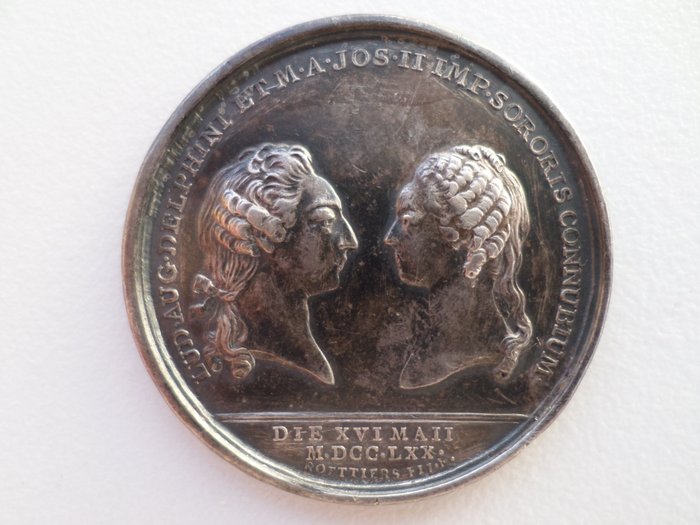
'Mariage de Louis XVI et Marie-Antoinette'

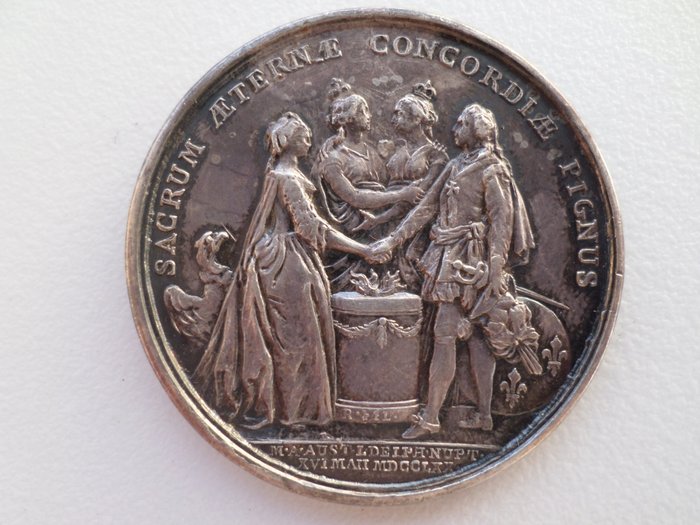
An April 1770 Austrian medal minted by Roettiers, on the marriage of Marie-Antoinette the "sister of Emperor Joseph II" by proxy with the future Louis XVI in the Augustinerkirche of Vienna. The actual, "second" wedding ceremony took place on May 16, 1770 at Versailles.

Here the young couple (who had not yet met) are shown at the altar of Vesta with goddesses representing their countries.

Share

How China Helps Iran Kill Americans

 From AND Magazine:

On March 1, 2026, Iranian Shahed drones struck a U.S. command center at Port Shuaiba in Kuwait. Six U.S. Army reservists from Iowa were killed. Dozens more were injured, suffering traumatic brain injuries and shrapnel wounds.

No unclassified forensic examination of the remnants of the drones in this attack has been completed to our knowledge. More generally, however, the construction of Iranian Shahed drones has been documented extensively, and it has been well established that while these weapons are ultimately fully assembled in Iran, many if not most of their key components come from China.

The engine used in the Shahed drone is a copy of one originally designed in Germany. All of the engines are now made in China. Several different Chinese companies are involved, including Xiamen Victory Technology, Xiamen Limbach Aircraft Engine Co., Harbin Bin-Au, and Jinhua Hairun.

Xiamen Victory Technology is so proud of its contribution to the construction of Shahed drones that it even includes imagery of the drone on its website for marketing purposes. While the United States was bombing Iran, Xiamen was continuing to send marketing emails to Iran and focusing on expanding sales. (Read more.)


Share

Blood Red Dirt

 From Hilary White at The Sacred Images Project:

I’ve started doing something lately that I’ve wanted to try for years, but for some reason never quite had the nerve to attempt. I know that many of the earth pigments used by our artistic forbears in Italy were prospected, dug up and processed by the painters, or by members of their workshops, themselves. Back then, unless one lived in Florence or Bologna, one could not simply go to an art supply shop and buy tubes of ready-made colour or pots of dry powdered pigments. A skilled painter, or a professional workshop, was expected to understand materials intimately and would often have prepared them personally.

So, in the interests of science, I’ve collected up a basic set of tools from stuff around the house and have started hunting for pigments in the woods and trails and rock-formations along the Narni-Amelia limestone ridge, in the farming countryside around Narni and Terni, and along the steep cliffs and banks of the Nera river gorge. (Read more.)

Share