Monday, December 5, 2011

Class

And the hypocrisy of democracy. (Of course, we in America have no masters and only ennoble people like the Kardashians.)
The Sovereign can never be "one of us," not least because millions of people will all have different ideas about what "us" means. Just as the Queen is expected to be above politics, so she is expected to be above that most sensitive, inflammable and confusing issue - class.

"The Queen is class-blind. If you're grand enough, it's much easier to be completely oblivious of the class structure below you," observes a former Private Secretary. Whatever one's analysis of the class structure, monarchs are unquestionably in a class of their own. The Queen's own accent has changed - less clipped, lower in tone than at the start of the reign - and she has remarked that her own grandchildren speak "Estuary" English (a view supported by the famously plummy critic and aesthete Brian Sewell). Some purists even argue that she has picked up the odd populist habit herself, including her pronunciation of "Jubilee."

Yet it would be absurd to describe the monarchy as "classless." It is an organization entirely based on hierarchy. It has its own internal honours system, the Royal Victorian Order, with strict gradations. A footman, for example, will never get a knighthood any more than a Lord Chamberlain will get the Royal Victorian Medal. The Queen draws her closest female confidantes, her ladies-in-waiting, from the traditional aristocracy and most of her circle of personal friends are from the same stratum of society, too.

But that does not make the modern monarchy class-ridden or, in modern parlance, snobbish. Like most people, the Queen and her family have friends of similar age, background and interests. The institution she runs is, by definition, traditional. But, crucially, what it does not seek to do is represent or lean in favour of a particular order or class, however much others may think it does. And that has been one of the fundamental changes of this reign.

Many commentators continue to follow Malcolm Muggeridge's argument that the monarchy is the source of class consciousness, that "the impulses out of which snobbishness is born descend from the Queen at the apex of the social pyramid, right down to the base." This neglects the fact that several countries routinely held up as progressive, egalitarian democracies - Holland, Sweden, Norway - are also monarchies. It also neglects the Olympic-class snobbery to be found in every non-royal society, from Ivy League America to the Crillon Ball crowd in Paris. (Read entire article.)

Gareth Russell adds his own thoughts:
The National Post has a very interesting article upon the Monarchy and attitudes to class in Britain. Perhaps one of the things which people who aren't too well-acquainted with monarchical history will find surprising is how often various members of the British aristocracy have scorned and criticised the monarchy for being too "common". The gorgeous but fascist socialite, Lady Diana Mosley (nee Mitford), was extremely critical of the late Queen Mother, whom she rather unfairly and improbably characterised as a social climber. A little like members of the ci-devant nobility in pre-revolutionary France who criticised Marie-Antoinette for her farm at Versailles, because it was considered lacking in majesty.

Perhaps one of the most interesting points the article raises is that, contrary to popular misconception, the monarchy in Britain does not necessarily encourage snobbery and it cites the rather revealing example of how entrenched snobbery can be in the United States and France, both of them the most celebrated republics in the world and both founded, at least in theory, on the principle of equality. Historically, it's often true that "self-made" aristocracies or oligarchies, like those in the United States or, most obviously, in ancient republican Rome, can be the most precious and conscious of their status. I don't entirely know what I think of that argument, although there seems to be a lot of truth in it. (Read more.)
Share

Sunday, December 4, 2011

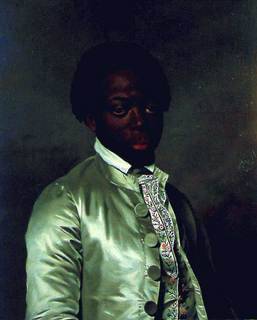
Portrait of Zamor

From Vive la Reine:
Zamor was a young boy in Chittagong when he was captured by slave traders and eventually sold to Louis XV. Louis XVI put him into the service of Madame du Barry, as a page boy. Madame du Barry paid for his education and welfare until 1792, when she was arrested upon his testimony that she was smuggling in jewels from England. She managed to avoid prison for the time being, but dismissed him from service. According to Zamor at Madame du Barry’s trial, she dismissed him when he told her that he found her lavish lifestyle, hatred of liberty, and assistance to emigrated aristocrats deplorable.

He was one of several key witnesses at her in 1793 trial that led to her execution, though Zamor himself was arrested soon after on suspicion of being her accomplice. He was released, and died in France in 1820.
Share

The Surrender of Fountains Abbey

The fall of a great English monastery.
Fountains Abbey was surrendered to Henry VIII and Thomas Cromwell's agents on November 26, 1539. As this site notes, it had a very close connection to the Pilgrimage of Grace:
Huby's successor, William Thirsk, was not as wise as Huby, nor as virtuous. He is said to have sold land, timber and jewels belonging to the abbey for his own use. Admittedly, however, this accusation is biased, as it relies entirely on the evidence supplied by Thomas Cromwell's agents during the Visitation of the Monasteries in 1536. Cromwelll, Henry VIII's chief minister, had begun to take account of the riches that the monks had secreted behind their monastery walls, and to look for ways to relieve them of it. Cromwell's protestant zeal and his practical desire to please the king were united behind the cause of showing the monks to be corrupt and superstitious. Thirsk was forced to resign as abbot and went to live at the nearby abbey of Jervaulx. Instead of living quietly on the pension that he had been provided with, however, Thirsk became involved with the Pilgrimage of Grace. This was a revolt led by Northern Catholics in 1536, who sought to force Henry VIII to return to the Catholic Church, reopen the abbeys and get rid of Protestant reformers. Henry VIII, however, was not to be stopped. Thirsk and the Abbot of Jervaulx were sent to the Tower of London, where they were both found guilty of treason and suffered traitors' deaths -- hanging, drawing and quartering. (Read more.)
Share

Saturday, December 3, 2011

The Forgotten Empress

The Empress Elizabeth Alexeievna, consort of Tsar Alexander I.
One of the forgotten and elusive figures of the Romanov family was the Empress Elizabeth Alexeievna, consort of Tsar Alexander I. Little has been written about her in English, and sometimes she was only a curious note in books about the earlier Romanovs. This treatment of her might be a little understandable. She did not do anything "great" in history to warrant special attention or popularity. And yet she was married to a man who was hailed as "Napoleon's conqueror" and "the liberator of Europe". She exercised no political influence in Russia, and throughout her lifetime, she was a sad and solitary figure, neglected by her husband, and treated with indifference by his family. 

Judging from her portraits and the written descriptions of her by contemporaries, Elizabeth was an exceptionally beautiful woman. Beauty and charm are all the hallmarks of almost all Russian empresses, but popular opinion puts that she is the most beautiful of the last five empresses-consort of Russia. No wonder why many poets, writers and musicians throughout Elizabeth's lifetime dedicated their works to her, among them were Alexander Pushkin, Nikolai Karamzin, and Vasily Zhukovsky. Her angelic beauty, gentle disposition, and cultivated mind made her the star of the Russian court. (Read entire post.)
Share

Cheveux de la reine

Some ideas from a top designer, based upon eighteenth century decor.
"What's great about this room is that it's not too matchy-matchy. Note the colors: There's red upholstery, yellow drapes, green walls and a blue carpet. I try to achieve a similar mix in my own work, whereas some people become obsessed with having the exact same blue everywhere in their house—which can look so overdone and fussy.

"Decorators often choose the rug first and use it to guide the palette. But I try to avoid letting the carpet drive design choices, as I think it makes the décor seem forced. Start picking other pieces first and then choose a rug that doesn't match too perfectly, so it feels like the room has evolved over time—as if you've inherited an antique and just made it work. That's a more European approach." Stark is a favorite source for carpets.....
The wonderful blonde fabric used for the walls and window treatments is called cheveux de la reine, which translates to 'the queen's hair'—based on Marie Antoinette's. It catches light beautifully. Window treatments are one of the most important elements in a room—certainly the strongest vertical gesture. Choose wisely because even simple white canvas will telegraph a lot. I prefer a clean look like this: just great cords and tiebacks. The sharp tailoring reinforces the architecture of the room and lets the windows be the star." On the designer's wish list: Décor de Paris's Canovaccio Tieback, decordeparis.com. (Read entire article.)
Share

Friday, December 2, 2011

Last Will of Isabel the Catholic

From Rorate Caeli:
I charge the Princess and said Prince her husband that they thus do it and fulfill it, and that this be their main end, and that in this they may place great diligence, and that they do not consent or permit that the Indians living in and inhabiting those said Indies and mainland be persecuted in their persons and in their properties; but instead I order that they be treated well and justly. And if they have received any distress, that it be remedied and corrected, so that in nothing may the Apostolic Letters of such grant be exceeded in what it is placed upon us and established. (Read entire post.)
Share

Charles of Orleans and Historical Fiction

Stephanie Mann discusses Charles of Orleans.
Charles, the Duke of Orleans was born on November 24, 1394. His father, Louis, the Duke of Orleans was assassinated by Jean sans Peur, the Duke of Burgundy. Jean's eponymous tower is a tourist sight in Paris today. Charles and his brothers swore an oath of vengeance against the house of Burgundy and this oath, according to Hella Haasse's extraordinary historical novel In a Dark Wood Wandering, dominated and directed his life.

Charles was a great poet and composed most of his poems while held a prisoner of war in England after the Battle of Agincourt for 24 years. When the English laid siege to Orleans--the occasion of St. Joan of Arc's great victory--it was a transgression of the contemporary military code, since its ruler was being held captive....

Here is an English translation of a rondel composed by Charles, the Duke of Orleans:

Strengthen, my Love, this castle of my heart,
And with some store of pleasure give me aid,
For Jealousy, with all them of his part,
Strong siege about the weary tower has laid.
Nay, if to break his bands thou art afraid,
Too weak to make his cruel force depart,
Strengthen at least this castle of my heart,
And with some store of pleasure give me aid.
Nay, let not Jealousy, for all his art
Be master, and the tower in ruin laid,
That still, ah Love! thy gracious rule obeyed.
Advance, and give me succour of thy part;
Strengthen, my Love, this castle of my heart.

(Read entire post.)
Share

Thursday, December 1, 2011

News from Daniel Mitsui

Some amazing art which is taking liturgical circles by storm. Daniel says:
Earlier this year, I was contacted by the Executive Secretary of the Vox Clara Committee, a Vatican committee of senior bishops from episcopal conferences throughout the English-speaking world that advises the Holy See on English-language liturgy. The Committee will publish in 2012 an interim edition of the Roman Pontifical, including new translations of certain texts drawn from the revised Roman Missal.

I was commissioned to create a series of five color illustrations for this Pontifical, depicting the Crucifixion, the Last Supper, the Presentation in the Temple, the Descent of the Holy Ghost and Christ the High Priest. The central images are surrounded by appropriate symbols and Old Testament prefigurements, and the corner scenes depict liturgical rites contained in the Pontifical.

The drawings were realized in colored inks on Bristol board, in a style heavily influenced by 15th century panel paintings, tapestries, manuscripts and incunabula. Black and white versions of two of these illustrations were also produced. (Read entire newsletter.)
Share

Wednesday, November 30, 2011

The First Dance

Western writer Richard S. Wheeler gives us the latest novel in his Barnaby Skye series, The First Dance, which deals with border conflicts in Montana in the 1880’s. Barnaby’s son Dirk, half English and half Shoshone, is abandoned on his wedding day by his bride, the enigmatic Métis girl, Therese. Crushed and mystified by his wife’s rejection, Dirk returns to his job as a civilian translator with the United States army. He finds himself in the unenviable position of having to participate in driving his wife’s people the Métis, who are a tribe of mixed French Canadian and Native American heritage, back over the border into Canada where they have already suffered persecution. When his commanding officer sinks to unconscionable acts, then Dirk objects and loses his livelihood. He decides to help the Métis, many of whom are starving and freezing in the wilderness with their families. In the course of his adventures he is befriended by Pap Reilly, an Irish hog farmer with a shady past, who gives shelter to the beleaguered immigrants. In the meantime, Dirk encounters his wife Therese, who claims to have had a vision of St. Teresa of Avila, and is determined to build a church for the Métis. Still reeling from Therese’s desertion, Dirk dedicates himself to her cause nevertheless, and protects her from the hostile locals, until his psychological “dance” with her reaches its climax. Written with both tender pathos and blunt insights, Wheeler plumbs the souls of his characters even as he captures the harshness and majesty of the Montana landscapes. Filled with humor, tears and intriguing historical detail, it is impossible to go away from the book without having learned a thing or two about the West, and about human nature as well. 
(*NOTE: This review was originally published in the November 2011 issue of the Historical Novels Review. The First Dance was sent to me by the Historical Novel Society in exchange for my honest opinion.)

Share