Tuesday, November 17, 2015

Slavery in New Zealand

A book review from From Reid's Reader: 
Under all her real scholarship, what Petrie is really attempting to do is to deflect that sort of Pakeha ignorance, which would claim that slavery (like the equally historical cannibalism) was somehow the defining mark of pre-European society. It was no more that than the Gulag and Holocaust were the defining features of European society. And after all, one could say that the Holocaust was an “aberration” in German history just as the “musket wars” and large-scale slavery were, in Petrie’s view, an aberration in Maori history. Should we therefore take a benign and forgiving attitude towards them? And does slavery somehow cease to be slavery because the people enslaved were of the same race, colour and religion as those who enslaved them? One could make a strong case, from Petrie’s own text, that social caste acted in the Maori context in much the same way that colour and race did in other situations of slavery. I have to note too that, by sheeting this grim aspect of Maori history home to European influence (Pakeha brought muskets and distorted Maori society etc.), 

Petrie is in effect stripping Maori of responsibility for their own actions. This is the very denial of “agency” that is so often deplored by historians who deal with “first nations”. Petrie often deploys the Lytton Strachey variety of historical sarcasm when she refers to missionaries’ motives, but this can sometimes reach an absurd level. Thus she says: “Missionary writings were at their most colourfully vitriolic when reporting the practice of eating enemies, but they failed or chose not to comprehend its full significance.” (Chapter 2, p.58). Does this mean that missionaries were foolish to condemn cannibalism or foolish to be appalled by it? Or that they would have had totally different attitudes had they only realised that eating enemies was a means of destroying their mana?

Much of the sarcasm, I fear, is misplaced.

It is good to inform us of the varieties of slavery as practised by Maori. It is salutary to be reminded that Europeans at various times practised slavery on a far vaster scale. But Petrie’s tone too often suggests that she is offering a sort of apologia for Maori slavery rather than seeing it as the degrading thing it was. (Read more.)
Share

Monday, November 16, 2015

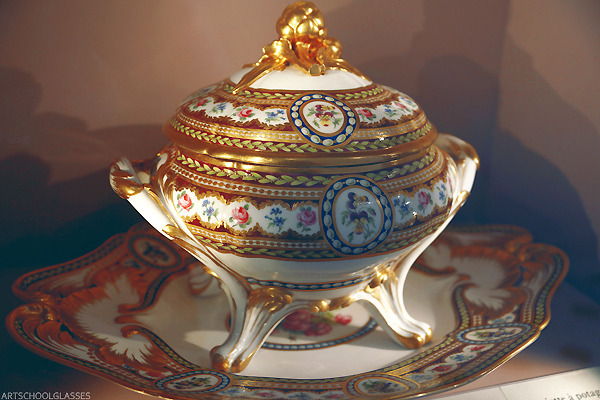
Marie-Antoinette at the Louvre

   Bust of Marie-Antoinette.

 For soup.

Tea cup.

Via Art School Glasses. Share

Maple-Roasted Acorn Squash

From InsideChic:
I love all things fall: Colorful gourds, cozy sweaters, changing leaves, and (of course!) spectacular autumn fruits and veggies. My soul just craves the sweet, buttery taste of this side dish when the weather starts to get cold. I also love how simple it is—in only 5 minutes, you can turn four ingredients into a scrumptious side dish. It doesn’t get any easier than this. (Read more.)
Share

The Jewish Ghetto in Venice

From Smithsonian:
 The first Jewish ghetto was in Frankfurt, Germany. But the Venetian Ghetto was so unique in its urban shape that it became the model for all subsequent Jewish quarters. The word “ghetto” actually originated in Venice, from the copper foundry that existed here before the arrival of the Jews, which was known as the ghèto.

The Jews had been working in the city for centuries, but it was the first time that they were allowed to have their own quarter. By that time’s standards it was a strong concession and was negotiated by the Jews themselves. After a heated debate, on March 29, the Senate proclaimed this area as the site of the Ghetto. The decision had nothing to do with modern notions of tolerance. Up until then, individual [Jewish] merchants were allowed to operate in the city, but they could not have their permanent residence there. But by ghettoizing them, Venice simultaneously included and excluded the Jews. In order to distinguish them from the Christians, they had to wear certain insignia, typically a yellow hat or a yellow badge, the exception being Jewish doctors, who were in high demand and were allowed to wear black hats. At night the gates to the Ghetto were closed, so it would become a kind of prison. But the Jews felt stable enough that, 12 years into the existence of the place, they started establishing their synagogues and congregations. The area was so small, though, that when the community started growing, the only space was upward. You could call it the world’s first vertical city. (Read more.)
Share

Sunday, November 15, 2015

Abingdon

Barter Theater

The pretty cowgirl on the right is my youngest sister.
A town in Virginia that everyone should visit. From Only in Your State:
As the newly named seat of Washington County, Black's Fort became a town in 1778 and was renamed Abingdon after Martha Washington's ancestral home in Oxfordshire, England. Today, Abingdon is a designated Virginia Main Street community with an historic downtown that is home to a thriving arts and culture scene.

n 1780, during the height of the Revolutionary War, 400 volunteers, known as the Overmountain Men, gathered at Abingdon's Muster Grounds to begin their journey to King's Mountain in South Carolina. With the help of other militia groups, they defeated the British at the Battle of King's Mountain and turned the tide of the war for America's independence. (Read more.)
Martha Washington Hotel and Spa

Share

Churchill and the End of World War One

Winston Churchill speaks. From The Churchill Centre:
And then suddenly the first stroke of the chime. I looked again at the broad street beneath me. It was deserted. From the portals of one of the large hotels absorbed by Government Departments darted the slight figure of a girl clerk, distractedly gesticulating while another stroke of Big Ben resounded. Then from all sides men and women came scurrying into the street. Streams of people poured out of all the buildings. The bells of London began to clash. Northumberland Avenue was now crowded with people in hundreds, nay, thousands, rushing hither and thither in a frantic manner, shouting and screaming with joy. I could see that Trafalgar Square was already swarming. Around me in our very headquarters, in the Hotel Metropole, disorder had broken out. Doors banged. Feet clattered down corridors. Everyone rose from the desk and cast aside pen and paper. All bounds were broken. The tumult grew. It grew like a gale, but from all sides simultaneously. The street was now a seething mass of humanity. Flags appeared as if by magic. Streams of men and women flowed from the Embankment. They mingled with torrents pouring down the Strand on their way to acclaim the King. (Read more.)
Share

Kiev and Babi Yar

From Holocaust Encyclopedia:
 Approximately 100,000 Jews fled Kiev in advance of the German occupation. German forces entered Kiev on September 19, 1941. Along with the rest of the Ukraine, the city was incorporated into the Reichskommissariat Ukraine, headed by East Prussian Nazi district leader Erich Koch. During the first days of the German occupation, two major explosions, apparently set off by Soviet military engineers, destroyed the German headquarters and part of the city center. The Germans used the sabotage as a pretext to murder the remaining Jews of Kiev. At that time, there were about 60,000 Jews in the city. Most of those who remained were women, children, the elderly, and the sick who had been unable to flee.

On September 29-30, 1941, SS and German police units and their auxiliaries, under guidance of members of Einsatzgruppe (mobile killing unit) C, murdered the Jewish population of Kiev at Babi Yar, a ravine northwest of the city. This was one of the largest mass murders at an individual location during World War II. As the victims moved into the ravine, Einsatzgruppe detachments shot them in small groups. According to reports by the Einsatzgruppe to headquarters, 33,771 Jews were massacred in two days. In the months following the massacre, German authorities stationed at Kiev killed thousands more Jews at Babi Yar, as well as non-Jews including Roma (Gypsies), Communists, and Soviet prisoners of war. It is estimated that some 100,000 people were murdered at Babi Yar. (Read more.)
Share

Saturday, November 14, 2015

Decorating with Autumn

From Southern Lady:
Pay homage to autumn’s abundant harvest with nods to the natural elements that characterize this time of year. Include favorite fall icons by incorporating details like napkin ties with small pewter acorns and Johnson Brothers’ Barnyard King china, which bears regal turkeys. Sophisticated glassware, shiny-rimmed chargers, and intricately carved wooden place mats reinforce a palette rooted in bronze. Handwritten chalkboard place cards infuse the scene with a thoughtful spirit of thanksgiving. (Read more.)
Share

How a Grandmother Keeps in Touch

From Southern Lady:
About a year ago, my son and his wife moved from here in Alabama to Arizona, taking my precious granddaughter Brooke with them. She was 4 at the time, and I vowed to find ways to let her know there was an Anna and Granddaddy who kept right on loving her even though she now lived far away.

My first way was to leap into the modern world and buy an iPad so I can talk with Brooke and see her sweet face on FaceTime.

But I also use not-so-modern means of staying connected. I send her greeting cards with cute pictures—in these, I often enclose an entire dollar, which is big money to her young self. Sometimes I write her simple letters, drawing little pictures to help her read the words. And every week or so, I mail her a care package containing delights like toys, clothes, dress-up jewelry, art supplies … The contents are often cheaper than the postage, a fact I push out of my mind by picturing the expression on Brooke’s face when her gifts arrives. (Read more.)
Share