Saturday, February 13, 2016

The First Disney Princess

From Smithsonian:
"The Goddess of Spring" wasn’t Walt Disney Picture’s last foray into Greek mythology or myth-inspired animation (hello, Fantasia), but it’s worth noting that animators used this myth to practice for their famous retellings of European-style fairy tales in the tradition of the Brothers Grimm and Charles Perrault. Given recent research that shows that both types of tales could share common roots, perhaps it's no surprise that the spring maiden who launched an entire genre of movies was not German or French, but rather Greek. (Read more.)
Share

Friday, February 12, 2016

Silverstream Priory

From Regina:
When Dom Benedict pronounced his vows last September, he was the first Benedictine monk to be professed in the Diocese of Meath since the dissolution of the Abbey of Fore by the commissioners of Henry VIII in 1539...Our monks must have zeal for the Sacred Liturgy and love of the Word of God, particularly the Psalms, and the desire to adore Our Lord in the Sacrament of His Love, and to make reparation for coldness, irreverence, and indifference towards the Most Holy Eucharist. (Read more.)
Share

The Story of Kaspar Hauser

From Reid's Reader: 
Yet the (romanticised) version of Kaspar’s story has inspired many capable writers. Stories of wild – perhaps feral – children hold a fascination for those who want to speculate on how the human mind would develop without conventional forms of socialisation. My first encounter with the Kaspar Hauser story was when I saw, nearly 40 years ago, Werner Herzog’s excellent film released in English as The Enigma of Kaspar Hauser. Its original German title was Jeder fur sich und Gott gegen alle [Every man for himself and God against everybody]. It was made in 1974. It did not attempt to “solve” the “mystery” of Kaspar’s background, but used Kaspar as a case study in a radically innocent mind, never socialised, and encountering the strangeness of the world for the first time. Herzog cast in the leading role an actor billed as “Bruno S.” (real name – Bruno Schleinstein) who had a history of mental illness and who played Kaspar as a sort of overgrown autistic child. Even if it was (probably) a complete fiction, it was a very interesting reflection on what an unsocialised mind in an adult body could be like.  It bore many comparisons with one of Francois Truffaut’s best films, L’Enfant Sauvage (The Wild Child), made in 1970 and dramatising the historical case of a doctor trying to educate a feral child.

As a legend, then, rather than as an historical fact, Kaspar Hauser has become an interesting figure in European culture and literature, with many poems, novels and plays written about him. (Read more.)
Share

A Roman Fresco in London

From Smithsonian:
The fresco was discovered at 21 Lime Street in the heart of London’s insurance district while a team from the Museum of London Archeology was doing fieldwork for a new office building. Thousands of years ago, the site was home to a different building, London’s Roman Basilica and Forum, a towering structure larger than St. Paul’s Cathedral, which served as a kind of city center and shopping mall for Londoners.

The discovery of the face-down fresco hints at the way the forum and adjacent buildings were torn down. Apparently, this building was simply toppled to the ground, instead of being demolished in a more thorough manner, meaning that after the wall fell to the ground, it was simply built over. All the better for archaeologists: When they uncovered the eight-foot long and nearly five-foot high wall section, they were able to flip it over to see the ornate decoration they believe used to stand in a rich family’s reception room. (Read more.)
Share

Thursday, February 11, 2016

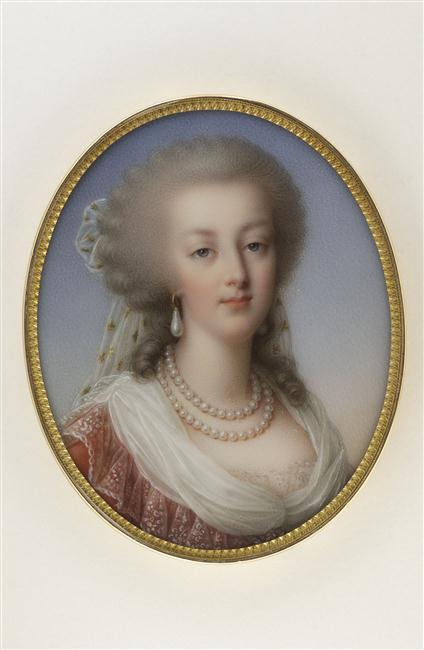
Jaquotot Miniature of Marie-Antoinette

Made in 1818 during the Restoration. From Vive la Reine. Share

Business in Brazil

From Ivanka Trump:
Brazil has been in the spotlight lately. The Olympics will be hosted there this summer and São Paulo is always high on the list of most-visited destinations for business travelers. Frequent fliers, it’s time for a primer on Brazilian business etiquette. Dress to impress, but don’t bring gifts—they may be seen as a bribe. Remember that the three-fingered “okay” symbol we make in the US is considered vulgar. Do a thumbs up instead. (Read more.)
Share

Wednesday, February 10, 2016

The George Orwell Roller-coaster

From The Telegraph:
George  Orwell' s admirers each seem to admire him for a different reason. Some revere his politics, though those change according to which passage in his depressingly short life one focuses upon. Others laud his abilities as a novelist. For some, he is a great essayist - my own favourite is his 1952 memoir of prep school, Such, Such Were the Joys. For others, the content of his writing is secondary to his command of the English language; he has a justified reputation as the finest writer of English prose of the last century.

There is much more to Orwell,  though, than comes under those headings. Another important aspect is considered in Robert Colls's superb analysis of his writings, George Orwell:  English Rebel. As the title suggests, Colls considers  Orwell' s relationship with his country: and what a roller-coaster ride it was. (Read more.)
Share

Tuesday, February 9, 2016

Mary I and the Wyatt Rebellion

From author Janet Wertman:
After assuming the throne in 1553, Mary I did what would have been expected from any queen: she searched for a husband so that she could produce an heir. Unfortunately for Mary, she chose Philip of Spain – which infuriated many in her country and led to an uprising. Led by Sir Thomas Wyatt (the son of the poet who wrote verse to Anne Boleyn) and several others, the rebels wanted to prevent the marriage to a foreign power…and place the Protestant Elizabeth on the throne. When news came that Wyatt’s troops were preparing to storm the city, Mary spoke to her people at Guildhall, exhorting them to bravely support her. It was a brilliant speech, one that led twenty thousand men to swarm to her side. Many believe that Elizabeth used it as the basis for her Armada speech…but that’s a story for another day. (Read more.)
Share

Monday, February 8, 2016

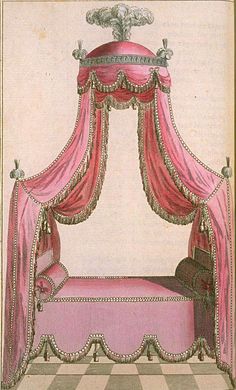
The Mysterious Quality of the Eighteenth Century

From The Paris Apartment:
There’s always been a mysterious quality to the 1700s, at least for me. How did these women come up with what is still considered the essence of chic right out of thin air? Of course it was not only women but I’m sure they were directing the men in terms of shapes, color and proportion of everything from fashion to furniture....There was a sort of whimsy, a playful frivolity and innocence that no other time before or since has captured. (Read more.)

Share