


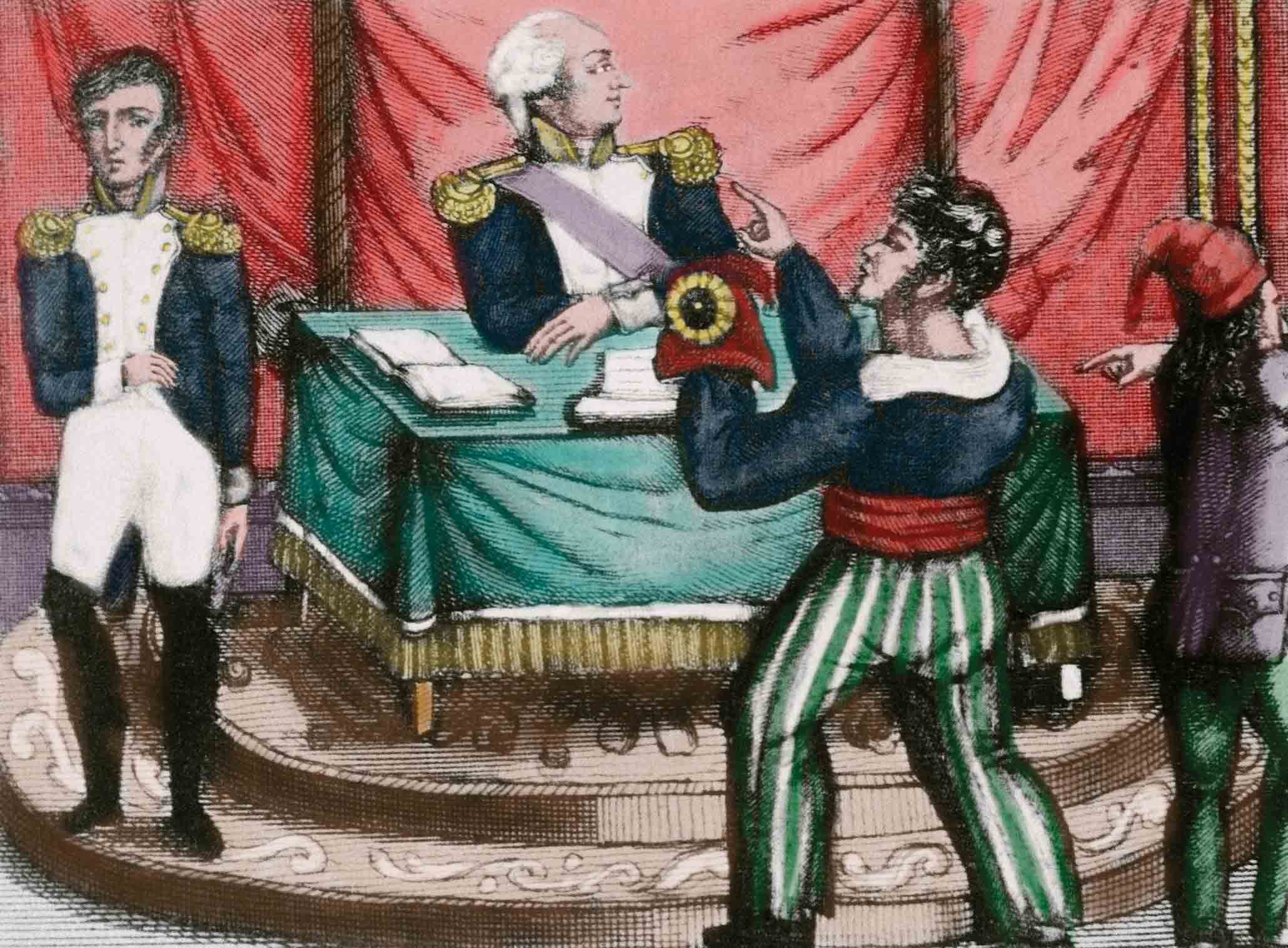
From David Bell at The Nation:
The history of modern selfhood, Wahrman argued, centers on the inescapable and ultimately unresolvable tension between a desire for uniqueness, accompanied by a belief in the power of self-transformation, and the recognition of how deeply we are shaped by our biology and social origins. The book was a virtuoso performance, but it too ultimately amounted to a history of the changing language in which selfhood was defined more than a study of the thing itself—of how people actually understood and experienced their “selves.”
New historians today are as well equipped to offer a creative new take on the subject as Lynn Hunt, who has had a long and distinguished career as a cultural historian of 18th-century Europe. This career took off in 1984 with her pathbreaking Politics, Culture, and Class in the French Revolution, a book that showed how the French invented a new political culture during the tumultuous years after 1789. Hunt followed this with brilliant ventures in what she dubbed “the new cultural history” and in the history of gender and sexuality, as well as a reading of the French Revolution through the lens of Freud’s theory of the “family romance,” a pioneering study of the invention of human rights, and much else.
In many of these works, even when dealing with the history of ideas, Hunt eschewed a lengthy engagement with canonical authors. Her Inventing Human Rights, for instance, despite its focus on the 18th century, was less interested in examining Locke, Montesquieu, or Rousseau than it was in exploring novel-reading in the period. As the practice spread, she contended, readers learned to identify emotionally with fictional characters who sometimes differed from them in class, sex, and national origin, and in the process underwent an education in empathy: “Novels made the point that all people are fundamentally similar because of their inner feelings.” It was only a step from there to the idea that all people deserved certain basic rights. (Read more.)









No comments:
Post a Comment