Showing posts with label Theater. Show all posts

Wednesday, September 16, 2026

Chloridia

 Image 

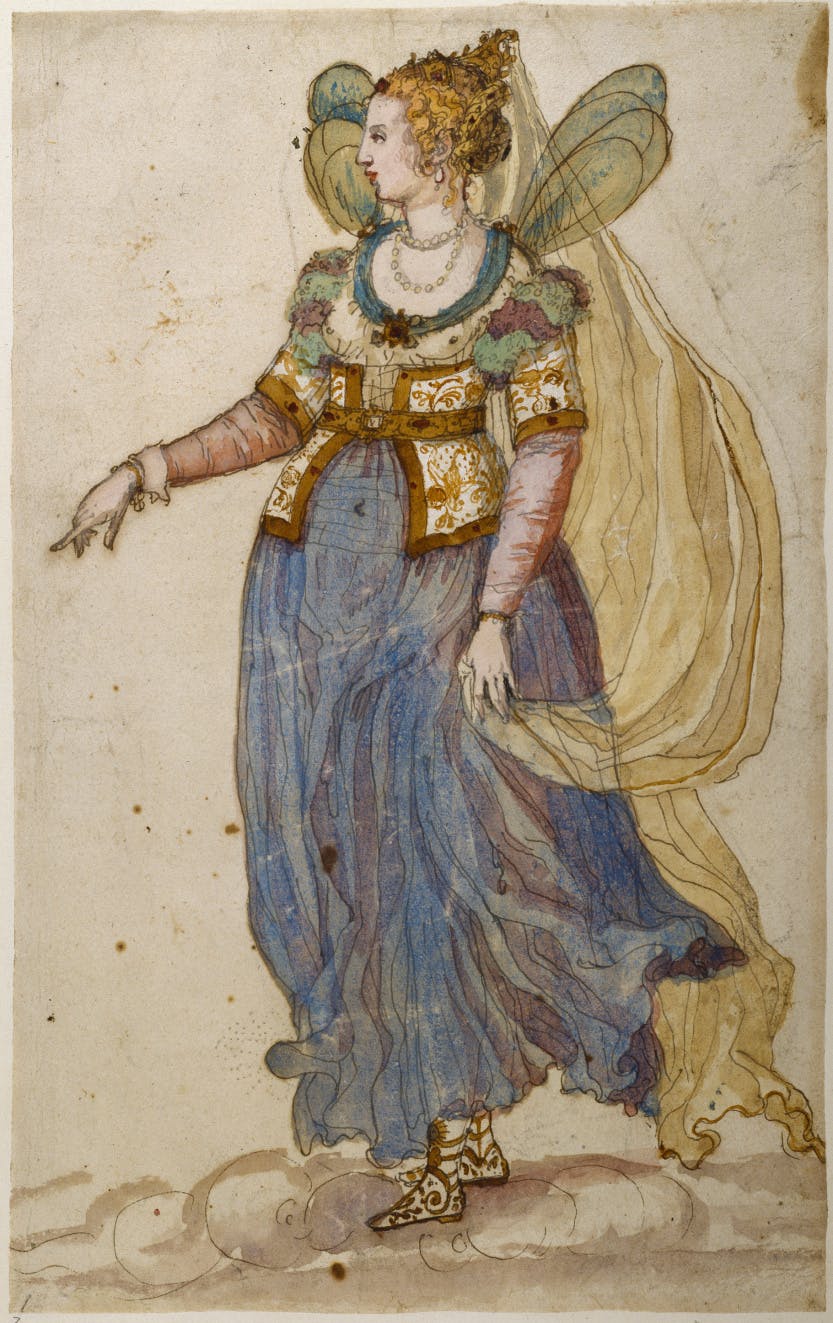
From Tony Riches: "Time travel back to the court of King Charles I with a glimpse of my research - the fascinating full text of Chloridia : rites to Chloris and her nymphs, a Shrovetide masque performed by the queen at Whitehall Palace." (Complete text HERE.)

Costume sketch for masque by Inigo Jones for Henrietta Maria

More on masques, HERE.

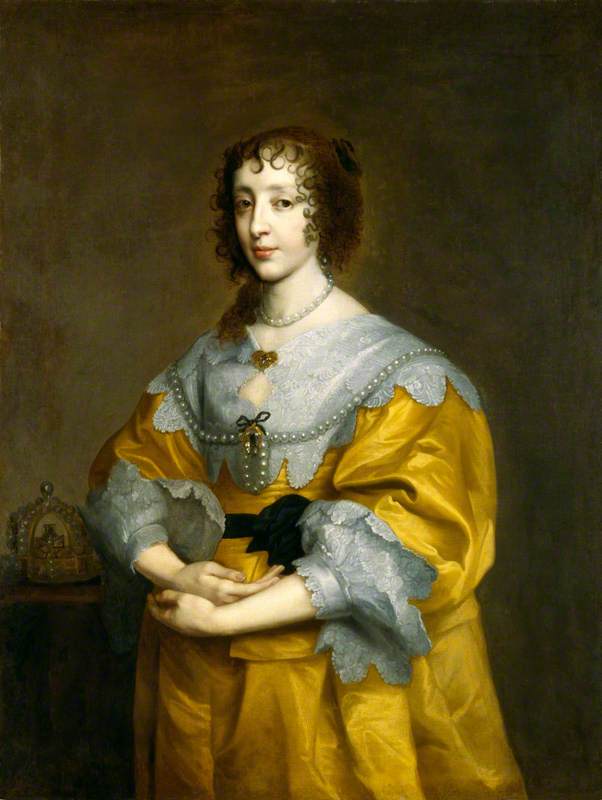
Queen Henrietta Maria


Share

Thursday, August 27, 2026

Elizabeth I and Cleopatra

 Elizabeth I is here portrayed among the goddesses
I think Cleopatra had more similarities with Mary Stuart than Elizabeth Tudor, but the article makes some interesting points. From the University College of London:
Perhaps second only to Tutankhamun in the who’s-who of Ancient Egypt Cleopatra VII is colloquially known as the Last Queen of Egypt. This is a very debatable epithet, whilst she is the last pharaoh of Egypt, she is also the last of Ptolemaic dynasty, a Greek family who ruled Egypt following Alexander’s conquest in 332 BC. Her death, 12th August 30 BC, is chronicled by Plutarch, mentioned by Virgil and exonerated by Horace[1],  she is so renowned her death is sometimes used to denote the end of the Hellenistic era.

Queen Elizabeth, who died 3 years prior to this play’s performance, is quite a similar character. With a slightly dubious claim to the throne, her death in 1603 heralded the end of the Tudor rule.  Following the establishment of the Church of England in the 1530’s and the sweeping massacres of Catholics and Protestants alike England had a Catholic Scottish King, James I. For years England had been at war with both Scots and Catholics, and now had that exact ilk on their throne.

Cleopatra faced similar regency problems;  she may have been an originally Greek Queen, but she was barring the advancing Roman Empire from Romanising her country and herself. Here the Queens differ, Elizabeth went on the offence, striking out at Catholic enemies, such as Spain with her famous victory in 1588. Cleopatra had nowhere near the allies nor resources to defeat her foe (indeed she lost her major naval incursion at Actium), so she had to make them [allies].

Allying herself to Caesar and then Mark Anthony she coerced armies and treaties out of them to protect her beloved Egypt. Plutarch, writing in the 1st century AD, describes Mark and Cleopatra’s first encounter as:
“Venus was come to revel with Bacchus for the good of Asia” (Lives III.XXVI.3)
Cleopatra is represented as the Roman goddess of love and founder of Rome, great praise for an Egyptian Queen who defied them. (Read more.)
Share

Wednesday, August 26, 2026

Court Masques

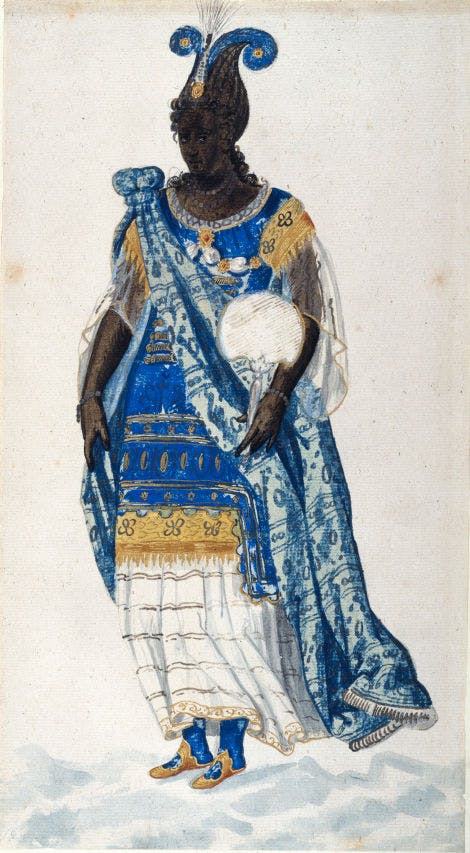
Costume design by Inigo Jones for Queen Anne's "Masque of Blackness"                                                                                                                     

Another design by Inigo Jones for one of Henrietta Maria's masques

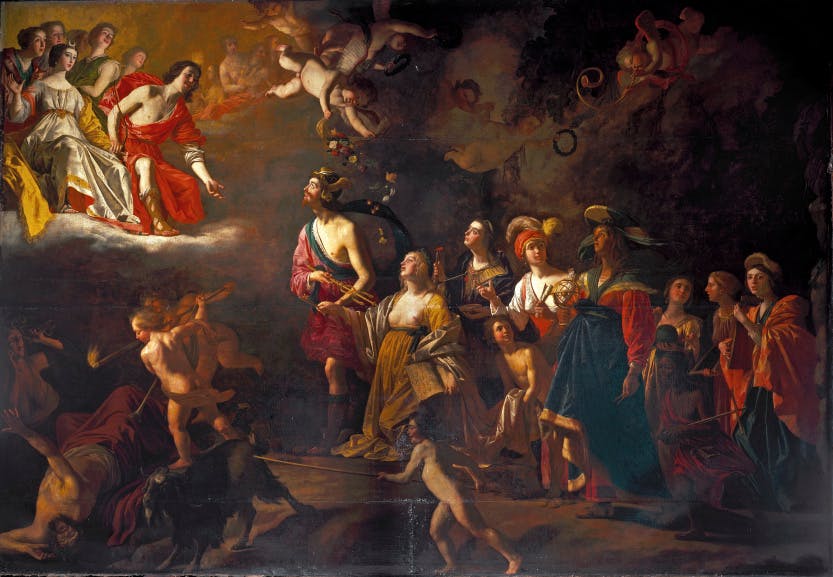
The court of Charles I in costume in a classical fantasy, Buckingham and his life Katherine are staring up at Charles I and Henrietta Maria.

Henrietta Maria of France

Masques were a big part of court life in both the English and French courts of the seventeenth century, especially during Shrovetide. From Historic Royal Palaces:

The masque began as an improvised performance at court in the 16th century during which courtiers and even royals would disguise themselves for play acting, fun and dancing. 

Masques were staged at Whitehall and Hampton Court Palaces for the Stuarts, with singing, acting, music, dialogue, amazing costume and above all, ‘special effects’ and moving scenery. By the early 1600s, under masque-loving monarchs James I and his queen Anne of Denmark, it became really elaborate. 

A Banqueting House was built specifically for the performance of masques at Whitehall Palace in 1608, but this burnt down in 1619, and was replaced by the present building, designed by Inigo Jones and completed in 1622. 

The Stuart Masques were mostly created by the brilliant partnership of playwright Ben Jonson and set and costume designer Inigo Jones. These temperamental artists quarrelled over whose contribution was more important, and after 1632, Jones worked with less argumentative (and less talented) poets.

The masques were a heady combination of opera, theatre, ballet and ball. They were always allegorical, featuring gods and goddesses from mythology and British history. Their purpose was to demonstrate the wisdom, and God-given right to rule, of the Stuart monarchs. There was always an ‘anti-masque’, featuring wild and outlandish dancers, who symbolised the chaos of a kingdom before the Stuarts. This was followed by the masque proper portraying the idealistic world of peace and harmony under divine kingship. At the end of the masque, the King would dance, and then the courtiers. Masques were performed for, rather than by, the court, although sometimes the queen and her ladies danced. 

A masque was also a place to see and be seen. They were incredibly expensive to produce; some of the most lavish were staged by affluent lawyers. But despite the cost, they weren’t always the most comfortable of shows to attend, for either actors or audiences. The crowded room was stifling hot, and smoke from the hundreds of torches must have been oppressive. Sometimes there was a long delay before the performance began. The chaplain to the Venetian Ambassador wrote of his experience after attending a masque in 1618: ‘So crowded and uncomfortable that had it not been for our curiosity we would have given up or expired … every box was filled notably with the most noble and richly arrayed ladies… During the two hours of waiting we had leisure to examine them again and again.’ (Read more.)

From Luminarium:

HAD Ben Jonson never lived, the English masque would scarcely need to be chronicled among dramatic forms. For despite the fact that mumming, disguising, and dancing in character and costume were pastimes in England quite as old, if not older, than the drama itself, it is to Jonson that we owe the infusion of dramatic spirit into these productions, together with the crystallization of their discordant elements into artistic unity and form. Generically, the masque is one of a numerous progeny, of more or less certain dramatic affiliation. Specifically, a masque is a setting, a lyric, scenic, and dramatic framework, so to speak, for a ball.1  It is made up of "a combination, in variable proportions, of speech, dance, and song;" and its "essential and invariable feature is the presence of a group of dancers . . . called masquers."2   These dancers — who range in number from eight to sixteen — are commonly noble and titled people of the court. They neither speak nor sing, nor is it usual to exact of them any difficult or unusual figures, poses, or dances. Their function is the creation of "an imposing show" by their gorgeous costumes and fine presence, enhanced by artistic grouping, and by the aids which decoration and scenic contrivance can lend to the united effect. On the other hand, the speech of the masque, whether of presentation or in dialogue, and the music, both vocal and instrumental, were from the first in the hands of the professional entertainer, and developed as other entertainments at court developed. The masque combined premeditated with unpremeditated parts. The first appearance of the masquers with their march from their "sieges" or seats of state in the scene, and their first dance — all designated the "entry" — was carefully arranged and rehearsed; so also was the return to the "sieges" or "going cut," and this preparation included sometimes the preceding dance. The "main," too, or principal dance, was commonly premeditated, as in Jonson Masque of Queens, where the masquers and their torchbearers formed in their gyrations the letters of the name of Prince Charles. Between the "main" and the "going out," two extemporal parts were interpolated, the "dance with the ladies" and the "revels," which last consisted of galliards, corantos, and la voltas. It was in the development of the "entry" and the "main" that the growth of the masque chiefly consisted. (Read more.)

From Dr. Lawrence Shafe:

There was an Italian tradition, particularly a Florentine tradition, called the intermezzi. These were entertainments designed to fill in the gap between plays. The key series was in 1589 when the Grand Duke got married. They were trying to recreate a Roman theatre with classical allegory in the form of an entertainment. Bernado Buontalenti was the architect engineer of these displays.

A 1600 Florentine drawing shows a mountain rising from a stage, at the top is Pegasus with Apollo and the Muses below and Poetry below them. Clouds float in with people in them and they have trees that sprout leaves. Light boxes were used containing multiple candles made brighter with mirrors and the theatres were not darkened as much as ours. This event was publicized across Europe and news came back to Henry, Prince of Wales. His friend John Harrington was in Florence and wrote back describing them.

The intermezzi increased the scale and the engineering (trap doors, revolving stages) and it was these the Stuart court wanted to emulate.

Ben Johnson and Inigo Jones were the great double act although they eventually fell out.

Caroline masques in England had a stage with a proscenium arch (first developed in the 16thC in Florence and picked up by Jones). The stage tilts at an angle and it has slots in the sides for scenery. In 1635 Inigo Jones a country scene for The Temple of Love. 1609 Jones, [at] The Masque of Queens for Anne of Denmark [made] a machine with a round arch doorway and a revolving section on top with seats. The machine was called machina versitilis.

Anne of Denmark was the prime mover to create these spectacular masques. She loved dancing and was the leading dancer. She singled out Ben Johnson but the ideas were unfortunately hers so they were all a bit thin. All the music and choreography has been lost, in fact the scenery was pulled down and destroyed as soon as the masque was over. They were modelled on the French ballet do corps where the dancers formed a complex pattern. James I never ever took part. (Read more.)


 HERE is the original program for the ballet danced by Henrietta Maria at the Louvre when Charles first saw her.

An article on the masques of Queen Henrietta Maria, HERE.

More on the stage props created by Inigo Jones, HERE.

My novel on Henrietta Maria, HERE.
Share

Monday, August 24, 2026

‘Mr Molière: A Brief History’

 From Jemahl Evans at Seventeenth-Century Lady:

Jean-Baptiste Poquelin (1622-1673) more commonly known as Molière, is a titan of world literature. The French Shakespeare, his influence on the development of early modern theatre, and his acerbic observations on the human condition in his work have fascinated and enthralled audiences for centuries. So great was his lasting influence on French literature that in 2025 Melvyn Bragg would restate the claim that French: ‘…is the language of Molière.’

Jean Baptiste was born into a well-to-do Parisian family in 1622. Christened ‘Le Nez’ (The Nose) by a maid, it remained a family nickname for the rest of his life. His father purchased the rank of Valet de chambre ordinaire et tapissier du Roi (Upholsterer to the King) in 1631 when the boy was just six. The title provided a steady income and conferred respectability on the upwardly mobile clan. After the death of his mother in 1632, Jean Baptiste was educated at the elite Collège de Clermont run by the Jesuit order (now the Lycée Louis-le-Grand). It is here that the young Parisian got his first taste of the theatre and actors. The Church would never forgive him.

The profession was not held in high regard in Seventeenth-Century France. Actors were publicly shamed as sinners, ran the risk of excommunication, and were forbidden from burial in consecrated ground. It was not the career path for a scion of a respectable bourgeoisie Parisian family. A decree by Louis XIII in 1641 stating that actors were ‘not to be considered worthy of blame nor prejudicial to their reputation’ did little to improve matters, even as the public flocked to theatrical performances. After completing his education, Jean Baptiste initially succeeded his father as Upholsterer to the King and started training as a lawyer. However, at the age of 21, he abandoned a respectable career for a life on the stage. His father and wider family were predictably appalled by the decision. (Read more.)


Share

Tuesday, August 18, 2026

The Remarkable Rise of Empress Theodora

 From Risto Gjorgjiev:

 Born around 500 AD in the vibrant city of Constantinople, Theodora’s early life was far from royal. Her father, Acacius, was a bear trainer for the city’s grand Hippodrome, a colossal stadium renowned for its chariot races and theatrical spectacles. After his untimely death, Theodora’s mother, a dancer and actress, found herself struggling to provide for her three daughters. To make ends meet, young Theodora was thrust into the world of entertainment, becoming an actress and dancer in the very Hippodrome her father had worked.

 The Hippodrome was not just a place of entertainment; it was the beating heart of Byzantine social life. Here, factions clashed, politics played out, and the mood of the populace was gauged. Theodora, with her keen observation, learned to read the crowd’s behavior, understanding their passions, grievances, and loyalties. This knowledge would later prove invaluable.

However, life in the limelight was not without its challenges. Theodora faced societal disdain due to her profession, which was often associated with promiscuity. Her travels across the Eastern Mediterranean exposed her to various cultures and experiences, including a tumultuous relationship with a Syrian official that left her stranded in North Africa.

In a twist of fate, Theodora’s return to Constantinople marked a new chapter in her life. Embracing Christianity, she left behind the world of entertainment and joined a community of devout women. It was during this period of reflection that destiny played its card: she caught the eye of Justinian, the nephew of the reigning emperor and the empire’s most eligible bachelor. (Read more.)

 The Mad Monarchist has a post about one of the most colorful women who ever lived, the Empress Theodora.

Together with her husband Empress Theodora oversaw the rebuilding of Constantinople into one of the most spectacular cities in history. She helped in the building of hospices, churches and refuges for the poor. She is also credited with influencing new laws to protect women, making rape and kidnapping capital offenses, no matter if the woman was noble or common born. Women could not be forced into the entertainment industry or prostitution and could not be put in prison for debts. Instead they were to be placed under the supervision of religious women to work off their debt. This was necessary because of the rape and abuse women often suffered in prison. She cracked down hard on prostitution, buying the freedom of many girls herself, meting out harsh punishment to their captors and setting up establishments to help them get back on their feet in legitimate ways. (Read more.)

Empress Theodora did much to protect women during her husband's reign. From The Collector:

The origins of women’s rights can be attributed to Empress Theodora. Probably her experience as a young woman marginalized by the institutional system of that time pushed her to work on the improvement of women’s rights in the Empire. She elaborated on The Corpus Juris Civilis, a series of juridical reforms included in Roman law, and laid the foundation for a framework for Western legal heritage for women’s rights, including the English Common Law, the American Constitution, and even contemporary international public law. Additionally, under Empress Theodora, rape became punishable by death. No matter their position or status, everyone present during the rape was affected by this rule, and the rapist’s property was handed over to the victim. (Read more.)

Share

Sunday, July 19, 2026

My Guest Post for Tony Riches


 My thanks to Tony for such a wonderful opportunity! From The Writing Desk:

Wife of the ill-fated Charles I, the colony named for her was intended to be a refuge for Roman Catholics, the Catholic religion being forbidden in the Three Kingdoms. In my room as a teenager there was a print of the Van Dyck portrait of Henrietta Maria, the original of which is in the National Gallery of Art in Washington, D.C. Called “Mary” by her subjects, the second Stuart queen of England peers down from the portrait with her black eyes, which contemporaries described as large, sparkling and beautiful. Her dark curls with auburn highlights contrast against the deep marine blue shimmer of a silk dress, with the salmon-pink bows and elaborate white cuffs and high starched collar. A wide-brimmed plumed black hat was of the type made famous by the cavaliers who later fought for her husband in the English Civil Wars. 

The white plumes are reminiscent of the one made famous by her father Henri IV of France, which he wore into battle so that his men could always find him. Like her father, Henrietta Maria was not afraid to stand out, remaining a devoted Catholic in a land where her faith was banned, becoming the number one lawbreaker, while also striving to be a traditionally obedient wife, as was expected. But the expectations placed upon her made her life a tightrope walk which almost broke her.

The life of Henrietta Maria of France (1609-1669) was turbulent from the beginning. Half-Bourbon and half-Medici, her father, the famous Henri IV, was assassinated when she was an infant. Brought up by her mother, the Queen Regent Marie de’ Medici, to be a devout Catholic, she also mastered ballet, singing, and acting, skills which she would use in masques to entertain the Bourbon Court and later the Stuart Court. At fifteen she was sent to marry Charles Stuart, grandson of Mary Queen of Scots, who had just succeeded his father James I to the throne of the Three Kingdoms. 

While Charles I never converted to Catholicism, as had been hoped by many, his relationship with his wife was profoundly spiritual, enhancing the intense physical passion between them. After the initial clashing of cultures and personalities, theirs became one of the most devoted in the history of royal marriages, and was blessed with nine children. During the troubles which led to the English Civil War, Henrietta Maria became a liability to Charles because of her religion and her meddling, both perceived and actual. But her courage and her devotion fuelled the royalist cause, as she sold her jewels to raise money for arms and led soldiers to aid her husband. 

The challenges the royal couple faced in their early years of marriage are told in Book 1 of the Henrietta of France trilogy, My Queen, My Love. Book 2 will deal with the Civil Wars and Book 3 will be about the Queen’s widowhood as well as the adventures of her surviving children.

My view of historical fiction is that the author attempts to paint a portrait of the past with words. A historical novel is like a portrait come to life, allowing the reader to step into the past. Authenticity is vital, and that comes only from thorough research. While it is not always possible to visit the historical places that play a part in the novel, it helps. 

The internet has been a gift to historical fiction writers, making accessible old documents, manuscripts, pictures and books that one once had to travel far to find. I found the original program of the 1623 masque performed by Anne of Austria and Henrietta of France at the Louvre during Shrovetide. It was at the rehearsal of the masque that Charles Stuart first saw Henrietta during his incognito visit to Paris. Such primary sources, like the Queen’s letters, are indispensable for creating a living portrait.

So much of what people think they know about Henrietta Maria has been filtered secondhand through multiple writers, some of whom view her as a frothy but tiresome fanatic who led her husband into ruin. This is often accompanied by the perception of the Queen as a dangerous seductress, who used her French wiles in the boudoir to subject Charles to her will. 

And others decide that Charles was not enough for her but she had lovers such as Henry Jermyn who actually told her what to do, while fathering her children. Just as her enemies called her the “popish brat of France,” she has been portrayed erroneously either as a sex fiend soaked with crazed religiosity, or as a shy, pious pawn. (Read more.)

Novel available HERE.

Share

Monday, June 1, 2026

The Ancient Philosophy of Brutality in Euripides’ Cyclops

 From The Collector:

Euripides’ Cyclops is the only satyr play that has survived intact. We do not know anything about the performance history of this play, or why or even when exactly it was written. The plot borrows from well-known versions of Odysseus’ encounter with the cyclops Polyphemus. The plot is simple and brutal, but with comic elements provided by Silenus and the satyrs. The play is perhaps easy to dismiss, but Euripides raises some interesting questions about power and brutality.

The three main characters in the play are Polyphemus, a cyclops; Odysseus, the cunning Homeric hero; and Silenus, the former companion and tutor of Dionysus. There are also a number of satyrs, described as Silenus’ sons, that act as the chorus. Odysseus’ shipwrecked crew is present, but none have speaking roles and were probably not depicted on stage.

Silenus has a few guises in Greek mythology. Sometimes he is depicted as a drunken man and other times as a satyr-like creature. In Euripides’ Cyclops, he is depicted as an old man. In the play, Silenus is toadying, coarse, sly, and greedy. He is there for comic effect, as are his sons, the satyrs. Odysseus is the same character we see in the Odyssey. He uses his cunning to outsmart the cyclops and escape. However, in Euripides’ play, we do not see all of the tricks Odysseus uses in Homer’s story.

Polyphemus is a cyclops. He lives on an island with his cyclops brothers. They are referenced but not seen. Cyclopes are solitary creatures and self-sufficient. Polyphemus lives off the sheep, which he forces the satyrs to look after. They were captured and enslaved after becoming shipwrecked on the island. Polyphemus is brutish but not unintelligent. He believes himself to be superior to the gods by virtue of his brute strength. (Read more.)


Share

Thursday, May 21, 2026

Headpiece Renaissance

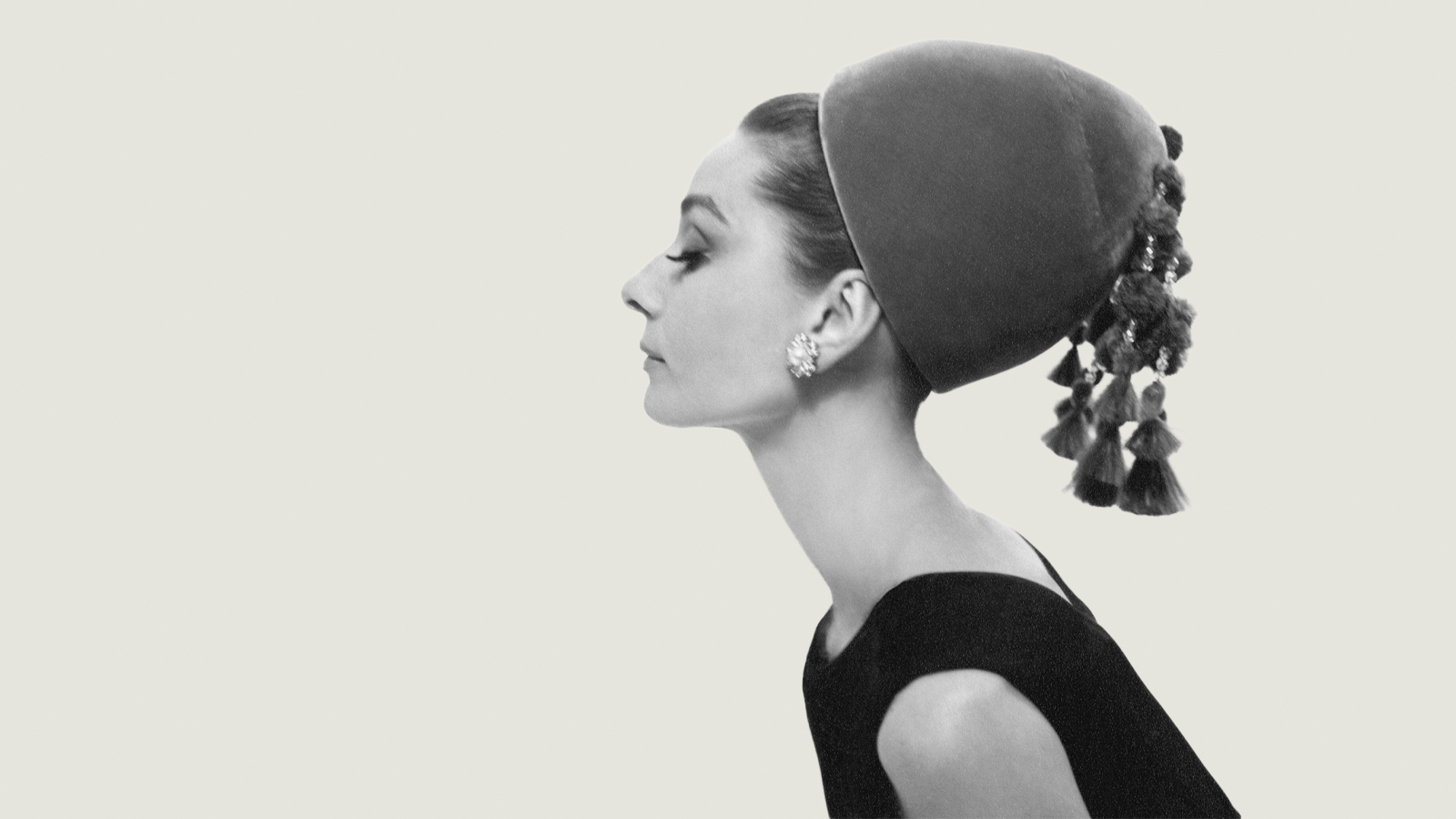
 Audrey Hepburn in profile 

From Country Life:

Headdresses have been making, well, headline news, thanks in part to one of the UK’s most famous wearers of headpieces, Isabella Blow, whose biopic The Queen of Fashion is due out this year.

Issy, as she was known, saw them as not merely a fashion statement, but as an extension of her identity, famously saying: ‘I don’t use a hat as a prop. I use it as part of me.’

Their renaissance has also been fuelled by Instagram and a flurry of lavish country-house celebrations. At a party at Cornbury Park, Oxfordshire, home of the Howden family, headpieces were as central to the spectacle as the setting itself.

For the Narnia-themed event, the insurance magnate David Howden wore a spectacular Aslan-inspired lion headdress commissioned from the Canadian costume designer Maryam of Eastern Wind Studio by his wife, Fiona, who has long been a passionate hat collector and wearer of headpieces.

She sees them as ‘an opportunity to dress up as a character and add glamour, fun and theatre to events’. Her hat collection, sourced from street stalls in Venice, Italy, together with commissioned pieces, ‘makes great dressing-up material for my girlfriends and daughters’ — and for Royal Ascot, which David's company sponsors. Both David and Fiona were in the Royal Procession last year.

Hats and headpieces have long been regarded as little pieces of theatre, as well as signifiers of status in country-house circles. They acted as a kind of visual shorthand, announcing style, self-assurance and, occasionally, the scale of one’s estate. (Read more.)


Hat etiquette (a snob's guide), HERE.

Share

Friday, May 1, 2026

Shakespeare’s Lost London Home

 From Mental Floss:

History never truly disappears in London. It lingers in forgotten corners and cobblestone crevices until rediscovered, sometimes in unexpectedly poetic ways. For centuries, scholars knew that William Shakespeare had owned property in the city, yet its exact location remained unknown, existing as more of a rumor than an actual record. A recent deep dive into the archives uncovered an overlooked map that transformed four centuries of speculation into fact. Instead of finding a newly built structure or sorting through debris, the discovery revived a piece of the past that had presumably been lost forever. Let's examine Shakespeare's personal life, property, and potential revelations about his later years.

Though his name is synonymous with London's theatrical reputation, Shakespeare's personal life remained rooted in Stratford-upon-Avon. He was born there in 1564 and maintained strong ties to the town throughout his life, even as his career flourished. His wife and children stayed behind while he spent extended periods in London, working as both a playwright and an actor. 

By the late 1500s, Shakespeare had become a familiar presence in the entertainment world, collaborating with fellow performers and writing plays for Lord Chamberlain’s Men. Despite this, he never fully relocated his household to London. Instead, his life traced its arc across two places: one a family home, and the other a stage. (Read more.)

Share

Friday, March 6, 2026

Hamnet (2025)

‘Hamnet’ | Anatomy of a Scene 

Hamnet - Upstate Films, Ltd.

  From The Catholic Thing:

Hamnet begins with the meeting and mating of William Shakespeare and Anne Hathaway, called Agnes in the book and film, because her father’s will refers to her by that name. O’Farrell, who came across Richard Hathaway’s will, sees “Agnes” as a kind of revelation about the way, historically, the fame of fathers, sons, and husbands has subsumed female identities.

There’s truth in that, although probably not in this case. In O’Farrell’s novel, the playwright’s surname never appears. He’s just “Will.” So, in a fair exchange for “history’s” marginalization of Anne Hathaway, Farrell and Zhao place William Shakespeare in the margins of the book and the film. And, twee as I think that is, it doesn’t diminish the movie’s power. Besides, we know perfectly well who’s wooing Agnes.

Hamnet moves slowly through their courtship: a kind of midsummer-night’s-dream of wonder in what’s probably the Forest of Arden. Agnes is an almost pagan figure, gathering medicinal plants and cavorting with her falcon. Is she a witch? Will, his father being a glover, presents her with a hawking gauntlet. He tells her the story of the ill-fated love between Orpheus and Eurydice. Will and Agnes have sexual intercourse. They marry and have three children. By and by, Will leaves for London.

At the heart of Hamnet, of course, is the boy, Hamnet, the Shakespeares’ only son, born with his twin sister, Judith, in 1585. (Their oldest, Susanna, had come two years earlier.) The real Hamnet would die of bubonic plague at age 11, and is buried (as are his father and mother) at the Church of the Holy Trinity in Stratford-upon-Avon.

The loss of a child is devastating. It was even in the 16th century when infant and childhood deaths were commonplace. The film does not explicitly suggest that Will retreated to London out of grief, but it seems that way, especially because we are given no hint that this young, grieving father will dominate the literature of the English-speaking world as no one ever had, or has since.

Perhaps his success, his fortune, and his work don’t justify “abandonment.” But, perhaps, there was no abandonment.

After all, Agnes was no poor child. When they married, Will was 18, and she was 26. We don’t know when Shakespeare left Warwickshire for London, but it was certainly after the births of the twins and may have been after Hamnet’s death. Anne would then have been in her early to mid 30s. (Read more.)

Share

Thursday, February 12, 2026

Marie-Antoinette and Music

File:Antoinette at the spinet.jpg

From Royal Central:
Whilst musical talent in the eighteenth century was judged to be an appropriate feminine accomplishment, Marie Antoinette’s personal relationship with music was a special one, which reached far beyond mere natural inclination. Music proved to be in many ways, perpetually present, like a main character in her life story, giving parallel to key events or lending them at least, poignant expression. Her love and patronage of the music of the composer Christoph Willibald Glück, whose works she did much to promote in France, reaches back even further than Marie Antoinette’s birth, because the composer’s official inauguration in the role of composer of “theatrical and chamber music” took place in 1755 at a court ball at the summer palace of Laxenburg, when her mother, Maria Theresia, was roughly three months pregnant with her, the Empress’s fifteenth child.

When Archduchess Maria Antonia (“Antoine”) of Austria, the future Marie Antoinette was recorded as singing a French song as early as three-years-old, for the name day of her father, the Holy Roman Emperor Franz I, in 1759. She also met the young Wolfgang Amadeus Mozart, who gave his first concert at Schönbrunn Palace, the magnificent Habsburg summer residence on the outskirts of Vienna, in 1762, in the presence of the Empress and the Imperial Family, with the boy prodigy from Salzburg performing on the harpsichord. As Austrian Archduchess, Marie Antoinette’s young love of music was expressed in the painting of her at the spinet by Franz Xaver Wagenschön, a delightful image now part of the Kunsthistorisches Museum collections. The art is arresting, showing Marie Antoinette poised to turn the pages of her music, with one hand delicately resting on the keys. She is dressed in a day dress of blue satin, trimmed with fur, possibly of sable. It is proof, in any was needed, of her early commitment to what would be, a lifelong relationship. (Read more.)

Share

Sunday, January 18, 2026

Veni, Vidi, Dixi

 From Spencer Klavan at The Claremont Review of Books:

Gallic War is a collection of field reports on these achievements, written with the general voting public in mind. It would have had the effect of transferring to the folks back home some of the enthusiasm that Caesar inspired in his soldiers. When he delegated command to senior officers, he fleshed out his own narrative with their notes—the last book, the eighth, was written entirely by one of Caesar’s high-ranking subordinates, Aulus Hirtius, to clear up some final details after Caesar’s own assassination. The whole thing is vivid with color commentary from the barracks: jokes the men told, slang terms they came up with. Soldiers in every time and place have a habit of christening their weaponry: British privates called their muskets “Brown Besses.” The pilots over Hiroshima and Nagasaki learned from their superiors to call their bombs “Fat Man” and “Little Boy.” In much the same way, Caesar’s men dug spike-filled booby traps outside their siegeworks and called them “lilies,” because they looked like deadly flowers. It’s often said that Gallic War is written in the third person, since Caesar so often refers to himself as “he,” not “I”: “at first Caesar decided to refrain from battle.” But the true grammar of the book is in the first-person plural: “our army,” “our province,” “our men stood armed and ready to attack.” The main character, the hero of the story, is us: the Roman army, of which Caesar presents himself (impersonally, but not at all impartially) as the consummate representative. It is a master class in building esprit de corps.

The Roman public had never seen anything like it. They voted to hold festival after festival of thanksgiving in Caesar’s honor. These were the achievements that made him a hero in the eyes of his men and a threat, in the eyes of his enemies, to the already wobbly balance of power in the republic. Plutarch writes of Caesar that he “wrapped his army around him like a cloak” to make himself unstoppable: that was the kind of unwavering allegiance he won from his soldiers in Gaul. The popular support inspired by that campaign made it possible for him, just a few years later in 49, to step across the Rubicon a legion at his back. In the wake of that cataclysmic event, Shakespeare imagined the assassin Cassius asking his co-conspirator Brutus, “Upon what meat doth this our Caesar feed / That he is grown so great?” The answer is in Gallic War. It is an astonishing book about the making of a world-historic man. (Read more.)

Share

Friday, December 26, 2025

How Shakespeare Helped Shape Christmas As We Know It Today

From Daniel McCarthy at The New York Post:

“Hamlet” isn’t altogether a Christmas play, but Christmas is a conspicuous part of it. And there is good reason to think that “Hamlet” was much on the minds of two authors who shaped modern conceptions of Christmas in the 19th century. Clement Clarke Moore’s 1823 poem “A Visit from St. Nicholas” (“’Twas the night before Christmas. . .”) includes the charming line “Not a creature was stirring, not even a mouse” — which echoes the guard at Elsinore who reports “Not a mouse stirring.” Twenty years later in “A Christmas Carol,” Charles Dickens would refer to Hamlet’s ghost in his own tale of yuletide hauntings.

In fact, Dickens observes the rule Marcellus set down in “Hamlet”: The ghosts are gone, their work accomplished, by the dawn of Christmas Day. There’s a faint reminder of “Hamlet” in an earlier Dickens tale set at Christmas as well. As in “Hamlet,” an impudent gravedigger features in a Christmas episode of “The Pickwick Papers,” “The Story of the Goblins Who Stole a Sexton.” Curiously, the goblin who first accosts the gravedigger has a catchphrase — “Ho! Ho! Ho!” — now familiar with a very different Christmas character. Moore and Dickens knew their Shakespeare, and when they set out to create new stories for the season, they didn’t forget the precedents the Bard had provided, few though they were.

“A sad tale’s best for winter: I have one of sprites and goblins,” says Mamillius in “The Winter’s Tale.” In Shakespeare’s day, sprites and goblins — and ghosts — were seasonally appropriate before Christmas. There’s debate about whether Shakespeare invented the “Marcellus rule” that banned such beings from Christmas Day onward, through Twelfth Night on the eve of Epiphany. Yet if there were no ghosts, there were other kinds of spirits. The “Twelve Days of Christmas” were a time of revelry — drinking, singing, putting on plays, and merriment — when not Santa Claus but a “Lord of Misrule” was the mascot of the season.

In Shakespeare’s age Puritans, much like Hamlet, were scandalized by bibulous customs like the wassail. “Hamlet” reminds us that our Christmas troubles and soul-searching are not altogether new. Shakespeare, too, had to ask whether his country had lost its values: Was it Christian or pagan, Catholic or Protestant, stoically philosophical or, like Hamlet in his agony, nihilistic and despairingly materialist? (Read more.)

Share

Saturday, November 22, 2025

The Imperial Family at the Opera

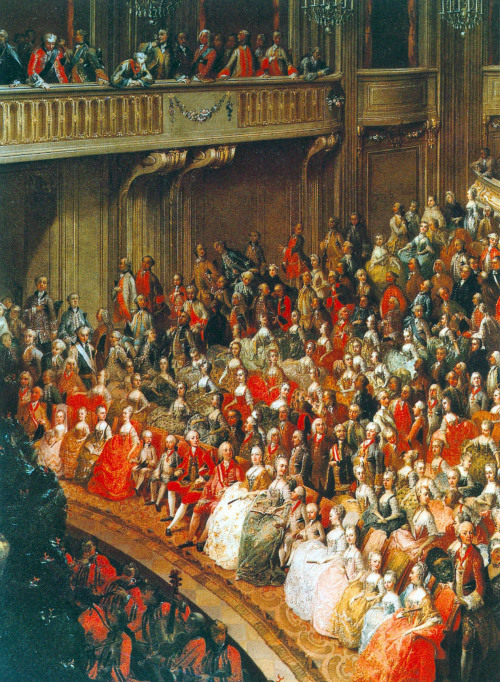
Emperor Francis Stephen and Empress Maria Theresa at the opera with all of their children. Marie-Antoinette is the smallest girl in the blue dress. (Via Treasure for your Pleasure.) Share

Wednesday, October 22, 2025

Happily Never After

 From Of Home and Womanhood:

When Sex and the City first aired, it was marketed as revolutionary, four women, unapologetically single, talking about sex like men. It was supposed to be the end of repression, the dawn of honesty. Finally women being liberated to do and become exactly whoever they wanted to be, finally women were free to become truly happy.

**Spoiler. It didn’t work.**

It wasn’t a story about women finding freedom. It was a story about women mistaking disconnection for independence, while trying to convince themselves it’s empowerment.

The show baptized feminism’s third act: the one where the revolution no longer had a goal, only momentum. Where “liberation” meant endless autonomy, endless choice, endless self-focus. The finish line had finally been reached. Feminism had conquered and women finally could be themselves. It took the feminist script reject tradition, reject dependence, reject limits, and tried to convince all of us how this meant a life of luxury and accomplishments.

Carrie Bradshaw became the ideal post-feminist woman: romantic but cynical, independent, sexually liberated but spiritually lost. Her life was a carousel of pursuit without arrival, intimacy without union, reflection without growth. She wasn’t building anything; she was collecting experiences. She was feminism’s perfect consumer, always searching, never satisfied. (Read more.)

Share

Monday, September 1, 2025

Sets for 'The Grand Finale'

 Image may contain Hugh Bonneville Michelle Dockery Person Clothing Hat Accessories Formal Wear Tie and Adult 

Image may contain Architecture Building Housing House and Manor

From Architectural Digest:

Few franchises have dazzled interior design and architecture lovers in the way that Downton Abbey has. Perhaps the only character more camera-worthy than the upstairs-downstairs assemblage in the British historical drama was the abbey itself, played beautifully by Grade 1 listed country house Highclere Castle. Over the course of six seasons and two movies, fans began to expect that level of elegance and verisimilitude in all of Downton’s sets: a tall order for longtime series production designer Donal Woods.

And now it all comes to a fantastic end with Downton Abbey: The Grand Finale, the third film and the official finale of the franchise, which premieres in theaters on September 12. While many of the series’ beloved filming locations make an appearance (you can’t have Downton without Downton, of course), there are three new sets that AD can reveal for the first time here. We also enlisted the expert commentary of Woods and director Simon Curtis to share more on the intricacies of scouting and filming places to stand in for 1930s England. (Read more.)


From Tatler:

After 15 years of upstairs-downstairs drama, aristocratic affairs, and some of the most beautiful country houses to grace the silver screen, the Downton Abbey finale is nigh. As the Crawleys return for one last goodbye in Downton Abbey: The Grand Finale , fans have been making their pilgrimages to Newbury, to walk the same staircase Lady Mary did on her wedding day, sit at Jackdaws Castle where Lady Edith found herself often and take in the state dining room where the late Dame Maggie Smith delivered many of Dowager Countess' iconic lines.

But Highclere Castle isn’t the only glorious location ITV used to help portray England’s roaring twenties, from Argyll to Buckinghamshire, Downton Abbey watches like a who’s who of the country’s finest stately homes. The show’s location manager, Mark Ellis, gave the BBC the inside scoop on many of the historic homes that formed the heart of Downton, saying, ‘Goodwood, Highclere, Alnwick… the first time we were in Alnwick [Castle] and saw that dining room, my word, it just looked beautiful! The rich colours, the costumes. I miss it.’

Now, to celebrate the release of Downton Abbey: The Grand Finale and October cover star Elizabeth McGovern, Tatler takes a look at some of the greatest locations. (Read more.)

Image may contain Animal Lion Mammal Wildlife Architecture Building Castle Fortress Grass and Plant

Share

Sunday, August 3, 2025

The Death of Late-Night Comedy

 From Direst Line:

Colbert didn’t just lean political—he built his entire post-Report career around Trump-bashing monologues, finger-wagging commentary, and curated guests from one end of the political spectrum. Letterman, once the disheveled king of sarcasm, reinvented himself as an earnest, beard-stroking sage preaching progressive orthodoxy from a Netflix pulpit. Kimmel cried on air about healthcare. Fallon got canceled by the left for… tousling Trump’s hair.

What’s missing? Comedy.

As CBS reportedly shutters The Late Show with Colbert, it’s worth asking—what killed late-night TV? It wasn’t streaming. It wasn’t TikTok. It was politics. Or more precisely, it was the arrogance of hosts who thought half the country didn’t deserve to laugh.

In a recent interview on YouTube with Donny Most—forever Ralph Malph from Happy Days—he recalled a time when television brought people together. Whether it was the warm family humor of The Carol Burnett Show or the gentle satire of Carson’s monologues, the point wasn’t to divide but to connect. Donny noted how Happy Days became a hit only after switching to live-audience tapings—because real people crave real reactions, not ideological applause lines.

Carson knew that. That’s why he didn’t let his personal views dominate the airwaves. It wasn’t cowardice—it was class.

That era is long gone. Today’s late-night is a parody of itself—less Tonight Show, more DNC infomercial. And America has tuned out. Viewership has plummeted. Trust has evaporated. Laughter, once shared, now feels like a partisan badge.

But the good news? Audiences are hungry for something real. Something spontaneous. Something funny. (Read more.)
Share

Sunday, July 6, 2025

The Lost Oz

 From Woman's World:

The Wizard of Oz follows a young girl named Dorothy Gale who gets transported from Kansas to the magical land of Oz via a cyclone. While there, she meets a talking scarecrow, a tin man and a lion who join her on her journey to defeat the Wicked Witch of the West, as demanded by the all-powerful Wizard of Oz, who claims to have an item that can get Dorothy home. 

[...]

As mentioned above, there are several different adaptations of The Wizard of Oz that hit theaters long before Garland’s film. They were produced back in the 1910s and 1920s, when black and white silent movies were all the rage in Hollywood. 

These films came after the widely popular 1903 Broadway stage production, which was written by Baum and scored by Paul Tietjens. It had a total of 293 shows and has been revived several times since then, including in the form of the 1910 silent film The Wonderful Wizard of Oz. (Read more.)


Share

Thursday, July 3, 2025

Stumbling Upon Words from Maeterlinck in a Book about Chesterton

 From Stephanie Mann:

As I was reading a selection ("Destiny's Pursuit") from David Fagerberg's Chesterton is Everywhere (which I bought at Eighth Day Books of course) I was surprised to see a quotation from the Symbolist playwright Maurice Maeterlinck about happiness.(Well, he did write The Blue Bird about happiness but that's not what I think of first when I see the name Maeterlinck.)

Fagerberg is discussing Chesterton and happiness and suggests that "happiness is not so passive; perhaps happiness even has the power to influence destiny." Then he suggests that Maeterlinck offers an insight: "that wise persons know in advance" . . .

how events will be received in their soul. The event itself is pure water that flows from the pitcher of fate, and seldom has it either savour or perfume or color. (from Wisdom and Destiny by Maeterlinck)

Maeterlinck cites the examples of Oedipus and Hamlet: they are not wise enough to respond well to events and yet remain happy: other wiser characters could, but "Hamlet is unhappy because he moves in unnatural darkness." (p. 24)

Immediately I thought one of the unhappiest characters on any stage: Maeterlinck's Mélisande in his play Pelléas et Mélisande and in Debussy's opera of the same name. Her key phrase is some variation on "I am not happy":

Melisande
Je suis...
Je suis malade ici...
(Read more.)

Share

Monday, May 19, 2025

Petit Théâtre de la Reine


From Tatler:

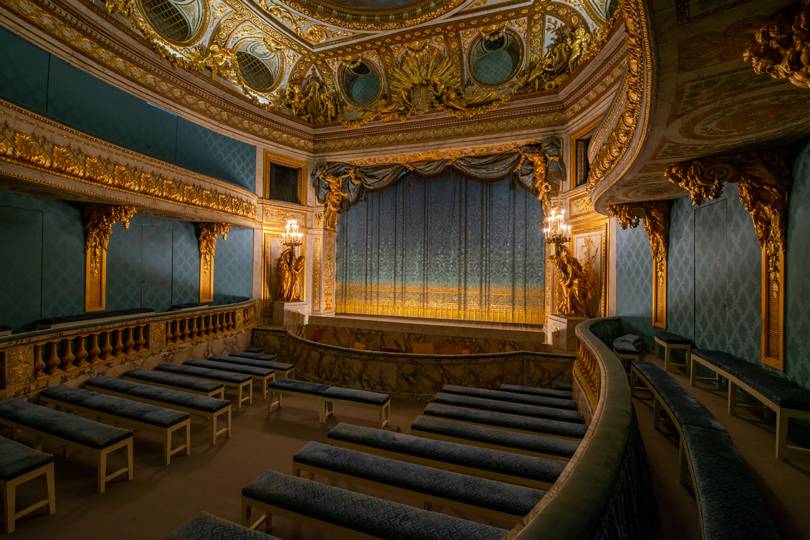
Before the French Revolution that ultimately led to her untimely death, Marie Antoinette was a great lover of the dramatic arts. After her coronation in 1774, her husband, King Louis XVI, put the royal in charge of organising entertainment for the court and, it is said, the last Queen of France regularly put on plays in the gallery of the Grand Trianon and the orangery of the Petit Trianon.

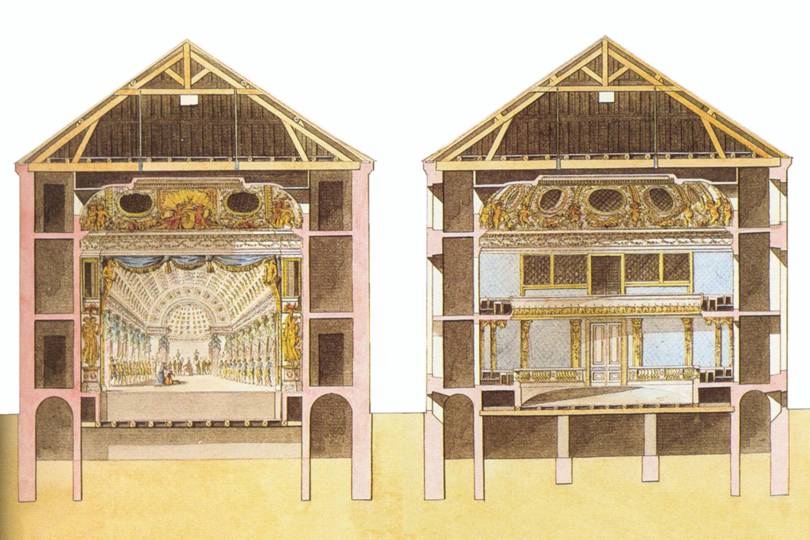
Four years into her reign, however, she grew tired of the temporary stages that were knocked together for her performances. So, in 1778, Marie Antoinette commissioned architect Richard Mique to build her a real theatre.

Hidden away amidst the foliage of the Château de Versailles gardens, the Petit Théâtre de la Reine was completed in spring of 1780, and quickly became Marie Antoinette’s private refuge away from court protocol. It was here, in 1785, that she gave her own last performance on stage, as Rosine in The Barber of Seville in front of its author, Beaumarchais.

At the time of the Revolution, the theatre was deemed worthless and lay empty until Napoleon Bonaparte took possession of it in 1809, adding to its interior a neo-Roman imperial box in the shape of a military tent and new wallpaper adorned with his emblematic bees. Then came Louis-Philippe, who gave the theatre a new 19th-century red velvet look complete with crystal chandeliers, then Napoleon III and the Second Empire. Sadly, by the end of the Great War the theatre had fallen into a state of disrepair.

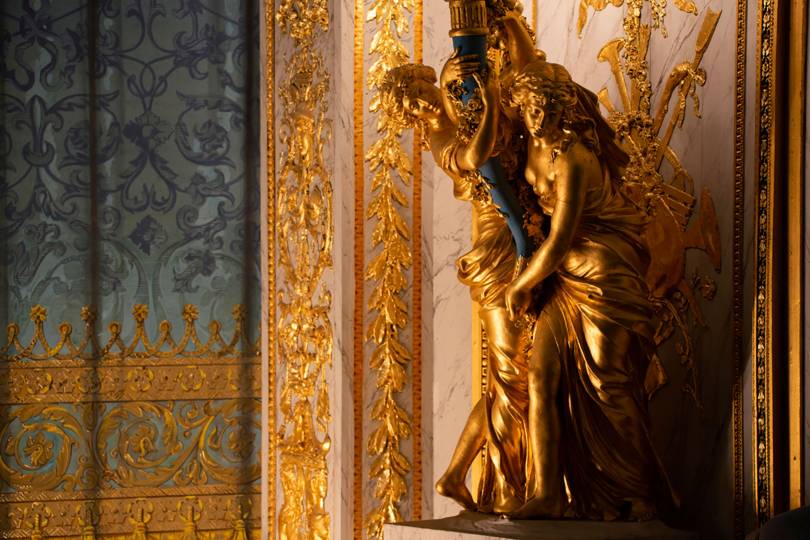
Today, a conservation team at Versailles are working hard to bring the historical gem back to life through painstaking conservation. With visitors kept away by the pandemic, the team have already finished the restoration of the stage curtain, hand-stitching the striking cobalt-blue linen together using the original techniques.

Now, the team, led by chief curator of heritage at Versailles, Raphaël Masson, who describes the theatre as ‘a miracle of conservation’, are using the château’s original inventory to rebuild other parts that have been lost over the years. This includes machinery that causes a tree to rise from a trapdoor and three sets – a simple interior, a forest and a temple of Minerva – the latter being the oldest intact decor in the world, dating back to 1754 – ‘our own Mona Lisa,’ said Masson. (Read more.)

More HERE.

Share