Showing posts with label Ballet. Show all posts

Wednesday, February 4, 2026

Petrushka


Stravinky's 0riginal costume design for Petrushka


Original 1911 set design for Petrushka

When I was a child my grandmother gave us a record with stories from famous ballets, including musical excerpts from Petrushka. We were entranced by it; my sister and I tried dancing to Petrushka when we were very small; from what I have read since, we were not alone in being swept up into the drama. Composed by Igor Stravinsky (1882-1971) for Sergei Diaghilev's Ballets Russes, Petrushka debuted in 1911 at the Théâtre du Chatelet in Paris. The mysterious, magical tale of love and revenge unfolds at a Russian Shrovetide fair, centering around a puppet called "Petrushka," who in Pinocchio-style comes to life. To summarize:
Petrushka ("Petey") is the story of three puppets - the forlorn and homely Petrushka, a beautiful ballerina, and a mysterious and gaudily dressed Moor - brought to life by their showman master at a Russian Shrovetide fair. Petrushka tries to express his love for the ballerina, but she has eyes only for the Moor. The frustrated Petrushka is subdued by the scimitar-wielding Moor, but the puppet's ghost has the last laugh by thumbing his nose at everyone. All this takes place within the context of the fair, full of dances by nannies, coachmen, masqueraders, crowds and even a dancing bear.
In Russian culture, the puppet character of "Petrushka" was rather like "Punch," a rude, comic Everyman, the butt of every joke. Stravinsky endows him with human feelings; as Petrushka attempts to rise from his baseness, his strivings lead to his destruction, only to gain immortality in the end.
Stravinsky's music captures the carnival atmosphere of Maslenitsa, the Russian version of Mardi Gras, with all its color and passion. As one commentator describes:
Subject and music appear to reflect the Russian nature. Gogol and Mussorgsky are there. Everything is reflected in the score with a sure and reckless mastery —the movement and tumult of the crowd; the gait and aspect of each leading figure; and the grotesque agonies of the helpless one. A shriek of...trumpets in different keys is the motto of Petrouchka's protest. The composition is permeated with Russian folk-melodies and also street songs marvelously treated.
"Fair"
In his day, Stravinsky was considered avant-garde since his music was a bit different from what had gone before. His work was part of the explosion of creativity that brightened the last days of imperial Russia, called the "Silver Age." On one level, Petrushka is an echo of a time that is gone; on another, it conveys the spirit of the Russian people which Communism was not able to destroy. I enjoy listening to Petrushka more than ever, especially during Shrovetide. 

Listen HERE.

Share

Saturday, December 27, 2025

The Man Behind 'The Nutcracker'

 From The Conversation:

So how does The Nutcracker and the Mouse King fit into this strange body of work?

Hoffmann’s original tale is no innocent sugarcoated fantasy. The story was written for his friend Hitzig’s children, Marie and Fritz. It is a veiled critique of the strictures Hitzig and his social class placed on his children’s freedom.

The story is, tellingly, set in a household named Stahlbaum, or “Steel Tree”: a fortress of sorts that is infiltrated by the mysterious Drosselmeier. 

In Hoffmann’s tale, Marie is positioned as the novice who must learn to use and trust her imagination. Only her imaginative vision can animate – literally and metaphysically – the mundane world that surrounds her and fulfil her dreams and desires. Drosselmeier is a figure analogous to Hoffmann, cultivating Marie Hitzig’s imagination within and outside of the story.

This clashing of worlds is not without its trauma. Hoffmann’s story ends on a sombre note, with Marie’s visions being dismissed by her family as nonsense. Mocked into outward submission, she never speaks of these adventures again. Ridiculed as a dreamer, she becomes reserved. But in her mind’s eye, she returns from time to time to “those glorious days”.

Hoffmann’s ending leaves us suspended between sadness at the suppression of Marie’s childhood imagination and triumph at the quiet persistence of her imaginative spirit. (Read more.)

Share

Sunday, December 21, 2025

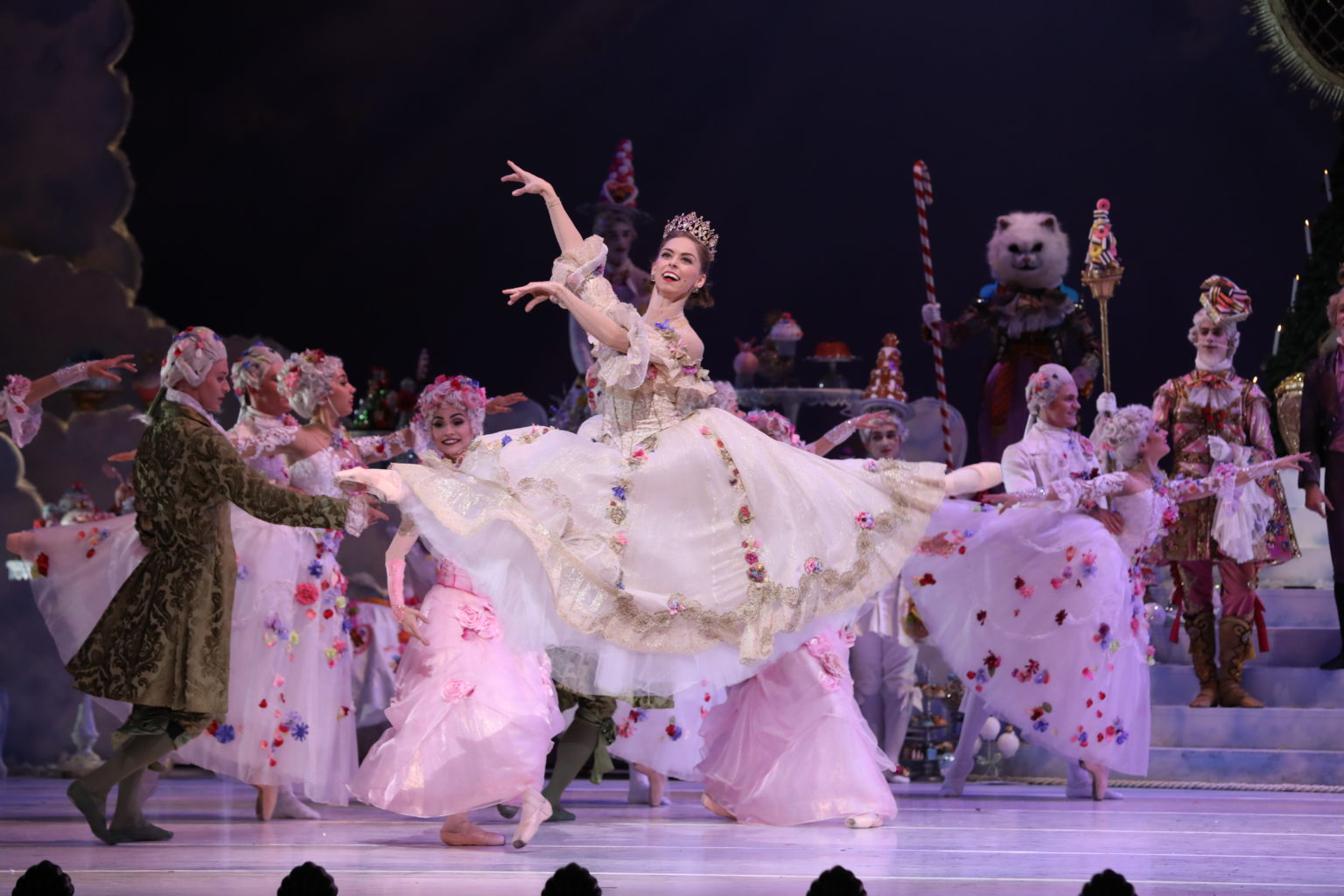
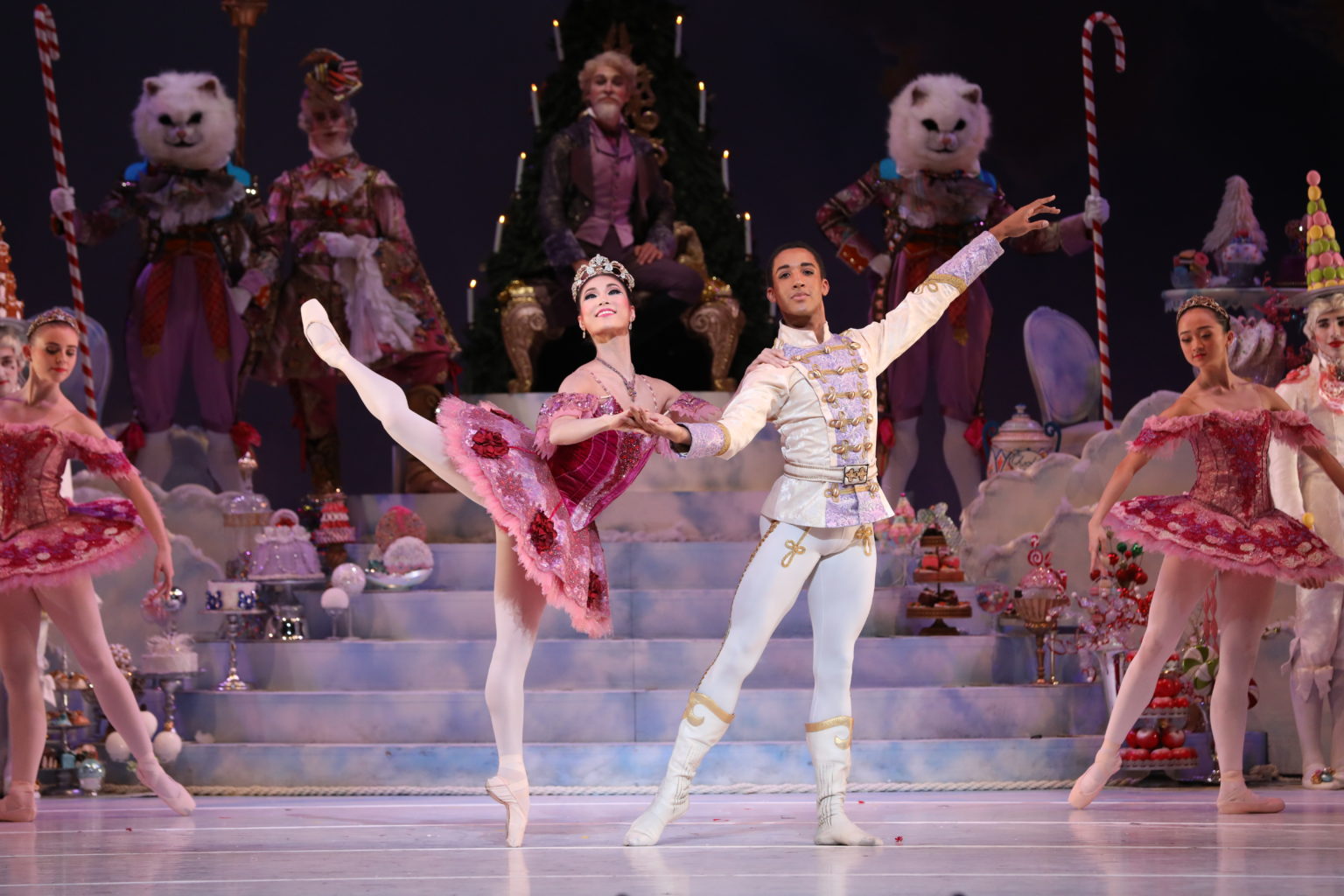
The Nutcracker

 
 In the hundred years or so since its debut, Tchaikovsky's The Nutcracker has become a delightful aspect of modern Christmas celebrations. Composed during the "Silver Age" of Russian ballet, The Nutcracker is based upon a fairy tale by the German romantic writer E.T.A. Hoffman, whose stories also inspired Delibes' Coppelia and Offenbach's Tales of Hoffman. It is one of the few ballets that is not a love story, although later stagings have tried to make it into one. The music, however, is powerful enough for any story of a great romance. In college, I helped my sister Andrea, who was still in high school, with a project; we were listening to the "Pas de Deux" of the Sugar Plum Fairy and her cavalier. Andrea said, "That must be from a really great love story." "No, it's just from The Nutcracker," I replied. It is a simple story, full of childhood's innocent, but very real, hopes and fears. To watch or listen to The Nutcracker is to enter into a dream, a dream which comes to life even after so many years, and all wars and revolutions which have tormented the world.
Share

Monday, April 21, 2025

A Brief History of Tutus


 From BAE:

New advancements in the theater—particularly in lighting—played an important role in tutu development. In the late 18th century, theaters were lit by candlelight and ballet costumes were made of heavy silk, woven with metallic thread and decorated with spangles and sequins, which glittered in the flickering light. By the early 19th century, brighter and more even gaslighting had been invented, which created a very different effect. The new tutus glowed bright white in this light.

However, the combination of lighter-weight fabrics and gaslighting was a dangerous duo. Many ballerinas tragically died when the skirts of their tutus caught fire. The most famed was Taglioni’s protégée Emma Livry, whose costume caught fire during a rehearsal. Although fireproofing was available, many dancers refused because it made the costumes stiff and dull. Eventually, new ways of fireproofing were developed, and lighting was made safer. (Read more.)

Share

Monday, January 17, 2022

The Real Mathilde Kschessinska

An old article about the Russian film Matilda. I thought the film was vile and turned it off. From The History Press:

Nicholas II and his family have been canonised as Passion-Bearers and opponents consider the film sacrilegious. Outside the offices of the production company activists have burnt cars and there have been processions, protests and threats to burn down any cinemas who show the film. Many Russians are offended because the film shows intimate scenes between Nicholas and his mistress, even though he was still unmarried at the time (as was Mathilde). State Duma Deputy Natalia Poklonskaya said that showing saints having sex ‘offends the feelings of believers.’

And all this before it has even been on general release.

From what I have heard from friends in Russia the film is pure fiction, with a whole load of events included which simply did not happen. Yes, there was an affair between Nicholas and Mathilde – Nicholas’ own diaries bear witness to this, as do surviving portions of Mathilde’s diaries. No, she was not at the coronation and nor could Nicholas have seen her there. And ‘no’ to a whole lot of other things included in this film.

When I was writing Imperial Dancer I investigated claims that she and Nicholas continued to meet after his marriage and found them to be untrue. Like his father Alexander III, Nicholas II was entirely faithful to his wife. The Russian Orthodox Church has placed billboards around Moscow which display ‘words about love’ exchanged between Nicholas and Alexandra. No-one has ever doubted their love for each other. (Read more.)


Share

Wednesday, December 8, 2021

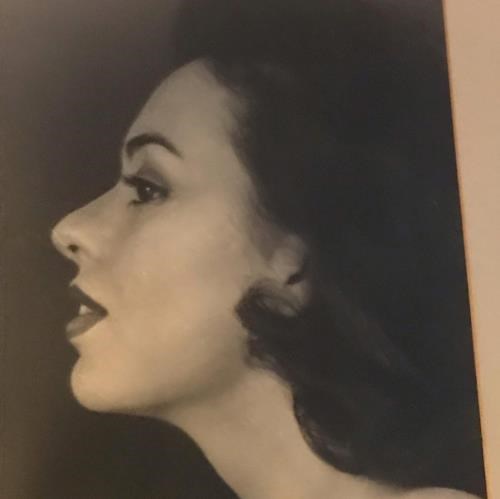
Rest in Peace, Dear Friend

 A dear friend and benefactress of mine died last week, fortified by the sacraments of the Church and clothed in the scapular of Our Lady of Mount Carmel. I went to school with Sally's older daughters, babysat and tutored her youngest daughter and two of her grandsons are my godchildren. I can never enumerate  the kindnesses and mercy that were shown to me by such a true friend. She was like a second mother to me. Those she left behind are disconsolate. May God reward her with eternal joy. From Bowersox Funeral Home:

"Mother," it may be said, is a word which means a thousand things, and one. To those who knew her, Sally Thomas was the embodiment of these. Warm, effusive, and generous: to walk into a room she occupied was to receive a dazzling welcome, as if your arrival was the most marvelous thing in the world. A more passionate soul could hardly be met with: Sally had only to think of something and she would hurl herself, body and soul, into it. Her talents seemed endless: she could sew, dance, decoupage, and design, and she gave free reign to the satisfaction of all these abilities the way she did everything: with enthusiasm. Yet, perhaps the most memorable aspect of all was her infectious laughter. Like all things, she put her whole self into her laugh: a sound to bring all those around her into instant merriment, simply to hear its joyful ring.

Sally was born in Frederick, Maryland, on August 5, 1938 to Jeannetta Geisbert Smith and Howard Smith on the grounds of her family home, Boscobel – since renamed Edgewood – in the millhouse where her parents were living with their two children, Ai and Barbara. There, Sally, the baby of the family, spent happy days, often recalling her wonder at the many beautiful trees which cropped up everywhere around her. Throughout her life, she would stop, gazing skyward towards branches and foliage, and remark, “I think that I shall never see,/A poem lovely as a tree.” So saying, her face would light up, suffused by a smile, and memories of her idyllic childhood and beloved family members would naturally form the topic of conversation. As time passed, Sally began her schooling at the Ladies’ Academy of the Visitation in Frederick. Surrounded by the kindness and devotion of the teaching sisters, Sally would often cite this as the source of the spiritual awakening that would lead her, many years later, to convert to Catholicism.

By fifth grade, Sally was enrolled in The Evelyn R. White School of Dance. During one recital, Sally and her class lined up in front of an older class, breathlessly waiting their turn to take the stage. Directly behind Sally stood a boy named Charles Thomas, who, seeing she was too short to peer round the curtain on her own, gallantly reached out to pull it back for her. Charles was, many years later, to become her husband.

After completing her schooling at Greenbrier College, Sally traveled to New York City with her sister. This was New York City of the late 1950’s and early ‘60’s – all bright lights and glamor. Sally would often reminisce upon this exciting time in her life and even recollect an occasion upon which she met Clark Gable. It was also during this time that Sally converted to Catholicism at St. Patrick’s Cathedral. She worked as a model, a ballerina, and an executive receptionist, charming all those she came across with her vivacity. New York was something of a dream, but it was to be cut short. (Read more.)

I grew up on the other side of the same hill from where Sally was born, so the stories of her childhood were of places that I knew well. Even the Visitation Academy, where she was educated, later became my first teaching job. We were familiar with many of the same nuns. Sally and her husband encouraged my writing and let me write in their house on the mountain in Blue Ridge Summit. Recently, Sally and I emailed each other often every week, exchanging news stories and family updates. The Saturday after she died I awoke in a dark dawn, feeling the weight of the grief at her passing. Then I thought I heard her voice, coming to me as if on a bad cell phone connection. Suddenly, the words became clear, and I heard her say, "Oh, Mary, it's so wonderful!" And I knew Sally was Home.

Share

Sunday, December 5, 2021

The Nutcracker Makes a Magical Return


In Houston. From Paper City:

In short, we were absolutely charmed and found ourselves smiling throughout the entire performance and joining the standing ovation that followed the production’s conclusion. Welch premiered his exuberant vision of the time-honored holiday ballet in 2016 and delighted audiences with myriad surprises such as the snowfall that not only gently showered on the dancers but also drifted from above onto the audience. The ballet notes that 575 pounds of paper-made flurries drift down on stage during the Snow Queen visit each performance. It was a melting snow, however, that lightly showered the audience. In a moment of Nutcracker joy, confetti showered down on the stage and the audience as well. (Read more.)
Share

Wednesday, October 20, 2021

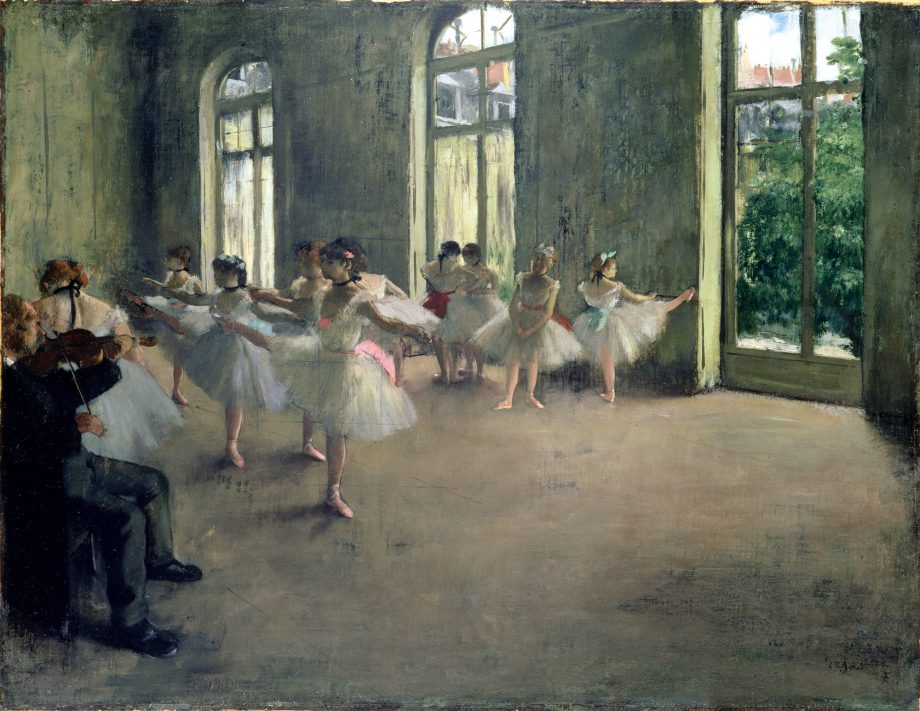
The Rehearsal by Edgar Degas

I love the way Degas perfectly captures the fleeting moment so beautifully, with the grace and elegance of each movement. It is that same movement in dance that has inspired me; you can see a nod to ballet in many of my designs. The close-cropped composition leaves me intrigued. It suggests more is happening outside the frame, in the busy room. The dancers are unaware of the viewer and you can feel their nervous energy. Equally, you can hear the muffled chatter and fine pitter-patter of points. It fascinates me how Degas captures the fabric of the tulle tutus in such a life-like way using oils. The blurred-edge sfumato effect emphasises the sense of realism. Oh, and the contrast of the sashes and the black neckline ties. I could look at his works for hours and hours. (Read more.)

Share

Tuesday, October 5, 2021

The Comedians of the King

Marie-Antoinette's theater at Trianon

Marie-Antoinette having a harp lesson

Theater at Trianon

 From Columbia News:

Lyric theater in ancien régime France was a political art, tied to the demands of court spectacle. This was true not only of tragic opera (tragédie lyrique), but also its comic counterpart, opéra comique, a form tracing its roots to the seasonal trade fairs of Paris. While historians have long privileged the genre’s popular origins, opéra comique was brought under the protection of the French crown in 1762, thus consolidating a new venue where national music might be debated and defined. 

In her new book, The Comedians of the King, Julia Doe, professor of music, traces the impact of Bourbon patronage on the development of opéra comique in the turbulent pre-revolutionary years. Drawing on both musical and archival evidence, the book presents the history of this understudied genre and unpacks the material structures that supported its rapid evolution. Doe demonstrates how comic theater was exploited in, and worked against, the monarchy’s carefully cultivated public image—a negotiation that became especially fraught after the accession of the music-loving queen, Marie Antoinette. 

Doe shared her thoughts on the book with Columbia News, along with what events she’s anticipating in New York’s fall cultural season, what she’s teaching, and what it might have been like to hear the 10-year-old Mozart play the keyboard at an 18th-century Parisian salon.

Q. Why did you write this book?

A. I’m a cultural historian, and my research examines the ways that opera shapes and is shaped by politics. There are few musical repertories more rewarding for this type of study than those produced in pre-revolutionary France. The political implications of tragédie lyrique in this period are fairly self-evident. Grand, heroic, and spectacular, the genre originated under the auspices of Louis XIV and transparently allegorized the achievements of the monarchy. (One musicologist has cheekily described such works as the “courtliest court operas” ever written.)

I was curious, however, to explore the meanings inherent in tragédie lyrique’s long-neglected comic counterpart, opéra comique. The latter genre has a reputation for being popularly inflected and politically subversive; it originated at the suburban fairs of Paris, and incorporated the progressive ideals of the philosophes. But over the course of the 18th century, opéra comique also became a favorite of the French aristocracy and was increasingly showcased at Versailles.

My book explores the tensions that arose as this ostensibly “lowbrow” musical form was appropriated as an emblematic courtly art. It turns out that comic theater might also serve absolutist political ends, but not without complications for the crown.

Q. How does Marie Antoinette fit into this story?

A. Marie Antoinette’s musical pursuits have attracted less scholarly attention than her other artistic activities, but she was remarkably active as a performer and patron. She supported composers like Christoph Willibald Gluck and Niccolò Piccinni, frequently attended concerts in Paris, and took regular lessons in voice and in harp. When she gave birth to her children, she even had a temporary stage constructed in her private apartments, so that opera could continue unabated as she convalesced!

My research in the archives of the French royal household indicates that the queen’s musical preferences were impressively forward-looking. She forcefully advocated for opéra comique and Italianate comedy at a time when those genres stood in antithesis to the courtly status quo. But not everyone was pleased when the monarch transformed the conservative theaters of Versailles into bastions of musical modernity. For opponents of the regime, Marie Antoinette’s newfangled operatic tastes marked an affront to dramatic, and by extension, to social propriety; this was interpreted as improper conduct from a “frivolous,” foreign-born queen. (Read more.)

Share

Saturday, August 21, 2021

The Nine Muses

 From The Greek Reporter:

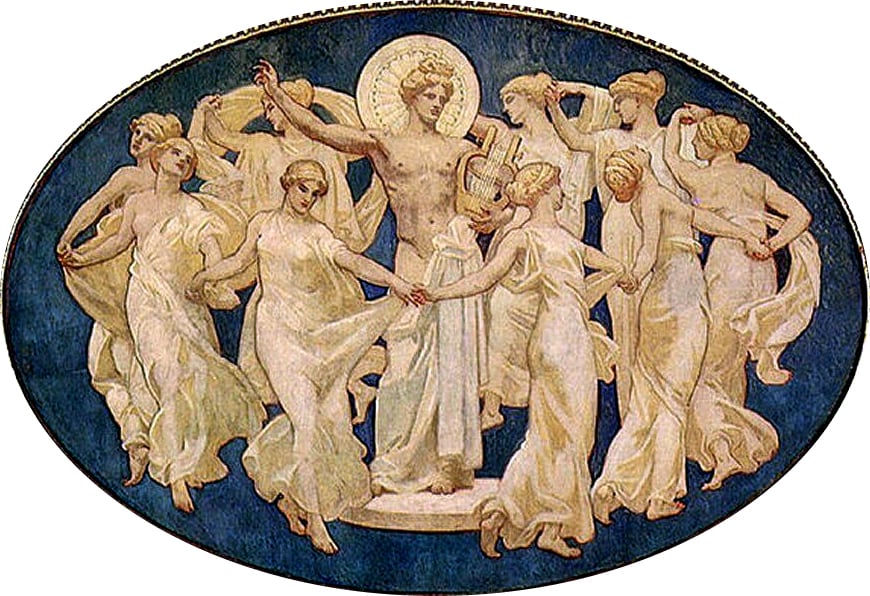
According to ancient Greek mythology, the Muses are the sources of inspiration for all of the arts and of knowledge. The daughters of Zeus and Mnemosine, they were the romantic companions of Apollo’s entourage of gods. The Muses began their lives as nymphs that manifested as whispers in the ears of those that invoked them. The ancient writer Hesiod describes how Osiris, the god of fertility, then called upon them to travel across the world as the nine muses: Calliope, Clio, Erato, Euterpe, Melpomene, Polyhymnia, Thalia, Terpsichore and Urania. (Read more.)

Share

Thursday, June 24, 2021

The Royal Serenade of the Palace of Versailles 2021

From  Sortir à Paris:

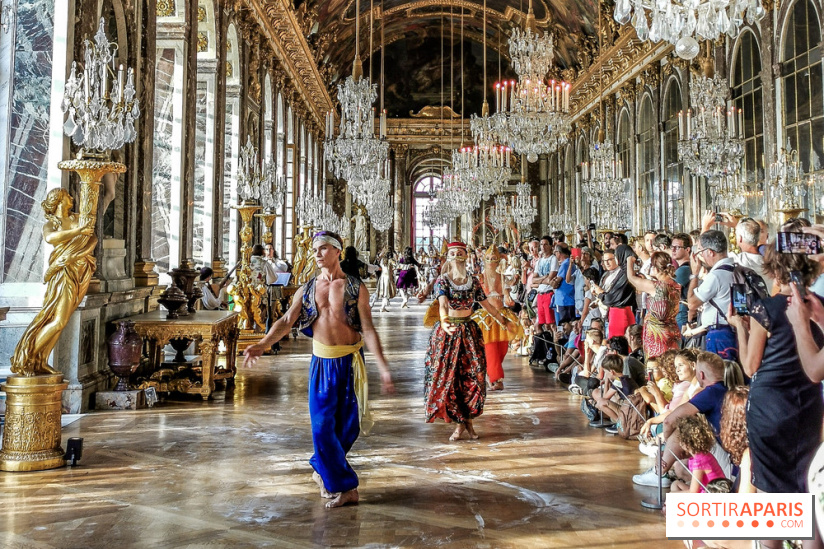
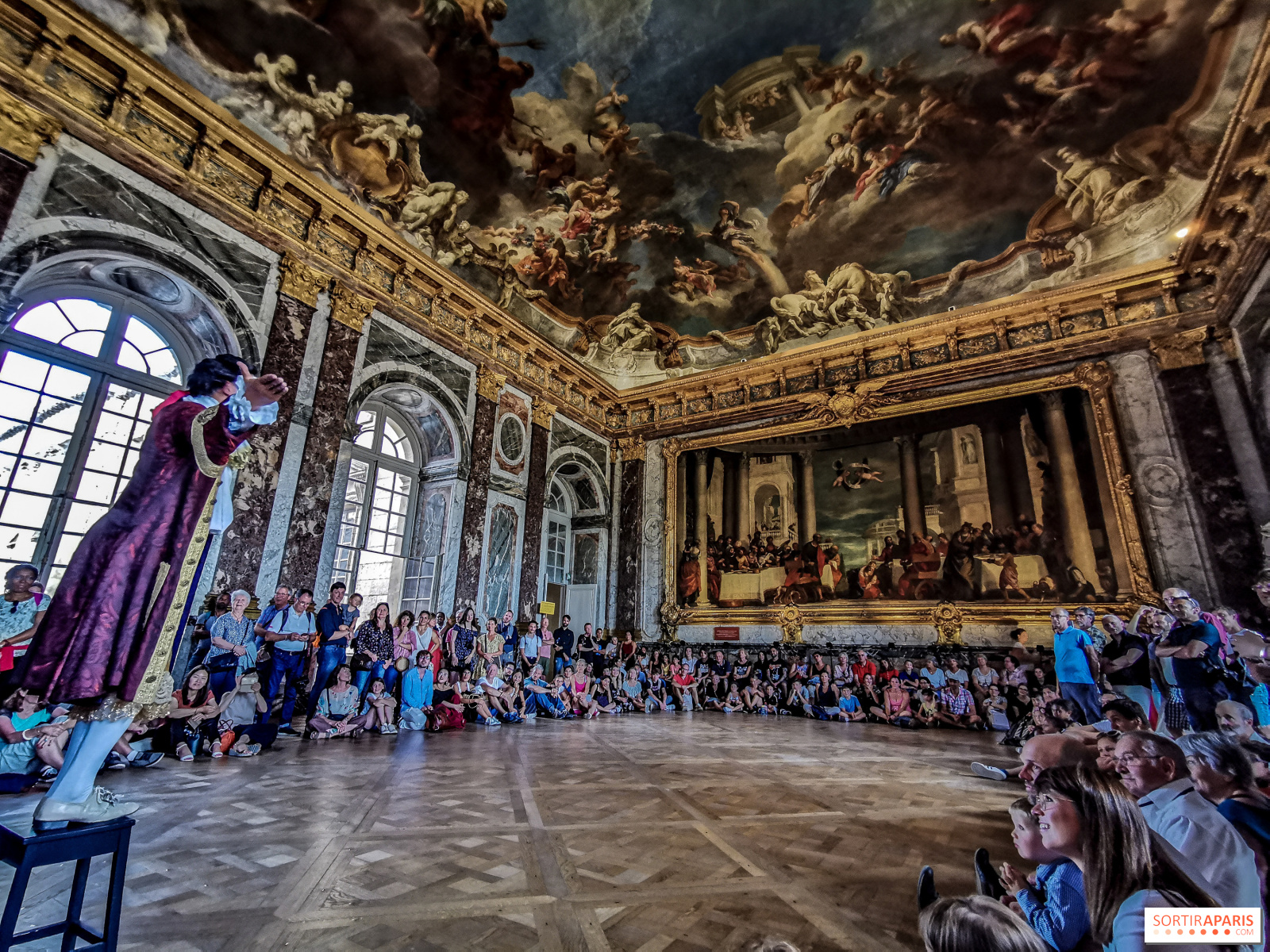
 With its Royal Serenade, the Palace of Versailles makes us live the entertainments of the Sun King’s Court for a 40-minute guided tour. Brace yourself to attend a dance lesson and a fencing show on Saturdays from June 12 to September 18, 2021. (Re)discover the Grands Appartements of the Palace of Versailles this summer with the King’s Valet, for a 40-minute visit, meeting baroque musicians and dancers: The Royal Serenade. From the Hercules Room to the Marbled Room via the Hall of Mirrors, the Royal Serenade immerses you within the Sun King’s Versailles, discovering activities offered to the King. (Read more.)

 La Sérénade Royale au Château de Versailles, les photos


Share

Monday, February 15, 2021

On Russian Ballet

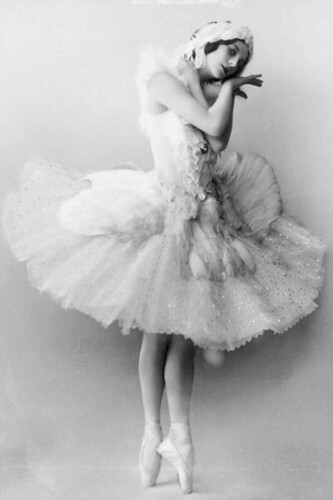
Anna Pavlova

 From Orthodox Christianity:

Ballet is a complex and ambiguous phenomenon. Meanwhile, dance in and of itself, is more neutral than sinful. It all depends on what one or another production carries, what the choreographer conceives, what the dancer puts into it, even down to the costumes, music and scenery he or she dances in.

His Holiness Patriarch Kirill spoke about this at one of his meetings with the public:

“All that does not provoke lust, that does not destroy the human personality, but, on the contrary, elevates it and works to harmonize the world and man—all of this is included in God’s plan for the salvation of sinful and fallen man… And in this sense, both opera and ballet—I mean classical ballet—deserve attention.”

It is known that the holy Tsar Nicholas II and Tsarina Alexandra Feodorovna loved to go to the theater. The Emperor liked opera more than ballet, but there is quite a lot of information in his diaries about him visiting ballet performances. The Emperor appreciated Tchaikovsky’s music, spoke highly of the ballets, Sleeping Beauty and the Little Humpbacked Horse. In 1913, St. Nicholas II and his daughters watched the ballet, Pharaoh’s Daughter, in which Anna Pavlova (1881–1931) “danced wonderfully.”

Metropolitan Anthony of Sourozh wrote in his works:

“Dance is perfect, complete, contemplative silence, and this experience of communion with God in the depths of stillness is expressed in movement, in full harmony, in perfect beauty.”

Dance as an experience of communion with God… It sounds rather bold. Is it really possible in any way?

The history of Russian ballet began in the mid-eighteenth century. In as early as 1806, the house church dedicated to the Holy Trinity at the Imperial Drama School (now the Vaganova Academy of Russian Ballet) opened. While he approved of the idea, Emperor Alexander I said: “Dancing is dancing; but one’s faith in God should not be shaken by it.”

“The religious foundation laid in the school remained with all the ballet dancers forever,” Victor d’Andre, Anna Pavlova’s husband, wrote in his book. “Many years after leaving school, the dancers—and many even after their service—continued to attend the theater church.”

Anna Pavlova, who often went to the theater church, together with the dancers of her company made a carpet for the church services as a gift. “Ballet is not about technique—it is about the soul,” the great Russian ballerina used to say. Having no children of her own, Pavlova opened an orphanage for Russian orphans in Paris.

The choreographer Michel Fokine (1880–1942), who was also good at painting, presented the school with an icon, “Christ the Savior, Not-Made-by-Hands”, he had painted himself. It was blessed and hung in the holy corner of the students’ dormitory.

The Russian-born American choreographer of Georgian origin, George Balanchine (1904–1983), as a child helped in the altar of the Drama School church. His relative wrote that “he was a very religious person. During his stays in Georgia he would always visit our churches.” This is what he would say about his faith:

“The words of the Gospel are rooted in all of us… Faith is not verified. …You cannot jump into the faith as you jump into a swimming pool. You need to enter it little by little as you would enter an ocean.”

The Russian ballerina Olga Spessivtseva (1895–1991) was a very religious person as well. Lonely in emigration, living out her days in a mental institution, she would often attend church services—only in the Orthodox Church did her melancholy abate. She loved Pascha very much. Spessivtseva miraculously overcame her illness and passed away at the age of ninety-six, reconciled with God and in her right mind.

This continuity was not interrupted even in the Soviet era. Igor Moiseyev (1906–2007), the founder of the State Academic Folk Dance Ensemble, recalled that he had been pressured to join the communist party as many as eighteen times. But he always refused for reasons of principle.

“Why don’t you want to join the Party?”

“Because I believe in God and don’t want to be tongue-lashed by you at your meetings.”

“We learned ballet… in church,” the soviet ballerina Alla Osipenko (b. 1932) recalls her studies during the Second World War. Baptized in 1937, she does not conceal her faith and says:

“God gave me talent, God gave me a family, and God gave me my wonderful [dance] partners.”

Aggripina Vaganova (1879–1951), who devised classical ballet technique and training system, spoke about modesty and did not recommend having an attitude higher than ninety degrees (in simple terms: “Do not raise your legs above your head”).

“Posture leads to a manner—very strict, without excess. The purity of a naked body requires this. A person turns into a living sculpture,” Nadezhda Bazarova (1904–1993), a pupil of Vaganova, wrote in her Alphabet of Classical Dance.

She was echoed by a critic who noted “a special, captivating modesty of gesture” in the legendary Galina Ulanova (1910–1998). Her whole image was “imbued with spiritual nobility and high moral purity.”

An elderly bishop who had seen Ulanova on stage as a young man told me that her entire dance was… spiritual. When I asked him, “Vladyka, do you think she believed in God?” he replied, “I think she did.”

“Do you believe in God?” Galina Sergeevna was once asked after perestroika. She answered: “God lives in me.” When she was a girl, her mother, also a ballerina, would take little Galina to the house church at the ballet school. Her nanny was also religious.

Ulanova’s last dance, after which the fifty-year-old ballerina left the stage, provoked feelings close to awe in Alexander Vertinsky1:

“I have never seen anything of this kind in my life! O Lord, what peaks and heights creativity can attain! It must be the Spirit of God!… How can one retain, preserve this miracle on earth? How can one pass on this gospel to posterity for future centuries, so that others can learn this supreme, divine art from her?” (Read more.)
Share

Sunday, August 23, 2020

Anthem of Royal France

  Happy Birthday to Louis XVI! Here is the hymn of the French monarchy, Tchaikovsky's version, used in his ballet of Sleeping Beauty. It is also known as Vive Henri IV.
Vive Henri IV
Vive ce roi vaillant !
Vive Henri IV
Vive ce roi vaillant !
Ce diable à quatre
A le triple talent
De boire de battre
Et d'être un vers galant.
(de 1800 à 1899 : ) 
Au diable guerres, 
Rancunes et partis. 
Comme nos pères,
 Chantons en vrais amis 
Au choc des verres, 
Les roses et les lys ! 
Au choc des verres, 
Les roses et les lys ! 

(en 1774 : ) 
Chantons l'antienne 
Qu'on chantera dans mille ans, 
Que Dieu maintienne 
En paix ses descendants 
Jusqu'à ce qu'on prenne, 
La lune avec les dents. 
Jusqu'à ce qu'on prenne, 
La lune avec les dents.  
Originally from the sixteenth century, the royalist anthem Vive Henri IV was featured in  Collé's 1770 opera La partie de chasse d'Henri IV. In 1774 it was often sung to honor Louis XVI, became popular again during the Restoration in 1814, as is told in the novel Madame Royale. The lyrics celebrate the monarch who was seen by the French people as the epitome of justice, kindness, and virility. It was an attempt to identify the Bourbon dynasty with the popular first Bourbon monarch, Henri IV. Louis XVI had also been seen as sharing with the King from Navarre an easy manner with the common folk, as well as a strong sense of justice and love of the hunt. Early in their reign, the King and Queen held a costume ball where everyone came in dress from the era of le bon roi Henri, with Marie-Antoinette herself garbed as Henri's beloved mistress, Gabrielle d'Estrées. It was part of the Queen's attempt to show that she was loved by her husband, and that she was his mistress as well as his wife. During the Restoration, members of the Bourbon family, especially the daughter of Louis XVI, the Duchess of Angoulême, were frequently welcomed with the anthem. After the fall of the Bourbons in 1830, the anthem was no longer played, and soon became a relic of the past.

Another version.

And another.

And another, along with the ancient coronation hymn, Domine Salvum Fac Regem.

Share

Wednesday, April 22, 2020

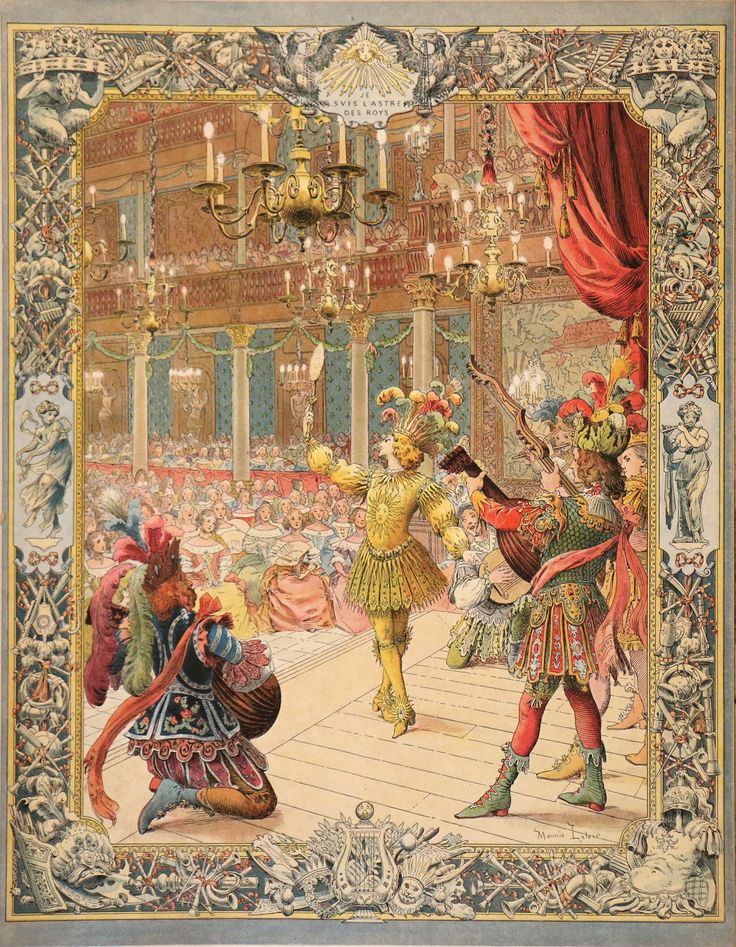
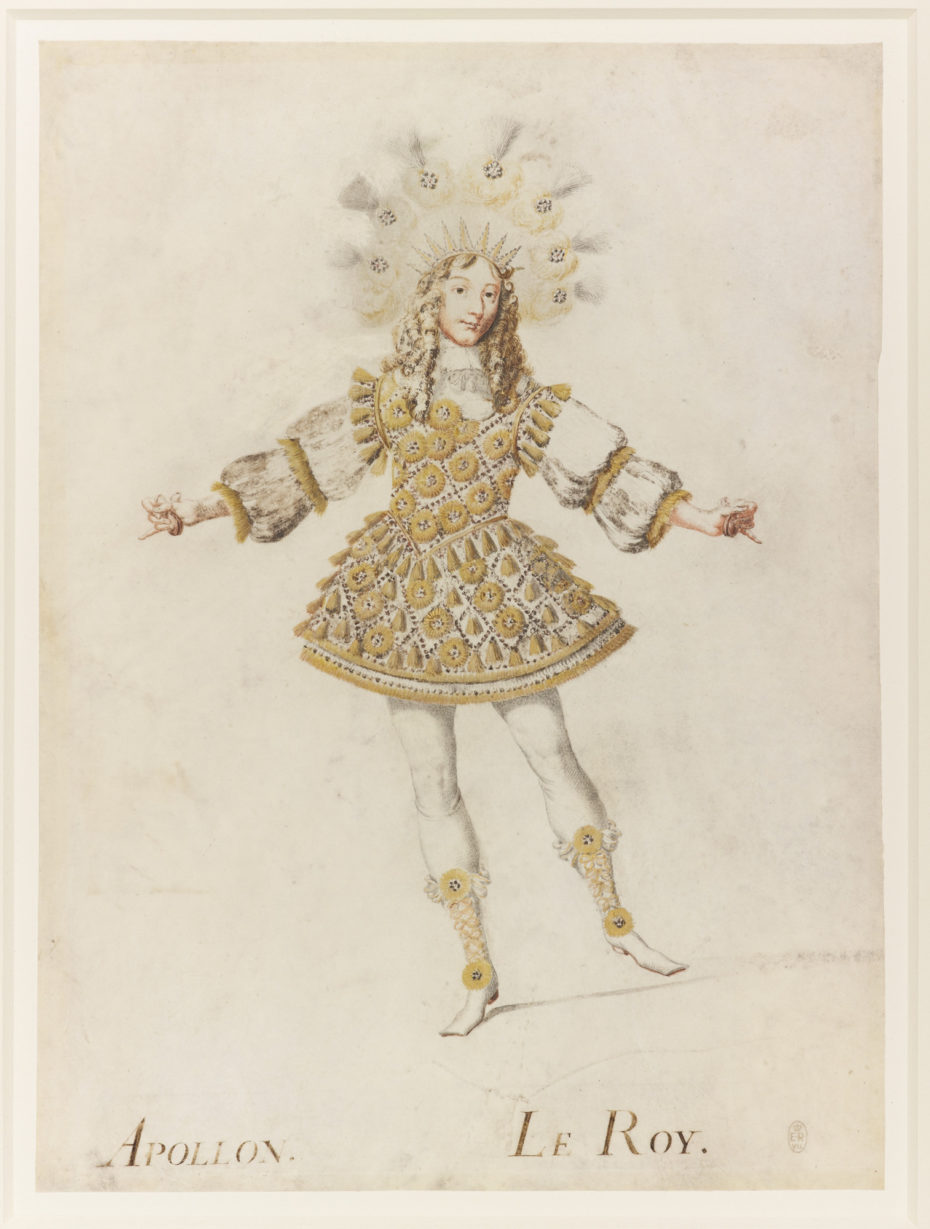
Ballets of the Sun King

Louis XIV Performing
Louis XIV as Apollo
From Messy Nessy:
We might add that the dancing was also pretty radical, effectively codifying the five main ballet foot positions we have today. Check out the tangled constellation of Louis’s routine, which represented his mastery of not just a physical routine but esteemed social etiquette. Today, we consider dance as a hobby. In 18th century aristocratic France, it embodied a codified set of social rules that were as important to know as, say, which fork to use at the banquet.

But the best part is how they practiced: with a teeny tiny violin called a pochette (or “pocket” in French) that a dance teacher would play, trailing beside you, whilst you mastered your fancy footwork: 
With the Molière-Lully-Beauchamp power team, Louis brought ballet as we know it into existence with Les Comédies-Ballets, or “Ballets Comedies.” Not that the implications of a comédie in France were comical. To the contrary, they were rather serious and esteemed (though Molière loved his farce). To this day, Frenchies will raise an eyebrow if you interchangeably use the word for, say, action movie acteurs et actrices (actors and actresses) and comédiens et comédiènnes (more “serious” actors and actresses of the stage variety). Eventually, Louis established the world’s first official royal academy of dance – establishing not only standards for his people, but for the rest of the Western world that endure. Excellence, as they say, à la française. (Read more.)
Share

Sunday, December 1, 2019

Noverre: The Shakespeare of the Dance

Marie-Antoinette's dancing master. From The Good Men Project:
Noverre was born in Paris on 29 April 1727, and was expected to follow a military career like his Swiss father. Instead, though, the young Jean-Georges chose a vocation requiring equally rigorous discipline, studying dance with a M. Marcel and then with the famous Louis Dupré and making his debut at the Opéra-Comique in Paris on 8 June 1743. This led to further engagements abroad; while still in his teens, Noverre performed at Fontainebleau, and in Berlin before Frederick II, at whose court he met Voltaire. The king’s excessive thrift, however, led his maître de ballet, Lany, and several of his colleagues to break their contracts and desert the Prussian court in 1747. Noverre became ballet master in Strasbourg and created his first great success, Les Fêtes chinoises, there. He went on to Vienna, where he worked under Empress Maria Theresa and became maître de danse to her 12-year-old daughter, the future Marie Antoinette, who later became his patron.

In 1755, he went to London with his family and his company to work with David Garrick at the Drury Lane Theatre. He had access to Garrick’s library, enabling him to study classical literature and draw on it for subjects for his ballets while developing his own methods of teaching dance and choreographing for the stage. It was here, in 1756, that he began to formulate his ideas in a treatise published four years later in Lyons.

When the London production of Les Fêtes chinoises was destroyed by rioters on the eve of the Seven Years’ War, Noverre and his family were forced to go into hiding. Although he continued to oversee productions at Drury Lane, he was not credited on the playbills. When Marie-Antoinette became Queen of France in 1774, she recalled her former dancing-master, and appointed Noverre to the Paris Opéra. However, in 1779 Noverre was displaced from his position because rival ballet masters and dancers Jean Dauberval, Maximilien Gardel and Mlle Guimard campaigned against him, although he did not finally leave the Opéra until 1781. (Read more.)
Share

Sunday, June 9, 2019

Marie-Antoinette or "Marie" at the Houston Ballet


As I have said before, Marie-Antoinette was known as "Antoinette" or "Antoine" by her family. But the ballet looks charming, although I wonder why Shostakovich is used. Why not Gluck? From The Houston Press:
It's a part that was specifically created for her and one that Houston Ballet Principal Melody Mennite holds dear. And with the upcoming production of Marie, a story of Marie Antoinette, Mennite has prepared once again to dance the title role with Artistic Director Stanton Welch's choreography to close out its 2019-20 season. 
"In 2009, Stanton was creating this ballet for the first time as a world premiere and he chose to go with me as his Marie. And he created the role entirely on me and I got to premiere it. It has really felt like my ballet," Mennite says. It is a challenging role - she never leaves the stage except for intermissions in the three art - but it gives the dancer a welcome opportunity to dive deeply into the character of Marie Antoinette. 
"I do like dancing it. It’s always hard to describe; the question I got a lot this year was whether it was exciting to go back to Marie. I don't know if I can describe it that way. It is a tremendously emotional and painful journey that she takes. So I fell very close to the role but it's also very challenging to immerse myself in. I think that's what what I appreciate about it. There’s no other role where I am so deeply immersed in another person's story and I love that Marie Antoinette was a real person. I feel like I'm honoring her life and her story when I'm dancing that role and that's pretty special." 
With sweeping music from Dmitri Shostakovich, the ballet picks up the story from the time Marie is a young girl sent from her Austrian home to France to become the bride of Louis XVI to her eventual decision to stay with her royal husband and face the guillotine. 
"She experienced a tremendous amount of trauma and loss in her life," Mennite says. "[As a teenager] she was ripped from her entire family and her country and never returned and was stripped naked at a border and had everything taken from her and was sort of told 'You’re French now.' So going through the arc of her life on stage is almost emotionally unbearable sometimes." 
Mennite describes Marie — whom she described as one of the first celebrities — as "kind of the first victim of propaganda. You look at what we do and how we kind of dehumanize celebrities now, I would say that absolutely she was misunderstood and painted as only one facet of who she was and what she did." 
Asked why the Marie Antoinette story continues to be told in all its forms, Mennite says "She was the first celebrity in a way and I think we still become fascinated with people are raised to that status. We have a fascination when someone receives that much blame and huge circumstances surrounding her as the icon of that fall of the monarchy and these people doing these insane things, I think that as human beings we want to look at that and understand it. How could that be? Not only her part of the story but what humans are capable of." 
Just as she takes a kinder view of Marie Antoinette, Mennite says Louis XVI was probably misunderstood as well. "I love their relationship through out the ballet. It was absolutely a rocky start and from what I've read the poor guy had some serious health issues. I know sexually there was a big problem there that caused chaos and drama. "It was an arranged marriage and they were meant to produce an heir. According to historians he had some really painful problems that prevented them from being able to consummate their marriage for years and years. He was also very young so I have empathy for his character and compassion. I also think it must have been so frustrating for her to be thrown into those circumstances and then on top of it feeling rejection and inadequacy with him. 
"He seems like kind of an awkward guy who had a sweetness to him. The whole thing is pretty unfortunate how it all turns out." (Read more.)
"The whole thing is pretty unfortunate how it all turns out." That's for sure....

Share

Monday, March 4, 2019

Standing on the Shoulders of Giants

From Dr. Joseph Pearce:
Considering the unity of faith and reason, it should come as no surprise that the Church has been a major contributor to the progress of the physical sciences throughout the centuries. Nicolaus Copernicus, the founder of modern astronomy, was a Third Order Dominican; Basil Valentine, one of the founding fathers of modern chemistry, was a Benedictine monk; Thomas Linacre, founder of the Royal College of Physicians, was a priest; Athanasius Kircher, a pioneer in diverse scientific disciplines including microbiology, astronomy, and physics, was a Jesuit; Nicolas Steno, a pioneering anatomist and the father of geology and stratigraphy, was a convert to Catholicism who became a priest and, as a bishop, a leading figure in the counter-reformation; René Just Haüy, the pioneering mineralogist and father of crystallography, was a Premonstratensian and honorary canon of Notre Dame cathedral; and Gregor Mendel, the father of genetics, was an Augustinian monk. Such a procession of scientists, all of whom were priests or in holy orders, constitutes a veritable scientific eminenti and illustrissimi. Apart from nailing the lie that the Church has been an enemy of scientific progress, this litany of great Catholic scientists illustrates that science is standing on the shoulders of faith as well as reason. (Read more.)
Share

Thursday, December 13, 2018

"Baby, It's Cold Outside"


Here I thought shows like Versailles and movies like Fifty Shades of Grey were violating the bounds of decency. But I have now been told that the height of depravity can be found in an Esther Williams movie, Neptune's Daughter, and encapsulated in the song, "Baby, It's Cold Outside." I have been informed that underneath the coyness and silly slapstick humor it is really a song about date rape. So I listened to it several times and watched the video in the context of the film. I never imagined that Ricardo Montauban was playing a would-be rapist and that Esther was allowing him to ply her with drink so he could exercise his nefarious intentions. I always innocently thought the film was a romantic comedy, the highlight of which was Esther dancing in the water.

Seriously, there must be a zillion songs that are more provocative and more about date rape and loss of virtue than "Baby, It's Cold Outside". I know from having watched just about every Esther Williams movie in the world that nobody is raped and nobody has sex outside of marriage, not in any of her films. Esther Williams movies had basically the same plot. They were fun and flirtatious but nobody got raped and as far as sex goes there was some kissing but that's all. Nobody had rape in mind. For one thing, when film was made when there was a strict code under the Legion of Decency about how sexuality was depicted in film. In fact, it was forbidden to show married people in bed together and even Desi and Lucy, who were married in real life, had to be shown with twin beds. So the film and song in question are leagues away from being about rape.  I really wish that people who want to demonize songs from the 1950's would focus on the very real harm caused by rap, porn, drugs, slutty fashions, violent films, and the overall disintegration of the moral and cultural fabric of our society.

Yes, the song is flirtatious. Yes, we do not want our teenage daughters sitting around at night drinking, especially not with amorous men. Although in the film, Esther is not a teen but a mature young lady. When a lady was out with a man she knew to be a gentleman, she could relax a little, knowing that he would not take advantage of her. In the film, Esther's character wants to leave because she fears for her reputation if she stays too long alone with a man at night, which would not even be a consideration nowadays. She also may fear giving in to her own feelings, that is, giving into temptation, and going "too far." It is why then, as now, people trying to live a life of virtue avoid what Catholics call "near occasions of sin." So it is a question of temptation, but not one of rape. Our time is so corrupt that people see flirting and immediately think of the bedroom. But there used to be such a thing as courtship which saved the consummation until the wedding night. It was a different world then; many couples, especially those from a religious background, waited until they were married. How sad our culture has become. 

Share

Sunday, August 5, 2018

The Creation of Covent Garden

From The History of London:
The first buildings to be completed in 1631 were two four-storey premises on what became the west side of the development. They were followed by twenty two five-storey stuccoed and pilastered houses along two terraces to the north and east. The top three floors of each house extended beyond the ground floor creating a public arcade at street level along which people could walk in all weathers. Below ground each house contained a large basement. A luxurious feature was that water was piped through conduits to the back yard of each building. By the standards of London at that time they were of a revolutionary style, with elegant, uniform façades. These dwellings were unusual in that middle class people lived side by side rather than individual premises of varying sorts as they had previously. They were more typical of Dutch towns such as Antwerp and Amsterdam than anything that had previously been built in England and set a new standard that would be followed in London and other British cities during the following centuries. The houses immediately became popular residences for wealthier Londoners. At the outset each house was leased to its tenants, with the first terms being of thirty-one years but later terms of forty-one years.

The new church of St.Paul’s was planned for local residents, sitting between the two original four-storey buildings on the west side. At that time almost all churches in London and elsewhere in England had existed since at least the Middle Ages and the one at Covent Garden was the first Anglican church to be built on a new site in England since the Reformation of the previous century. The Earl, presumably viewing a church as something that would bring no profit, did not want to pay a large sum for its building and (according to Horace Walpole, writing over a century later) instructed Jones that he “would have it not much better than a barn” to which the architect replied: “You shall have the handsomest barn in England!”.

Jones originally designed the church with the altar at the west end allowing for an entrance and grand portico, with two round and two square Tuscan columns, opening at the east into the piazza. However the unusual location for the altar was not accepted by the Anglican authorities and it was moved to the traditional east end. Nevertheless, Jones went ahead with his plan for the portico onto the piazza, making it at that time the dominant feature of the square. To complete the design a false door was created below the portico but with the church entered through the churchyard at the opposite end, giving it a strange and unique layout. (Read more.)
Share

Tuesday, May 22, 2018

A Polish Ballerina

From Broadly:
Franceska Mann was a beautiful and exceptionally talented dancer, pirouetting her way through many prestigious shows and competitions, including the Brussels International Dance Competition of May 1939 where she won fourth prize. She danced regularly in Warsaw's Melody Palace nightclub before the outbreak of the Second World War and her career-shattering imprisonment in the Warsaw Ghetto. In 1943 she was transported out of Poland, presumably in connection with the Hotel Polski Affair, where Jews hoping to escape to South America with foreign passports were tricked and sent to Auschwitz instead. (Read more.)
Share