Showing posts with label Art. Show all posts

Saturday, September 26, 2026

French Country Decor Ideas


From Léonce:

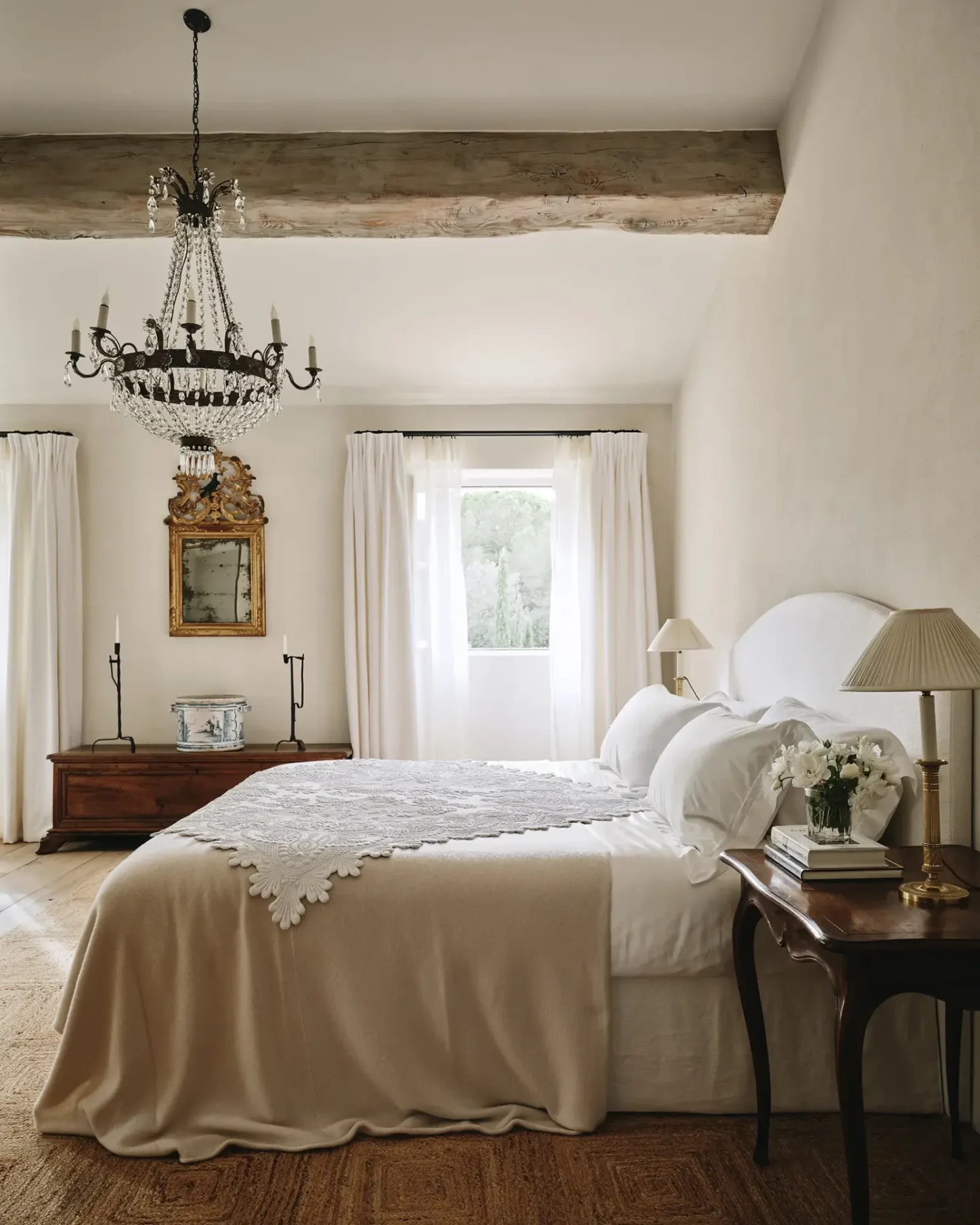
Over the past few months, I’ve saved countless home décor images on Pinterest (and if you enjoy French and Parisian inspiration, feel free to follow me there for more). Not that I’m currently renovating my apartment here in Amsterdam (although, truth be told, that would be one of my dreams) but I recently realized that many of the images I had saved seemed to gravitate toward the same aesthetic: French country style, sometimes also called French cottage style.

And without quite realizing it at first, this is also the direction my own Amsterdam home has slowly been evolving toward over the past few months. An aesthetic that feels rustic yet chic. Simple and unpretentious. Filled with natural materials: wood, linen, glass, ceramics, copper, and brass. A touch of vintage, but never kitsch. The kind of interior that creates a warm and welcoming atmosphere and that, to me, often evokes the charm of grandmother’s houses, countryside homes where everything feels convivial and where one immediately feels at ease.

Amsterdam, and the Netherlands more broadly, have influenced this shift more than I expected. Kitchens here often feel more rustic than Parisian ones, and because winters can be long and sometimes harsh, homes and apartments tend to have a naturally cozy and comforting quality that I’ve come to appreciate more and more.

This article is therefore a blend of different European influences which I hope will inspire you and perhaps give you a few ideas for bringing the charm of a French country home into your own space, wherever you may live. My inspirations draw from several places: the interior of Claude Monet’s house in Giverny, the Parisian atelier of Astier de Villatte in the 5th arrondissement near Place Maubert, the architecture and interiors typical of Amsterdam houses, as well as the timeless charm of traditional British cottages. (Read more.)
Share

Wednesday, September 23, 2026

Pygmalion’s Passion

 From The Abbey of Misrule:

Long before the digital age, artists have pondered both the promise and peril of artificial intelligence. Homer’s Iliad described automaton tripods made by Hephaistos that might be confused with Elon Musk’s dream of putting an Optimus robot in every home. Ovid’s Metamorphoses tells of Pygmalion, disappointed in his marital prospects, carving his perfect woman and bringing her to life with the help of Venus. She was the first romantic chatbot, a reflection of Pygmalion’s self-love. Mary Shelley’s Frankenstein warns us what can happen when scientific hubris puts the creation of life and intelligence in its crosshairs. More recently, we have Frank Herbert’s Dune, with the maxim “thou shall not make a machine in the likeness of a human mind.”

Yet we are here, crafting such a machine. Many, perhaps the majority of us, have deep reservations about AI, yet struggle to explain why. We think it could create trouble but also see the great benefits. As a result, nearly all the arguments have been around the outcomes of AI. This is the modern approach - judging something by what it can do, rather than what it is.

If artificial intelligence were a tree, then nearly every discussion we are currently seeing concerns its fruits. An AI optimist predicts a cure for cancer, where a pessimist sees the elimination of the doctor-patient relationship. Mass prosperity! Or is it mass layoffs? For every rotten apple I spot, another sees a juicy golden delicious. How can we make sense of it all?

Arguing about the fruits is problematic. First, predictions are tricky business. Remember when social media was supposed to bring people together? Second, Christianity focuses on the means, not the ends. We care more about whether eggs are getting cracked than how tasty the future omelette may be. (Read more.)


Share

Monday, September 21, 2026

Christianity in the Disembodied Age


From Hilary White at The Sacred Images Project:

When reading the New Testament through our usual theological lens of a grand cosmic drama, it’s easy to miss the significance of the kind of work done by most of the named protagonists. The first Apostles, Peter, Andrew, James and John are all fishermen. And Thomas, Bartholomew and Philip probably were too. Paul of Tarsus - a highly educated Pharisee and Roman citizen - is described as a tentmaker, though the Greek skēnopoios may mean something closer to a general leatherworker or maker of canvas goods, and his friends Aquila and Priscilla practised the same trade. Tabitha (also called Dorcas) was a seamstress.

There were a few representatives of what we might today call the “middle class”1. Lydia was a successful cloth merchant who specialised in the famous purple cloth of the region. Luke was a physician (and painter), Matthew and Zaccheus were both publicans (tax collectors for the Romans) a profession despised by the Jews, of course, though lucrative. Cornelius and Julius were centurions in the Roman army. Zenas (Titus 3:13) is identified as a lawyer.

Later the movement attracted members of the upper echelons, including Erastus, who is identified by Paul as the city of Corinth’s director of public works2. The wealthy, slave-owning convert Philemon was an upper-class patrician, probably a Romanised Greek and landowning civic politician in the city of Colossae. Very interestingly, Paul refers to Philemon3 as a “dear friend and fellow worker” in his letter about the escaped slave Onesimus.

But we get the general tone from Paul of how deeply work, and often manual work, was morally incorporated into early Christian thinking. “We labour, working with our own hands, (1 Corinthians). “We worked night and day,” ( 1st Thessalonians) and “if anyone will not work, neither shall he eat,” (2 Thessalonians).

In fact it would never have occurred to any person of that time that work - an occupation of some kind, whether manual or domestic labour, artisan craft or mercantile trade, or even senatorial-rank political involvement - was something embarrassing to be escaped in favour of a life of pure leisure and entertainment. On the contrary, Christians taught that whatever work you did it should be ordered to the Christian goals of salvation. (Obviously this meant there were some trades and professions you could not enter, like prostitution, gladiatorial combat, making idols for the temples, etc.) (Read more.)

Share

Sunday, September 20, 2026

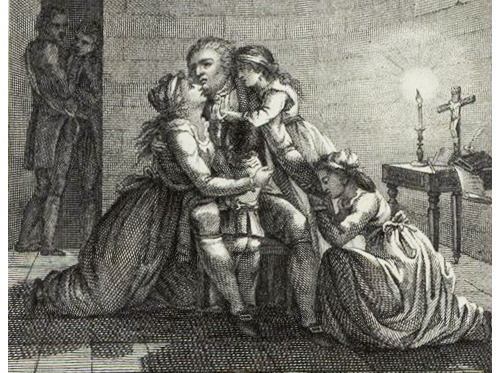
Louis XVI's Last Meeting with His Family

From Vive la Reine:
At half-past eight the door opened; the queen appeared first, holding her son by the hand; then Madame Royale and Madame Élisabeth; they ran to the arms of the king. A gloomy silence reigned for several minutes, interrupted only by sobs.
… The king sat down, the queen on his left, Madame Élisabeth on his right, Madame Royale nearly opposite to him, and the little prince between his knees.
All were bending towards him and held him half embraced. This scene of sorrow lasted seven quarters of an hour, during which it was impossible to hear anything; we could see only that after each sentence of the king the sobs of the princesses redoubled, lasting some minutes; then the king would resume what he was saying.—the journal of Jean-Baptiste Cléry

Share

Saturday, September 19, 2026

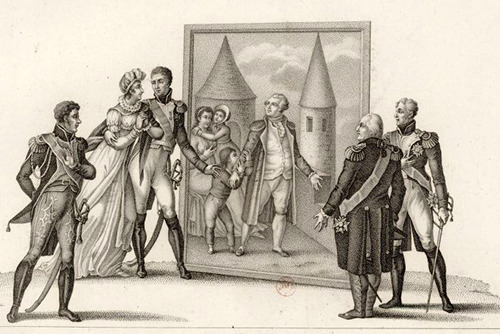
Marie-Thérèse Viewing a Portrait of Her Family at the Temple

Notice how her husband Louis-Antoine is very attentive. He knew how such things upset her.  Berry stands alone off to the side on the left. And then there are Artois and Louis XVIII on the right. One wonders what passed through their minds when seeing their doomed brother and his family. Via Vive la Reine. Share

Friday, September 18, 2026

Charity of the Dauphine

Before becoming Queen of France, Marie-Antoinette was known for her mercy and sweetness. From Vive la Reine:
Mme la Dauphine, who had returned, got out of her carriage, ran toward the woman, and held out some perfume to her nose, which made her come out of her faint. Mme la Dauphine gave her all the money she had with her, but what was even more admirable was the kind and consoling way in which HRH talked to the poor woman. Finally, Mme l'Archiduchesse, who was touched, shed tears and, at that moment, caused more than a hundred spectators to do the same….

Then, having called for her carriage, Mme la Dauphine gave orders that the peasant woman be taken in it back to her cottage which was in a neighboring hamlet.* Her Royal Highness waited right there for her carriage to return; she asked about the care of the wounded man … I cannot describe to Your Majesty the greatness or intensity of the sensation caused by the event, not only among the courtiers, but even more among the people of Fontainebleau….

The public in Paris [seems very moved;] whenever Mme la Dauphine’s name comes up, it evokes a universal cry of joy and admiration.
–Ambassador Mercy to Maria Theresa, 12 November 1773
(Read more.)
Share

Thursday, September 17, 2026

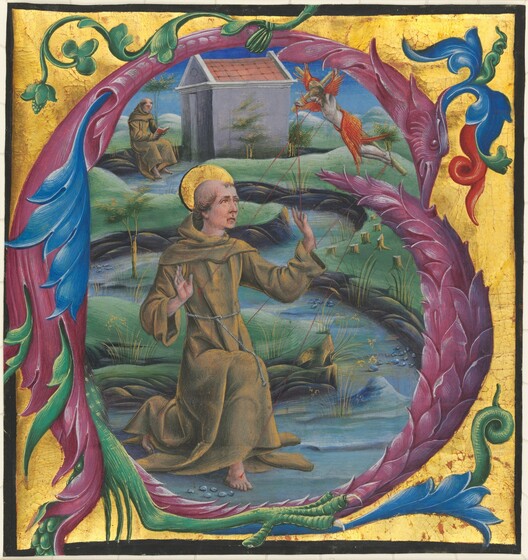
Heavenly Earth: Images of Saint Francis at La Verna

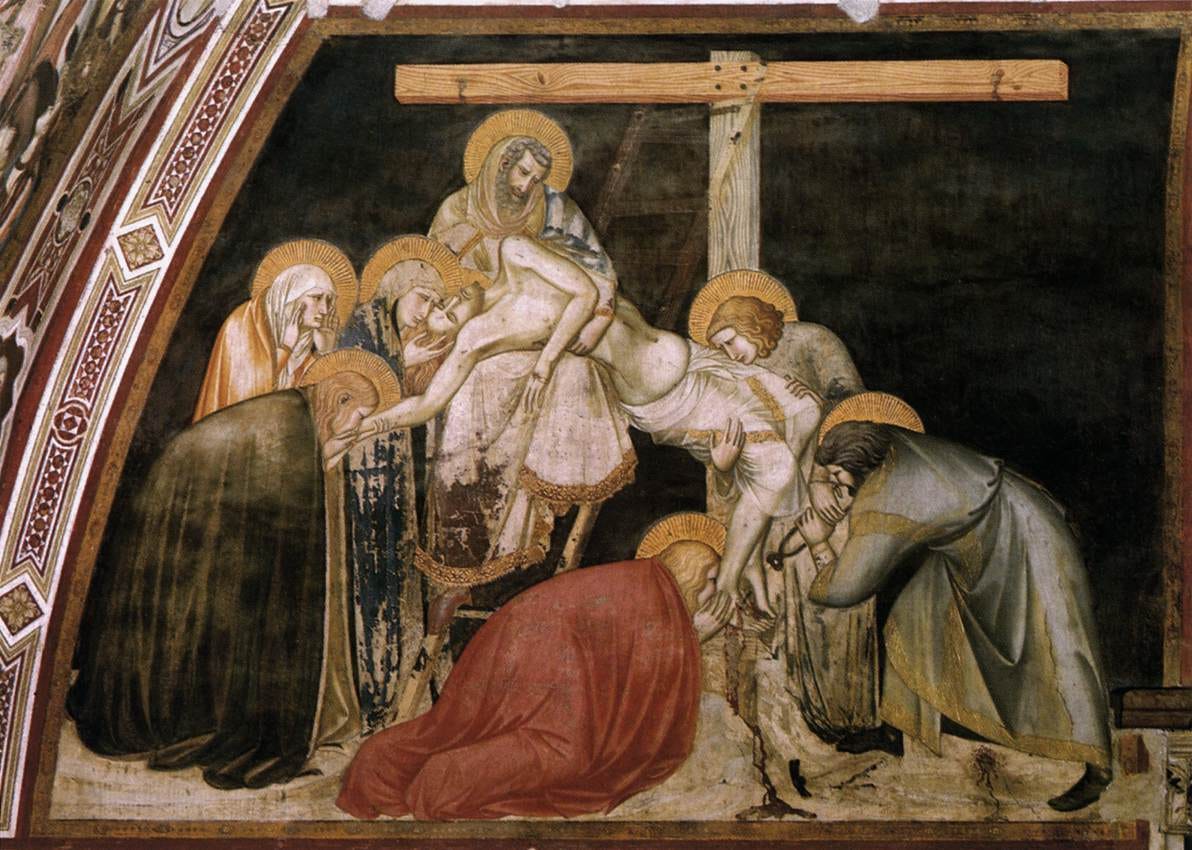
A 2018 exhibition. Today is the feast of the stigmata of St. Francis. From The Leaven:
WASHINGTON (CNS) — St. Francis of Assisi’s reception of the stigmata, the wounds of Christ, at La Verna in Italy and its depiction by artists beginning in the 15th century is the focus of a National Gallery of Art exhibit. “Heavenly Earth: Images of Saint Francis at La Verna” includes 30 pieces of Franciscan art centered on the miraculous 13th-century event. The exhibit was to open Feb. 25. Ginger Hammer, an assistant curator at the museum in Washington, said the display focuses on an “unprecedented event in Western spirituality.” No one in recorded history had experience such an occurrence before St. Francis did in 1224.

It happened while St. Francis was meditating on the passion of Christ during one of his regular retreats in the mountain wilderness. “He wanted to understand the very suffering that Christ endured. The result of his prayers reportedly is that a seraph, or six-winged angel, approached him enfolding the image of Christ on the cross. When the seraph departed, the actual wounds of Christ’s passion were transferred to the body of Francis,” Hammer told Catholic News Service Feb. 20 during a media preview. “That had never happened before and it was quite remarkable that through his own endeavors something mystical of this magnitude could happen to a human being,” she said.

A Franciscan sanctuary and museum complex mark the La Verna site today and continues to welcome pilgrims. The event was so extraordinary that artists over the centuries have tried to capture it to share with others. The exhibit focuses on work in various media from the 15th through 18th centuries. (Read more.)
More information at the National Gallery of Art website, HERE. Share

Wednesday, September 16, 2026

Chloridia

 Image 

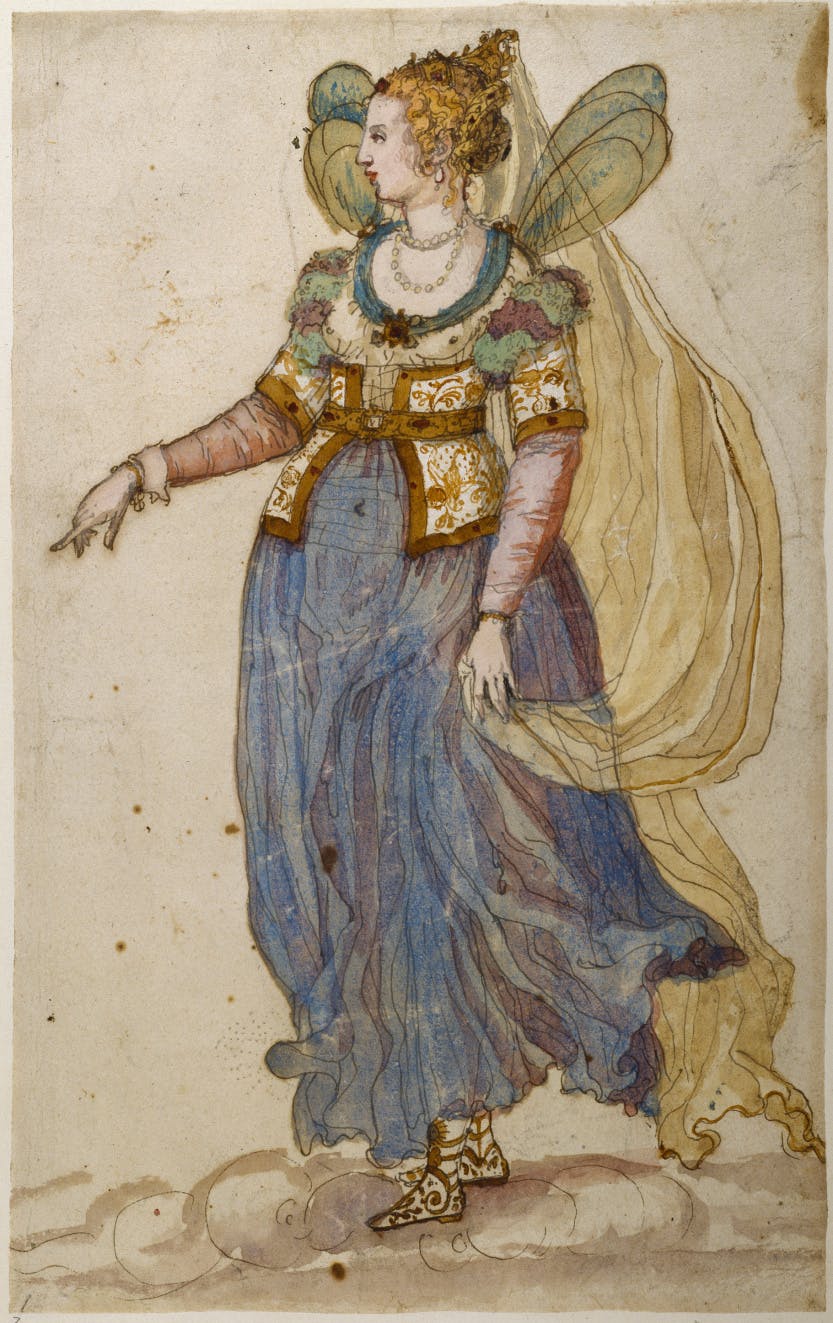
From Tony Riches: "Time travel back to the court of King Charles I with a glimpse of my research - the fascinating full text of Chloridia : rites to Chloris and her nymphs, a Shrovetide masque performed by the queen at Whitehall Palace." (Complete text HERE.)

Costume sketch for masque by Inigo Jones for Henrietta Maria

More on masques, HERE.

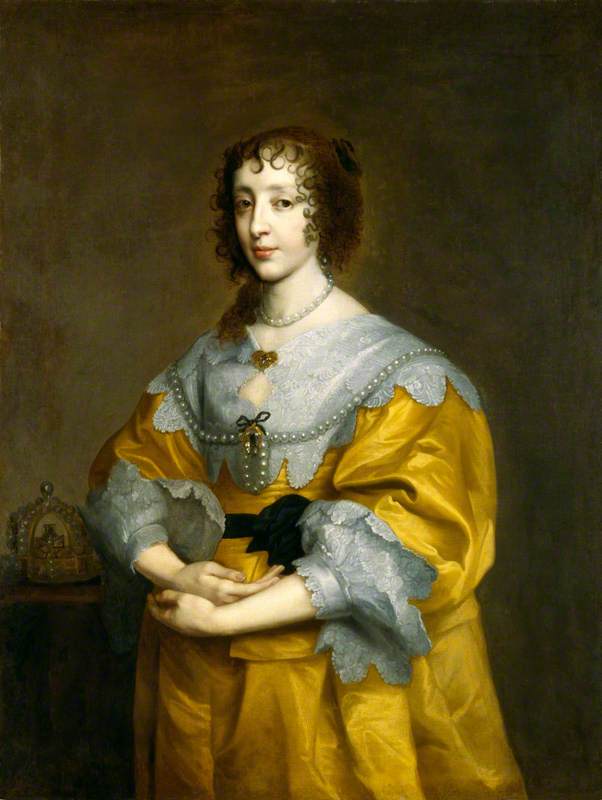
Queen Henrietta Maria


Share

Tuesday, September 15, 2026

Guichette

Anna Gibson posts on the eldest child and only daughter of the Royal Governess Madame de Polignac. She was Aglaé de Polignac, the Duchesse de Guiche, whom Marie-Antoinette nicknamed "Guichette." To quote:
Aglaé Louise Françoise Gabrielle de Polignac (7 May 1768 - 30 March 1803) was the first child and only daughter of Yolande Martine Gabrielle de Polastron and Jules de Polignac. In 1780, she was married to the Antoine Louis Marie de Gramont, duc de Guiche. They had three children.

In 1784, the talented Elisabeth Vigee-Lebrun painted the 16 year old Aglaé in a simple, pastoral dress that was popularized in the 1780s by the rise of country and hamlet inspired fashions. (Read more.)
Share

Sunday, September 13, 2026

Our Lady of Scherpenheuvel


Marie de' Medici had great devotion to Mary under her title of Our Lady of Scherpenheuvel, giving a reproduction of the statue to her daughter Henrietta Maria for one of her chapels in London where it was used by the Confraternity of the Most Holy Rosary. From Wikipedia:

Even before the official approbation of the cult of Our Lady of Scherpenheuvel, pilgrims took particles of the oak tree with them as pious souvenirs. Several stories of miracles attributed to the intercession by the Virgin relate of the thaumaturgic power of this Scherpenheuvel or Montague wood. Following the approbation, Archbishop Hovius ordered the tree to be cut down. It was divided in several parts. Some remained with the sanctuary; one particularly large piece was given to Albert and Isabella. Most of this Montague wood was used to make images of the Virgin Mary. Distributed as gifts among princes, nobles and clergy, they helped to disseminate the cult of Scherpenheuvel.[13]

Quite a few Belgian churches and convents came to possess an image carved in Montague wood. Well known examples remain in the Church of St. Charles Borromeo in Antwerp, the Church of St. Hilonius in Izegem and the chapel of the Capuchins in Enghien. In the Grand Duchy of Luxembourg, the statue of the national patron saint, Our Lady Comforter of the Afflicted or Our Lady of Luxembourg, is believed to contain Montague wood. A smallish statue of the Virgin and Child in Montague wood was taken by St. Marguerite Bourgeoys to Montreal and stands presently on her tomb in the Notre-Dame-de-Bon-Secours Chapel.[14]

Some places of worship became closely associated with the cult of Scherpenheuvel. In the vicinity of their château of Mariemont, Albert and Isabella founded the priory of Montaigu in the present day municipality of Morlanwelz. In the town of Gray a statue of the Virgin made out of Montague wood became the object of a regional devotion. Likewise in the Franche-Comté, the statue donated to the priory of Bellefontaine in Brussey came to attract many pilgrims.[15] In the proximity of the Spanish Court, the Convent of Las Descalzas Reales obtained an altar dedicated to Nuestra Señora de Monteagudo.

The House of Lorraine had a particular devotion for Scherpenheuvel. Cardinal Charles of Lorraine, prince-bishop of Strasbourg, founded a chapel dedicated to Our Lady of Scherpenheuvel in the noviciate of the Jesuits at Nancy. After his death in 1607, his sister Antoinette completed the project with an altarpiece depicting the ducal family venerating Our Lady of Scherpenheuvel. The chapel served as the repository of the embalmed hearts of the members of the House of Lorraine until 1720.[16] The cult was also greatly favored by the French Queen Marie de' Medici. During her regency, the Discalced Augustinians obtained a statue in Montague wood at their church of Notre-Dame-des-Victoires. During her exile, she donated one statue in Montague wood to the city council of Cologne and another to the monastery of the Discalced Carmelites of that city. While serving the Catholic household of her daughter, Queen Henrietta Maria, the Queen's Chapel of St James's Palace likewise had an altar with a Madonna in Montague wood.[17] (Read more.)


(Image Source) 

A history of the original statue, HERE.

Share

Saturday, September 12, 2026

St. Joseph and Emperor Leopold I


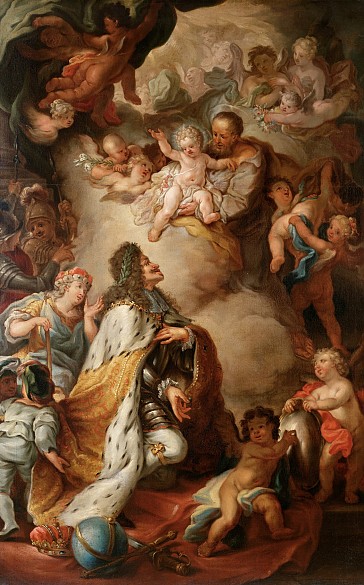
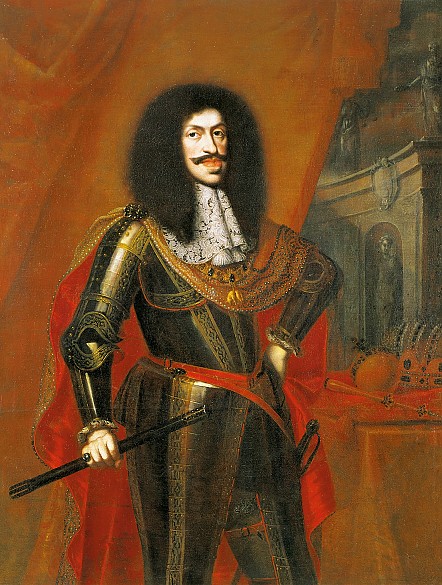
Holy Roman Emperor Leopold I is shown kneeling before the Child Jesus, Who blesses him from the arms of His foster-father St. Joseph. (Via The World of the Habsburgs.) Leopold is known as the "Baroque Emperor" and was a first cousin of Louis XIV of France, as their mothers were sisters. He was also a former brother-in-law of Louis' Queen, Maria Teresa of Austria (Spain), for he had been married to her younger sister, the Infanta Margarita, painted by Velasquez. Also from The World of the Habsburgs:

Leopold I was a defining figure in the history of the Habsburg dynasty. His reign saw the consolidation of the Monarchy after the Thirty Years’ War and the decisive victories against the Ottoman Empire that enabled the Habsburg Monarchy to become one of the leading Great Powers in Europe.

Leopold himself was however a shy, indecisive character who effaced himself behind his imperial persona. He was not a ‘radiant’ monarch, being almost grotesquely ugly and afflicted with an extreme example of the Habsburg jaw. It is said that he had his physical deficits emphasized in portraits of himself out of humility. The emperor compensated for his personal shortcomings with the nimbus of his sublime office. Leopold’s adversary Louis XIV once remarked that it was not the emperor in person that he feared but his ‘miracle’.

Leopold was steeped in the majesty of imperial office, emphasizing its religious aspect above all else. The victory over the Ottoman Empire which had put a stop to its westward expansion served pro-Habsburg propaganda as an ideal instrument to stylize Emperor Leopold as the protector of Christendom. Thus as the donor of the Plague Column on the Graben in Vienna, Leopold is represented kneeling in humility as he recommends his realm to the heavenly powers. On another occasion the emperor referred to himself as the ‘least and most unworthy servant of the Holy Virgin Mary’.

[...]

One positive aspect of his personality was his pronounced artistic gifts, in particular for music. He was himself an enthusiastic musician and the author of several compositions, the quality of which should not be underestimated. Opera was his great passion. Important occasions at court were staged as allegorical Baroque spectacles with no expense spared. (Read more.)

More on Emperor Leopold's wives and children, HERE.

Marriage of Leopold I to his third wife Eleonore Magdalene of Neuburg

Eleonore Magdalene of Neuburg, Emperor Leopold's third wife, was very devout and had wanted to be a Carmelite nun. Instead she became the mother of seven children and a wife who helped her husband rule a great empire. She had her sons educated by the Jesuits. She was the grandmother of Empress Maria Theresa and great-grandmother of Marie-Antoinette. More about Empress Eleonore, HERE.

Eleonore and Leopold


Here is my book, in which I discuss the Habsburg patrimony in the life of Marie-Antoinette.

Share

Tuesday, September 8, 2026

A Guide to the Children of James VI and I and Anne of Denmark

The first Prince of Wales from the House of Stuart was named for his grandfather, Lord Darnley. (Yes, the Lord Darnley.) To quote author Linda Root:
Many historians wrongly refer to Henry Frederick Stuart as the Prince of Wales from the time he arrived in England in 1603.  This is incorrect.  He was not invested with that title until 1610.  His predecessor was Edward Tudor, the boy king Edward VI (1537-1553)  Upon Henry Frederick's  birth in Scotland he was given the customary title of a male Scottish heir apparent, Duke of Rothesay, as well as several lesser grants appropriate to the Scottish heir. However, when he arrived in England he was also conferred the English title Duke of Cornwall.  He had to wait seven more years to become Prince of Wales.  Referring to him as Prince of Wales during his early childhood should be a cause of embarrassment to a any historian or historical novelist who refers to him as Wales prior to 1610 and yet, it is a common mistake.  It is the way he is most often remembered although he only lived two years to enjoy the title. (Read more.)
Share

Monday, September 7, 2026

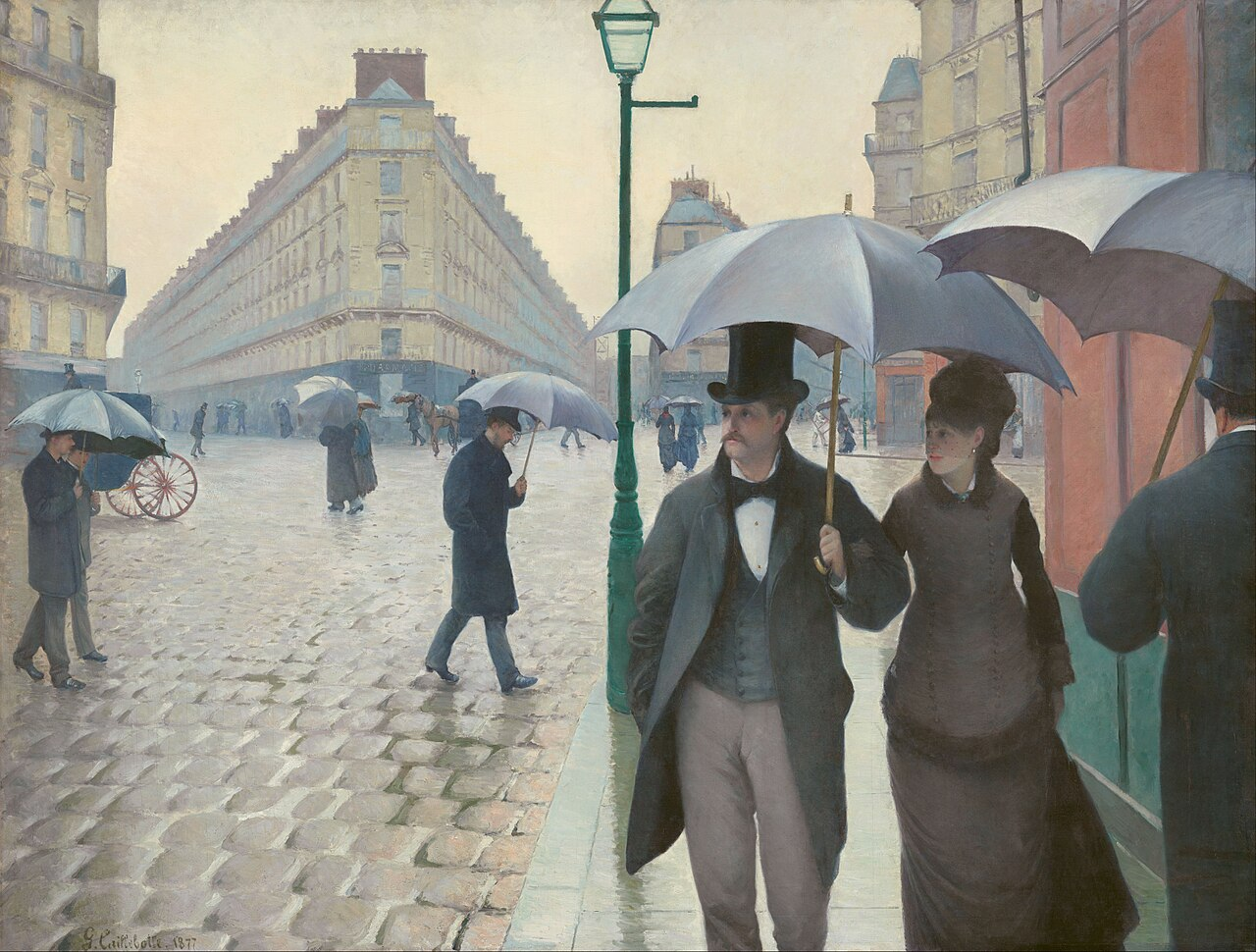
Umbrellas: The Aesthetics of 19th-Century Urban Life


From The History Avenue:

 Appearing in Ancient Egypt around the 25th century BC, umbrellas evolved and took on different purposes. In Ancient Egypt, Akkad, and Persia, for example, umbrellas served as status symbols, often tied to regal processions. In Ancient Greece, fashionable ladies used umbrellas as a style statement. In Rome, maidservants also used umbrellas to protect high-status women from the sun. There are rare mentions of umbrellas used for protection from rain. During the Middle Ages and the 16th and 17th centuries, umbrella popularity declined. Umbrellas were mostly reserved for clergy and religious processions. Records also note Italian riders using them as protection from rain. 

In the 18th century, things changed. Umbrellas were mostly used by women to protect themselves from rain. There was also a common perception that umbrella users were “vulgar” and didn’t have their own carriage to escape from rain. Apart from women, the most frequent users of umbrellas were the lower classes, who saw them as protection from sudden downpours or long, slow autumn rains. The first lightweight folding umbrella in Europe was introduced by French merchant Jean Marius, who had a shop in Paris. Princess Palatine purchased a model in 1712 and introduced it to her aristocratic friends. Very soon, umbrellas became a hit fashion statement in Paris. This paved the way for luxury umbrellas where the handle was especially important. The makers of umbrellas paid a lot of attention to crafting special handles depicting animals and having special shapes made from precious materials and carefully ornamented. In England, Jonas Hanway, a merchant and the founder of Magdalen Hospital, was the first person who braved public ridicule by carrying an umbrella in public. By the end of the 18th century, umbrellas were widely accepted by English gentlemen. (Read more.)


Share

Sunday, September 6, 2026

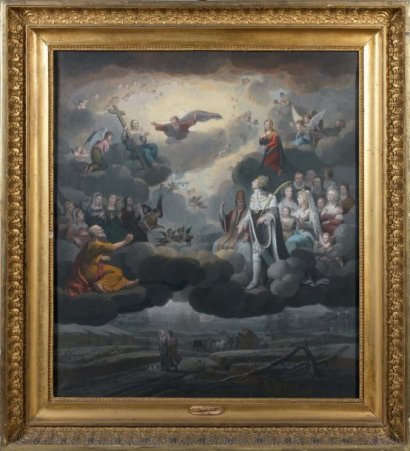
The Cloud of Witnesses

A marvelous painting showing Madame Royale in exile, walking down a long road with her uncle Louis XVIII, as the Blessed Trinity, the saints, the angels and her own family, watch over her from above. Share

Thursday, September 3, 2026

The Art of Pilgrimage


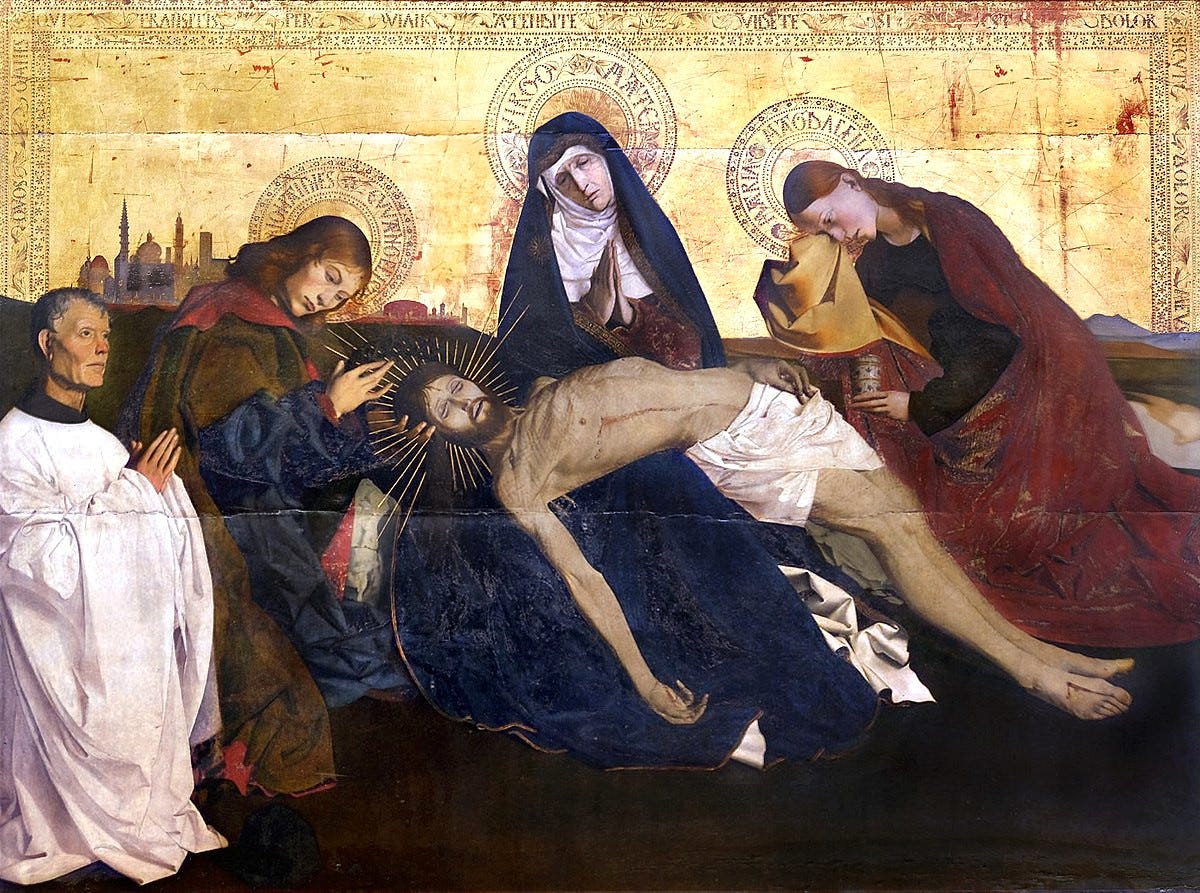
September is the month of Our Lady of Sorrows. From The Way of Beauty:

Pope Benedict XVI, in The Spirit of the Liturgy, identified three authentic traditions of Christian liturgical art: the iconographic, the Gothic, and the Baroque. Each is a legitimate expression of the Christian understanding of the human person and our relationship to God, and each communicates that understanding through a distinct visual language, thereby promoting prayer and worship among the faithful. The iconographic tradition, which dominated Christian art in both East and West until the 12th century, portrays man as he will be in heaven: transfigured, luminous, outside ordinary space and time. The Baroque, which developed in the 17th century, portrays fallen historical man in this life, in the full drama of suffering and grace. The Gothic stands between them, and it is the art most characteristic of the high medieval period in the West.

The Gothic is an authentic and distinct style of liturgical art that developed organically in the West from the iconographic prototype. As the change was gradual, any attempt to date its beginning involves some arbitrary choice. Most commentators settle on the mid-12th century, coinciding broadly with the completion of what is generally considered the first Gothic church, the Abbey of St Denis in Paris, in 1144. The name ‘Gothic’ was coined by High Renaissance commentators as a term of contempt. They held it to be a barbaric style belonging to the period of cultural decline that they believed had begun when the Goths overran the Roman Empire in the West a thousand years earlier. Historians today do not generally share that view of cultural decline, but the name stuck. Even those of us who admire Gothic culture and art continue to use it!

The impetus for the departure from the iconographic prototype stemmed from an increased emphasis on the reliability of human experience and the value of information received through the senses. This led to a greater curiosity about and appreciation of the natural world. Such appreciation was not new: Christians had always relied on sensory information and valued the beauty of the cosmos. What was different was the degree of weight now placed upon them.

Tied to this was the conviction that our world, though fallen and imperfect, is nevertheless good, ordered, and beautiful. There may be evil and suffering in the world, and it may not be as good and beautiful as it ought to be, but it remains God’s creation. This appreciation of the natural world and confidence in our ability to know it through the senses sparked curiosity and a desire to observe it more closely. One effect was the rise of scientific inquiry; another, the one that concerns us here, was an increased naturalism in art, a greater correspondence to natural appearances. The devotion to rational inquiry bound up with this cultural movement also led to a new approach to learning and to the establishment of the great universities, among them those of Paris and Oxford. (Read more.)


Share

Thursday, August 27, 2026

Elizabeth I and Cleopatra

 Elizabeth I is here portrayed among the goddesses
I think Cleopatra had more similarities with Mary Stuart than Elizabeth Tudor, but the article makes some interesting points. From the University College of London:
Perhaps second only to Tutankhamun in the who’s-who of Ancient Egypt Cleopatra VII is colloquially known as the Last Queen of Egypt. This is a very debatable epithet, whilst she is the last pharaoh of Egypt, she is also the last of Ptolemaic dynasty, a Greek family who ruled Egypt following Alexander’s conquest in 332 BC. Her death, 12th August 30 BC, is chronicled by Plutarch, mentioned by Virgil and exonerated by Horace[1],  she is so renowned her death is sometimes used to denote the end of the Hellenistic era.

Queen Elizabeth, who died 3 years prior to this play’s performance, is quite a similar character. With a slightly dubious claim to the throne, her death in 1603 heralded the end of the Tudor rule.  Following the establishment of the Church of England in the 1530’s and the sweeping massacres of Catholics and Protestants alike England had a Catholic Scottish King, James I. For years England had been at war with both Scots and Catholics, and now had that exact ilk on their throne.

Cleopatra faced similar regency problems;  she may have been an originally Greek Queen, but she was barring the advancing Roman Empire from Romanising her country and herself. Here the Queens differ, Elizabeth went on the offence, striking out at Catholic enemies, such as Spain with her famous victory in 1588. Cleopatra had nowhere near the allies nor resources to defeat her foe (indeed she lost her major naval incursion at Actium), so she had to make them [allies].

Allying herself to Caesar and then Mark Anthony she coerced armies and treaties out of them to protect her beloved Egypt. Plutarch, writing in the 1st century AD, describes Mark and Cleopatra’s first encounter as:
“Venus was come to revel with Bacchus for the good of Asia” (Lives III.XXVI.3)
Cleopatra is represented as the Roman goddess of love and founder of Rome, great praise for an Egyptian Queen who defied them. (Read more.)
Share

The Banality of an Evil Pro-Abortion Art Exhibit

 From Mark Judge at Chronicles:

Still, the effect of seeing Andrea Bowers’ art was mostly enervation. This kind of angry political art is by now very old hat. Take the first room one enters at the exhibit. In Wall of Letters: Necessary Reminders from the Past for a Future of Choice, Bowers has simply reproduced dozens of letters of women seeking abortions, as well as guides on how to perform abortions, blown them up to poster size, and wallpapered a huge white room with them. This performative exercise might have shocked people a few decades ago, but by now the public has already absorbed and passed its judgment on the nonsense of artists like Robert Mapplethorpe and Andres Serrano. We have moved on. A hectoring and didactic display meant to incite insurrection in defense of abortion is old news. I mean, I was around to see Karen Finley smear herself with chocolate!

Bowers does better in the other rooms at Glenstone, which feature her pieces The Body is Not a Thing, It’s a Situation and Women and the Earth Have to Tolerate a Lot. Bowers has reproduced book illustrations, both from 1896, on square panels of cardboard. The illustrations themselves are quite beautiful, lovely representations of women in flowing Victorian dresses bodies intertwined. The original drawings were meant to illuminate women as deeply powerful and fertile beings with a seamless and metaphysical connection to nature. Then there are the works Ecofeminist Sycamore Branches: Women Have Always Thought Like Mountains, which feature tree branches illuminated with neon. The irony, of course, is that Bowers is using imagery evocative of the sensual and generative power of women to argue for killing babies. (Read more.)

Share

Tuesday, August 18, 2026

The Remarkable Rise of Empress Theodora

 From Risto Gjorgjiev:

 Born around 500 AD in the vibrant city of Constantinople, Theodora’s early life was far from royal. Her father, Acacius, was a bear trainer for the city’s grand Hippodrome, a colossal stadium renowned for its chariot races and theatrical spectacles. After his untimely death, Theodora’s mother, a dancer and actress, found herself struggling to provide for her three daughters. To make ends meet, young Theodora was thrust into the world of entertainment, becoming an actress and dancer in the very Hippodrome her father had worked.

 The Hippodrome was not just a place of entertainment; it was the beating heart of Byzantine social life. Here, factions clashed, politics played out, and the mood of the populace was gauged. Theodora, with her keen observation, learned to read the crowd’s behavior, understanding their passions, grievances, and loyalties. This knowledge would later prove invaluable.

However, life in the limelight was not without its challenges. Theodora faced societal disdain due to her profession, which was often associated with promiscuity. Her travels across the Eastern Mediterranean exposed her to various cultures and experiences, including a tumultuous relationship with a Syrian official that left her stranded in North Africa.

In a twist of fate, Theodora’s return to Constantinople marked a new chapter in her life. Embracing Christianity, she left behind the world of entertainment and joined a community of devout women. It was during this period of reflection that destiny played its card: she caught the eye of Justinian, the nephew of the reigning emperor and the empire’s most eligible bachelor. (Read more.)

 The Mad Monarchist has a post about one of the most colorful women who ever lived, the Empress Theodora.

Together with her husband Empress Theodora oversaw the rebuilding of Constantinople into one of the most spectacular cities in history. She helped in the building of hospices, churches and refuges for the poor. She is also credited with influencing new laws to protect women, making rape and kidnapping capital offenses, no matter if the woman was noble or common born. Women could not be forced into the entertainment industry or prostitution and could not be put in prison for debts. Instead they were to be placed under the supervision of religious women to work off their debt. This was necessary because of the rape and abuse women often suffered in prison. She cracked down hard on prostitution, buying the freedom of many girls herself, meting out harsh punishment to their captors and setting up establishments to help them get back on their feet in legitimate ways. (Read more.)

Empress Theodora did much to protect women during her husband's reign. From The Collector:

The origins of women’s rights can be attributed to Empress Theodora. Probably her experience as a young woman marginalized by the institutional system of that time pushed her to work on the improvement of women’s rights in the Empire. She elaborated on The Corpus Juris Civilis, a series of juridical reforms included in Roman law, and laid the foundation for a framework for Western legal heritage for women’s rights, including the English Common Law, the American Constitution, and even contemporary international public law. Additionally, under Empress Theodora, rape became punishable by death. No matter their position or status, everyone present during the rape was affected by this rule, and the rapist’s property was handed over to the victim. (Read more.)
Share

Monday, August 17, 2026

Queenship and Revolution in Early Modern Europe: Henrietta Maria and Marie-Antoinette

Marie-Antoinette de Lorraine d'Autriche

Henriette-Marie de France
Queen Marie-Antoinette, wife of King Louis XVI of France and Queen Henrietta Maria, wife of King Charles I of England were two of the most notorious queens in European history. They both faced accusations that they had transgressed social, gender and regional norms, and attempted to defend themselves against negative reactions to their behaviour. Each queen engaged with the debates of her time concerning the place of women within their families, religion, politics, the public sphere and court culture and attempted to counter criticism of her foreign origins and political influence. The impeachment of Henrietta Maria in 1643 and trial and execution of Marie Antoinette in 1793 were also trials of monarchical government that shaped the English Civil Wars and French Revolution.
I was lucky enough to receive a copy from Palgrave Macmillan of Queenship and Revolution in Early Modern Europe: Henrietta Maria and Marie Antoinette by Carolyn Harris, which is a part of their Queenship and Power series. Marie-Antoinette has had much written about her, while Henrietta Maria seems to have been quite forgotten. I only recently received a new biography about her.
The comparison between Marie-Antoinette and Henrietta Maria is perhaps not one that immediately comes to mind, but both women lived in a time of civil unrest, albeit over 100 years apart. Both women were childless for the first part of their marriage and suffered for it. It’s a rather interesting comparison, and I especially enjoyed reading about Henrietta Maria’s impeachment, about which so little appears to have been written. Henrietta Maria managed to escape to France, but without her husband who was eventually executed in 1649. Marie-Antoinette and her family also attempted to escaped, but they were caught, and both Marie-Antoinette and her husband were executed by guillotine. (Read more.)
  My books on the two Queens available HERE. Share

Wednesday, August 12, 2026

Charles I and Henrietta Maria Departing for the Chase

File:Daniel Mytens (c. 1590-1647) - Charles I and Henrietta Maria Departing for the Chase - RCIN 404771 - Royal Collection.jpg
 From The Royal Collection Trust:

 In this ambitious large scale double portrait by Daniel Mytens the King and Queen are depicted on a terrace as they prepare to depart on a hunting excursion. Surrounded by lively dogs, they are attended by the court dwarf, Jeffrey Hudson and an African servant who brings their horses. The unusual composition, in which the two main figures are set off to the left hand side serves to emphasise the informality of the image. The couple are depicted in fashionable dress rather than court regalia and the strength of their loving relationship is commemorated through their intimate pose - they are shown holding hands - while a winged cherub showers flowers upon them. (Read more.)


More HERE.


Share