Showing posts with label Poetry. Show all posts

Wednesday, September 16, 2026

Chloridia

 Image 

From Tony Riches: "Time travel back to the court of King Charles I with a glimpse of my research - the fascinating full text of Chloridia : rites to Chloris and her nymphs, a Shrovetide masque performed by the queen at Whitehall Palace." (Complete text HERE.)

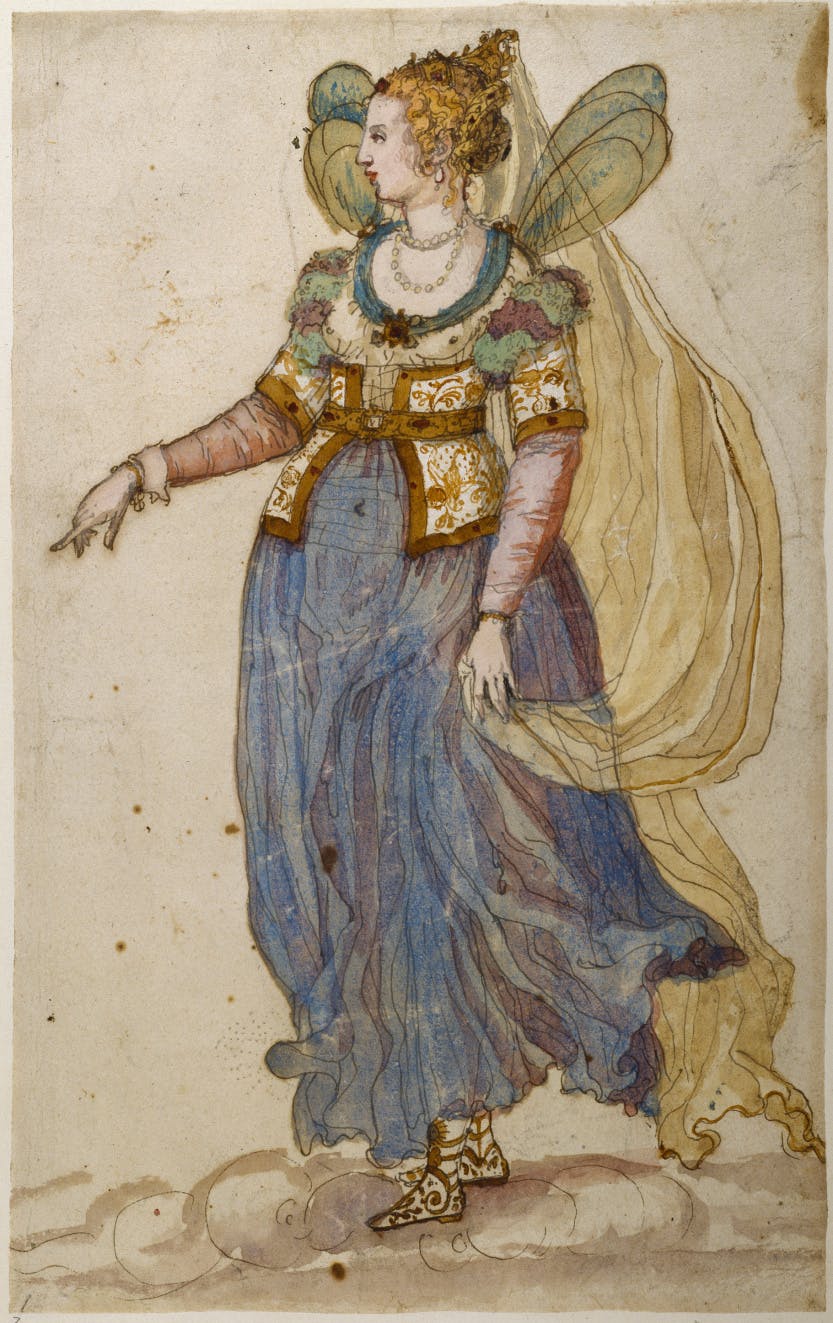
Costume sketch for masque by Inigo Jones for Henrietta Maria

More on masques, HERE.

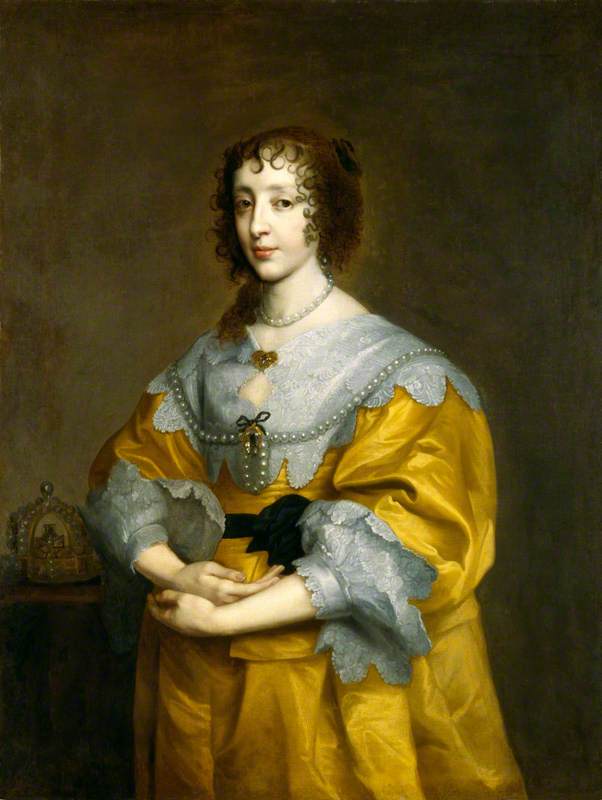
Queen Henrietta Maria


Share

Wednesday, August 26, 2026

Court Masques

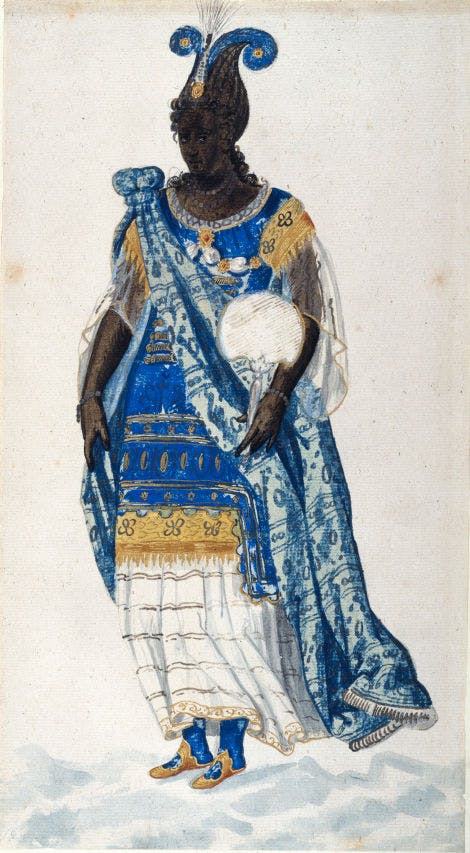
Costume design by Inigo Jones for Queen Anne's "Masque of Blackness"                                                                                                                     

Another design by Inigo Jones for one of Henrietta Maria's masques

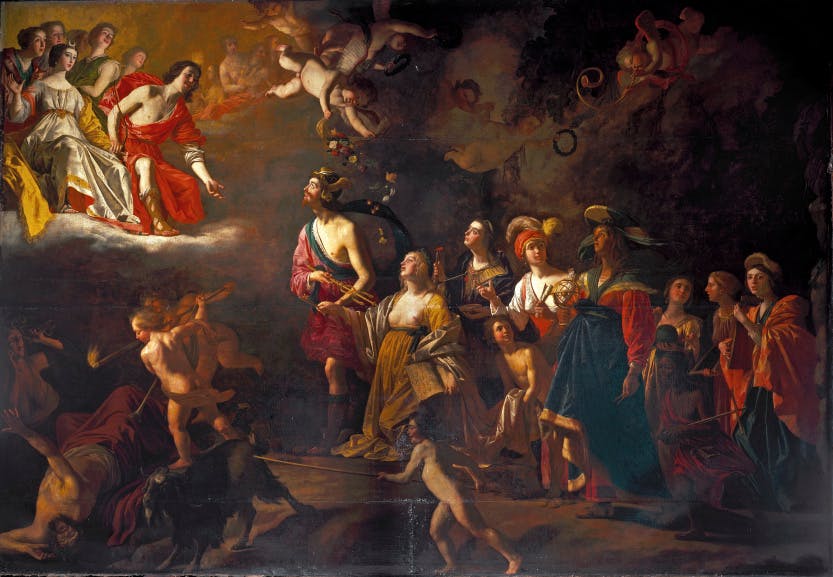
The court of Charles I in costume in a classical fantasy, Buckingham and his life Katherine are staring up at Charles I and Henrietta Maria.

Henrietta Maria of France

Masques were a big part of court life in both the English and French courts of the seventeenth century, especially during Shrovetide. From Historic Royal Palaces:

The masque began as an improvised performance at court in the 16th century during which courtiers and even royals would disguise themselves for play acting, fun and dancing. 

Masques were staged at Whitehall and Hampton Court Palaces for the Stuarts, with singing, acting, music, dialogue, amazing costume and above all, ‘special effects’ and moving scenery. By the early 1600s, under masque-loving monarchs James I and his queen Anne of Denmark, it became really elaborate. 

A Banqueting House was built specifically for the performance of masques at Whitehall Palace in 1608, but this burnt down in 1619, and was replaced by the present building, designed by Inigo Jones and completed in 1622. 

The Stuart Masques were mostly created by the brilliant partnership of playwright Ben Jonson and set and costume designer Inigo Jones. These temperamental artists quarrelled over whose contribution was more important, and after 1632, Jones worked with less argumentative (and less talented) poets.

The masques were a heady combination of opera, theatre, ballet and ball. They were always allegorical, featuring gods and goddesses from mythology and British history. Their purpose was to demonstrate the wisdom, and God-given right to rule, of the Stuart monarchs. There was always an ‘anti-masque’, featuring wild and outlandish dancers, who symbolised the chaos of a kingdom before the Stuarts. This was followed by the masque proper portraying the idealistic world of peace and harmony under divine kingship. At the end of the masque, the King would dance, and then the courtiers. Masques were performed for, rather than by, the court, although sometimes the queen and her ladies danced. 

A masque was also a place to see and be seen. They were incredibly expensive to produce; some of the most lavish were staged by affluent lawyers. But despite the cost, they weren’t always the most comfortable of shows to attend, for either actors or audiences. The crowded room was stifling hot, and smoke from the hundreds of torches must have been oppressive. Sometimes there was a long delay before the performance began. The chaplain to the Venetian Ambassador wrote of his experience after attending a masque in 1618: ‘So crowded and uncomfortable that had it not been for our curiosity we would have given up or expired … every box was filled notably with the most noble and richly arrayed ladies… During the two hours of waiting we had leisure to examine them again and again.’ (Read more.)

From Luminarium:

HAD Ben Jonson never lived, the English masque would scarcely need to be chronicled among dramatic forms. For despite the fact that mumming, disguising, and dancing in character and costume were pastimes in England quite as old, if not older, than the drama itself, it is to Jonson that we owe the infusion of dramatic spirit into these productions, together with the crystallization of their discordant elements into artistic unity and form. Generically, the masque is one of a numerous progeny, of more or less certain dramatic affiliation. Specifically, a masque is a setting, a lyric, scenic, and dramatic framework, so to speak, for a ball.1  It is made up of "a combination, in variable proportions, of speech, dance, and song;" and its "essential and invariable feature is the presence of a group of dancers . . . called masquers."2   These dancers — who range in number from eight to sixteen — are commonly noble and titled people of the court. They neither speak nor sing, nor is it usual to exact of them any difficult or unusual figures, poses, or dances. Their function is the creation of "an imposing show" by their gorgeous costumes and fine presence, enhanced by artistic grouping, and by the aids which decoration and scenic contrivance can lend to the united effect. On the other hand, the speech of the masque, whether of presentation or in dialogue, and the music, both vocal and instrumental, were from the first in the hands of the professional entertainer, and developed as other entertainments at court developed. The masque combined premeditated with unpremeditated parts. The first appearance of the masquers with their march from their "sieges" or seats of state in the scene, and their first dance — all designated the "entry" — was carefully arranged and rehearsed; so also was the return to the "sieges" or "going cut," and this preparation included sometimes the preceding dance. The "main," too, or principal dance, was commonly premeditated, as in Jonson Masque of Queens, where the masquers and their torchbearers formed in their gyrations the letters of the name of Prince Charles. Between the "main" and the "going out," two extemporal parts were interpolated, the "dance with the ladies" and the "revels," which last consisted of galliards, corantos, and la voltas. It was in the development of the "entry" and the "main" that the growth of the masque chiefly consisted. (Read more.)

From Dr. Lawrence Shafe:

There was an Italian tradition, particularly a Florentine tradition, called the intermezzi. These were entertainments designed to fill in the gap between plays. The key series was in 1589 when the Grand Duke got married. They were trying to recreate a Roman theatre with classical allegory in the form of an entertainment. Bernado Buontalenti was the architect engineer of these displays.

A 1600 Florentine drawing shows a mountain rising from a stage, at the top is Pegasus with Apollo and the Muses below and Poetry below them. Clouds float in with people in them and they have trees that sprout leaves. Light boxes were used containing multiple candles made brighter with mirrors and the theatres were not darkened as much as ours. This event was publicized across Europe and news came back to Henry, Prince of Wales. His friend John Harrington was in Florence and wrote back describing them.

The intermezzi increased the scale and the engineering (trap doors, revolving stages) and it was these the Stuart court wanted to emulate.

Ben Johnson and Inigo Jones were the great double act although they eventually fell out.

Caroline masques in England had a stage with a proscenium arch (first developed in the 16thC in Florence and picked up by Jones). The stage tilts at an angle and it has slots in the sides for scenery. In 1635 Inigo Jones a country scene for The Temple of Love. 1609 Jones, [at] The Masque of Queens for Anne of Denmark [made] a machine with a round arch doorway and a revolving section on top with seats. The machine was called machina versitilis.

Anne of Denmark was the prime mover to create these spectacular masques. She loved dancing and was the leading dancer. She singled out Ben Johnson but the ideas were unfortunately hers so they were all a bit thin. All the music and choreography has been lost, in fact the scenery was pulled down and destroyed as soon as the masque was over. They were modelled on the French ballet do corps where the dancers formed a complex pattern. James I never ever took part. (Read more.)


 HERE is the original program for the ballet danced by Henrietta Maria at the Louvre when Charles first saw her.

An article on the masques of Queen Henrietta Maria, HERE.

More on the stage props created by Inigo Jones, HERE.

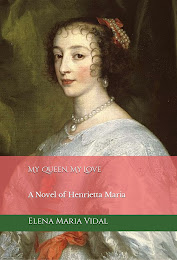
My novel on Henrietta Maria, HERE.
Share

Monday, August 24, 2026

‘Mr Molière: A Brief History’

 From Jemahl Evans at Seventeenth-Century Lady:

Jean-Baptiste Poquelin (1622-1673) more commonly known as Molière, is a titan of world literature. The French Shakespeare, his influence on the development of early modern theatre, and his acerbic observations on the human condition in his work have fascinated and enthralled audiences for centuries. So great was his lasting influence on French literature that in 2025 Melvyn Bragg would restate the claim that French: ‘…is the language of Molière.’

Jean Baptiste was born into a well-to-do Parisian family in 1622. Christened ‘Le Nez’ (The Nose) by a maid, it remained a family nickname for the rest of his life. His father purchased the rank of Valet de chambre ordinaire et tapissier du Roi (Upholsterer to the King) in 1631 when the boy was just six. The title provided a steady income and conferred respectability on the upwardly mobile clan. After the death of his mother in 1632, Jean Baptiste was educated at the elite Collège de Clermont run by the Jesuit order (now the Lycée Louis-le-Grand). It is here that the young Parisian got his first taste of the theatre and actors. The Church would never forgive him.

The profession was not held in high regard in Seventeenth-Century France. Actors were publicly shamed as sinners, ran the risk of excommunication, and were forbidden from burial in consecrated ground. It was not the career path for a scion of a respectable bourgeoisie Parisian family. A decree by Louis XIII in 1641 stating that actors were ‘not to be considered worthy of blame nor prejudicial to their reputation’ did little to improve matters, even as the public flocked to theatrical performances. After completing his education, Jean Baptiste initially succeeded his father as Upholsterer to the King and started training as a lawyer. However, at the age of 21, he abandoned a respectable career for a life on the stage. His father and wider family were predictably appalled by the decision. (Read more.)


Share

Monday, July 27, 2026

The Agony of The Odyssey

 From Paul du Quenoy at Chronicles:

“Hahaha. Very proud to say we got the Odyssey removed from the curriculum this year!” Lawrence, Massachusetts, high school teacher Heather Levine tweeted in 2020, responding to a post from a fellow “scholar-educator” who called Homer’s epic poem “trash.” The Wall Street Journal reported that the teachers were part of an online group of left-wing activist educators who tried to get Homer’s epic and other classics of Western literature banned from classrooms because of their supposedly racist, sexist, and ableist contents.

These undoubtedly enlightened purveyors of knowledge have yet to register any reaction to this summer’s blockbuster release of Sir Christopher Nolan’s film adaptation of Homer’s epic. Nolan’s film, which he co-produced with his wife Emma Thomas and for which he wrote the script, debases The Odyssey so cheaply that Hellenophobic New England schoolmarms might well be pleased, assuming they are not too triggered to see the film.

Nolan was on tap to direct Troy, an adaptation of Homer’s Iliad executed more than two decades ago by Wolfgang Petersen, but the studio eased Nolan out of the project, giving him Batman Begins as a consolation prize. Nolan has said in interviews that at the time, he felt ill-prepared to tackle The Iliad. He only conceived his Odyssey project in 2024, after the stunning success of Oppenheimer, his disjointed biopic of the troubled atomic bomb scientist J. Robert Oppenheimer, which won seven Academy Awards. According to interviews, Nolan kept the subject of his next film secret for nearly a year while he read several translations of Homer’s epic, along with various related media, apparently including comic book adaptations.

Perhaps naturally, Nolan contextualized The Odyssey within his larger oeuvre of feature films, many of which, including Memento, Interstellar, and his Batman trilogy, relate existential quests involving emotionally tortured men who suffer from familial loss. From that perspective, Homer’s epic—a hero’s 10-year voyage home from a distant battlefield to a faithful but beleaguered family—may have seemed a natural fit. Nolan had the time, money, and opportunity to make a stirring and searching literary adaptation of great significance, if for no other reason than that a serious film adaptation of The Odyssey hasn’t been undertaken since Italian director Mario Camerini’s flawed 1954 attempt in technicolor, Ulysses, starring Kirk Douglas. (Read more.)

Share

Wednesday, July 22, 2026

Restoring a House in Saint-Antonin-Noble-Val

How Jinny Blom restored her mother's house in South of France with colour pattern and joy Architecture Building City... 

How Jinny Blom restored her mother's house in South of France with colour pattern and joy Home Decor Lamp Couch... 

How Jinny Blom restored her mother's house in South of France with colour pattern and joy Indoors Interior Design Wood... 

From Home and Garden:

‘I am very loyal,’ says the landscape gardener Jinny Blom. ‘If I make a promise, I’ll keep it.’ That is precisely how she ended up being the custodian of a house in a small village in south west France. Before Jinny’s mother Françoise died in 2013, she asked her daughter to look after her home in Saint-Antonin-Noble-Val. ‘It meant a huge amount to her,’ Jinny adds. ‘I feel she belonged there and so it became somewhere with real resonance for me.’

Her mother moved to the historic village, which is surrounded by a rugged limestone plateau at the bottom of a gorge on the Aveyron River, on something of a whim in the early 1990s. ‘It was a funny choice,’ says Jinny, ‘as she was very gregarious, and it was desolate and parochial back then.’ Things have, however, changed significantly since. Today, the inhabitants of the charming village include a Parisian interior designer and a former member of Yohji Yamamoto’s fashion design studio. As Jinny puts it, ‘There is a lot of nice stuff happening.’

Françoise sounds like a very wonderful character. Born in Madagascar, where her French father was a spice and timber trader, she was sent to school in England during the Blitz: she arriving speaking only Malagasy patois and didn’t see her parents again until she was an adult. ‘My mother was more English than anyone you’ve ever met,’ notes Jinny. ‘She spoke like the Queen and had her hair done like her. She was, to all intents and purposes, the Queen, except that she was – without a shadow of a doubt – French, because she wore couture, which nobody else did in Royal Leamington Spa, where we lived.’ (Read more.)

 How Jinny Blom restored her mother's house in South of France with colour pattern and joy Indoors Interior Design...

Image may contain Cushion Home Decor Indoors Interior Design Pillow Chair Furniture Bed Bedroom and Room

Share

Saturday, July 18, 2026

Homer’s ‘The Odyssey’ Is About Duty, Loyalty, and Family

 From Victor Davis Hanson at The Daily Signal:

Christopher Nolan, the renowned British director, has a new film coming out, another remake of “The Odyssey” by Homer. It’s supposed to come out July 17.  

Everybody’s been talking about it, not because they know what’s in it or they’re trying to guess how he treats this age-old epic, but because one of the stars, Lupita Nyong’o, and forgive me if I mispronounced her name, has been very vocal that, as she views the script and Homer’s work himself, there’s a matter of feminism that Homer did not highlight women sufficiently. 

Homer wrote “The Odyssey,” remember, around 700 to 650 BC at the dawn of the Greek city-state. It’s the second of his two epics, "The Iliad" and "The Odyssey", and it’s a much different epic than "The Iliad", which takes place in about 11 weeks on the plain of Troy.  

This is a panoramic view of the Mediterranean and traces the 20-year odyssey of the hero Odysseus to get back from Troy to the northeastern island off the coast of Greece, Ithaca. 

What she said was that there was not a sufficient portrayal of women or they were not powerful enough. I couldn’t understand that. I taught “The Odyssey” for 20 years in English at the California State University system to a variety of students, probably 2,000 students in humanities courses, as well as a much smaller number in Greek. 

And one thing one comes away with is that there’s no literature anywhere in the world at that time that has been more deferential or more interested in women. (Read more.)

Share

Tuesday, July 7, 2026

The Meadows of Medieval Summer


 From Eleanor Parker at History Today:

A 15th-century calendar poem, turning these labours into rhyming verse, has its speaker say in July, ‘With my scythe my mede I mowe’, and in August, ‘And here I shere my corne full lowe’. This work may even have given July one of its names in English: in some sources it is called ‘Mead-month’, which may go back to a lost Old English name, Mædmonað.

A mead and a meadow are the same thing, though the words now have different connotations. Both go back to Old English forms of the same word, mæd and mædwe. They are related to the Germanic base of the verb mow, just as hay is related to the verb hew, i.e. ‘cut down’. A meadow is land that’s ‘mown’, just as hay is grass that’s ‘hewn’.

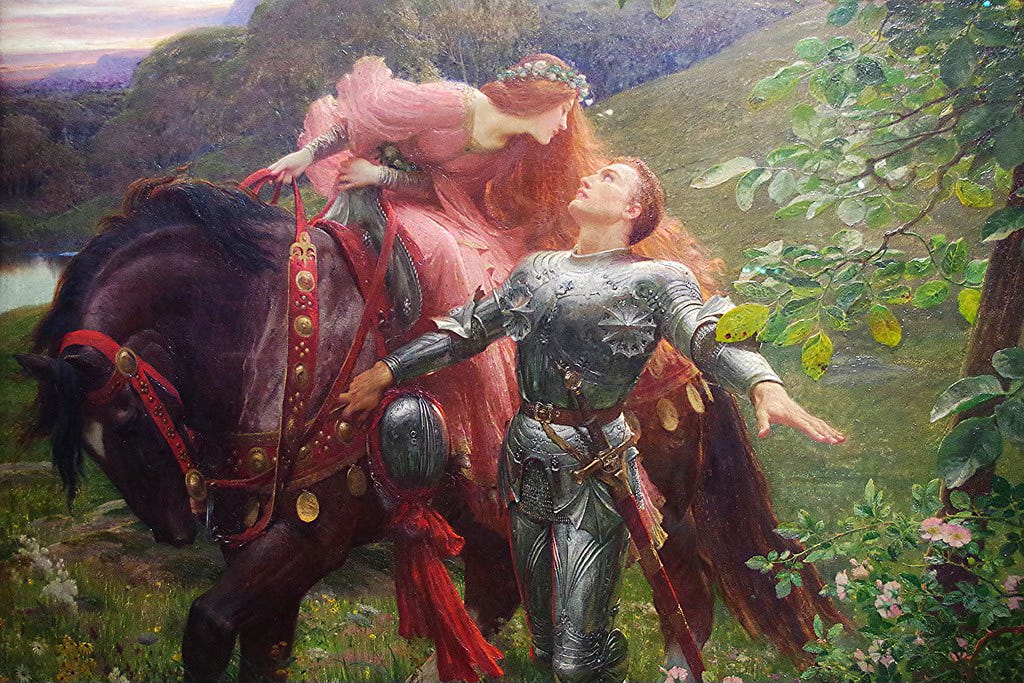
These days meadow is the usual term in modern English, while mead has become archaic – not quite obsolete, but certainly carrying an old-fashioned and poetic air. It calls to mind literary landscapes more than real ones, such as the place where Keats’ woebegone knight in La Belle Dame Sans Merci ‘met a lady in the meads, full beautiful, a faery’s child’.

Such romantic, medievalising associations of mead, compared to the more ordinary meadow, probably owe something to the way the word is used by Middle English poets, especially Chaucer. Chaucer writes often of meads and their beauties, praising their colourful flowers and fragrant scents and the enchantments that might be met there. At the beginning of ‘The Wife of Bath’s Tale’, for instance, the wife nostalgically describes the good old days of King Arthur when Britain was full of fairy magic and ‘The elf-queene, with hir joly compaignye, daunced ful ofte in many a grene mede’. (Read more.)

Share

Monday, May 25, 2026

Earliest English Poem

 From Euronews:

A 9th-century manuscript held in Rome has revealed the earliest known Old English poem, Caedmon’s Hymn, hidden within a copy of Bede’s Ecclesiastical History of the English People. In the archives of a Roman library, researchers have made an astonishing discovery: a 9th-century manuscript copy of the oldest known poem in the English language - missing, until now.

The lost copy of the Hymn of Caedmon was uncovered in the archives of the National Central Library of Rome. The author of the nine-line poem is said to be a cowherd from Whitby in North Yorkshire, who was inspired after a divine visitation. The composition praising God for the creation of the world, was composed in the 7th century, and survived thanks to its inclusion in some copies of the Ecclesiastical History of the English People, an 8th century history of England written in Latin by the venerable Bede, a northern English monk and saint. (Read more.)

 
Share

Sunday, May 17, 2026

5 Historical Figures Who May Have Inspired King Arthur

real king arthur battle illustration
Notice the dragon pennant. It went back to the Romano-British legions and was like a small Chinese dragon. It whistled when the wind blew through it. It became the symbol of the Pendragons.

I would happily do nothing all day but study Arthurian legend. One thing to keep in mind is that many of the names are not proper names but titles. "Riothamus," for instance, in the ancient British language means "high king." From The Collector:

Another warlord from Dark Age Britain, who is one of the prime historical candidates for the real King Arthur, is Riothamus. He is known from two Roman sources, one from the 5th century and one from the 6th century. The more important of these two is the account by the 6th-century historian Jordanes.

He described how Riothamus, the king of the Britons, assisted the Romans in a battle against Euric of the Visigoths in the year 470. This idea of a king of the Britons travelling from Britain to Gaul to fight a battle in association with the Romans is fascinating for its similarities to the Arthurian legends. In the account of Arthur’s life by Geoffrey of Monmouth, Arthur is said to have travelled to Gaul with a large army to fight against the Romans.

In addition to this overall similarity, Riothamus is said by Jordanes to have fled to the territory of the Burgundians. It is argued that, given the location of the battle in the territory of the Bituriges, his route while fleeing would have brought him near a town called Avallon. This is then connected to the tradition of Arthur being taken to the Isle of Avalon after being betrayed by his nephew, Mordred. (Read more.)

Share

Friday, May 15, 2026

Helen of Troy


Abduction of Helen by G. Hamilton


The face that launched a thousand ships
And burnt the topless towers of Ilium. 
 —From The Tragical History of Doctor Faustus by Marlowe

 From Ancient History Encyclopedia:

Helen of Troy (sometimes called Helen of Sparta) is a figure from Greek mythology whose elopement with (or abduction by) the Trojan prince Paris sparked off the Trojan War. Helen, considered the most beautiful woman in the world, was the wife of Menelaus, the king of Sparta, and he persuaded his brother Agamemnon, king of Mycenae, to form a great army to besiege the mighty city of Troy in order to recapture Helen. Following the Greek victory in the war, Helen returned home with Menelaus but she became a despised figure in the ancient world, a symbol of moral failure and the perils of placing lust above reason. Despite the poor standing of the literary Helen, she also had a divine form and was the centre of cults at several Greek sites, notably Rhodes, Sparta, and Therapne. 

In Greek mythology, Helen was the daughter of Zeus and Leda, the queen of Sparta and the wife of Tyndareus. Zeus disguised himself as a swan to seduce Leda, and Helen was the result of their amorous engagement. In another version of the myth, Helen's mother is the goddess Nemesis, the personification of retribution. Whoever is the mother, in both versions, Helen is born from an egg in Sparta. Helen's siblings included the hero twins Castor and Pollux (aka Polydeuces) and Clytemnestra, the future wife of King Agamemnon, the king of Mycenae. One day, Tyndareus offered sacrifices to all the gods but forgot Aphrodite and the goddess, angered at the slight, then promised that all of the king's daughters would become infamous for their adultery. (Read more.)


From The New Republic:

Ruby Blondell’s insightful study of ancient Greek representations of Helen of Troy notes the close connections between her subject and the Pandora myth. Both, she argues, spring from cultural anxieties about female beauty and female sexuality, centered on the figure of the parthenos—the girl at marriageable age, a liminal figure who must cross from the world of childhood in her father’s house to the house of her husband. “She must be sufficiently reluctant to suggest that she will not stray once she is married, but she must also actively desire her new husband”—a balance that constantly threatens to tip over. Helen, the most famous adulterous wife in the Western tradition, is figured as a woman who is constantly in this liminal state, and who repeatedly crosses over from one household to another: “many-manned Helen,” as Aeschylus calls her. She was (and is) the locus for exploring the questions of whether beautiful women are always necessarily bad, and whether female sexual desire is always a force of destruction. She is also—unlike modern versions of the promiscuous or adulterous woman—always presented as at least semi-divine, the ever-young, ever-beautiful daughter of Zeus, worshiped at cult centers all over Greece, especially in her native Sparta. Modern versions of misogyny usually do not account for the possibility that “bad” women might also be goddesses.

The best-seller about Helen of Troy by the television presenter Bettany Hughes, from 2007, bizarrely claimed to tell, and to celebrate, “Helen as a real character from history,” while acknowledging that her existence is only “a possibility”—as if the biography of a mythical character from three thousand years ago could possibly be reconstructed. Blondell has almost none of this naïveté: she notes explicitly that her subject is a set of cultural tropes, not a historical person. Helen was a construction of the Greek male imagination, and the myths and literary treatments of Helen can teach us nothing about the lives even of women in classical Greece, let alone women in Sparta in the Bronze Age: she is “a concept, not a person.” But these myths can teach us a great deal about the complex attitudes of ancient Greek men, mostly ancient Athenian men, toward women, female beauty, and male desire.

The story goes that Zeus wanted to reduce the human population, so he arranged for the birth of the two characters who would make the Trojan War inevitable: Achilles and Helen, representing “seductive female beauty and destructive male strength.” They have in common an extraordinary self-awareness and concern for their future reputations in myth and legend. Both were half-human, half-divine, Achilles being the son of the mortal Peleus by the sea-goddess Thetis, and Helen the daughter of Zeus in the form of a swan and of the Spartan queen Leda. Owing to this parentage, she hatched from an egg—the first mark of her unusual, not-quite-human status. Helen is the only female child of Zeus by a mortal woman, an exceptional woman in this as in every other respect. Other versions of the myth suggest that she was the daughter of Nemesis, or “Destruction.”

Helen’s beauty is not subjective. A key premise of the myth is that she is beautiful in some absolute and total way that defies description, and hence can be represented only by entirely conventional means. Helen, like any other beautiful woman in the Greek literary tradition, has lovely cheeks, neat ankles, and pretty accessories. She is equally irresistible to any and every man. As Blondell neatly puts it, “a beauty that is in the eye of the beholder may launch a ship or two, but only a beauty upon which all beholders agree can bind a generation of heroic males under oath and generate an enterprise as cataclysmic as the Trojan War.” 

From a young age, Helen was prone to getting abducted. When she was still a young girl the Athenian hero Theseus swiped her, but she was retrieved by her magical brothers, the twins Castor and Pollux. A little later, suitors from all over Greece began to court her, and took an oath that they would all fight together for her eventual husband. Menelaus of Mycenae, whose main claim to fame was his wealth, won Helen as his wife. But some time afterward, a Trojan prince named Paris was appointed to judge between three goddesses, Hera, Athena, and Aphrodite. He chose Aphrodite, goddess of love, because she promised him Helen as a reward—the only problem being that Helen was married already. The abduction of Helen caused the Trojan War. (Read more.)

The Hatching of Helen

More HERE.

Helen with King Priam watching Menelaus fight Paris

Share

Friday, May 8, 2026

Loverboy Chivalry vs Martial Chivalry


I love Arthurian legend, the basis for "courtly love" which the article refers to as "Arthurian" chivalry or "loverboy" chivalry. Courtly love was essentially invented by Eleanor of Aquitaine, inspired by the troubadour culture of the south of France, cultivated by her grandfather Duke William of Aquitaine. Queen Eleanor founded the "courts of love" in which great ladies would play lawyers and debate the highly romanticized and highly idealized manners and general behavior of their knighted admirers. It allowed women to hold forth upon matters of deportment and courtesy as well as discussing poems,songs and ballads. The bottom line was the respect and reverence which noble men were expected to show to noble ladies. It gave agency to women in an era of arranged marriages, when people did not marry for love. Women of all classes could be beaten by their husbands and mistreated in any number of ways. There was always the danger of both men and women finding love outside of marriage. Courtly culture acknowledged that such forbidden love happened but channeled it into chaste manifestations, because when actual adultery occurred it could lead to war, imprisonment or corporal punishment,  depending upon the rank of the lady and her husband. Not a Christian ideal but then many think it was influenced by the Cathars, as I explore in my novel The Night's Dark Shade. From The Chivalry Guild Letters:

Carolingian chivalry is the essentially French version, and its mythos is the chansons de geste (“songs of great deeds”) involving Charlemagne and his paladins—the most famous of which is The Song of Roland. Carolingianism is about war and God. It is the chivalry, Gautier writes, of the “11th and 12th centuries—that of the crusades, that of our [epic poetry]. It will appear rude and barbarous to some people, but in truth is strong and healthy, and has formed for us the powerful race whose glory has filled the world.” Roland and company don’t have much time for the finer points of etiquette and don’t dedicate themselves to idealized romantic love; they are too busy fighting Saracens and protecting Christian civilization.

As for the more popular Arthurian or English chivalry, Gautier has less fond things to say. He writes:

The romance of the Round Table spread amongst us the taste for a less wild but also a less manly chivalry. The elegancies of love in them occupied the place formally reserved for the brutality of war and the spirit of adventure in them extinguished the spirit of the crusades. One will never know how much harm this cycle of the Round Table inflicted on us. It’s civilized us no doubt; but effeminated us. It took away from us our old aim, which was the tomb of Christ gained by blood in battle. For the austerities of the Supernatural it substituted the tinsel of the Marvelous. It is to this dangerous but charming literature that we owe for theatrical, the boastful, rash chivalry which proves so fatal during the Thirty Years’ War.

This kind of chivalry also gives birth to the satires of Cervantes and company, which aren’t making fun of paladins defending Christendom but instead the errant knights roaming the countryside looking for damsels to rescue. “And we must confess,” Gautier notes, “that some complaints of the great satirist are not without foundation.” (Read more.)


 From Becoming Noble:

Modern discourse offers only impoverished models for women. Feminism dismantled an older understanding of womanhood without replacing it with a sustainable alternative. It treats the household as a prison, motherhood as an obstacle to self-realisation, and the virtues historically cultivated by women as instruments of oppression. Ironically, in so doing, it foreclosed many of the domains by which women wielded substantial influence over civilization.

The reaction is equally impoverished despite its superficial conservatism. The trad-wife thing, to take the obvious example, is a performance of homemaking that lacks any serious theological or historical foundation. It reduces womanhood to a visual display of domestic labour, detached from the actual structures of authority, education, and spiritual responsibility that characterised the aristocratic household. At bottom, it is a reaction to feminism conducted on feminism’s own materialist terms.

The home-schooling mother model is a significant improvement but still shares a visceral and fatal error which precludes its wider adoption. These approaches treat the domestic as something small. None advances the majesty of the Christian aristocratic tradition: that the household is the foundational unit of civilisation, that its proper ordering is a matter of cosmic significance, and that the woman who presides over it wields a form of distinct and profound authority. (Read more.)


Share

Wednesday, April 29, 2026

Who Is Queen Mab?

From Barrie's Peter Pan in Kensington Gardens, illustrated by Arthur Rackham
From The Imaginative Conservative:
Santayana dedicated some pages to a piece titled “Queen Mab” presumably after the enigmatic faery who is mentioned by Mercutio in Romeo and Juliet.[1] The essay turns into an analysis of British literature, which I take to mean that Santayana saw some form of greater representation in Queen Mab that extended to the wider British psyche. Santayana’s claims regarding British romantic literature, if there is truth in them, add yet another level of genius to Shakespeare, who would have most likely been aware of the duplicity of romance while implementing it in his play. I want first to explain Santayana’s essay—his views regarding British literature—before revisiting the lines where Romeo and Mercutio exchange their thoughts on the meaning of dreams and Queen Mab’s role within them. 
Who is Queen Mab? That is the question this essay will aim to explore. 
Santayana begins his piece by connecting literature to nature. He writes that nature is “far more resourceful than logic,” which is why she has “found a way out the contradiction” that exists between “the human need for expression” and the “British distaste for personal outbursts.” If our inner and outer man oppose each other, then literature is a way to circumvent this contrast. But not all literature is equal. Santayana turns his attention to romantic fiction, which he called a “bypath of expression.” It is a form of literature that is the equivalent of a fleeting phase in our lives, when man plays at “self-revelation” despite being far from it. In Romantic literature man indulges in “day-dreams and romantic transformations” and “imaginary substitutes” for himself as a way to “nurse and develop” his opinions and preferences without stating them directly. Through this form of expression, Santayana writes, man will “dream of what Queen Mab makes other people dream.” 
The sentence needs unpacking. In Santayana’s essay, Queen Mab is England’s literary imagination, but a very specific part of it: the Romantic. And this romantic part of the English literary imagination is a momentary step in our journey towards understanding our hearts. It is, in other words, incomplete. Santayana wrote that a man’s heart, his “ruling motives,” will be revealed “only in long stretches of constant endeavor and faithful habit,” which often comes towards the end of his life. But Queen Mab is still part of the human heart that managed to revolutionize people’s aesthetic sensibilities. British Romanticism elevated man’s self-image. As Santayana wrote, “that which he might have been, and was not, comforts him. Such a form of self-expression, indirect, bashful, and profoundly humorous, being play rather than art, is alone congenial to the British temperament; it is the soul of English literature.” (Read more.)
Share

Monday, April 27, 2026

Song


YOU bound strong sandals on my feet,
You gave me bread and wine,
And sent me under sun and stars,
For all the world was mine.
Oh, take the sandals off my feet,
You know not what you do;
For all my world is in your arms,
My sun and stars are you.
by Sara Teasdale

(Picture by Andrew Wyeth) Share

Sunday, April 26, 2026

The Easter Rising

 From The Abbey of Misrule:

The April weather in the Irish west was astonishing this year, for a while. Two whole weeks of unseasonal heat brought the land out from the finalities of winter. True, the frost still came at night, but by the afternoon I was digging the garden with my top off. Everything on our land awoke. Our field, in which we planted 800 trees nearly a decade ago and which is now becoming a forest, hums with insects heading for the poplar blossom and the whitethorn. The pond is full of frogspawn and the soil is warming. Crocus and cowslip defeat the couch grass in their quest for the light. Sparrows gather moss and straw, the hazel poles are budding. We have set up a beehive in a grove by the hedgerow, and now we wait in the hope that some worker will seek it out and beckon the swarm to follow.

But ask the animals, and they will teach you, or the birds in the sky, and they will tell you; or speak to the earth, and it will teach you, or let the fish in the sea inform you.

As the land has sung itself back into life, it is as if I have awakened too from some numbness that overcame me. It was not simply the numbness of winter. For a while, I have felt closed off from my land; somehow an alien as I walked through it. Maybe I was reading too much theology. I always knew that the Holy Spirit sung itself through bud and blossom, but knowledge is not experience. Back in the day, when I was a pagan and a pantheist, I felt the force of nature as an overwhelming power within me. Then I became a Christian, and something retreated.

What was it?

I wondered this, and I concluded that I had misdirected my worship. I had worshipped the trees rather than their creator. I think that this was a category error; still, I missed the feeling it gave me. I missed the sense that the trees were my sisters and the birds my brothers. Those who have never felt this may call it ‘pagan’, as if that meant anything, but they would be wrong. It is not ‘pagan’ to feel, as Adam did, as Eve did, that this place was created to be our home. That we were intended to be at one with it before we broke away and began instead to worship ourselves.

The heavens declare the glory of God; the sky proclaims the work of his hands. Daily they speak, they never become silent.

Something has happened to me this Easter, though; that old feeling has come back. Now I walk through my growing forest and I feel again that green force that I once felt, and I am overjoyed because I missed it. Is it different now? Yes, and no. I feel the land breathe within me and to me, I see that everything here has its own life, I feel the inscape of it all, but now I feel something beyond it too; something that made it, that sings it every hour, though for this force there is no time. (Read more.)

Share

Tuesday, April 21, 2026

My Lagan Love

https://blogger.googleusercontent.com/img/b/R29vZ2xl/AVvXsEjyEQRMpFkqbMvqB7C7W-i9Ezcc0UxzHNCJo2RLGF3jebVNqCYy0-6WGLEcR4fn0QlwxPIH0_fvSIfBzZl1yHZy_A9XIbVQTKj5q8lEi0wKwMoecYplzUWtkMAGdcnOYFFzntS5_0GBPeE/s1600/My+Lagan+Love.jpg
Where Lagan stream sings lullaby
There blows a lily fair

The twilight gleam is in her eye

The night is on her hair

And like a love-sick
leánan sídhe
She has my heart in thrall

Nor life I own nor liberty

For love is lord of all.


Her father sails a running-barge

'Twixt
Leamh-beag and The Druim;
And on the lonely river-marge

She clears his hearth for him.

When she was only fairy-high

Her gentle mother died;

But dew-Love keeps her memory

Green on the Lagan side.


And often when the beetle's horn

Hath lulled the eve to sleep

I steal unto her shieling lorn

And thru the dooring peep.

There on the cricket's singing stone,

She spares the bogwood fire,

And hums in sad sweet undertone

The songs of heart's desire


Her welcome, like her love for me,

Is from her heart within:

Her warm kiss is felicity

That knows no taint of sin.

And, when I stir my foot to go,
'Tis leaving Love and light

To feel the wind of longing blow
From out the dark of night.


Where Lagan stream sings lullaby

There blows a lily fair

The twilight gleam is in her eye

The night is on her hair

And like a love-sick
leánan sídhe
She has my heart in thrall

Nor life I owe nor liberty

For love is lord of all.


(from an old Irish song)
A beautiful rendition, HERE, HERE and HERE.

To quote from Mary O'Hara's notes on this song, from her book A Song For Ireland:

The leánan sídhe (fairy mistress) mentioned in the song is a malicious figure who frequently crops up in Gaelic love stories. One could call her the femme fatale of Gaelic folklore. She sought the love of men; if they refused, she became their slave, but if they consented, they became her slaves and could only escape by finding another to take their place. She fed off them so her lovers gradually wasted away - a common enough theme in Gaelic medieval poetry, which often saw love as a kind of sickness. Most Gaelic poets in the past had their leanán sídhe to give them inspiration. This malignant fairy was for them a sort of Gaelic muse. On the other hand, the crickets mentioned in the song are a sign of good luck and their sound on the hearth a good omen. It was the custom of newly-married couples about to set up home to bring crickets from the hearths of their parents' house....

undefined
Waterhouse's "Hylas and the Nymphs"


Share

Monday, April 6, 2026

Lilacs

Lilacs by Pierre-Joseph Redouté


Lilacs by Mary Cassatt
 

Our lilacs are blooming in Maryland. Here is an article on the history of lilacs. Lilacs were much loved by Marie-Antoinette. And here is an excerpt from the poem "Lilacs" by Amy Lowell:

Lilacs in dooryards
Holding quiet conversations with an early moon;
Lilacs watching a deserted house
Settling sideways into the grass of an old road;
Lilacs, wind-beaten, staggering under a lopsided shock of bloom
Above a cellar dug into a hill.
You are everywhere.
You were everywhere.
You tapped the window when the preacher preached his sermon,
And ran along the road beside the boy going to school.
You stood by the pasture-bars to give the cows good milking,
You persuaded the housewife that her dishpan was of silver.
And her husband an image of pure gold.
You flaunted the fragrance of your blossoms
Through the wide doors of Custom Houses—
You, and sandal-wood, and tea,
Charging the noses of quill-driving clerks
When a ship was in from China.

 (Read more.)


More lilacs at East of the Sun, West of the Moon. 

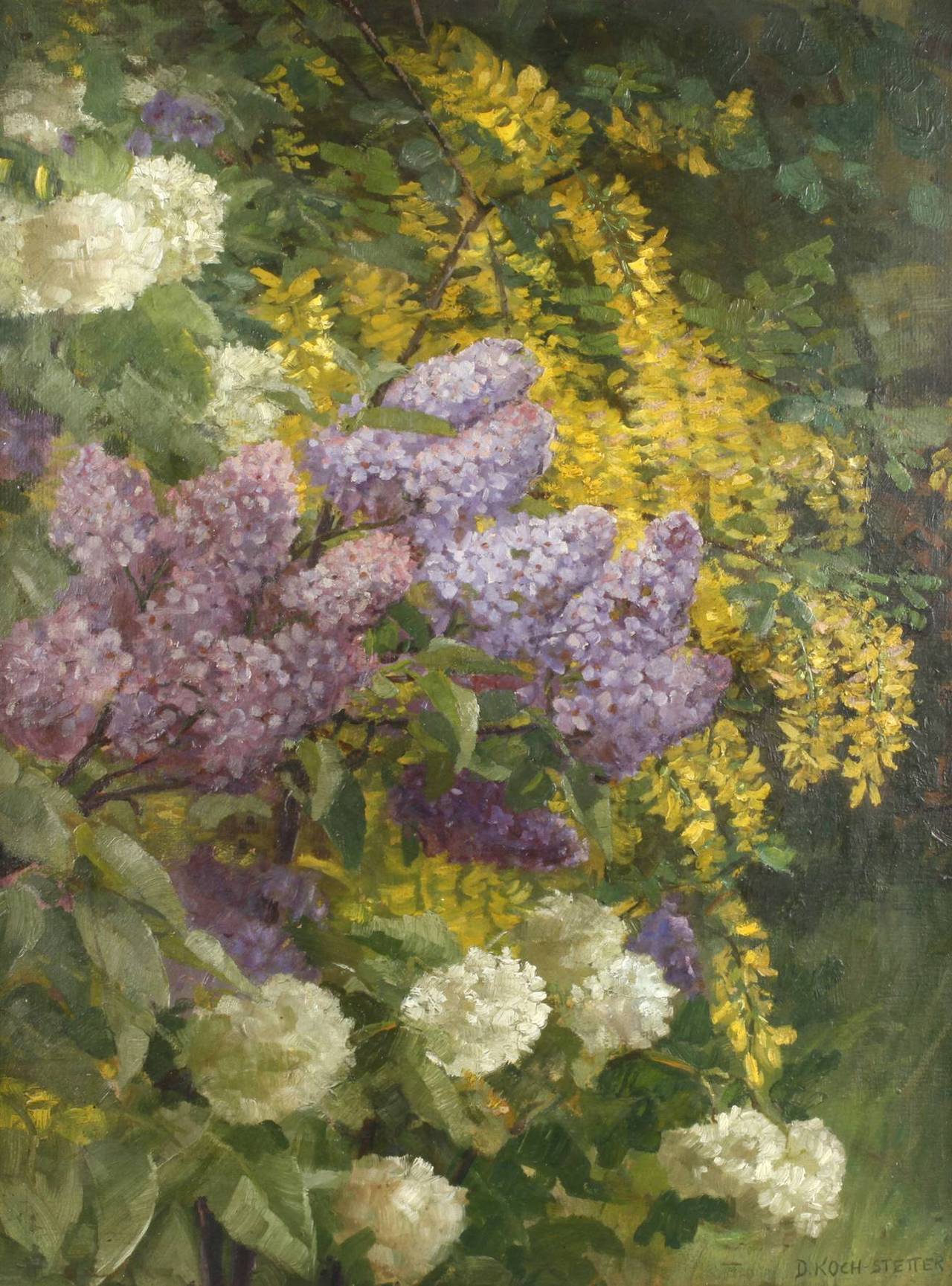
Lilacs by Dora Koch-Stetter

Share

Friday, March 20, 2026

The First Spring Day


I wonder if the sap is stirring yet,
If wintry birds are dreaming of a mate,

If frozen snowdrops feel as yet the sun

And crocus fires are kindling one by one:

Sing, robin, sing!

I still am sore in doubt concerning Spring.
I wonder if the spring-tide of this year
Will bring another Spring both lost and dear;
If heart and spirit will find out their Spring,
Or if the world alone will bud and sing:
Sing, hope, to me!
Sweet notes, my hope, soft notes for memory.
The sap will surely quicken soon or late,
The tardiest bird will twitter to a mate;
So Spring must dawn again with warmth and bloom,
Or in this world, or in the world to come:
Sing, voice of Spring!
Till I too blossom and rejoice and sing.

By Christina Rossetti
(Artwork "The First Buds of Spring" by Lionel Percy Smythe, courtesy of Hermes.) Share