Showing posts with label Christmas. Show all posts

Saturday, January 10, 2026

A Road Trip to Avalon


Some young knights on a quest. From The Saxon Cross:

Glastonbury is a weird town. For two thousand years it has been the spiritual center of England. For a long time this was because Glastonbury Abbey was the largest and most powerful monastery on the island. But while the monastery has long lain in ruin, the town is still very much a spiritual center. The town is chockfull of New Age shops, druids, neo-pagans, witches and occultists. Something very real draws this sort of person to the town, and I think some of them are genuine seekers. Of course, they’re looking in all the wrong places, but the power they feel is real. Glastonbury is a Christian holy place and that power still pervades the ground.

First we walked the ruins of the great abbey. This island is littered with the ruin of the work of the Protestant Reformation and King Henry VIII. During King Henry’s dissolution of the monasteries the abbey fell into disrepair, and its last abbot was draw, quartered, and hanged on Glastonbury Tor in 1539. Glastonbury then ceased to be the center of Christianity in the isle, and the blood soaked into the ground has been crying out ever since. The ruins of the monastery are hauntingly beautiful. It is also the purported site of Arthur and Guinevere’s graves, although this is one legend that I think may have been fabricated in the Middle Ages. On the abbey grounds still live the last of the Holy Thorns, the sacred trees that bloom on Christmas Day, that are said to have been brought to the isle of Avalon by St. Joseph of Arimathea.

 On our way up to the Tor we stopped to drink from the Chalice Well, also known as the Red Spring. There are two versions of the legend of this holy well. One claims that St. Joseph buried the Holy Grail inside the Tor, and from it sprang the well. The other claims that he buried two vials, one filled with Christ’s blood and the other with His tears, and from these sprang the Red and White Springs respectively, the White Spring being another holy well just across the street from the Chalice Well garden. Whatever the truth is, the water is full of iron and indeed tastes like blood. Inside the chalice well garden at the foot of the Tor we were met by another one of our companions, Jake, which seemed like a fitting and symbolic place to meet on a spiritual quest. Together we prayed and drank from the well, and then ascended the Tor together. As we began our ascent a rainbow broke out across the sky, crowning St. Michael’s Tower. (Read more.)

Share

Tuesday, January 6, 2026

"Queen of the Bean"

From Writing the Renaissance:
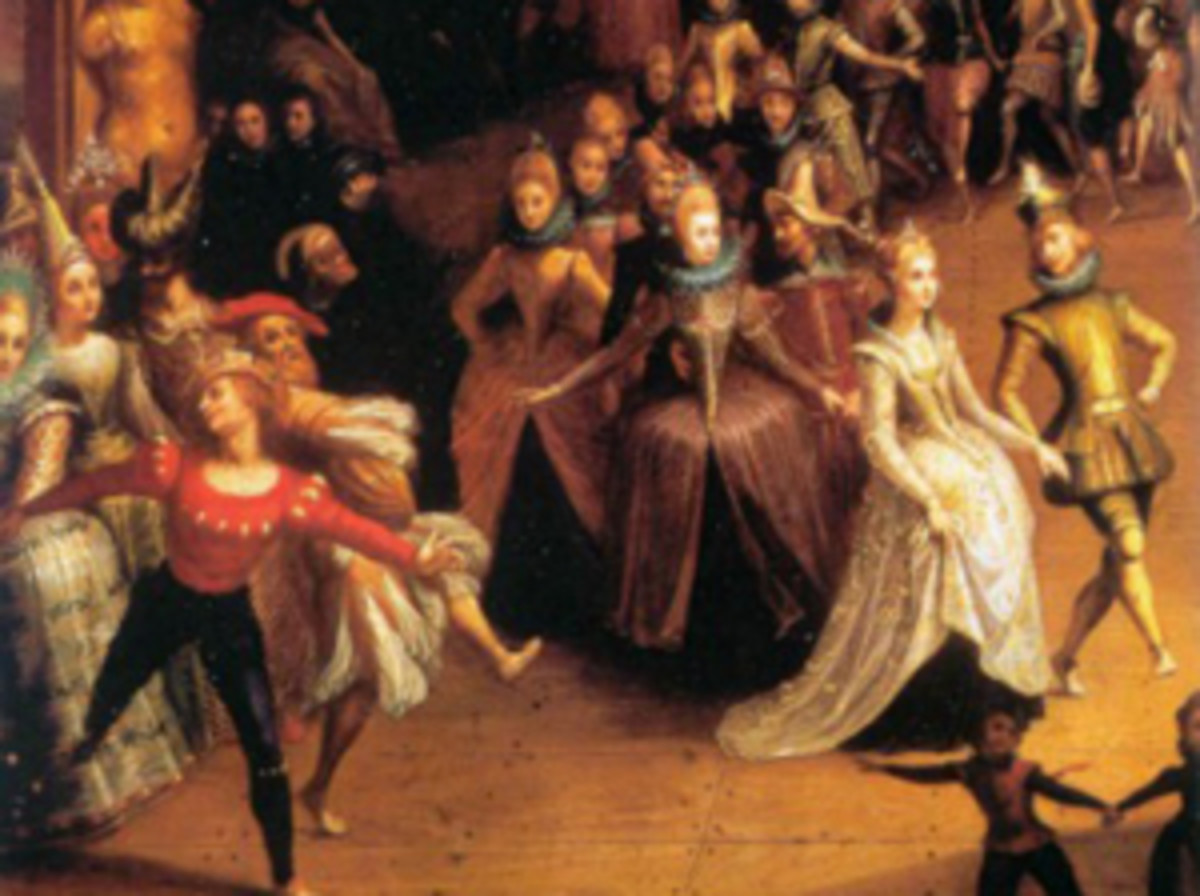
The Feast of the Epiphany occasioned much merriment--and expense--at the French court during the Renaissance. The tradition of sharing a galette des rois--a cake containing a concealed bean--traces back to early sixteenth century celebrations of Twelfth Night. The person who found the bean in his or her piece of cake became the de facto ruler for the duration of the festivities. Whereas in England the choice of a "king," or Lord of Misrule, predominated, across the channel it was the election of the "Queen of the Bean" that evolved into an elaborate ritual.

According to Robert Knecht in his book The French Renaissance Court (p. 75-76), it was custom at the court of François I to chose not only a Queen of the Bean, but a bevy of eighteen ladies to attend her. The women wore beautiful new clothes, which the King provided: undergarments of crimson velvet with slashed sleeves held together by gold clasps and outer garments of grey satin fringed with velvet and lined with mink. Matching belts, necklaces and bracelets complemented the attire; the Queen wore a plumed bonnet atop a long golden or silver snood adorned with precious stones. When it was time for supper, the Queen of the Bean rose from her seat next to the true queen, Eléanore, and took the King's hand. The monarch led her and her ladies into the hall where two tables had been set. The Queen of the Bean sat above Queen Eléanore, the dauphin's wife Catherine de' Medici, and the King's sister Marguerite de Navarre at the shorter table; the King joined the eighteen attendants at the second table. During the meal, the Bean Queen was served with the ceremony normally reserved for the real queen, who surrendered any precedence during the twenty-four hours of her rival's reign.
(Read more.)
Share

Monday, January 5, 2026

The Lord of Misrule

It is the Twelfth Night.

Fisheaters has everything you need to know about Twelfth Night, including a poem by Robert Herrick:
Twelfth Night: Or King and Queen

Now, now the mirth comes
With the cake full of plums,
Where bean's the king of the sport here;
Beside we must know,
The pea also
Must revel, as queen, in the court here.

Begin then to choose,
This night as ye use,
Who shall for the present delight here,
Be a king by the lot,
And who shall not
Be Twelfth-day queen for the night here.
Share

Sunday, January 4, 2026

Galette des Rois

Happy Epiphany! January is Epiphany Month! It is never too late to celebrate. From Chocolate and Zucchini:
If you’ve ever been in France during the month of January, surely you’ve noticed the blossoming of galettes des rois in the window of every bakery and pastry shop. A puff pastry pie garnished with a buttery filling, it is the traditional confection with which the Epiphany is celebrated*; I have written in more detail about this tradition in this post, so I invite you to go and read that first. I’ll wait right here.

La galette, and the fun ritual that determines who will be king or queen for the day (allow me to insist you read this post if you don’t yet know about the fève thing), bring back many a happy childhood memory for me. Aside from the two years I spent in California, I have partaken of at least one galette a year for as long as I can remember.

I used to buy them from the pastry shop, like most French people do, but I started making my own a few years ago. My deep attachment to this confection should have compelled me to do so years earlier, but the Epiphany is theoretically celebrated on January 6 — though this is extended to the whole month of January nowadays — and I always felt a bit too tuckered out after the holidays to tackle the project. But that inaugural year was different. We were celebrating my parents’ 40th wedding anniversary one Saturday, my sister, brother-in-law and nephew were visiting from London for the occasion, and my mother had asked if I could bring the dessert for our celebratory lunch. It seemed the perfect opportunity to share a galette with my family, and I had just enough time to make it myself.

My initial intention was to make my own puff pastry, using this easy puff pastry formula, but I didn’t quite have it in me so I decided to use store-bought puff pastry. Not just any store-bought puff pastry, mind you, but Madame François’ puff pastry, which is produced in Sologne with butter from the Charentes, farine de gruau (fine wheat flour) and zero additives. I got it from G. Detou, where it is sold in slabs of 3 kilos, ready to be divided, shared and/or frozen; it can also be ordered on their website**. (Read more.)
Share

Friday, January 2, 2026

Queen Charlotte and Christmas in Georgian England

From Nancy Bilyeau:

Some people cherish an image of Victorian Christmas as the peak of all celebrations. This was when the Christmas tree first found its way into English homes, thanks to Prince Albert, and when families gathered to "make merry" and give thanks for their good fortune, just as they did in Charles Dickens' A Christmas Carol. 
Um, that's not quite right. 
While there is a strong belief that Albert brought with him from Saxe-Coburg the tradition of a Christmas tree, the honors belong to Queen Charlotte, wife of George III. She was raised in Mecklenburg-Strelitz, and it was following her marriage to George in 1761 that the tree tradition found its way to England.... 
At first Queen Charlotte confined her importing of German Christmas traditions to mounting a decorated yew branch, but in 1800 she threw a memorable party at Windsor for the kingdom's leading families, showing off an entire tree. Dr John Watkins wrote with some awe of how "from the branches of which hung bunches of sweetmeats, almonds and raisins in papers, fruits and toys, most tastefully arranged; the whole illuminated by small wax candles." He said that "after the company had walked round and admired the tree, each child obtained a portion of the sweets it bore, together with a toy, and then all returned home quite delighted." 
Before long, anybody who was anybody wanted a Christmas tree. (Read more.)
Share

Wednesday, December 31, 2025

Happy New Year!

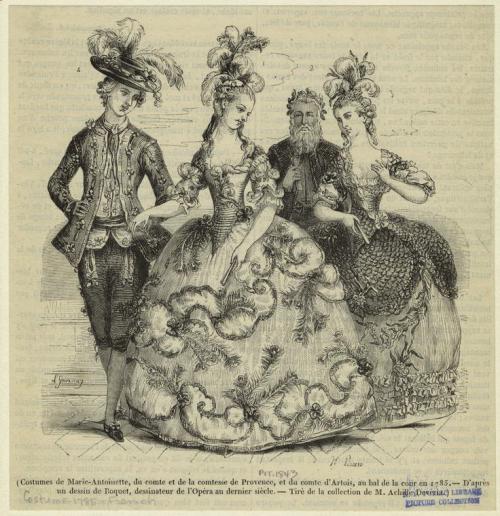
Marie-Antoinette (center) accompanied to a costume ball by Artois, Monsieur and Madame.


Wishing all the readers of Tea at Trianon a New Year of blessings and joy! Share

Sunday, December 28, 2025

The Coventry Carol

Christmas is tinged with sorrow. From A Clerk at Oxford:
Lullay, lullay, thou little tiny Child,
By, by, lully, lullay.
Lullay, lullay, thou little tiny child.
By, by, lully, lullay.

O sisters too, how may we do,
For to preserve this day
This poor youngling for whom we sing,
By, by, lully, lullay.

Herod the King, in his raging,
Charged he hath this day
His men of might, in his own sight,
All young children to slay.

Then woe is me, poor child, for thee,
And ever mourn and may,
For thy parting, nor say nor sing,
By, by, lully, lullay.
The Coventry Carol is among the medieval carols most often heard today, and I find the popularity of this profoundly sad song at Christmastime intriguing. As John of Grimestone's lullaby suggests, there are actually a considerable number of medieval lullabies which share the mood of the Coventry Carol: somewhere between lullaby and lament, full of melancholy and pity for the child being comforted, whether it's Herod's victims, the Christ-child, or any human baby born into a weeping world. (Here's another beautiful example.) I wonder if the popularity of the Coventry Carol today indicates that it expresses something people don't find in the usual run of joyful Christmas carols - this song of grief, of innocence cruelly destroyed. Holy Innocents is not an easy feast for a modern audience to understand, and I'll confess I find the medieval manuscript images of children impaled on spears just horrible - but then, they are meant to be, and they're horrible because they're all too close to the reality of the world we live in. The idea that this is incongruous with the Christmas season (as you often hear people say) is largely a modern scruple, I think. It's our modern idea that Christmas is primarily a cheery festival for happy children and families - our images of Christmas joy, both secular and sacred, are all childlike wonder and picture-perfect families gathered round the tree. This is very nice, of course, for those who have (or are) children, or happy families, but for those who don't - those who have lost children or parents, who face loneliness or exclusion, who want but don't have children, family, or home - it can be deeply painful. (Read more.)
Share

Saturday, December 27, 2025

Jesus Christ the Apple Tree


It is St. John's day, which is the name-day of my late father. This early American carol was one of his favorites. It invokes images of Eden and the lost earthly paradise, while bringing to mind the Tree of Life which is the Cross. From Hymns and Carols of Christmas:
1. The tree of life my soul hath seen,
Laden with fruit and always green:
The trees of nature fruitless be
Compared with Christ the apple tree.

2. His beauty doth all things excel:
By faith I know, but ne'er can tell
The glory which I now can see
In Jesus Christ the apple tree.

3. For happiness I long have sought,
And pleasure dearly I have bought:
I missed of all; but now I see
'Tis found in Christ the apple tree.

4. I'm weary with my former toil,
Here I will sit and rest awhile:
Under the shadow I will be,
Of Jesus Christ the apple tree.

5. This fruit doth make my soul to thrive,
It keeps my dying faith alive;
Which makes my soul in haste to be
With Jesus Christ the apple tree.
From The Thinking Housewife: "The lyrics were written by an unknown poet in the 18th century and call to mind the tradition in the Middle Ages of decorating Christmas trees with apples, symbolic of the Tree of Knowledge." (Read more.)

The Tree of Life and Death


Share

Friday, December 26, 2025

'Sing we Yule til Candlemas'


From A Clerk of Oxford:
As a lover of carols, I'm much in favour of the medieval practice of celebrating Christmas to some degree all through the dark days of January, so today I thought I would post a carol which encourages us to keep singing throughout this season. It runs through not just the twelve days of Christmas but also the forty days of the Christmas season, all the way up to Candlemas, the Feast of the Purification, on February 2. It's a fifteenth-century carol (from Bodleian MS Eng. poet. e. I), and the unmodernised text can be found on this site, which also lists the various feasts mentioned: St Stephen on the 26th, St John on the 27th, the Holy Innocents on the 28th, St Thomas Becket on the 29th (check back soon for more carols about him!), the Circumcision of Christ on January 1st, Epiphany and Candlemas.

Make we mirth
For Christ's birth,
And sing we Yule til Candlemas.

(Read more.)
Share

The Sacred Earthiness of Christmas

 From George Weigel at First Things:

Christianity begins in a real place, at a specific point in time in which real men and women met an itinerant rabbi named Jesus of Nazareth—and after what they had thought to be the utter catastrophe of his degrading and violent death, met him anew as the Risen Lord Jesus. The lives of those real men and women were so transformed by these encounters that they, in turn, went out and got to work on the task the Risen One gave them: to “make disciples of all nations” (Matt. 28:19). 

The earthiness of the Christmas story—the manger, the stable, the “swaddling clothes,” the stolid oxen and lowing cows, the bewildered but kindly shepherds, the exotic Magi from the East and their gifts of gold, frankincense, and myrrh, the child’s circumcision—underscores this core Christian conviction: The Second Person of the Most Holy Trinity, the “Word” through whom “all things were made” (John 1:1, 3), entered history through the cooperation of a Jewish girl and her overshadowing by the Holy Spirit, and was born at a precise moment in time at a precise place. Whether “the first cuttings of His infant hair” really are in Rome’s Basilica of the Holy Cross in Jerusalem may be beyond historical verification; the real point being made in such claims is that the incarnate Son of God really was at one point in his life among us, an infant who had an infant’s hair and all the other attributes of a weak and defenseless child. 

Ditto for what is really being proposed by the “napkins,” the cradle, St. Joseph’s blanket-cloak, and all the rest: He whom Christianity proclaims as Lord and Savior, the One who fully reveals both the truth about God and the truth about our humanity’s dignity and destiny, was not a character in some virtual reality “metaverse” constructed by Mark Zuckerberg. He was here, on this third planet of the solar system. And he is still with us: in the Scriptures proclaimed, and above all in the holy bread broken and shared. (Read more.)


Share

How Shakespeare Helped Shape Christmas As We Know It Today

From Daniel McCarthy at The New York Post:

“Hamlet” isn’t altogether a Christmas play, but Christmas is a conspicuous part of it. And there is good reason to think that “Hamlet” was much on the minds of two authors who shaped modern conceptions of Christmas in the 19th century. Clement Clarke Moore’s 1823 poem “A Visit from St. Nicholas” (“’Twas the night before Christmas. . .”) includes the charming line “Not a creature was stirring, not even a mouse” — which echoes the guard at Elsinore who reports “Not a mouse stirring.” Twenty years later in “A Christmas Carol,” Charles Dickens would refer to Hamlet’s ghost in his own tale of yuletide hauntings.

In fact, Dickens observes the rule Marcellus set down in “Hamlet”: The ghosts are gone, their work accomplished, by the dawn of Christmas Day. There’s a faint reminder of “Hamlet” in an earlier Dickens tale set at Christmas as well. As in “Hamlet,” an impudent gravedigger features in a Christmas episode of “The Pickwick Papers,” “The Story of the Goblins Who Stole a Sexton.” Curiously, the goblin who first accosts the gravedigger has a catchphrase — “Ho! Ho! Ho!” — now familiar with a very different Christmas character. Moore and Dickens knew their Shakespeare, and when they set out to create new stories for the season, they didn’t forget the precedents the Bard had provided, few though they were.

“A sad tale’s best for winter: I have one of sprites and goblins,” says Mamillius in “The Winter’s Tale.” In Shakespeare’s day, sprites and goblins — and ghosts — were seasonally appropriate before Christmas. There’s debate about whether Shakespeare invented the “Marcellus rule” that banned such beings from Christmas Day onward, through Twelfth Night on the eve of Epiphany. Yet if there were no ghosts, there were other kinds of spirits. The “Twelve Days of Christmas” were a time of revelry — drinking, singing, putting on plays, and merriment — when not Santa Claus but a “Lord of Misrule” was the mascot of the season.

In Shakespeare’s age Puritans, much like Hamlet, were scandalized by bibulous customs like the wassail. “Hamlet” reminds us that our Christmas troubles and soul-searching are not altogether new. Shakespeare, too, had to ask whether his country had lost its values: Was it Christian or pagan, Catholic or Protestant, stoically philosophical or, like Hamlet in his agony, nihilistic and despairingly materialist? (Read more.)

Share

Thursday, December 25, 2025

Merry Christmas!

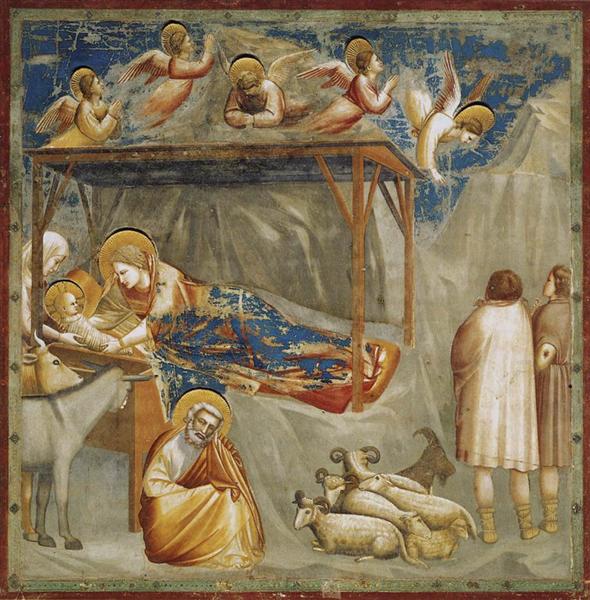
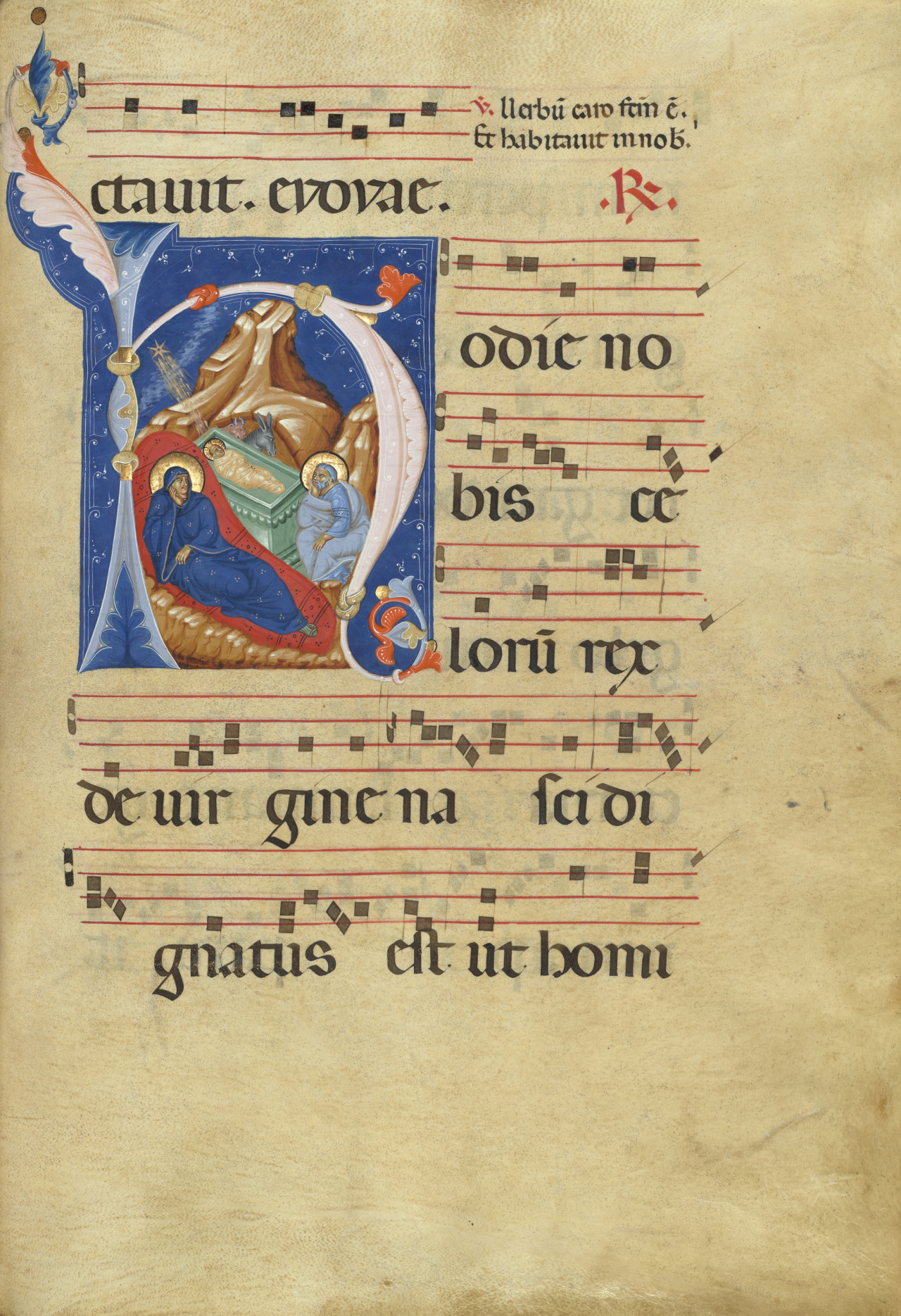
The Nativity by Giotto
And a Happy New Year! Thanks to everyone who has visited this blog in 2025~ I will pray for you all this Christmas Day in the morning. Please pray for me.
Welcome, all wonders in one sight!

       Eternity shut in a span;

Summer in winter; day in night;

       Heaven in earth, and God in man.

Great little one, whose all-embracing birth

Lifts earth to heaven, stoops heav’n to earth.
 ~  from "In the Holy Nativity of Our Lord" by Richard Crashaw

Share

Christmas Scenes


From East of the Sun, West of the Moon. And Christmas trees, HERE.


And scenes of winter, too. Happy New Year!


Share

Last Will and Testament of Louis XVI

The last Will and Testament of Louis XVI, King of France and Navarre, given on Christmas day, 1792.
In the name of the Very holy Trinity, Father, Son and Holy Ghost.
To-day, the 25th day of December, 1792, I, Louis XVI King of France, being for more than four months imprisoned with my family in the tower of the Temple at Paris, by those who were my subjects, and deprived of all communication whatsoever, even with my family, since the eleventh instant; moreover, involved in a trial the end of which it is impossible to foresee, on account of the passions of men, and for which one can find neither pretext nor means in any existing law, and having no other witnesses, for my thoughts than God to whom I can address myself, I hereby declare, in His presence, my last wishes and feelings.
I leave my soul to God, my creator; I pray Him to receive it in His mercy, not to judge it according to its merits but according to those of Our Lord Jesus Christ who has offered Himself as a sacrifice to God His Father for us other men, no matter how hardened, and for me first.
I die in communion with our Holy Mother, the Catholic, Apostolic, Roman Church, which holds authority by an uninterrupted succession, from St. Peter, to whom Jesus Christ entrusted it; I believe firmly and I confess all that is contained in the creed and the commandments of God and the Church, the sacraments and the mysteries, those which the Catholic Church teaches and has always taught. I never pretend to set myself up as a judge of the various way of expounding the dogma which rend the church of Jesus Christ, but I agree and will always agree, if God grant me life the decisions which the ecclesiastical superiors of the Holy Catholic Church give and will always give, in conformity with the disciplines which the Church has followed since Jesus Christ.
I pity with all my heart our brothers who may be in error but I do not claim to judge them, and I do not love them less in Christ, as our Christian charity teaches us, and I pray to God to pardon all my sins. I have sought scrupulously to know them, to detest them and to humiliate myself in His presence. Not being able to obtain the ministration of a Catholic priest, I pray God to receive the confession which I feel in having put my name (although this was against my will) to acts which might be contrary to the discipline and the belief of the Catholic church, to which I have always remained sincerely attached. I pray God to receive my firm resolution, if He grants me life, to have the ministrations of a Catholic priest, as soon as I can, in order to confess my sins and to receive the sacrament of penance.

I beg all those whom I might have offended inadvertently (for I do not recall having knowingly offended any one), or those whom I may have given bad examples or scandals, to pardon the evil which they believe I could have done them.

I beseech those who have the kindness to join their prayers to mine, to obtain pardon from God for my sins.
I pardon with all my heart those who made themselves my enemies, without my have given them any cause, and I pray God to pardon them, as well as those who, through false or misunderstood zeal, did me much harm.

I commend to God my wife and my children, my sister, my aunts, my brothers, and all those who are attached to me by ties of blood or by whatever other means. I pray God particularly to cast eyes of compassion upon my wife, my children, and my sister, who suffered with me for so long a time, to sustain them with His mercy if they shall lose me, and as long as they remain in his mortal world.
I commend my children to my wife; I have never doubted her maternal tenderness for them. I enjoin her above all to make them good Christians and honest individuals; to make them view the grandeurs of this world (if they are condemned to experience them) as very dangerous and transient goods, and turn their attention towards the one solid and enduring glory, eternity. I beseech my sister to kindly continue her tenderness for my children and to take the place of a mother, should they have the misfortune of losing theirs.

I beg my wife to forgive all the pain which she suffered for me, and the sorrows which I may have caused her in the course of our union; and she may feel sure that I hold nothing against her, if she has anything with which to reproach herself.

I most warmly enjoin my children that, after what they owe to God, which should come first, they should remain forever united among themselves, submissive and obedient to their mother, and grateful for all the care and trouble which she has taken with them, as well as in memory of me. I beg them to regard my sister as their second mother.

I exhort my son, should he have the misfortune of becoming king, to remember he owes himself wholly to the happiness of his fellow citizens; that he should forget all hates and all grudges, particularly those connected with the misfortunes and sorrows which I am experiencing; that he can make the people happy only by ruling according to laws: but at the same time to remember that a king cannot make himself respected and do the good that is in his heart unless he has the necessary authority, and that otherwise, being tangled up in his activities and not inspiring respect, he is more harmful than useful.

I exhort my son to care for all the persons who are attached to me, as much as his circumstances will allow, to remember that it is a sacred debt which I have contracted towards the children and relatives of those who have perished for me and also those who are wretched for my sake. I know that there are many persons, among those who were near me, who did not conduct themselves towards me as they should have and who have even shown ingratitude, but I pardon them (often in moments of trouble and turmoil one is not master of oneself), and I beg my son that, if he finds an occasion, he should think only of their misfortunes.

I should have wanted here to show my gratitude to those who have given me a true and disinterested affection; if, on the one hand, I was keenly hurt by the ingratitude and disloyalty of those to whom I have always shown kindness, as well as to their relatives and friends, on the other hand I have had the consolation of seeing the affection and voluntary interest which many persons have shown me. I beg them to receive my thanks.

In the situation in which matters still are, I fear to compromise them if I should speak more explicitly, but I especially enjoin my son to seek occasion to recognize them.

I should, nevertheless, consider it a calumny on the nation if I did not openly recommend to my son MM. De Chamilly and Hue, whose genuine attachment for me led them to imprison themselves with me in this sad abode. I also recommend Clery, for whose attentiveness I have nothing but praise ever since he has been with me. Since it is he who has remained with me until the end, I beg the gentlemen of the commune to hand over to him my clothes, my books, my watch, my purse, and all other small effects which have been deposited with the council of the commune.

I pardon again very readily those who guard me, the ill treatment and the vexations which they thought it necessary to impose upon me. I found a few sensitive and compassionate souls among them – may they in their hearts enjoy the tranquillity which their way of thinking gives them.

I beg MM. De Malesherbes, Tronchet and De Seze to receive all my thanks and the expressions of my feelings for all the cares and troubles they took for me.

I finish by declaring before God, and ready to appear before Him, that I do not reproach myself with any of the crimes with which I am charged.

Made in duplicate in the Tower of the Temple, the 25th of December 1792.

LOUIS

Share

Coronation of Charlemagne


On Christmas Day, 800, Charles the Great, King of the Franks, was crowned Emperor of the Romans by Pope Leo III at St. Peter's Basilica. According to one account:
On the day of the Nativity of our Lord Jesus Christ all [who had been present at the council] came together again in the same basilica of blessed Peter the apostle. And then the venerable and holy pontiff, with his own hands, crowned [Charles] with a most precious crown. Then all the faithful Romans, seeing how he loved the holy Roman church and its vicar and how he defended them, cried out with one voice by the will of God and of St. Peter, the key-bearer of the kingdom of heaven, "To Charles, most pious Augustus, crowned by God, great and peace-loving emperor, life and victory."(Salus et victoria) This was said three times before the sacred tomb of blessed Peter the apostle, with the invocation of many saints, and he was instituted by all as emperor of the Romans. Thereupon, on that same day of the nativity of our Lord Jesus Christ, the most holy bishop and pontiff anointed his most excellent son Charles as king with holy oil.
Share

Wednesday, December 24, 2025

“Tomorrow Shall Be My Dancing Day”

 From The Imaginative Conservative:

William Sandys (1792-1874) was an antiquarian by hobby—a “person who collects or studies old things” or “a student of the past,” according to Webster’s. The things Sandys happened to collect were Christmas songs. His 1833 publication Christmas Carols Ancient and Modern helped to launch the Victorian revival of the holiday, a revival that followed centuries of puritan neglect.[*] Sandys claimed in his book to have unearthed English yuletide songs dating back four centuries. Making their first appearance in print were many carols we now take for granted, such as “The First Noel,” “God Rest Ye Merry, Gentlemen,” and “Hark, the Herald Angels Sing.”

Although it hasn’t soared to those heights of popularity, “Tomorrow Shall Be My Dancing Day” is richly fascinating nonetheless. The text has turns of phrase redolent of the Middle Ages or Renaissance, yet no source for the song prior to Sandys has been found. What is most remarkable about “Dancing Day” is that it narrates the entire story of Christ’s life in Christ’s own voice, and that it describes the story of salvation with the image of a dance:

Tomorrow shall be my dancing day;
I would my true love did so chance
To see the legend of my play,
To call my true love to the dance.

Refrain:

Sing, oh! My love, oh! My love, my love, my love,
This have I done for my true love.

Most scholars agree that the text goes back far earlier than 1833, with the phrase “legend of my play” a possible clue that the carol was connected to the medieval mystery plays. Musicologists Hugh Keyte and Andrew Parrott write:

It seems possible that ‘Tomorrow shall be’ was devised to be sung and danced at the conclusion of the first day of a three-day drama . . . The actor portraying Christ would have sung the verses and the whole company and audience the repeats of the refrains.

Hymn texts in which Christ himself speaks—a device one commentator refers to as vox Christi—are rare, making a theatrical origin for “Dancing Day” even more likely.

Mystery plays were one of the three distinctive medieval forms of theater, the other two being miracle plays and morality plays. All three types evolved out of short scenes performed in church by the clergy as an adjunct to the liturgy and depicting biblical subjects such as the Creation, Adam, and Eve, or the Last Judgment. Mystery plays eventually moved out of church premises into the village square, often traveled from town to town on wagons, and became increasingly elaborate.

As the plays traveled to various locales, they were often advertised by the players in a song called a “banns.” If our carol originally formed part of a mystery play about the life of Christ, the “dancing day” on the “morrow” might refer to the subsequent part of the play, treating the Redemption.

Most striking is the relationship between Christ and humanity being likened to that of a lover and his “true love,” with the refrain’s expressive repetitions of “my love.” This motif hearkens back to the love poetry of the Song of Songs, in which the lover and beloved are traditionally interpreted as representing Christ and the church or Christ and the soul. The idea of Christ and humanity being united as bridegroom and bride is a classic Christian motif, but we are surprised to find it in a popular Christmas carol, and even more to find the image extended to depict Christ as our dancing partner. There is a good amount of theology and scripture in “Dancing Day,” such as the treatment of the Incarnation:

Then was I born of a virgin pure;
Of her I took fleshly substance.
Thus was I knit to man’s nature
To call my true love to the dance.

In a manger laid and wrapped I was,
So very poor; this was my chance,
Betwixt an ox and a silly poor ass,
To call my true love to my dance.

(Read more.)


Share

Irish Christmas Blessings and Carols

From Ireland Calling:
Carols are also important in an Irish Christmas. Ireland has its fair share of original carols such as The Wexford Carol and While Shepherds Watched Their Flocks by Night. Many others have been translated into Irish and performed by leading artists. These are some of Ireland’s best known Christmas blessing and carols.
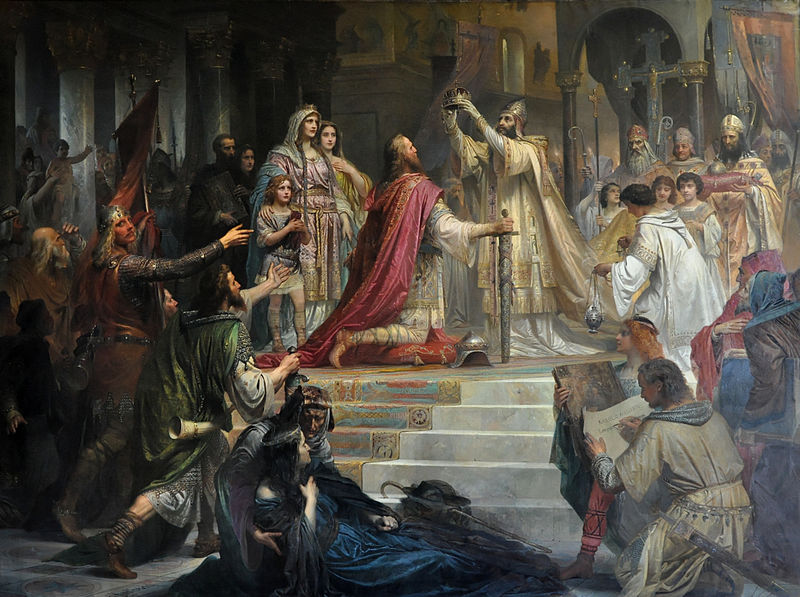
The Wexford Carol is one of the most famous and most popular hymns to come out of Ireland. Its origins are uncertain but it certainly dates back several centuries. It originated in Co Wexford and first came to wider prominence due to the work of William Grattan Flood who was the organist at St Aidan’s Cathedral in Enniscorthy. He first came across the carol when he heard it being sung by a local singer in Wexford in the 19th century. He started to perform it at Christmas services in the cathedral and it was later published in the Oxford Book of Carols. It soon became a standard in carol books across the world. (Read more.)
Share

Into the Mystery of the Baby Jesus

 From Daily Compass:

And yet neither the intemperate weather, nor the bitter cold, nor the long celebration that lasted until five in the morning, could dissuade those who sought Paradise in the eyes of the Saint during the night that was the most special of all nights. “At the end,” one of his brothers recounts, “Padre Pio put on the white veil woven with gold, incensed the statue of the Baby Jesus, and preceded by the altar boys and some of his brothers who held lighted torches in their hands, he carried it in procession from the choir to the altar and from the altar to the Crib, clutching the little cradle closely to himself…. Then, he offered the beloved statuette to the faithful to kiss. His face was radiant, luminous. His lips were full of joyful smiles as everyone kissed the knees or the little feet of the Baby Jesus. Then “with an open heart and a clear voice,” he united himself to the choir of his brothers and the faithful in singing Tu Scendi Dalle Stelle, the sweet Christmas carol composed by Saint Alphonsus Maria de’Liguori.

It is particularly beautiful then to listen to the testimony of those who learned to live the Christmas mystery at the side of the humble friar. Like Lucia Ladanza, one of his spiritual daughters, who travelled from Pietrelcina to San Giovanni Rotondo to spend Holy Christmas with her illustrious compatriot. In a page of her diary dated December 24, 1922, Lucia writes, “The friars had brought a large brazier into the sacristy, and many people had gathered around it to keep warm. We were reciting the Rosary as we waited for Mass. Padre Pio prayed right in the middle of all of us. Suddenly, in a halo of light, I saw the Baby Jesus appear in his arms. The face of the Padre was transfigured, his eyes turned towards that figure of light that he held in his arms, his arms open in a surprised smile. When the vision vanished, the Padre realized, from the way that I was looking at him, that I had seen everything. He came up to me and told me not to say anything to anyone.” (Read more.)

Share

Tuesday, December 23, 2025

The Ancient Roots of Christmas Ghost Stories

From The Spectator:

Christmas in its traditional sense is the Christmas season – not the period from mid-August to Christmas Eve when shops are selling tinsel and mince pies, but the Twelve Days of Christmas that begin at sundown on Christmas Eve and culminate in ‘Twelfth Night’ on the evening of 5 January. The medieval 12 nights were the ultimate stand of light and warmth against cold and darkness in the depths of Europe’s Little Ice Age. Small wonder, then, that this strange time of the year gave rise to cathartic tales of the dark, death and the macabre. The nineteenth century writer Montague Rhodes James – who used to read a chilling ghost story yearly at to a select gathering of students and fellows at King’s College – described it as the desire to be made ‘pleasantly uncomfortable’. Tales of supernatural horror, when you yourself are in perfect safety, are perhaps as old as human storytelling itself. 

In a famous story recorded by Bede, the seventh-century missionary St Paulinus converted King Edwin of Northumbria by asking Edwin to imagine human life like a sparrow that flies into the king’s hall in midwinter, and for a brief moment enjoys the light and warmth of the festivities before flying again into the freezing dark:  ‘So this life of man appears for a little while, but of what is to follow or what went before we know nothing at all. If, therefore, this new doctrine tells us something more certain, it seems justly to deserve to be followed’, the king declared.  

And the Anglo-Saxon fear of winter is memorably evoked in Beowulf, a poem about the horrors that stalk the midwinter night:  

Long was the season:
Twelve-winters’ time torture suffered
The friend of the Scyldings, every affliction…  long against Hrothgar
Grendel struggled – his grudges he cherished,
Murderous malice, many a winter, 
Strife unremitting…

Grendel is not, of course, a ghost – exactly what he is remains somewhat unclear – but he is an ill-favoured otherworldly visitant. The feeling that Christmas represents a struggle of light against darkness resonates, of course, with the Gospel reading for Christmas night, John 1: ‘The light shineth in darkness, and the darkness comprehended it not’. Some have linked the appearance of ghosts on Christmas Eve to the holiness of the day to follow, as if it is a last chance for dark forces to come out and play before being driven away by the light.  

Christmas has long been associated with strange upheavals in nature; animals are supposed to gain the power of speech at midnight on Christmas Eve, as the entirety of nature is transformed in wonderment at the birth of Christ. As the Gaudete carol has it, Deus homo factus est, natura mirante – ‘God is made man, with all nature marvelling at it’. 

But this does not seem to be enough to explain why the dead should return at Christmas time. On a basic level, we all know that grief for our loved ones is heightened at Christmas, simply because it is that time of the year when families are reunited. In the Middle Ages many people believed that there was a chance for the souls of the dead to return from Purgatory at the turning of the year in order to ask for prayers in the coming year.  

Besides Dickens’s A Christmas Carol, the most famous seasonal ghost story is surely the ‘sad tale… of sprites and goblins’ started but left unfinished by the boy Mamillius in Shakespeare’s A Winter’s Tale. ‘There was a man dwelt by a churchyard…’ In those eight words we have the essence of the medieval and early modern midwinter ghost story: the setting is the churchyard, not because churchyards are spooky (a modern idea), but because the churchyard is the resting place of the dead.

Mamillius’s story is not, first and foremost, a frightening tale but a sad one – for the souls of the dead have returned to demand the mercy of the living through the offering of prayers and masses, not to scare them.  The Christmas ghost story cathartically exorcises our fear of the spirits of the outer darkness, like Grendel – but it is also a mechanism for managing our collective grief at the loss of the departed, and a reminder to offer them their due. In this context, the morally insistent ghosts of A Christmas Carol are perhaps not as untraditional as they might at first seem. 

The Christmas ghost story is far more than just a spooky bolt-on to the festive season, an antidote to tinsel and relentless good cheer. It is more than a comfortable scare. The Christmas ghost story arises from the deepest roots of the midwinter season as a time of turning, transformation and new beginnings.  Midwinter is a time of encounter with the dead; when we are reminded of their presence alongside us in our revels. The Christmas ghost stories of literature – and now TV – continue, in culturally sanitised form, an age-old and complex negotiation between light and dark, death and life, that becomes acute as the dark encroaches and daylight dwindles. (Read more.)

Share

Monday, December 22, 2025

What Is Figgy Pudding?

From NPR:
This holiday season, one popular Christmas carol has been raising some questions here at NPR headquarters. Namely: "Oh, bring us some figgy pudding, oh, bring us some figgy pudding, oh — "
Wait. What is figgy pudding? First of all, it's "absolutely delicious," says Debbie Waugh, who recently served the dish at a tea at the Historic Green Spring House in Alexandria, Va.
Figgy pudding — also known as plum pudding or Christmas pudding — is a staple of the British Christmas table, she says. "It resembles something like a cannonball, and it maybe feels a bit like a cannonball when it hits your stomach, but it's tradition and we love it," Waugh tells NPR's Michel Martin. And despite its moniker, the dessert features neither figs nor plums. (Read more.)
Share