Sunday, August 31, 2025

Murder of the Princesse de Lamballe


Among the thousands murdered during the French Revolution, one of the most notorious cases was that of the death of the Princesse de Lamballe, friend of Queen Marie-Antoinette. The fury of the new order of Liberty, Equality, and Fraternity vented itself upon her frail form in a manner of extreme violence. This was as strange as it was hideous, because other than being a confidante of the queen's, Madame de Lamballe could be counted among the more liberal, "enlightened" aristocrats, devoted to works of charity and civil improvements.

Contrary to the standard depiction of Lamballe as a lovely but simpering idiot, the princess was intelligent as well as cultured. She was the Grande Maitresse of all the French masonic ladies' lodges, for she saw freemasonry as a tool for creating a better world, as did many of her contemporaries. Her liberal politics were one of the reasons, according to scholar Bernard Fay, that King Louis XVI encouraged his wife towards the Polignacs, and away from Lamballe and her Orleanist salon. Madame de Lamballe discovered before the end that utopian politics that seek to create an earthly paradise inevitably lead to social chaos.

Marie-Therese-Louise de Savoie-Carignan was born in Turin on September 8, 1749. In 1767 she was married to the Prince de Lamballe, son of the Duc de Penthievre, relatives of the French royal family. Her husband died soon afterwards, and the young Marie-Antoinette pitied her and took her sleigh-riding. According to Madame Campan, the queen's chambermaid:
It was at the time of the sleighing-parties that the Queen became intimately acquainted with the Princesse de Lamballe, who made her appearance in them wrapped in fur, with all the brilliancy and freshness of the age of twenty,–the emblem of spring, peeping from under sable and ermine. Her situation, moreover, rendered her peculiarly interesting; married, when she was scarcely past childhood, to a young prince, who ruined himself by the contagious example of the Duc d’Orleans, she had had nothing to do from the time of her arrival in France but to weep. A widow at eighteen, and childless, she lived with the Duc de Penthievre as an adopted daughter. She had the tenderest respect and attachment for that venerable Prince; but the Queen, though doing justice to his virtues, saw that the Duc de Penthievre’s way of life, whether at Paris or at his country-seat, could neither afford his young daughter-in-law the amusements suited to her time of life, nor ensure her in the future an establishment such as she was deprived of by her widowhood.
Marie-Antoinette made Madame de Lamballe, known for her virtue and kindness, the Superintendent of her household, which was controversial at the time since there were other courtiers who felt the position was due to them. The two women became good friends. The queen was always trying to recapture the home she had left in Austria, where she had been inseparable from her older sister Maria Carolina, who had mothered her a great deal. Madame de Lamballe and Madame de Polignac were both roughly the same age as Carolina. However, Lamballe was a bit too intellectual for Antoinette and so the queen, with Louis' approval, eventually became closer to the Polignacs. She always remained friends with Lamballe, however.

When the Revolution erupted in 1789, Madame de Lamballe returned to France from the safety of England in order to be share the troubles of the royal family. She became closer than ever to the king's devout sister, Madame Elisabeth of France, and was horrified at how the masonic principles she had thought to be so constructive had led to such a violent revolution. When the royal family was arrested and sent to the Temple prison in August 1792, Lamballe was separated from them and sent to the prison of La Force. When the September Massacres broke out, in which thousands were killed and the streets ran with blood, Madame de Lamballe was asked to renounce her loyalty to the king and the queen. She refused, and was delivered over to the mob. She was bludgeoned and stabbed to death, and by some accounts raped and mutilated. She was definitely decapitated, and the valet of Louis XVI, Hanet Clery, gave an account of how the mob brought her head on a pike to the Temple prison for the queen to kiss.
We were hardly seated before a head at the end of a pike was presented at the window. Tison's wife screamed loudly; the murderers thought it was the queen's voice, and we heard the frantic laughs of those barbarians. Thinking that Her Majesty was still at table, they had raised the victim's head so that it could not escape her sight; it was that of the Princesse de Lamballe. Though bloody, it was not disfigured; her blond hair, still curling, floated around the pike.
Such excesses became typical of the French Revolution, stirred up by propaganda which played upon the fears of many. The Princesse de Lamballe was a bit misguided but ultimately heroic and loyal, and the grisly death to which she was subjected exemplified not only the misogyny of the new order but a hatred of all that was beautiful and good.
 
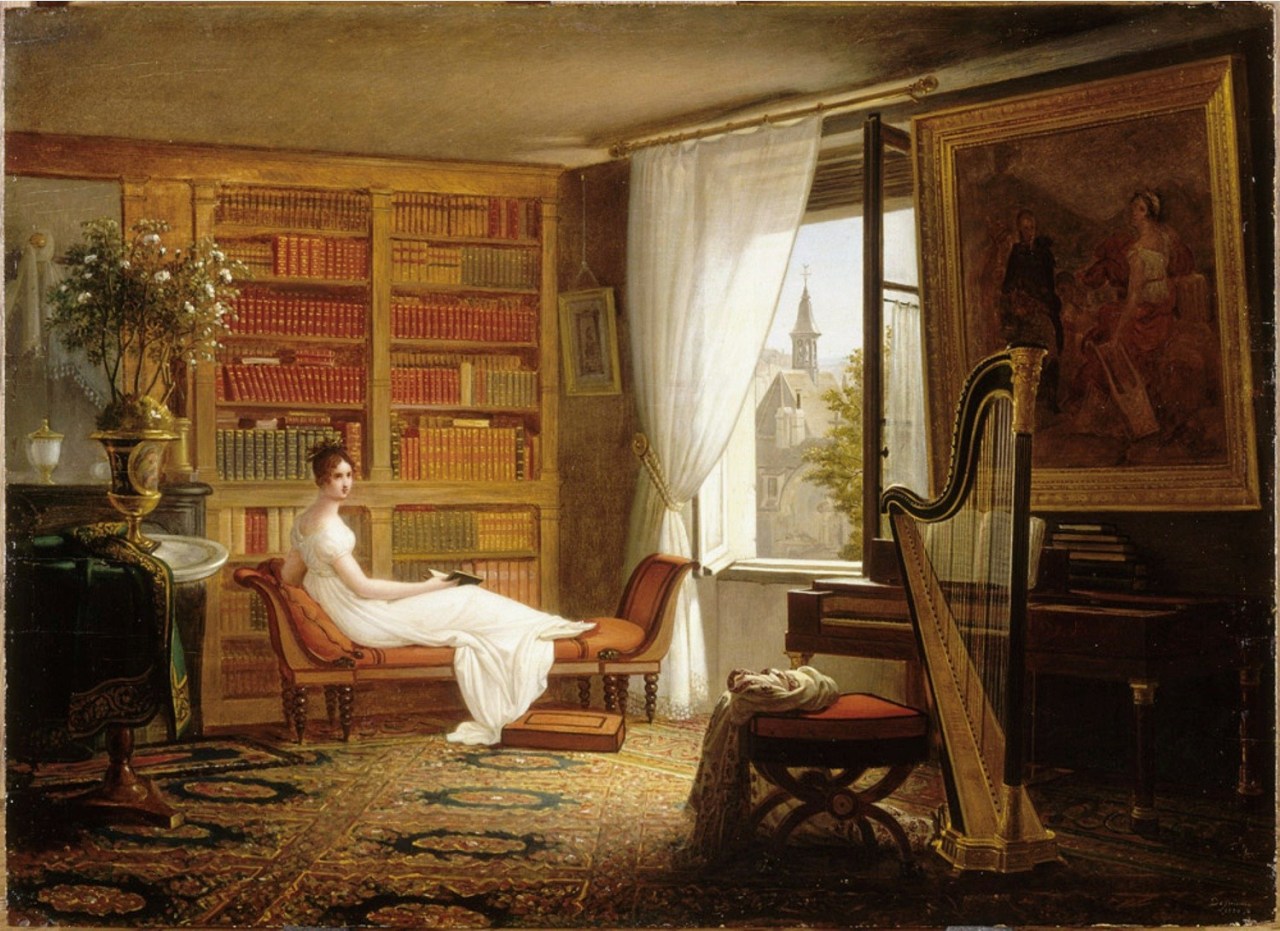
 File:Death-of-the-Princess-De-Lamballe-by-Leon-Maxime-Faivre.jpg
Share

Terrorist Murder of Christian School Children

 From Catholic Culture:

The sheer horror of it. The overwhelming sadness for all those affected by it. The fear for the safety of our own little ones. (Five of my seven kids attend Catholic schools. A sixth teaches at one.) The danger of transgenderism, both the ideology and the scientific quackery, which is making all of us less safe. The obtuseness of politicians who want us to ignore every possible reason for school shootings except for guns, always guns, and only guns, the only thing we are ever allowed to talk about. The outrageousness of public officials who criticize prayer. The anti-Catholic discrimination by state governments who refuse to fund security for private schools at the same level they do for public schools. And on and on.

Others, I’m sure, will be writing about these things in the weeks and months ahead. I may have more to say about them too. But right now, I want to focus on the importance of the vibe shift. Because I am concerned that, in the crush of all these other related matters, it will be missed. And it should not be. It is the key to solving the problem.

What I mean is this. Two years ago another transgender terrorist, Audrey Hale, deliberately targeted and murdered children at another Christian school, Covenant Presbyterian in Nashville. But the media and the politicians would not describe the matter as clearly as I just did in my previous sentence. Instead, they obfuscated and gaslit the public. Minneapolis will be different because the mood of the public is different. Before we get to what that means, consider what we have been through. (Read more.)


From Forbidden News:

An investigation by Tony Seruga on X found that the cellphones and laptops of trans-identifying Minneapolis Catholic School shooter, Robert "Robin" Westman, who killed two children and wounded 18 others on Wednesday have been present during at least five Antifa protests. Numerous "burner" phones were also found to have been present at his home.

Westman's devices also appeared to have been present with a number of Zizian cult followers including with their founder Jack LaSota, on two occasions two months apart.

Jack "Ziz" LaSota is a transwoman leader of the Zizian "Trans Murder Cult" who was indicted by a federal grand Jury in Maryland last June for "their" involvement in a series of six nationwide deaths and violence in Vermont and California. (Read more.)


Share

A Royal Palace Reborn

 From the BBC:

The reopening of a city's Norman castle after a £27.5m revamp has been hailed a success after strong visitor numbers. Norfolk Museums Service said a daily average of about 1,500 people had been visiting Norwich Castle since 7 August. Work started in the summer of 2020 but delays meant it was not until earlier this month that features including the recreation of its great hall could be viewed. Jo Warr from the museums service said: "We're delighted with the increase in visitor numbers following the completion of the major redevelopment of its Norman keep." (Read more.)

Share

Saturday, August 30, 2025

A Stately Summer Home

 https://hips.hearstapps.com/hmg-prod/images/996bae0f-3f14-4d71-8821-d6046e6158ab.jpg?crop=1xw:1xh;center,top&resize=980:*

 https://hips.hearstapps.com/hmg-prod/images/1ca9b569-ab1a-4871-be6e-63ca3879b3bf.jpg?crop=1xw:1xh;center,top&resize=980:*

 https://hips.hearstapps.com/hmg-prod/images/8f1e71f7-76db-406f-98e6-dfea8f875e51.jpg?crop=1xw:1xh;center,top&resize=980:*

 From Elle Decor:

The secret ingredient to Jenkins’s success might be his ability to use virtually any piece from a client’s existing collection in a new project, be it a Louis XVI daybed, a vintage sunburst mirror, or a pair of antique wooden swans—all of which figure into the interiors of the shore house.

“What I always tell my team is that a client’s vision, taste, and collection are like bricks in a brick wall,” he says. “And we are the mortar holding it all together. In the end, you should see the client’s personality, not ours.”

Nowhere is this approach more apparent than in the Chesapeake Bay home’s front hall, which features walls clad in a cheerful yellow grasscloth from Kravet. “The client’s favorite color is sunshine yellow,” says Jenkins. “We wanted to celebrate that.” He then glazed the wall covering with a special plaster mixed on-site, giving it a textured patina that complements the space’s crisp white architectural moldings.

For the front hall’s furnishings, Jenkins took a pair of armchairs the clients already owned and reupholstered them in a blue-striped fabric from his collaboration with Kravet. He also added a bespoke skirted loveseat, a gilded Aerin floor lamp from Visual Comfort, and window treatments in a blue and white floral motif. (The aforementioned wooden swans enjoy pride of place on an antique console just beyond the front door.) (Read more.)

https://hips.hearstapps.com/hmg-prod/images/chapter-ten-3-design-reimagined-cdja-lr-ph-andrew-frasz-68a779b80e9de.jpg?crop=1xw:1xh;center,top&resize=980:*

Share

Brainwashed, Not Trans

 From Tierney's Real News:

What I’m learning about the shooter’s background is horrifying - yet predictable in the Communist hellhole of Minnesota - where chaos seems to be the norm. My research is showing that the Democrat Minnesota authorities KNEW this family and their history and either ignored what he was about to do - or facilitated it.

BTW - Facebook is already removing my posts on this issue - which means a cover-up is in place.

Until then, please read my recent post on the massive school shooting in the UK that convinced the British people to turn over their weapons to the Government. That’s a good base of information to start with. Also, read my series on the MK ULTRA mind control program and gun control - it shows the playbook. This isn’t a conspiracy - it’s very very real.

Secondly, Michele Bachmann, a respected conservative former legislator from Minnesota, who was literally DRIVEN out of office by the Koch Libertarians there who are in bed with the Democrats, wrote a guest post about the shooting. It’s worth your time.

The Lord could not have made this more obvious.

The DNC met in Minneapolis this week trying to figure out why the voters rejected them.

On Monday, Governor Tim Walz took to the podium and bragged Minnesota is the number one trans state in America. (Read more.)


From Peggy T. Tierney's Facebook page:

Westman's father, James Westman, has reportedly worked 29 years as a Senior Application Developer for ESRI. Esri provides GIS software like ArcGIS to government agencies, including intelligence community members like the CIA. It collaborates with the National Geospatial-Intelligence Agency on the IC GIS Portal, used by the CIA and others for intelligence. He removed his LinkedIn profile photo…
 
Robert L. Heleringer was Westman's uncle and a former Republican representative in the Kentucky General Assembly (Massie, McConnell, Rand Paul and the Koch Libertarians.) In 2023, three years after Westman legally changed his name from Robert to Robin, Heleringer condemned conservative Republicans’ “vendetta” against the LGBTQ+ community and their identities that he asserted were “nobody’s public business.”
 

(Read more.)


Share

The Spirit of Respect

 From Brownstone Institute:

The first subject he chooses concerns what he calls “the spirit of respect.” I tried but failed to anticipate what he means with this word, but it becomes clear quickly. He proposes the word respect as a replacement for the word patriotism, which he finds too much wrapped up in the history of warfare. The Vietnam experience did indeed loom large in those days. 

Respect in his view covers the whole of what is good about patriotism but is inclusive of so much more. It means respect for country and the symbolism thereof, including its music, national anthems, and flag. More than that, it is about respect for the inner air of what these symbols mean to signify. 

Above all else, they signify freedom. That is for him the essence of the American idea. 

With respect for freedom comes respect for that which freedom grants unto us, including faith, family, community, the dignity of oneself, and the dignity of others. He found tremendous evidence of this idea in American history and worried already in 1973 that this attitude was ever more rare. 

Of course, he was writing in a time of tremendous crisis in American life. The draft riots, the assassinations, the political scandals, and the loss of cultural identity were fresh on everyone’s mind. (Read more.)

Share

Friday, August 29, 2025

Robin Hood – The Man, The Myth, and The History


From Medievalists:

Perhaps the most readily identifiable trait of the literary Robin Hood is his status as an outlaw – spending his life in and out of the Royal Forest of Nottingham with his band of merry comrades as they preyed upon the wealthy and evaded their evil nemesis, the Sheriff. However, the image of medieval outlawry we get in the Robin Hood corpus is a decidedly saccharine one – the criminal exploits of Robin and his band are often colored with a sort of chivalry and a playful cheekiness, as if being an outlaw in late medieval England was something equivalent to a clever prankster who just so happened to “borrow from those who can afford it” from time to time.

The reality, as we will discuss, was far less rosy and the experience of the historical 14th century English outlaw was vastly more violent and cruel than the myths would have us believe. Also, this piece will look at how the depiction of Robin Hood both bears similarities and critical differences to the lives of the real outlaws from that period.

First, in order to better understand the outlaw, one must understand the legal system of which he had run afoul. The exercise of legal authority in medieval England was a decidedly interpersonal affair – far more so than the impersonal, bureaucratic systems we in the modern era are accustomed to. In post-Magna Carta England, all municipal judicial and law enforcement roles were almost entirely filled by members of the local minor gentry or the landed yeomanry, giving each shire and county their own unique flavor when it came to law and order. From the 12th to the 16th Centuries, the primary law enforcement official of medieval England was the Sheriff, appointed in the King’s name to exercise a wide variety of both judicial and law enforcement responsibilities for his local shire – all collectively classified as “keeping the King’s Peace.” Assisting him through most of the 14th and 15th centuries was a body of men known as the “trailbastons” – essentially a posse of officials that served as both a law enforcement body and a roving trial court that could hear both civil and criminal cases wherever they went. (Read more.)
Share

Weaponized “Misinformation”

 From Brownstone Institute:

When evaluating new interventions for healthy newborns, presenting the full safety record – including every death – is not optional; it is a fundamental obligation. This is always true, but in the case of Merck’s clesrovimab, it was especially critical: the FDA skipped presenting the product to its advisory committee on the grounds that it was “not first in class.” 

This left ACIP as the only public forum charged with reviewing the product. Instead of two independent layers of oversight, there was only one. In such circumstances, withholding or downplaying deaths meant that ACIP – the sole safeguard – was not given the complete picture it needed to protect infants and families.

Before turning to the substantive issues, two clarifications are in order:

A large portion of the critique is devoted to personal ad hominem remarks. Such rhetoric does not honor the principles of scientific debate and is contrary to what science should represent. I will therefore not address these attacks further.

Some of the first claims in the critique actually concern an article by Dr. Maryanne Demasi, which I cited. Since I included them, I will clarify them briefly:

  1. “The CDC split the age groups (0-37 days vs. 38 days-8 months) for sound epidemiological reasons, not to conceal a signal.”

    My article highlighted that the split erased statistical significance. A unified calculation shows a nearly fourfold increase in seizure risk, a signal that was never presented to ACIP. The split was not explained during the meeting, and it occurred exactly at the point when routine vaccinations begin. Even if additional vaccines are a confounder, that does not absolve the CDC of its obligation to present the combined analysis. An advisory committee deserves to see both the stratified and the pooled results.

(Read more.)


Share

And Jesus Wept

 From Diary of a Single Catholic Writer:

I was in tears while reading this book. This is probably the warmest, rawest and most relatable book I have ever read about grief. And when it comes to grief, who among us could ever remain untouched?

If we come to think of it, we are all “dying.” Someone even bluntly said that none would ever get out of this life alive. And that is just the truth.

It may not be ours, but it could be our loved one’s death. It comes like a thief in the night and takes away that which matters most to us.

What I love about this book is how it does not refrain from talking about the reality of grief when it comes to our humanity. While it was clearly written in the light of our Christian faith and our belief in eternal life, it does not preach as though coming from an untouchable pulpit.

And Jesus Wept. Just three words. And yet it tells us so much.

Even Jesus wept. How could we not do the same?

But how do we even start to grieve? If grief is a process, is there really a step-by-step procedure we can follow so that we can come out of it relieved without breaking our schedule? (Read more.)

Share

Thursday, August 28, 2025

Les Tricoteuses


Les Tricoteuses were the women who sat around the guillotine, keeping track of the number of executions with their knitting. They embodied the Terror of the French Revolution, for they seemed to be drawn to the blood and the violence, so consumed were they by hatred. When women are out for blood, they can be more ruthless than men, and far more cruel. Most of les tricoteuses, "the knitters," were simple and ignorant women, manipulated both by their own passions and by the leaders of the various factions. The manipulation was facilitated by famine, war and social chaos, all of which spiraled out of control amid the violence of the Revolution.

Les tricoteuses took part in the great massacres of the Revolution, such as when the mob attacked the Tuileries in August 1792, and during the slaughter of the following September. They were instrumental in storming the palaces and terrorizing the royal family. The were used by the new power elite. It is a sad but thought-provoking example of how low people can go when reduced by circumstances as well as by rage and hatred. The rage of les tricoteuses shows the dehumanizing effect of the revolutionary movement on victors as well as on victims. Share

Mass Killers May Be Telling Us Something — But Are We Listening?

 From Sharyl's Substack:

In the wake of yet another mass killing—the tragic event at Annunciation Catholic School in Minneapolis on August 27, 2025, where two children were murdered and 17 others injured—the public discourse often zeroes in on guns, manifestos, and societal failures.

But amid the clamor, a critical question seems to have faded from view: What role might legal and illegal drugs, and toxic exposures play in the volatile mix that drives some individuals to violence?

For years, reporters routinely probed the medical histories of perpetrators, revealing patterns of psychiatric drug use. Today, that line of inquiry has largely vanished, even as evidence mounts that certain medications carry warnings for suicidal thoughts and aggressive behavior, and environmental toxins disrupt brain function. Ignoring these factors not only overlooks potential triggers but also misses opportunities to prevent future tragedies through better data collection and analysis.

Read on for details. (Read more.)


From Lepanto Institute:

The very idea of the show was that man could somehow be improved through technological enhancements.  We can see this philosophy playing out in many aspects of modern life.  In the world of genetics, scientists are tinkering with the human genome in an attempt to improve the human condition.  Some scientists have even attempted to splice human genes with animal genes.  In the world of entertainment, men and women obtain powers and abilities beyond human nature, whether it be by technology, genetic mutation, or occult sources.  And central to this mingling of fantasy with technology is the Trans-Movement.

The very essence of the Trans-Movement is the idea that someone can be that which they are not.  The feverish delirium that men can be women or that women can be men has swept the world to the point that civil laws are being enacted that punish people for refusing to go along with these sexual fantasies.  But that’s just the tip of the iceberg. (Read more.)


Share

Archaeologists Discover Christian Cross in Abu Dhabi

 From Live Science:

Archaeologists have uncovered a complete plaster cross dating to 1,400 years ago during an excavation in the United Arab Emirates. The Christian symbol finally proves that a series of houses discovered decades ago were part of a monastery.

"This is a very exciting time for us," Maria Gajewska, an archaeologist at the Department of Culture and Tourism — Abu Dhabi, said in a video. "We never had concrete proof [the houses] were inhabited by Christians."

Nine small courtyard houses were excavated in 1992 on Sir Bani Yas, an island 110 miles (170 kilometers) southwest of Abu Dhabi. Nearby, archaeologists found a church and monastery dating to the seventh and eighth centuries A.D. But it was unclear whether the houses were related to the monastic settlement. (Read more.)

Share

Wednesday, August 27, 2025

Marie-Antoinette à la Rose


From the time I first started to write about Queen Marie-Antoinette, I have received comments from devout people about the low-cut gowns that she wore. Let me explain once again that, in the decadent old world, it was etiquette in most of the courts of Europe for ladies' formal attire to include a plunging décolletage. It was considered perfectly correct as long as the proper corset was worn.

The gown which evoked some disapproval for Marie-Antoinette was not one of the low-cut court gowns (shown above) but the simple white linen dress which she favored for her leisure time at Petit Trianon. The portrait in which she is shown thus had to be withdrawn from the public gaze because people took offense at seeing their Queen painted in casual attire. Now to us, the white dress is perfectly modest, but to people of the eighteenth century, it looked as if she were in her chemise, without the stiff corset prescribed for ladies of the royal family. Furthermore, it was interpreted as being a pro-Austrian picture, since linen came from Flanders, one of the Habsburg territories, and the rose the Queen held was seen as a symbol of the House of Austria.

In order to quell the outrage, Madame Vigée-Lebrun had to quickly come up with another painting. In 1783 the artist completed the portrait above, called "Marie-Antoinette à la rose" showing the Queen appropriately garbed in a silk court gown and headdress, trimmed with lace, ribbons and plumes. She is wearing pearls, as befits a Queen, with hair powdered and face rouged, in accord with court etiquette. She looks as if she has just stepped into her garden on a summer evening, bathed in moonlight. The nocturnal quality of the portrait softens the formality of her attire, alluding to Marie-Antoinette's love of nature, and the fact that she was much more at ease in her gardens than she was in the Hall of Mirrors.
Share

Don’t Maryland MY VIRGINA

 From Direct Line News:

This November, Virginians face a choice that will define the future of our Commonwealth for years to come. On the ballot are two very different candidates for governor: Lieutenant Governor Winsome Sears, a proven conservative leader who has stood shoulder-to-shoulder with Governor Glenn Youngkin in protecting parents, taxpayers, and common sense—or radical leftist Abigail Spambergler, a politician who claims moderation on the campaign trail but, like too many Virginia Democrats before her, would veer sharply to the left the moment she took office.

We’ve seen this movie before. In 2017, Ralph Northam ran as a moderate Democrat. Many voters assumed he would govern as a centrist, but in office, he became one of Virginia’s most progressive governors. We see the same playbook in neighboring Maryland, where Governor Wes Moore campaigned as a fresh-faced moderate, only to yank the state hard left once he took power. Taxes went up, spending ballooned, and Marylanders were treated to a $2.3 million taxpayer-funded renovation of the Governor’s Mansion—while ordinary families struggled to make ends meet. Virginians should not want that same fate.

The Firewall Against Radicalism

Right now, Governor Youngkin serves as the critical firewall between the radical Virginia legislature and the people of the Commonwealth. Time and again, he and Winsome Sears have stood against the worst excesses of the Democratic agenda:

  • Parental Rights: Youngkin and Sears have been unflinching in defending parents’ say in their children’s education. They believe parents—not bureaucrats, not activist school boards—know what is best for their kids. Spambergler, on the other hand, sides with the unions and the woke crowd that think parents should sit down, shut up, and write the check.

  • Protecting Girls’ Sports and Privacy: Youngkin and Sears have pushed back against policies that would allow biological males into girls’ locker rooms and onto girls’ sports teams. Spambergler embraces these radical gender policies, regardless of the impact on Virginia’s daughters.

  • Fiscal Responsibility: Governor Youngkin inherited a fiscal mess from Democrats and has worked to keep Virginia’s financial house in order. Taxes have been cut, businesses have confidence to invest, and families have kept more of their hard-earned dollars. Spambergler promises more spending, more taxes, and more bureaucracy—just like Wes Moore in Maryland.

(Read more.)


Share

On Monasteries and Birth Rates

 From Anne Morse-Huércanos at Public Discourse:

Like all demographic patterns, the fertility system in historical Europe was the result of a complex interplay between economics, culture, and institutions. Cultural values dictated that people waited until marriage to have children, and that marriageability was tied to one’s ability to support a family. In combination with norms concerning inheritance and the existence of a largely agricultural economy, this often meant waiting to inherit land before starting a family. Unsurprisingly, this resulted in a comparatively late age at marriage. Where other natural fertility societies often had an average age at marriage in the mid-to-late teens, Europe generally had average ages in the mid-to-late twenties, for both men and women. The European system also left significant proportions of people never having children at all. Despite widespread childlessness, high rates of fertility within marriage maintained a moderate fertility rate in the population.  

Within this historical regime shaped by culture and economics, social institutions also played an important role. Monasteries, in particular, served important functions in the demographic ecology. Monasteries absorbed excess children; impoverished parents could safely abandon children they couldn’t care for, and people of all social classes gave children as oblates to avoid dividing the family estate among “too many” offspring. With their members’ vows of chastity, monasteries regulated fertility rates by sequestering part of the population from reproduction. Monasteries also provided social goods such as education for the poor, hospitals for the sick, and relief for the impoverished. (Read more.)

Share

Tuesday, August 26, 2025

In Search of the Once and Future King


From Medievalists:

In this, our final entry, we will seek to shuck these layers of artifice and reinvention as we examine the case for Arthur’s historicity as well as the pertinacious campaign waged by scholars, amateur historians and enthusiasts to discover the real Arthur. As historians, we should never be ashamed or shy about acknowledging the limitations of our medium or sources. In a way, despite our best efforts, it is very hard to discern the degree or way in which medieval audiences conceived of Arthur as a historical personage.

The majority of people within the medieval period had an essentially isochronal understanding of history, viewing the past as being largely identical to their present in terms of material culture, social mores and structure. Medieval writers and artists visualized and portrayed the great events of antiquity in the same stylized way they did the geopolitical struggles of their own day, transforming Roman generals and dark age warlords into resplendent knights. One of the most notable 14th-century manifestations of this practice was the codification and celebration of the Nine Worthies of Chivalry, a group whose membership was composed of the most puissant and virtuous knights within the canon of Christian Europe.  Arthur and Hector of Troy were included in this group alongside such historical luminaries as Julius Caesar, Alexander the Great and Charlemagne. A further three of the Worthies, Joshua, David and Judah Maccabee were Biblical figures who contemporary audiences would have been very familiar with and whose historical existence was readily accepted. (Read more.)


More HERE.

Share

Tulsi Gabbard, The Five Eyes, And How Far We Have To Go

 From AND Magazine:

According to CBS News, on July 20, 2025, DNI Tulsi Gabbard directed American intelligence agencies not to share intelligence on the Ukraine peace negotiations even with our closest allies, the other members of the so-called Five Eyes: Great Britain, Canada, Australia, and New Zealand. These English-speaking nations have historically had a unique relationship with the United States in the world of intelligence gathering.

Gabbard took this action because she was concerned that our intelligence agencies might pass to these other nations sensitive intelligence on the ongoing negotiations that would be harmful to our national interests and negatively impact the President’s efforts to bring the Ukraine-Russia conflict to an end. In practice, what this means is that she directed that all such intelligence be marked NOFORN, a designator that means the intelligence product in question cannot be passed to any foreign entity. (Read more.)

Share

The Shifting Scales of Oral and Animated Narrative

 From Steam Calliope Scherzos:

So, what exactly prompted the switch into the less subjective, more consistent approach of the novel? The McLuhan-inspired answer would be: the advent of movable type, or in other words, the printing press. And I think it’s basically right. The rise of literacy from the eleventh to fourteenth centuries, and then later the invention of the printing press were the decisive factors in raising the visual sense to cultural dominance over all of man’s other senses. Once the educated members of society were accustomed to using their eyes to imbibe vast quantities of information, the printing press came along and removed all of the unique, distinctive qualities of transmitting information from one person to another, since it not only nullified the human voice, but handwriting as well. The uniformity through which the press conveyed human expression slowly massaged the European mind into understanding the phenomenal world primarily as a fixed, rational, and measurable space. And this shift in mentality affected not only narrative but images as well. The linearity, order, and segmentation of the printed book all played a role in developing the rules of perspective within the visual arts that we see during the Renaissance, and these rules of perspective further augmented our understanding of how we might similarly “paint a picture” of our surroundings using words only. So although it took some time and didn’t occur all at once, the printing press gradually objectified the worlds that stories inhabit, inviting mathematical, mechanical, and physics-based considerations that would not have been applied hundreds of years prior.

While the rise of the novel during the second half of the eighteenth century both reflected and reinforced this new, consistent sense of size and scale, it was the nineteenth century that marked its high-point, and thus one will rarely find counterexamples from that time. But all of this changed in the twentieth century, and the reason is pretty simple: narrative was no longer conveyed strictly through the word (or the theater stage, for that matter) but now the drawn image as well. While still predominately visual, drawn narratives nonetheless were based on sequential images, and thus they required modifications and simplifications that could not help but retrieve the hazy, hallucinatory qualities of folkloric and/or mythic narrative — the same kind that novels had temporarily extinguished. One reason is that characters needed to be drawn in a simple, repeatable fashion, and they could not so easily convey the complex emotions that novels expound upon at length. Therefore, both the characters and stories moved away from psychological realism and returned to the world of familiar tropes, topoi, clichés, and archetypes found in Aesop’s Fables and the Tales of Mother Goose. Yes: it was no coincidence that Laugh-O-Gram, Disney, Van Beuren, and other studios turned to orally-composed stories for their inspiration. Additionally, the use of sequential images as a means of conveying narrative encouraged more stories in which characters interact with either very large or very small environments, since such situations are universally interesting to see. And in such stories, obviously scale more easily loses consistency. Thus, animation and comic books both signaled a return to a more experientially subjective, mythological sensibility, and their inconsistent approach to size and scale, which this web site full of visual narrative "tropes" recognizes, was but one example of such a return.

There are too many examples of inconsistent scale to mention from the world of cartoons. They’re all over early Walt Disney, they’re found in Warner Bros. material, and Ren & Stimpy is one of the major examples from relatively recent decades. For the most part, any time you’ve got one character dealing with either a very large or very small character, the scaling is going to get screwy. Such inconsistency wouldn’t be limited only to these kinds of stories, either. In 1968, the Yellow Submarine animated movie was released, basically a series of animated vignettes attached to a loose narrative designed to showcase The Beatles and their music. It was directed by George Dunning, and his style left an impact on various animators, since it represented a third path away from not only the cost-prohibitive Disney style but also the cheaper but waning UPA style of animation. One such director influenced by Dunning, the Hungarian animator Marcell Jankovics, claimed that a major advantage of Dunning’s style was that its psychedelic quality meant that you didn’t have to keep the characters a consistent size. Therefore, when the storyboards were given to different individual animators, they didn’t have to collaborate with each other as tightly as they would if they were trying to maintain a mathematically precise sense of scale, and so a character in one scene might appear big, but in another, he might appear small. In 1973, Jankovics released János vitéz (“Johnny Corncob,” based on the epic poem by Sándor Petőfi), and this trippy, folkloric sense of narrative with derelict visual scaling was on full display, used to much greater effect than in Dunning’s work. (Read more.)

Share

Monday, August 25, 2025

The Salon of Madame Récamier

Juliette Récamier on her famous sofa in her famous salon.To quote:
Juliette Récamier was a woman of letters and held a literary salon in an apartment of the Abbaye-aux-Bois rue de Sèvres in Paris, rented 7 April 1820. She moved into this religious establishment with her niece in October the same year. (Read more.)

There is more about Juliette HERE, as well as in my novel Madame Royale

 undefined

Share

Grand Plan

 From Tierney's Real News:

Russia's number two man even said two months ago that if Trump destroyed Iran's ability to build a nuclear weapon that Russia and China would HELP IRAN REBUILD IT. Who thinks that means Putin and Xi are on our side? Who thinks that makes them the good guys and us the bad guys? WRONG.

People pretend that Russia and Putin is not a threat to America - WRONG. THEY FUND HAMAS AND IRAN. Just like the CCP funds the Muslim Brotherhood and Zelenskyy enables the NAZIs. The propaganda is thick. Putin, Xi & Zelenskyy are all dangerous to the American people!

Add Trump’s plan to take back control of the Panama Canal, unite the Middle East and Israel in the Abraham Accords and end the Muslim Brotherhood’s reign of terror into the fray - and it's world peace!

Pretty cool, huh?

MARK LEVIN: “Like it or not, the Axis of China-Russia-Iran-North Korea has already started WWIII. The Battle of Ukraine is the first battle of WWIII. China's military has been and is being built to wage a military and economic world war against the United States in particular, and the West generally, and Xi will not be satisfied with conquering Taiwan. All of his military spending and diplomatic maneuvering is about far more than Taiwan.” (Read more.)


Meanwhile, Democrats are in decline. From Gregg Jarrett:

The Democratic Party is facing steep voter registration losses nationwide, with new data showing Republicans gaining ground in every state that tracks partisan registration. Breitbart News reports on a New York Timesanalysis of voter registration records, which was compiled by nonpartisan data firm L2, found that more new voters identified as Republicans than Democrats in 2024 — the first time that has happened since 2018.

The shift has been fueled by President Donald Trump’s gains among younger voters, Latinos, and men. The report describes the situation as dire for Democrats, noting that the party’s traditional methods of reversing registration declines no longer appear effective. Party officials and strategists, the Times noted, are increasingly unsure how to recover. (Read more.)


Share

Dualism and Wholeness

The challenges of teaching teens. From El Antiguo:

Teaching the Faith to teenagers is extremely difficult for many reasons. They dislike school (as did I). Although our school is excellent, it still generally operates under modern models of education which prioritize measured achievement over human formation. They are distracted by their changing bodies and interests, which is understandable—but instead of looking to parents and mentors who could help them, they have been conditioned to listen to their peers and social media. They are numb and bored as a result of the gamification, poor-quality media, and dopamine deficiency as a result of technological dependence. The brokenness of the family, the fragmentation of cultural identity, the collapse of genuine community, and the crippling of their imaginative, rational, and moral powers have destroyed their mental health. Their ability to learn and grow, their ability to remember, to be quiet, to self-regulate, to recollect themselves, to ponder, to look, to trust… all of it has been harmed by the realities of modern life. 

I recognize these things in myself as well. But after years of reflection, I have found that the root of most of these problems is not merely Sin. Rather, the root of the problem is Sin, but the ability to recognize and address this Sin has been diminished by a severe conceptual mistake which we constantly manifest, and which our children inherit. This is the great mistake of dualism, the separation of the internal reality of the Spirit from the external reality of the Body.

I am not philosophically sophisticated enough to take on the epistemological claims of Rene Descartes and all of the thinkers that have inherited his framework. For me the question is both theoretical and practical.

[I suppose that this stance already pushes back against dualism; I don’t believe that something must be perfectly logical to be true. The Truth accounts for all variables, and our limitations in time and space make perfect perception of the Truth impossible. If something doesn’t work, if it doesn’t apply, we have missed something. Logic is the rational mind at play with imaginary realities, but when we pretend the game is real, we do so at our peril. Reality is that which resists our will to change it. When something works, we may then understand it. But the operation of a principle most often comes before the understanding of it.] (Read more.)


Share

Sunday, August 24, 2025

La Machine de Marly

From World in Paris:

La Machine de Marly was built between 1681 and 1684 to pump the water from the Seine River and then bring it to Château de Versailles and Château de Marly (the King’s weekend castle). This technical challenge was taken up by engineers from Liège, who applied pumping techniques used in the Liège mining industry at Marly but in unprecedented proportions. La Machine de Marly was a marvel of civil engineering. It was located on the Seine River banks, at the foot of the Hill of Louveciennes in Bougival. It was considered a World Wonder at the time, and it may have been the most extensive system of integrated machinery ever assembled to that date.

Fourteen wheels (like Louis XIV), twelve meters in diameter, moved more than two hundred and fifty pumps to bring up 5,000 m3 of water per day. The water was then directed by gravity through an aqueduct (Aqueduct de Louveciennes) to three successive reservoirs used to feed Versailles and Marly’s water games. This super machine – also called the Eighth World Wonder -, soon became a manifesto of King Louis XIV’s grandeur, a propaganda tool. The Machine of Marly was visited by tsars, queens, American presidents, and other important people. (Read more.)

Share

A Week Without Murder: What Washington Can Teach the Nation

 From Direct Line News:

For the first time in what feels like forever, Washington, D.C. just went an entire week without a single murder on its streets. Let that sink in. In a city where crime has become as routine as morning traffic on the Beltway, we finally had seven days of peace. Coincidentally—or maybe not so coincidentally—this streak happened during the same week the National Guard was deployed in the nation’s capital.

As a Georgetown Hoya, this is more than just a statistic to me. It means I can actually walk down M Street at 9 p.m. to grab a coffee or a late snack without constantly glancing over my shoulder. It means my classmates don’t have to text three friends to escort them across the Key Bridge after dark. It means, for the first time, people in D.C. felt like someone actually had their back. And that someone wasn’t the mayor, or the city council, or the entrenched bureaucrats who wring their hands while crime spirals out of control. That someone was President Donald J. Trump.

The critics will sneer and say it’s all optics, that the Guard was just a show of force. But tell that to the residents who could finally breathe easier for a week. Tell that to the parents who didn’t have to wake up to another headline about a teenager gunned down on a corner. The truth is simple: security works. And President Trump has never been afraid to use the tools at his disposal—whether it’s the National Guard, federal task forces, or tough-on-crime policies—to put the safety of American citizens first.

Pam Bondi deserves credit here too. She’s been one of the strongest advocates for restoring law and order in American cities. While the left demonizes law enforcement and handcuffs police officers with endless restrictions, Bondi and Trump have pushed for empowering cops and cracking down on the criminals who terrorize neighborhoods. Their leadership is producing results the Democrats only dream of.

Let’s be honest: the loudest critics of Trump’s strategy are the ones jealous that his policies are working. They cling to failed experiments in “reimagining” public safety that usually boil down to coddling criminals while leaving law-abiding citizens to fend for themselves. Meanwhile, when Trump acts decisively, real people see immediate benefits—like a week without murder in Washington, D.C.

That’s not just a victory for Trump. It’s a victory for every single person who calls this city home. It’s a glimpse of what life could look like if we stopped treating crime as an inevitable feature of urban living and started treating it as a problem to be solved. (Read more.)

Share

The Massacre of Innocence

 From The Feminist Turned Housewife:

God did not give woman to man so that she might be consumed like prey. He gave her to man so that he would not be alone, so that she could walk with him in his God-given and ordained journey.

God gave men women to be helpers, not hungers to be devoured.

Some men may read this and dismiss my examples as minor, not serious, not worth such weight. But this is what they do not understand about a young girl’s innocence. These comments and actions are like a plague, a virus, a deadly possession that takes hold and only consumes. It was life-changing to me when I was first introduced to the wicked appetites of some men. It disgusted me. It shocked me. It plagued me. And it should trouble us deeply if anyone argues that these are not serious examples. How far have we drifted from any true understanding of sex, and of our own sexuality.

Sex is a fire.

Used wisely, it will keep you warm.

Used foolishly, it will burn you and everything around you down to death, down to dust.

This is the true nature of sex. (Read more.)

Share

Saturday, August 23, 2025

The Dairy at Trianon

Marie-Antoinette did not "play" dairy maid. Trianon had a working dairy which produced milk, cream, butter and cheese for her household and dependents. From Vive la Reine:
The laiterie de propreté, or “Refreshments Dairy,” was one of two dairies built for Marie Antoinette at her hamlet retreat in the Petit Trianon; milks and cheeses were produced at the first dairy, the laiterie de préparation (“Preparation Dairy,”—it has not survived) and brought for consumption at the laiterie de propreté.

Although today, the Refreshments Dairy features ornate decor, including a trompe l’oeil ceiling, white marble basins, several gilded ram’s head fountains and an exquisitely carved marble table, these were not part of the dairy’s original design. The basins and fountains were not added until the Bourbon Restoration, and the central table was installed on the order of Napoleon’s second wife, Empress Marie-Louise, during the First Empire. (Read more.)
Share

FBI Raid

 From Tierney's Real News:

Bolton was reportedly paid a $2 million advance for his book plus royalties. Even though the book was NOT approved, Bolton had already given his publisher permission to move ahead with publication while the supplemental review was still underway. Bolton’s book had already been printed and bound, and members of the media had obtained advance copies when - on June 17, 2020 - the US government sought an injunction to prevent its release and strip Bolton of all proceeds from book sales.

The initial civil action, U.S. v. Bolton, was followed by an attempt to pursue criminal charges against Bolton.

In the fall of 2020, Trump’s DOJ opened a criminal investigation and empaneled a grand jury to determine whether Bolton could be prosecuted for criminally disclosing classified information. They stole the election from President Trump in November 2020 and in June 2021, Biden's DOJ dropped the investigation against Bolton.

In theory, the statute of limitations for criminally disclosing classified information is five years. However, some unique situations extend the timeframe to 10 years. Further, if the FBI is pursuing a conspiracy case against Bolton, the conspiracy lasts until the last overt act, which might neatly fit into a five-year statute of limitations if adequate evidence exists.

President Trump terminated Bolton’s security clearance on January 20, 2025 as one of his first acts in office in his second term. He also immediately withdrew the government security detail that had been protecting Bolton.

Bolton was also named on the “Members of the Executive Branch Deep State” list in the book Government Gangsters published in 2023 by now-FBI Director Kash Patel. I’ve read this book and it’s worth your time.

Bolton has not been arrested and is not currently charged with any crimes. Bolton is now trying to compare Trump with Nixon. In some ways, he’s right - they both were framed - the coup against Trump is a repeat of the coup against Nixon. (Read more.)


Transparency. Also from Tierney's Real News:

Remember that what you think you know about Epstein is probably wrong. I found out that we’ve all been fed a bunch of lies about Epstein for the last 10 years - by doing extensive research. Epstein was likely an FBI informant for Mueller & Comey and laundered money for the swamp through the Clinton foundation - the rabbit hole goes deep....(Read more.)


From AND Magazine:

As DNI Gabbard herself has noted repeatedly, the reform of the Intelligence Community (IC) is not just about numbers and size. It is about focus, the composition of the workforce, and restoring efficiency and effectiveness. What we have now is not just too big. It is incapable of getting the job done.

Earlier this week, DNI Tulsi Gabbard pulled the security clearances of 37 individuals involved with the Russiagate hoax and efforts to stage what amounts to the first coup in American history. None of these individuals is currently in federal service, but an examination of their records and the positions they held says something very disturbing about the condition of our national security apparatus in general and the IC in particular. (Read more.)

Share

The Isis Threat is Returning to Europe

 From Kyle Orton at UnHerd:

Since the final destruction of the Islamic State’s “caliphate” more than six years ago, the group has struggled to rebuild. This is especially true of its former stronghold in Iraq, where Isis operations are notably down. While the group has perpetrated a number of successful attacks in Syria, notably against a church in June, the country’s new regime under Ahmed al-Sharaa has made efforts to crack down on terrorist activity. Meanwhile, the Americans remain on the scene and conduct occasional raids against the leadership, including one this week that killed a senior Isis member.

Yet Isis is a unified global organisation, with nodes — or “provinces” (wilayat), as it calls them. Reports this week have highlighted a strengthened recruitment drive in Africa, with a facilitation network in South Africa and Zambia which raises funds and directs fighters around the continent. In the northern breakaway zones of Somalia, Isis’s crucial Al-Karrar Office collects and distributes funds to active theatres.

Local Somali efforts, with US assistance, have disrupted Al-Karrar to some degree, but it remains able to finance the group in Afghanistan — a concrete example of the global integration of Isis’s jihad. The most recent United Nations report compiling intelligence from member states describes Isis’s presence in Afghanistan as “the most serious threat, both regionally and internationally”. In a country run by the Taliban and Al-Qaeda, this is notable.

From the Sahel to Southern Africa, Isis has combined devastating acts of terrorism with an increasingly sophisticated insurgency that is overwhelming local states. This clears the way for the group to govern territory. But what does this mean for Europe? (Read more.)

Share

Friday, August 22, 2025

"Chantons, célébrons notre reine!"

Chantons, célébrons notre reine.
L'Hymen qui sous ses loix t'enchaîne,
Va nous rendre à jamais heureux.
"Let us sing, celebrate our Queen./ Marriage which binds you under its laws,/ Will make you happy forever." The chorus from Gluck's Iphigénie en Aulide quickly became Marie-Antoinette's theme song, as it was sung to praise her at the Paris debut of the opera in 1774. In the words of her biographer Imbert de Saint-Amand:
When, at the beginning of the second act of Gluck's Iphigenia, the chorus exclaims: "Sing, let us celebrate our queen," the public turns toward [Marie Antoinette] and salute her enthusiastically....How she animates by her gaiety, how she illumines by her smile, this grand palace of Versailles which, without her, would be so dismal! What life there is in the private balls which she gives every Monday in her apartments! People dance there for the pleasure of dancing, without ceremony and without etiquette. The ladies come in white dominos, and the men in their ordinary attire. Here shines one of the most poetic and sympathetic of women, the Princess de Lamballe, that twenty-year-old widow who will be Marie Antoinette's best and most faithful friend....
Paris did not cease, during the first years of the reign, to give proofs of pleasure whenever the Queen appeared at any of the plays of the capital. At the representation of "Iphigenia in Aulis," the actor who sang the words, "Let us sing, let us celebrate our Queen!" which were repeated by the chorus, directed by a respectful movement the eyes of the whole assembly upon her Majesty. Reiterated cries of 'Bis'! and clapping of hands, were followed by such a burst of enthusiasm that many of the audience added their voices to those of the actors in order to celebrate, it might too truly be said, another Iphigenia. The Queen, deeply affected, covered her eyes with her handkerchief; and this proof of sensibility raised the public enthusiasm to a still higher pitch.
The opera Iphigénie was a political and moral triumph for the young Queen. According to a biography of Gluck:
The opera proved an enormous success. The beautiful Queen herself gave the signal for applause in which the whole house joined. The charming Sophie Arnould sang the part of Iphigénie and seemed to quite satisfy the composer. Larrivée was the Agamemnon, and other parts were well sung. The French were thoroughly delighted. They fêted and praised Gluck, declaring he had discovered the music of the ancient Greeks, that he was the only man in Europe who could express real feelings in music. Marie Antoinette wrote to her sister: "We had, on the nineteenth, the first performance of Gluck's 'Iphigénie,' and it was a glorious triumph. I was quite enchanted, and nothing else is talked of. All the world wishes to see the piece, and Gluck seems well satisfied."
The road to the production of Iphigénie had been a bumpy one, as the one article says:
Iphigénie en Aulide was the first of the seven operas that Gluck composed for Paris, although it was not actually commissioned by the Académie Royale de Musique. After Paride ed Elena failed to meet with success in Vienna in 1770, Gluck's thoughts turned elsewhere. He had already written and adapted several French opéras comiques for Vienna and he had admired and studied the tragédies lyriques of Lully and Rameau; their influence can certainly be seen in Gluck's three Viennese ‘reform’ operas, Orfeo ed Euridice, Alceste and Paride ed Elena. It was inevitable that, having incorporated many features of French opera into his latest works, Gluck should be drawn to the French stage itself.

So, in the early 1770s, with no certainty of a production, Gluck set the libretto of Iphigénie en Aulide written by Roullet, an attaché to the French Embassy in Vienna. The two men then began to plan their conquest of Paris, a matter involving artistic politics and diplomatic letters to the Académie Royale and the French press. The directors of the Académie Royale, fearing that Iphigénie en Aulide would drive existing French operas off the stage, were reluctant to accept the work unless Gluck agreed to write five more operas for them. However, with the support of the Dauphine, Gluck's former singing pupil Marie Antoinette, the composer arrived in Paris in 1773 and, after six months of strenuous rehearsals, during which Gluck's demands on his performers were exigent, sometimes abrasive, occasionally furious, Iphigénie en Aulide finally reached the stage.
The composer had also to contend with Madame du Barry, who favored the Italian Piccini over Gluck. To quote:
On the arrival of Piccini, Madame du Barry began activities, aided by Louis XV himself. She gathered a powerful Italian party about her, and their first act was to induce the Grand Opera management to make Piccini an offer for a new opera, although they had already made the same offer to Gluck. This breach of good faith led to a furious war, in which all Paris joined; it was fierce and bitter while it lasted. Even politics were forgotten for the time being. Part of the press took up one side and part the other. Many pamphlets, poems and satires appeared, in which both composers were unmercifully attacked. Gluck was at the time in Germany, and Piccini had come to Paris principally to secure the tempting fee offered him. The leaders of the feud kept things well stirred up, so that a stranger could not enter a café, hotel or theater without first answering the question whether he stood for Gluck or Piccini. Many foolish lies were told of Gluck in his absence. It was declared by the Piccinists that he went away on purpose, to escape the war; that he could no longer write melodies because he was a dried up old man and had nothing new to give France. These lies and false stories were put to flight one evening when the Abbé Arnaud, one of Gluck's most ardent adherents, declared in an aristocratic company, that the Chevalier was returning to France with an "Orlando" and an "Armide" in his portfolio.
The triumph of Iphigénie was followed by Armide and Iphigénie en Tauride. As one account says:
It is said the Gluck composed "Armide" in order to praise the beauty of Marie Antoinette, and she for her part showed the deepest interest in the success of the piece, and really "became quite a slave to it." Gluck often told her he "rearranged his music according to the impression it made upon the Queen."
"Great as was the success of 'Armide,'" wrote the Princess de Lamballe, "no one prized this beautiful work more highly than the composer of it. He was passionately enamored of it; he told the Queen the air of France had rejuvenated his creative powers, and the sight of her majesty had given such a wonderful impetus to the flow of ideas, that his composition had become like herself, angelic, sublime."
 Professor Amy Wygant of the University of Glasgow describes in her article entitled "Fire, Sacrifice, Iphigénie"  how the sacrifice of Iphigenia in Gluck's opera foreshadowed that of Marie-Antoinette:
 And it seems that, in the midst of the public mania occasioned by the opera, [Marie-Antoinette's] identity had somehow merged with that of the erstwhile sacrificial victim. We know from a report in the Mémoires secrets of 14 January 1775 that on the night of 10 January, when the new queen was in the audience, Le Gros, singing the part of Achille, modified the second act chorus, 'Chantez, célébrez votre reine', sung as he introduces Iphigénie to his countrymen. On this occasion, Le Gros turned to the queen and sang, 'Chantons, célébrons notre Reine,/Et l'hymen qui sous ses lois l'enchaîne/Va nous rendre à jamais heureux!' The queen reportedly wept tears of joy, and the people, 'la foule' outside the theatre, played the same part as the chorus on the stage, for, following the performance, 'l'allégresse du peuple n'a pas moins éclaté, et la foule a suivi la Princesse autant qu'elle a pu avec les acclamations ordinaires de vive la Reine, etc.'.41
 
In about twenty years, in 1793, this crowd would see to her execution, and this returns us to the odd ability of music to prefigure the political. Marie-Antoinette had literally patronized a revolution in music, and allowed herself from its beginning to be collapsed upon its most fragile figure. Both of them, Iphigénie and the young queen, in these early days, frustrated the structure of sacrifice. On the stage, this chorus calling for the people to celebrate their queen became a political flashpoint. At the performance of 10 December 1790 the singer Lainez apologized before beginning it: 'Messieurs, tout bon Français doit aimer son roi et sa reine; ainsi je vais commencer.' Two days later the performance was disrupted at this point and there were riots in the streets afterwards. The municipality reprimanded the singer and banished the words 'roi', 'reine', and 'trône' from the stage for ten years.42
Many years later, during the Restoration of 1814-15, the chorus from Iphigénie en Aulide was sung to honor Marie-Antoinette's daughter, as is told in the novel,  Madame Royale. Imbert de Saint-Amand describes one such see in his book The Duchess of Angoulême and the two restorations, saying:
All Bordeaux was stirring on the 5th of March. It flocked to the banks of the Gironde, at which the Princess and her husband were to land. Louis XVI's daughter had never visited this royalist city, and she was awaited with mingled feelings of curiosity and veneration. At one o'clock in the afternoon the beautiful gondola of the Duke and Duchess appeared. It was preceded and followed by a great number of boats handsomely decorated with white flags. At the moment when the daughter and the nephew of Louis XVI left their craft to take carriage, twenty young men and the same number of young girls dressed in white attached themselves to the carriage and proceeded to draw it. The streets were strewn with verdure, and the houses hung with tapestry, while flowers were scattered profusely along the path of the triumphal procession. When it paused for an instant at the Place de la Comedie, a band of musicians, placed in the gallery surmounting the peristyle of the Grand Theatre, rendered the famous chorus from the Iphigénie:
"Let us sing and celebrate our queen,"
a chorus of which Marie Antoinette was very fond and which had very often been sung in her honor.


The Duchess of Angoulême
Share