Showing posts with label Turkey. Show all posts

Monday, August 31, 2026

Remembering the Battle of Mohács

A brilliant article which shows how the European powers' fears over the growth of Habsburg hegemony contributed to the triumph of Islam. From Chronicles:

Hungary’s defeat coincided with larger European developments. The Habsburgs were then emerging as a major European power, considered by many players—and most dishonorably by the French—to be more threatening than the 100,000-strong devastating Turkish host advancing up the Danube Valley. The Habsburgs were able to establish control over the westernmost fifth of Hungary, and from there, 150 years later under the leadership of their brilliant commander Eugene of Savoy, to advance steadily south to the Military Frontier established along the northern banks of the Sava and the Danube east of Belgrade. In the Hungarian heartland under Turkish rule, however, and in  autonomous Transylvania in the east,  because so many Catholic hierarchs and priests died at Mohács, the Hungarian Reformation consolidated its territorial hold.

In 1526 there was a structural imbalance between Europe’s acute political fragmentation, while the Ottomans, under Suleiman, had achieved an impressive level of administrative centralization and military efficiency. The Turkish edifice would start crumbling only decades after Suleiman’s death in 1566, but in the meantime Europe faced immense danger from the east. It loomed just as Europe engaged—during the Thirty Years’ War—in the most destructive episode of self immolation until that time. The Ottoman threat finally retreateed after the second siege of Vienna in 1683.

The battle lost in 1526 has had a defining role in forming Hungarian historical consciousness. The “Mohács Trauma” appeared in the public discourse soon after the battle, and eventually became synonymous with continuing Hungarian misfortune in the public mind. For a long time that trauma was restricted mainly to the upper social stratum. This was in contrast to Serbia and other Serb lands, where the epic saga of the Battle of Kosovo and its mystical transformation of military defeat into moral victory lived on even among illiterate peasants, indeed especially among them. (Read more.)

Share

Tuesday, August 18, 2026

The Remarkable Rise of Empress Theodora

 From Risto Gjorgjiev:

 Born around 500 AD in the vibrant city of Constantinople, Theodora’s early life was far from royal. Her father, Acacius, was a bear trainer for the city’s grand Hippodrome, a colossal stadium renowned for its chariot races and theatrical spectacles. After his untimely death, Theodora’s mother, a dancer and actress, found herself struggling to provide for her three daughters. To make ends meet, young Theodora was thrust into the world of entertainment, becoming an actress and dancer in the very Hippodrome her father had worked.

 The Hippodrome was not just a place of entertainment; it was the beating heart of Byzantine social life. Here, factions clashed, politics played out, and the mood of the populace was gauged. Theodora, with her keen observation, learned to read the crowd’s behavior, understanding their passions, grievances, and loyalties. This knowledge would later prove invaluable.

However, life in the limelight was not without its challenges. Theodora faced societal disdain due to her profession, which was often associated with promiscuity. Her travels across the Eastern Mediterranean exposed her to various cultures and experiences, including a tumultuous relationship with a Syrian official that left her stranded in North Africa.

In a twist of fate, Theodora’s return to Constantinople marked a new chapter in her life. Embracing Christianity, she left behind the world of entertainment and joined a community of devout women. It was during this period of reflection that destiny played its card: she caught the eye of Justinian, the nephew of the reigning emperor and the empire’s most eligible bachelor. (Read more.)

 The Mad Monarchist has a post about one of the most colorful women who ever lived, the Empress Theodora.

Together with her husband Empress Theodora oversaw the rebuilding of Constantinople into one of the most spectacular cities in history. She helped in the building of hospices, churches and refuges for the poor. She is also credited with influencing new laws to protect women, making rape and kidnapping capital offenses, no matter if the woman was noble or common born. Women could not be forced into the entertainment industry or prostitution and could not be put in prison for debts. Instead they were to be placed under the supervision of religious women to work off their debt. This was necessary because of the rape and abuse women often suffered in prison. She cracked down hard on prostitution, buying the freedom of many girls herself, meting out harsh punishment to their captors and setting up establishments to help them get back on their feet in legitimate ways. (Read more.)

Empress Theodora did much to protect women during her husband's reign. From The Collector:

The origins of women’s rights can be attributed to Empress Theodora. Probably her experience as a young woman marginalized by the institutional system of that time pushed her to work on the improvement of women’s rights in the Empire. She elaborated on The Corpus Juris Civilis, a series of juridical reforms included in Roman law, and laid the foundation for a framework for Western legal heritage for women’s rights, including the English Common Law, the American Constitution, and even contemporary international public law. Additionally, under Empress Theodora, rape became punishable by death. No matter their position or status, everyone present during the rape was affected by this rule, and the rapist’s property was handed over to the victim. (Read more.)

Share

Monday, August 17, 2026

Did the Hittites Record the Fall of Homeric Troy in Cuneiform?

 From The Collector:

Homer’s account of the Trojan War in the Iliad, written in the 7th century BC, is one of the world’s most enduring stories. But was it purely fantasy, or based on real historical events? In the search for confirming evidence, scholars have examined clay tablets containing the historical archives of the Hittite kings at Hattusa. They preserve details of Anatolian politics in the 13th century BC, the time when the Trojan War was supposed to have been fought. While these administrative texts do not speak of golden armor or meddling gods, they do record a century of real conflict over the legendary city the Hittites called Wilusa, which many scholars believe was ancient Troy.

The Hittite Empire ruled over much of Anatolia throughout the Late Bronze Age, the era between approximately 1550 and 1150 BC. Numerous Hittite documents have been uncovered and translated. In particular, thousands of clay tablets were unearthed at Bogazköy in modern Turkey in the early 20th century, containing administrative records kept by Hittite royal scribes of the Hittite capital of Hattusa. This collection contains diplomatic letters between rulers, quite a few of which refer to attacks on western Anatolia by a nation called the Ahhiyawa. While not universally accepted, the majority of scholars agree that the Ahhiyawa were the Mycenaean Greeks. The ethnonym “Ahhiyawa” is held to be a Hittite version of “Akhaioi,” the Greek form of “Achaeans.”

As soon as these documents were uncovered and translated, historians began to realize their potential significance regarding the Iliad. According to Homer’s epic poem, a thousand Greek ships were launched against Troy in western Anatolia in the 13th century BC. This was not a war against just one city but against Troy’s many allies all over western Anatolia as well. Hittite documents dating to the same period appear to confirm that the Ahhiyawa were engaged in large-scale warfare in western Anatolia at this time. (Read more.)


Share

Wednesday, July 15, 2026

Does King Priam of Troy Appear in Hittite Records?

 From The Greek Reporter:

King Priam was the famous king of Troy during the Trojan War. It was his son, Paris Alexander, who took Helen back to Troy and inadvertently caused the enormous war with the Greeks. Priam himself was allegedly a powerful monarch. He was married to a princess from the nearby kingdom of Phrygia, which itself was a very wealthy and powerful kingdom.

The father of Priam was Laomedon, the king who had fortified the city of Troy. He was the last king in a dynasty going all the way back to Dardanus, some five generations prior to him. While many of the kings in this line had Greek names, scholars generally interpret Priam’s name to be Luwian. This was an Anatolian language common in the Bronze Age.

Traditionally, scholars believe Priam first appears in Homer’s Iliad. However, some researchers claim he appears in records, such as those of the Hittites, long before this.

What are the records in question? They are Hittite documents dating to the 13th century BCE, particularly the middle and late part of that century. These documents reveal that a certain war leader named Piyama-Radu was active in Western Anatolia in that era. (Read more.)

Share

Tuesday, June 23, 2026

The Lost Basilica of Saint John at Ephesus

 From Liturgical Arts Journal:

This basilica was constructed by the Emperor Justinian in the sixth century over what was said to be the site of tomb of the apostle John. It replaced another, even earlier church founded on this same site, a church that was already ancient and worn down by Justinian's time. This new church was constructed in a typical Eastern Roman, Byzantine style and, according to the Greek historian Procopius, it took its design inspiration from the Church of the Holy Apostles in Constantinople. The actual dates for its construction are A.D. 548-565 and the construction was overseen by the local bishop of Epheuus, Hypatius. 

This basilica was cruciform in shape and included typical features such as a long, columned nave; a sanctuary surrounded by a balustrade, a ciborium covering the altar and tomb of St. John, and a synthronon located behind. There was also an octagonal baptistery attached to the basilica, as well as a forecourt. 

The interior walls of the basilica were covered in polychrome marbles, as were the columns and there was a decorative stone pavement for the basilica's floor. Mosaic work ornamented the ceiling and at some point following the main construction of the church, iconographic paintings were also added, a few of which are still extant.  

In short, it sounds like both familiar and noble, and between the basilica's imperial patronage and its connection with the Apostle John, it would go on to become one of the most important Christian sites in the region -- though one which, sadly, history would not be as generous toward. (Read more.)

Share

Wednesday, June 10, 2026

The UN, Slavery, and History’s Selective Amnesia

 From The European Conservative:

In March 25th, the United Nations General Assembly adopted a resolution describing the transatlantic slave trade and the enslavement of Africans as “the gravest crime against humanity.” The text was adopted by 123 votes to 3, with 52 states abstaining, including France, Portugal, Spain, the United Kingdom, and most European countries. The United States, Israel, and Argentina voted against.

The symbolic significance of this resolution is considerable. No one would dispute that the transatlantic slave trade constitutes one of the greatest tragedies in human history. For several centuries, millions of Africans were deported to the Americas under appalling conditions, reduced to the status of commodities, and integrated into an economic system based on their dehumanisation. The memory of this crime deserves to be acknowledged and passed on.

But it is precisely because the history of slavery is too grave to be exploited that we must question the ideological assumptions underlying this resolution. For the controversial nature of the text does not lie in its condemnation of the transatlantic slave trade but in what it omits.

By designating the transatlantic slave trade as ‘the gravest’ of crimes against humanity, the UN appears to be establishing a moral hierarchy among historical atrocities—as if certain sufferings could be considered superior to others and as if one could objectively measure the horror and declare that one crime surpasses all others. This wording partly explains the numerous European abstentions, for whom, for many years, the Holocaust has been held up as the ultimate benchmark of human barbarity. Regardless of the comparison with the Second World War, the motivations for which may be suspicious, several states argued that it was not for the UN to establish a hierarchy among crimes against humanity. Should we place Auschwitz and Kolyma, the Armenian genocide and the genocide of the Tutsis in Rwanda on a graduated scale, as if ranking the competitors in a macabre contest?

But the main difficulty lies elsewhere. This resolution completely ignores the existence of other slave systems which have nevertheless shaped the history of Africa and the world for over a millennium. (Read more.)


Share

Sunday, May 31, 2026

Why Constantinople’s Fall Was Not Inevitable

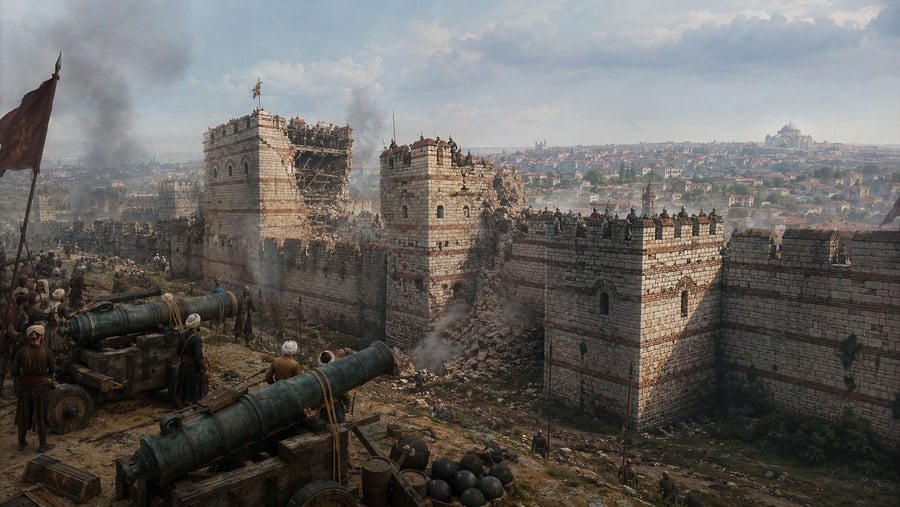
Illustration of the 1453 siege of Constantinople, showing Ottoman artillery attacking the Theodosian Walls 

From The Greek Reporter:

Historian Anthony Kaldellis, Professor of Classics at the University of Chicago, challenges the long-held idea that the Fall of Constantinople in 1453 was inevitable, arguing that the siege should be understood through the specific military and tactical factors that shaped its outcome.

Speaking to Greek Reporter about his new book, 1453: The Conquest and Tragedy of Constantinople, Kaldellis explains that historians cannot prove that an event was inevitable because they have only one historical timeline to go by. “In a sense, nothing in history is inevitable,” Kaldellis tells Greek Reporter. “We can’t go back and run experiments to see if we change certain variables what would happen.”

His argument is directed against the idea that Constantinople’s fall was inevitable, a view he noted appears across scholarship, novels, journalism, and online commentary. Rather than reading 1453 backward from its outcome, Kaldellis argues that the event should be examined through the variables that determined the result “one way or another.” (Read more.)

More HERE, HERE, and HERE.

Share

Friday, May 29, 2026

Islam’s Sexual Enslavement: A History in Paintings

 From Raymond Ibrahim:

Objectively speaking, the painting in question portrays a reality that has played out countless times over the centuries: African, Asiatic, and Middle Eastern Muslims have long targeted European women—so much so as to have enslaved millions of them over the centuries (see Sword and Scimitar for documentation).

Not only do elements of this phenomenon continue to this day—right smack in Europe—but there is something else, another medium besides writing, that documents this long history: countless more such paintings that feature the abduction, trafficking, and sexual enslavement of European women. Altogether they further underscore the ubiquity and notoriety of this phenomenon.

Indeed, this was such a well-known theme that many nineteenth and early twentieth century artists and painters specialized in it, often based on their own eye-witness accounts. (As one art gallery puts it, “Many … of the most important painters did travel [to the Muslim world] themselves, and what they painted was based on the sketches they had made while they were there…”)

Below are just 20 such paintings (there are many more). Aside from noting the artist’s name, year of painting, and, where possible, title—information which is often difficult to ascertain—I’ve limited my remarks to important asides and clarifications, mostly in the first few paintings, leaving the rest to speak for themselves. (Read more.)

Share

Monday, May 18, 2026

The Discovery at Oxyrhynchus

 From The Sunday Times:

The Egyptian archaeological site of Oxyrhynchus, 120 miles south of Cairo, might not have the glamour and renown of the hallowed Valley of the Kings. But a team from the University of Barcelona working at the site has made one of the most significant discoveries in decades.

A mummy from the late Roman period, about 1,600 years old, was discovered buried with a verse of Homer’s The Iliad, the original of which dates back 2,800 years. The text was found in clay with an embalmer’s seal on the outside of the mummy’s wrapping. It is the first time a Greek literary text has been found directly incorporated into the Egyptian mummification process. The discovery, at the ancient city of El-Bahnasa, started as a relatively unexceptional find, said Ignasi-Xavier Adiego, a professor at the University of Barcelona who directs the Oxyrhynchus project. (Read more.)


From The Conversation:

Archaeologists have found something unexpected inside a 1,600-year-old Roman-era Egyptian mummy: a fragment of Homer’s Iliad. It wasn’t placed beside the body, but inside the mummy’s abdomen. But the real surprise isn’t just where the fragment was found. It’s how it got there. To understand, we must go back – to the Iliad itself, and to what it became in the Roman world.

In The Iliad, a poem shaped in the 8th century BC and attributed to Homer, the Trojan war does not end in triumph or renewal. It ends in devastation. The poem closes at the edge of collapse, with Troy reduced to a landscape of heroic ruin. And yet, this is not where the story ends.

According to later Roman tradition, one Trojan escaped. Aeneas – son of Anchises and the goddess Aphrodite – fled the burning city carrying his father on his shoulders and the household gods in his hands. He moved west, across the Mediterranean, towards Italy, where he became the ancestor of Rome.

This continuation did not come from the Iliad itself. It was shaped centuries later, most famously in Virgil’s Aeneid. But it changed the meaning of the Trojan war entirely. The past, in other words, was actively reorganised – through stories that could be reworked, extended and connected across time and space. (Read more.)

Share

Tuesday, April 21, 2026

Romans, Not “Byzantines”

 From Medievalists:

Few historical civilizations suffer from a greater identity mismatch than the Byzantine Empire. To modern readers, “Byzantine” conjures images of decadence, intrigue, and a shadowy afterlife of ancient Rome. Yet to the people who lived in the empire we now call Byzantine, this label would have been meaningless. They did not call themselves Byzantines. They did not believe they lived in a successor state. They were Rhomaioi—Romans—and their empire was the Roman Empire.

Understanding how Byzantines saw themselves is more than a matter of semantics. It reshapes our understanding of medieval history, Roman continuity, and the profound cultural divide between Eastern and Western Europe. The Byzantine self-image as Roman endured for more than a thousand years, surviving language change, religious transformation, territorial loss, and even the fall of Rome itself. (Read more.)

Share

Sunday, November 30, 2025

8,000-Year-Old Rock Art

 From Ancient Origins:

Archaeologists working in Central Anatolia have uncovered a collection of prehistoric petroglyphs near Mount Erciyes that fundamentally reshapes our understanding of symbolic expression in the region. The discovery in Kayseri's Develi district reveals engravings dating to approximately 6000 BC, millennia before the rise of the Hittite Empire that would later dominate these lands.Carved into dark volcanic rocks scattered across the southern foothills of Mount Erciyes, these ancient markings capture human and animal figures alongside geometric patterns. The discovery, currently awaiting official registration with Turkish cultural authorities, represents one of the most significant prehistoric finds in the region in decades. Early analysis dates the engravings to the Late Neolithic or Early Chalcolithic period, offering a rare glimpse into how early Anatolian communities expressed symbolic thought long before written language existed.

The petroglyphs discovered near Develi offer compelling evidence that organized symbolic expression flourished in Central Anatolia thousands of years before any known writing system reports ArkeoNews. Archaeologists involved in documenting the site described the volcanic rock surfaces as "among the earliest canvases of the human imagination," noting that every carved line—whether depicting animals, humans, or abstract shapes—reflects a symbolic consciousness that predates writing by millennia.

The site's strategic position near ancient water sources and migration routes suggests it may have functioned as a gathering or ritual area for early farming and herding communities. Researchers believe the engravings served purposes far beyond decoration, likely representing early expressions of belief, identity, and social connection. The figures of humans and animals, along with geometric motifs, provide insight into how prehistoric communities understood their world and their relationship to the natural environment surrounding them. (Read more.)

Share

Friday, November 21, 2025

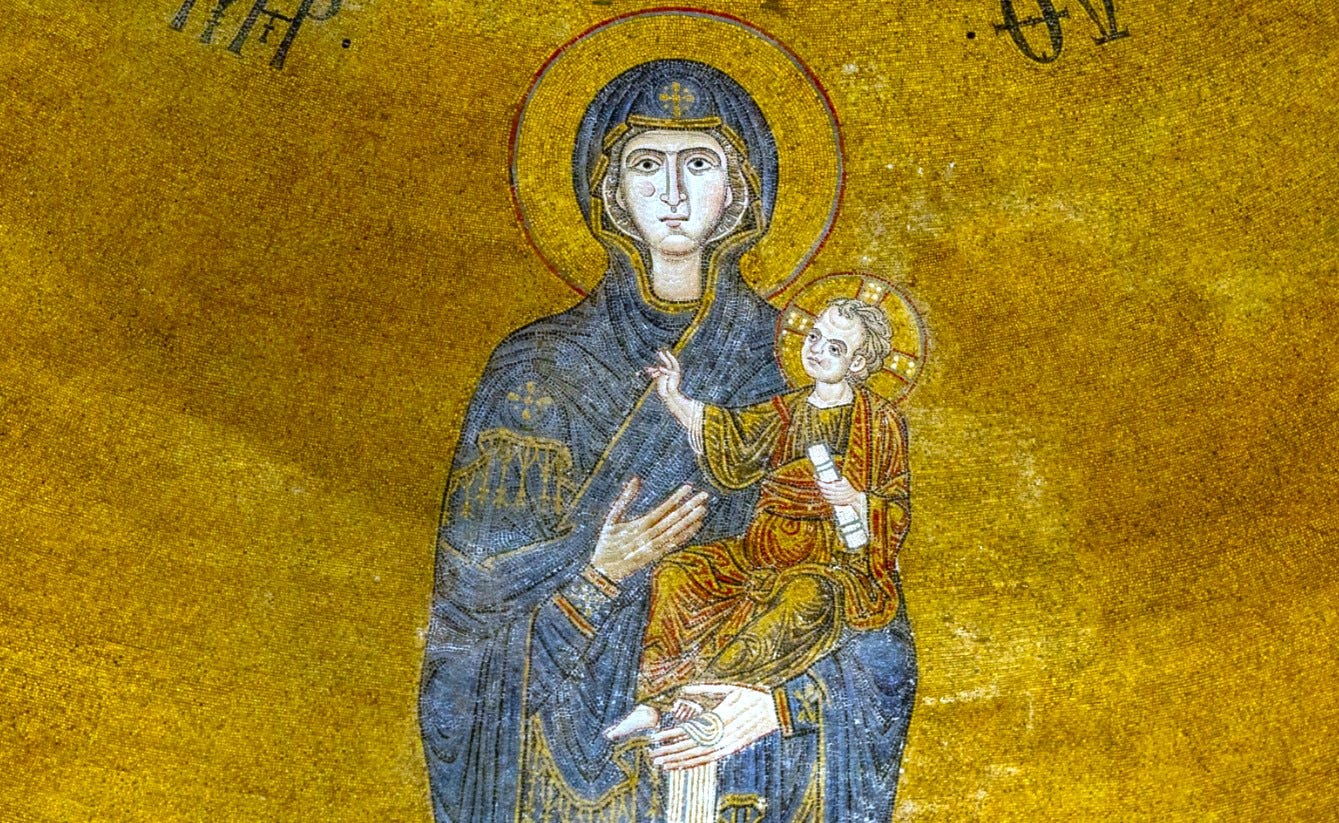
Icon of the Mother of God Nicopeia


 From The Liturgical Arts Journal:

This precious and important icon is thought to have been originally located either in the Monastery of Saint John the Forerunner -- sometimes simply called the Stoudios monastery -- or perhaps the Monastery of Christ Pantokrator. Whatever the case, it is, as it was then, considered an important and prestigious icon of Byzantium. 

The sixteenth century Italian travel writer, Giovanni Battista Ramusia, lends his own account of the icon's taking:

The barons and the Venetians battered the walls and towers day and night without with various machines, and redoubled the War, conducting many great skirmishes from one area to another; it was in one of these that they valorously acquired the banner of the Tyrant, but with much greater joy a panel on which was painted the image of Our Lady, which the Greek Emperors had continuously carried in their exploits, since all their hopes for the health and salvation of the Empire rested in it.  The Venetians held this image dear above all other riches and jewels that they took, and today it is venerated with great reverence and devotion here in the church of San Marco, and it is one that is carried in procession during times of War and plaque, and to pray for rain and good weather.  

[...]
 
The icon itself is really quite beautiful and falls into the "Nicopeia" type which means "Bringer of Victory." Arguably the most famous examples of this type of Theotokos icon are those which can still be found gracing the wall of Hagia Sophia in Constantinople. The title reflects the idea of the Virgin as a protector of Byzantium and icons such as this were frequently employed as a kind of standard, carried in battle by the Eastern Roman emperors. (Read more.)
Share

Monday, November 10, 2025

Legendary Foundress of Carthage

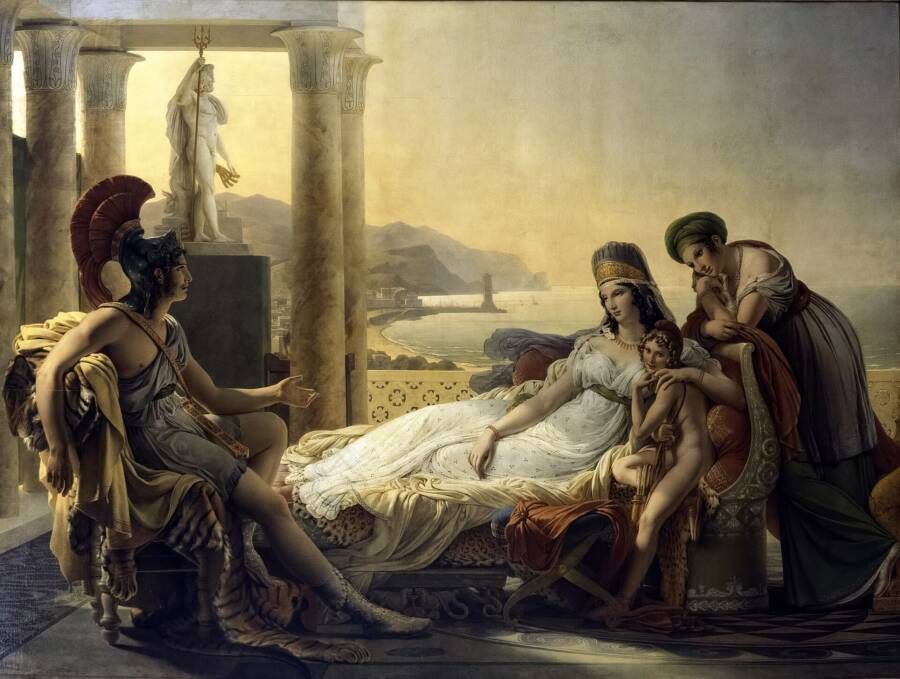
Queen Dido 

From All That's Interesting:

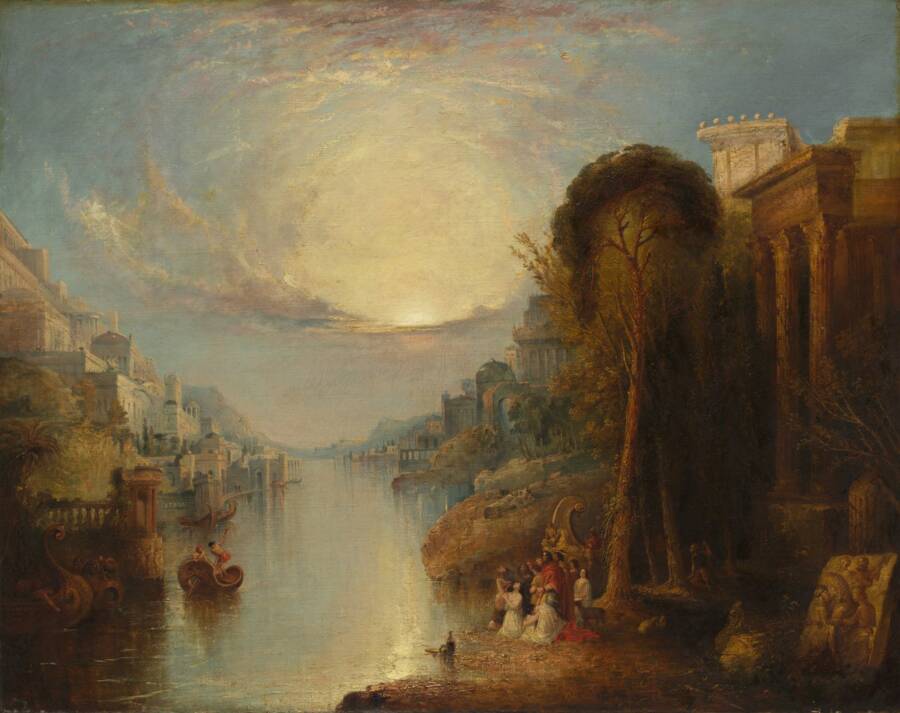
According to Greco-Roman legend, Dido founded the ancient city of Carthage in modern-day Tunisia by requesting a seemingly small amount of land from a local chieftain — only as much as an ox-hide could cover. Dido then cleverly cut that ox-hide into tiny strips and laid them out in a circle, claiming a much larger space than expected.

Encompassing an entire hillside, Carthage quickly transformed into a bustling metropolis, and Dido became famous not only as the founder of the city, but also its first queen. However, as ancient myths tell it, her power and influence couldn’t protect her from meeting a tragic fate.

In Virgil’s Aeneid, Queen Dido fell in love with the Trojan hero Aeneas after he landed in North Africa. Though it initially seemed like Aeneas returned her feelings, Aeneas was soon commanded by the gods to continue on his planned journey. He then abandoned Dido, leading her to die by suicide.

The mists of time have forever clouded the story of this fabled queen, and it’s still unclear whether she was inspired by a real historical figure. Despite this, Dido’s legends have captivated countless people for millennia. (Read more.)

Painting Of Carthage


Share

Wednesday, August 6, 2025

Emperor Constantine Palaiologos’ Heroism

 From The Greek Reporter:

If the urban legends are to be believed, “The city has fallen and I am still alive” were the last, painful words of Constantine XI Palaiologos, the last Byzantine Emperor.

On May 29 1453, as the world of Byzantium crumbled around him, its last emperor faced an impossible choice between heroism and humiliation. The story of his final hours on the walls of Constantinople is a blur of history, covered in myth and proud stories of national identity. It is a story that still moves modern Greece, showing how interconnected the identities of the Byzantines, the Eastern Romans and the modern Greeks are. While no one doubts that Constantine Palaiologos died like a hero, how exactly he fell remains a mystery that gave rise to one of Greece’s most prominent modern legends.

The facts, as much as we can ever know them, are pieced together from the accounts of men who were there at these historic moments for the entire region. The Venetian surgeon Nicolò Barbaro wrote in his ”Giornale dell’assedio di Costantinopoli” about the pure chaos that engulfed Constantinople as the Turks were advancing towards the once mighty Byzantine capital. Similar accounts we find in Archbishop Leonard of Chios’ writings in his letter he sent to Pope Nicholas V. Their accounts agree that Constantine, facing the vast army of Sultan Mehmed II, refused to flee or surrender his city. (Read more.)

Share

Friday, August 1, 2025

Among the Ruins of an Ancient Empire

 From Popular Mechanics:

Today, the ancient city of Hattusha—the capital of the Hittite empire that ruled north-central Turkey in the late Bronze Age (1650 - 1200 BCE)—is a treasure trove of ancient languages. At the Boğazköy-Hattusha archaeological site, excavations over the past century have uncovered around 30,000 cuneiform tablets detailing the history, traditions, and society of Bronze Age Anatolia. This site is so rich in Bronze Age history that the once-powerful capital became a UNESCO World Heritage Site in 1986.

Although most of the tablets found in Hattusha are written in Hittite—the oldest attested Indo-European language (and the language tree through which English evolved)—many other languages of the region can be found among these cuneiform treasures, including Luwian, Palaic, and Hattic. However, 2023 excavations at the site revealed a surprising discovery—an entirely new language.

“The Hittites were uniquely interested in recording rituals in foreign languages,” Daniel Schwemer, head of the Chair of Ancient Near Eastern Studies at Julius-Maximilians-Universität (JMU) Würzburg in Germany, said in a press statement. (Read more.)

Share

Monday, July 21, 2025

History of Greek Loukoumia, or Turkish Delights

From The Greek Reporter:

Greek loukoumia, or Turkish delights, hold an important place in the world of Greek sweets. The delectable, soft little squares of sweet flavor coated in powdered sugar are an iconic symbol of Greece. In Greece and Cyprus, loukoumia, the plural of loukoumi, are a traditional sweet offered with coffee. In many villages across the country, visitors are welcomed into the homes of locals with an offering of the delicious gelatinous confection. Made from the simple ingredients of water, starch, and sugar, and flavored with iconic tastes of Greece like rose, bergamot, and mastiha, loukoumia are easy to make but difficult to perfect. (Read more.)

Share

Monday, June 23, 2025

The Mysterious Frescoes of Castelseprio

 From Hilary White at The Sacred Images Project:

It might seem surprising that this fresco of Christ Pantocrator, discovered in the apse of a small obscure church in the north of Italy, is so unusual that it caused a major re-write of the art-history timeline.

It looks like any early Byzantine image that we’ve seen hundreds of times: serene, otherworldly, with the face symmetrical with classical proportions, modelled with lights and darks to give the impression of lifelike three-dimensionality. But at the same time, we can see it is stylistically different: the softness of the facial modelling, the natural fall of the hair, the subtly rendered shadow beneath the chin, the piercing gaze and human expression.

In fact, it immediately reminds me in its naturalism of the frescos discovered at Pompei and Herculaneum. It might not be surprising to find that it dates to the earliest paleo-Christian period, when Roman standards were still in use.

But that would be the wrong guess. (Read more.)

Share

Thursday, June 12, 2025

The Changing Face of Byzantine Sacred Art


From Hilary White at The Sacred Images Project: 

Many western Christians who are not regularly exposed to them have an idea that all Byzantine or “eastern” iconography looks the same.

It’s easy to see why: after 500+ years of adulating the illusionistic naturalism of the Renaissance, the stylized, formal and symbolic aesthetic of Byzantine icons can seem like a foreign world. And I think these stylistic differences are a big part of what keeps the two sides separated.

We westerners, used to our naturalism, tend to not think much about them, and assume that they’re all more or less the same. And it’s true that the forms have a visual stylistic consistency; we know what “Byzantine icons” means. But once you start looking more closely, we see there is a much more complex and historically nuanced development, as there is in western art. Over the centuries, Byzantine iconography changed and developed dramatically, shaped by theological debates, political upheavals and cultural influences.

Our timeframe of iconography stretches across vast temporal and spatial distances, from the earliest frescoes of the catacombs in old Rome to the deeply symbolic, highly stylized icons of post-Byzantine (Constantinopolitan) Orthodox traditions. And it was carried out to the outer corners of the Christian world; we can see the same motifs, the same language spoken, from Ireland, Scotland and Lindisfarne, to Cappadocia to Ethiopia. (Read more.)

Share

Wednesday, June 11, 2025

Remember the Romans

 From The History Desk:

Open borders is another utopian idea. History has shown us that utopias don't work. And yet, there are people who just won't let that dream go. It is insane. But I think one day the history books will write about this particular era as the age of insanity. Even in the days of the Hunter-gatherers, the tribes had their hunting grounds that were not open to other tribes.

Getting back to the Roman empire, after 1000 years in Byzantium, in 1453, it fell to the Ottoman Sultan, Mehmed II, after a siege lasting 55 days. Alas, the Roman Empire was, truly, no more.

The Romans were replaced by the Ottomans. The Ottomans did not have the lasting power that the Romans did. Their rule over that part of the world ended with the reactions of WWI. Those reactions had to do with a general overthrowing of monarchs. Russia, the Hapsburg empire, those too were overthrown. The Hapsburg empire was broken up, and, along with Russia, and Turkey, they became modern states. Though Russia and Germany went from the frying pan into the fire, with their radical take on what a modern state should be.

Which is to point out that we must always be careful about what we wish for. The open border people are violent. So there is more to it than an open border. This movement is world wide, so be wary. We have already seen how Europe and the UK are faring under their policies of inviting the world in. Now there is some push back. But the fight needs to grow on the other side. Especially in a democracy, where the other side can win through fraud and intimidation during an election. (Read more.)

Share

Tuesday, June 10, 2025

Tomb of King Midas

 From All That's Interesting:

During excavations in the ancient city of Gordion — which has its own connection to another famous Greek legend — archaeologists unearthed a wooden burial chamber full of grave goods that dates back to the 8th century B.C.E. They suspect that the tomb has links to the Phrygian royal family and perhaps Midas himself.

The tomb was found inside a tumulus (a burial mound made of earth and stone) at the site, dubbed Tumulus T26. Though the wooden burial chamber had been crushed over the millennia, archaeologists discovered human remains and dozens of grave goods inside, including a 2,700-year-old bronze jug covered with linen.

Archaeologists believe that the tomb dates back to the 8th century B.C.E. Its age, elaborate nature, and plethora of high-quality artifacts suggest that it once belonged to an elite, perhaps a member of the Phrygian royal family.

“During the excavations in the ancient city of Gordion, we unearthed an untouched wooden burial chamber that is thought to belong to the Phrygian royal family,” Culture and Tourism Minister Mehmet Nuri Ersoy said in a statement on X. “The 88 metal artifacts found in the T26 tumulus, most of which are in good condition… provide unique clues about the burial traditions and social structure of the Phrygians.” (Read more.)


Share