Showing posts with label Holidays. Show all posts

Sunday, April 12, 2026

Desserts for Spring and Easter


From Victoria:

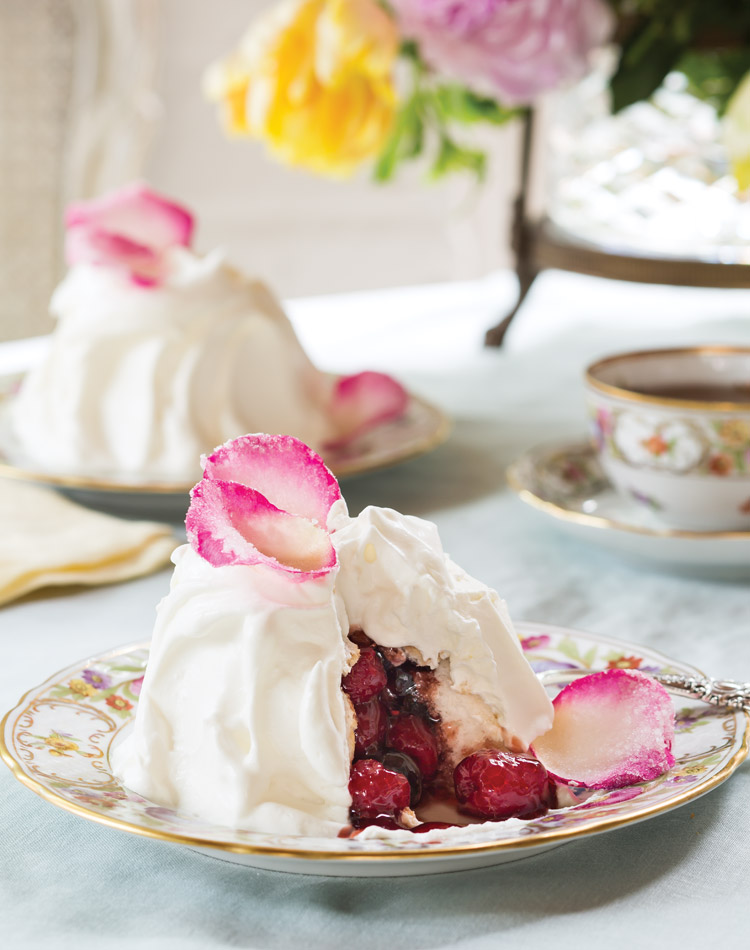
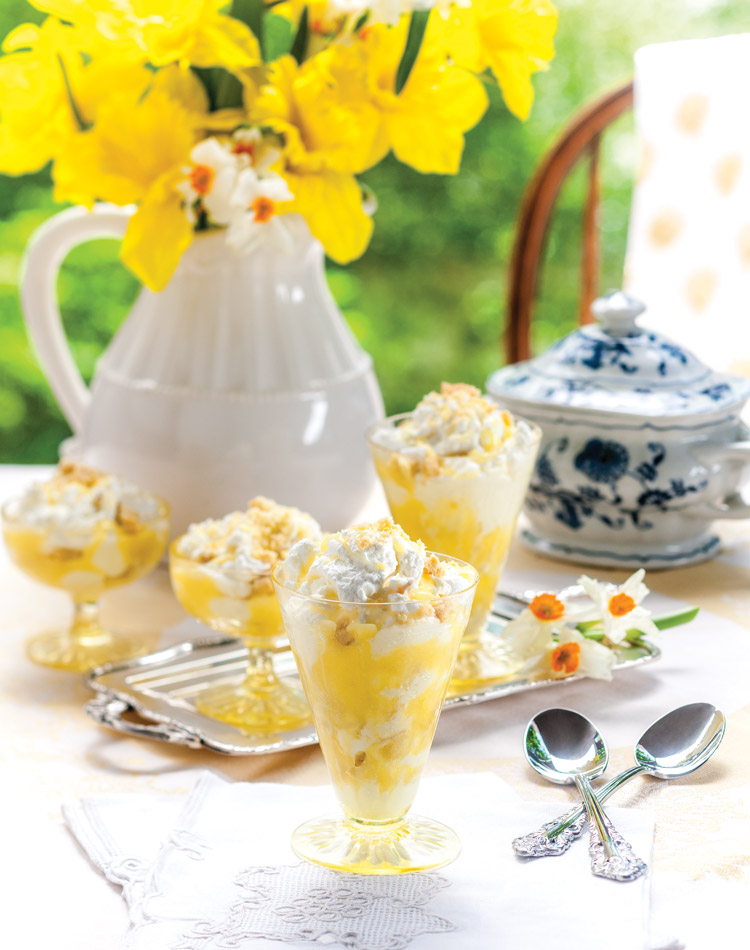
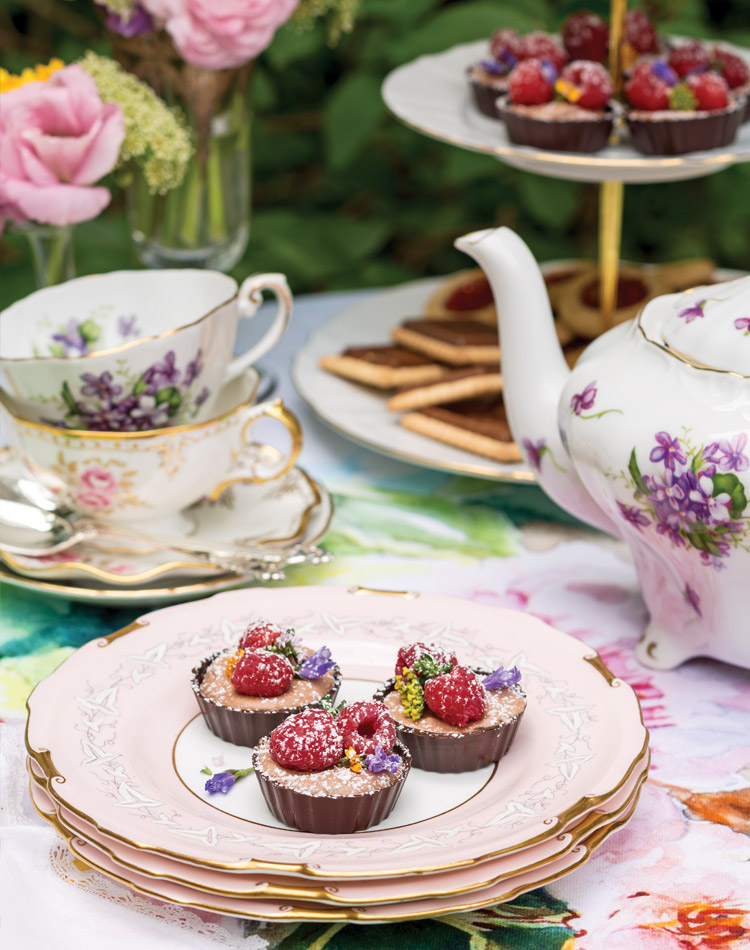
The gentle blush of a sugared rose petal adds the crowning touch to Angel Food Cakes. Beneath a rippling cloud of sweetened whipped cream, delicate sponge cake holds a luscious surprise. The first forkful reveals an abundance of raspberries and jam—the ruby-hued fruit filling a delightful complement to the other components of the dessert. For a variation on England’s chilled dessert of cooked, puréed fruit (typically gooseberries) folded into whipped cream, sample sunny Lemon Shortbread Fool. Crumbled cookies add delightful crunch to tantalizing swirls of citrus and cream. Hibiscus tea, an infusion made from the subtropical roselle bloom, adds tartness to the airy dessert filling in our decadent Chocolate Mousse in Chocolate Cups. Raspberries, edible flowers, and a dusting of confectioners’ sugar draw attention to these artful treats. Our pièce de résistance is a scrumptious pairing featuring fruits swimming in silky-smooth cream. This fresh and fragrant Berries and Cream delight mixes strawberries and raspberries with whipped cream flavored with raspberry liqueur. (Read more.)


From Southern Living:

To longtime Southern Living readers, it might come as no surprise that the most searched cake in the South is the Hummingbird Cake. Any way you slice it, this cake’s classic combination of banana, pineapple, and cinnamon has long made it one of our most popular recipes across all recipe genres. The 45-year-old recipe, first submitted to the magazine in 1978 by Mrs. L.H. Wiggins of Greensboro, North Carolina, has been reinvented into Bundt cakes, pancakes, and even whoopie pies. But the classic three-layer cake enveloped in cream cheese frosting is still our readers’ preferred way to enjoy this dessert. Nationwide, ‘dump cakes’ proved popular for their ease, with no special tools required to make these no-fail cakes. Despite the extra effort needed to assemble the hummingbird cake, Southerners are more than willing to put in the time for the final delicious result. (Read more.)

Share

Sunday, April 5, 2026

Easter Cakes

 From Country Living:

Easter is a time for dressing up, attending church services, decorating eggs and making Easter crafts. But it's also for planning tasty menus for Easter dinner or Easter brunch. And it isn't an Easter celebration without an over-the-top, fancy spring Easter cake! We've rounded up some of our favorites, from easy recipes that'll feed a crowd to simpler ideas for smaller gatherings. From light and refreshing spring flavors like blueberry, citrus, and coconut to down right decadent and rich chocolate cakes, there's something for everyone. This list has simple cakes, festive cakes, and elegant cakes that make gorgeous Easter centerpieces! (Read more.)

Share

How Some Puritans Saw Easter

 From The Earl of Manchester's Foote:

Much like their more famous ‘war on Christmas’, some hardline Puritans of the early 17th Century also had Easter in their sights.

It has been said that the transformation of Easter into a secular festival second only to Christmas has accelerated in recent years. With the long weekend affording many families the chance to come together, commerce has not been slow in sensing an opportunity to capitalise and the profusion of Easter-related paraphernalia – gifts, cards, and confections – only seems to grow. “Easter”, one commentator wryly noted, “is the new Christmas”.

This would have been no surprise in late medieval England, where Easter outranked Christmas as the key festival of the Christian year and was surrounded by a schedule of feast days, public events, and rituals.

But the English Reformation saw much of the Roman Catholic ceremony associated with Easter striped away, in favour of the more austere – and, to the Puritan mind, more fitting – fasting, contemplation, and prayer.

Historian Ronald Hutton traces the downgrading of Easter to the lead-up to the English Reformation led by its chief architect, Archbishop Sir Thomas Cranmer, who energetically pursued a policy of destruction of many of the medieval rituals associated with the festival, such as the dressing of special ‘Easter sepulchres’ – an arched recess generally in a church’s chancel which, from Good Friday to Easter day, would have had a crucifix and sacred elements placed within it – a long standing English tradition that was effectively snuffed out as early as 1548. (Read more.)

Share

Tuesday, February 17, 2026

"If Ever I Cease To Love"

It is Mardi Gras. "If Ever I Cease To Love" was once the theme song of Mardi Gras in New Orleans. It is a song which does not make sense, but then neither does love, most of the time. Tomorrow it will be Lent.
In a house, in a square in a quadrant
In a street, in a lane, in a road.

Turn to the left on the right hand
You see there my true love's abode

I go there a courting, And cooing to my love like a dove;
And swearing on my bended knee, if ever I cease to love,
May sheep-heads grow on apple trees, If ever I cease to love.

Chorus:
If ever I cease to love, if ever I cease to love,
May the moon be turn'd to green cream cheese,
If ever I cease to love
Share

Monday, February 16, 2026

Marie-Antoinette and Carnival


I usually do not use photos from the 1938 Marie Antoinette film; the costumes were glitzy and the wigs, too platinum. However, Norma Shearer's portrayal of Marie-Antoinette was soulfully authentic; the photo above captures the zest of the young Dauphine taking Paris by storm at Carnival. As a young girl, Marie-Antoinette embraced the festivities of Carnival with alacrity, especially the masked balls. Since members of the royal family were constantly surrounded by semi-liturgical ceremonies, at the masked ball the princes and princesses could engage in something vaguely resembling normal human interaction. The wearing of a mask, although it did not always endow total anonymity, lightened the tight protocol so that royals could mingle and converse with others in society.

In February of 1773, Marie-Antoinette wrote to her mother Empress Maria Theresa, relating how she went with her husband the Dauphin Louis to the Opera ball in Paris:
We went- M. le Dauphin, the comte, and comtesse de Provence and I- last Thursday to the Opera Ball in Paris; we kept the utmost secret. We were all masked; still, we were recognized after half an hour. The duc de Chartres and the duc de Bourbon, who were dancing at the Palais Royal right next door came to meet us and asked us pressingly to go and dance at Madame de Chartres's; but I excused myself from it as I had the King's permission for the Opera only. We returned here at seven and heard Mass before going to bed. Everybody is delighted with M. le Dauphin's willingness to have this outing since he was believed to be averse to it. (Secrets of Marie Antoinette: A Collection of Letters, edited by Olivier Bernier. New York: Fromm International, 1986, p. 102)
In January of 1774, Louis and Antoinette once again ventured incognito into Paris to the Opera ball, accompanied by Louis' two brothers and their wives. Here is Comte Mercy's description of the event in a letter to Empress Maria Theresa:
The three Princes and Princesses came on the 30th of January to the masked ball at the Opera; measures had been so well taken that they remained a long while without being recognized by anyone. M. le Dauphin [Louis] behaved splendidly; he went about the ball talking indiscriminately to all those he met on his path, in a very gay and decorous manner introducing the kind of jests suited to the occasion. The public was enchanted with this conduct on the part of M. le Dauphin, it made a great sensation in Paris and they did not fail, as always happens in these cases, to attribute to Madame la Dauphine the improvement they noticed in her consort's way of showing himself....

The Princes and Princesses came back a second time to the Opera ball on Sunday, the 6th of this month [February]; but this time their presence was less well concealed and consequently there was a greater influx of people to the theater. However, nothing improper or embarrassing resulted, and Madame la Dauphine, who did not unmask, drew on herself all the applause and admiration with which all the public always hastens to do homage to her, both owing to the people to whom she spoke and the things she said to them. (Louis XVI and Marie-Antoinette before the Revolution by Nesta Webster, p. 21)
It was at the Opera ball on January 30 that Marie-Antoinette chatted with Count Fersen behind her mask, in the presence of her husband and in-laws, but no eyebrows were raised by this playful incident. The Empress Maria Theresa was more concerned with her daughter getting sick from exhaustion than with anything else, and at the end of the 1773 Carnival wrote: "Thank God it is all over...." (Secrets of Marie Antoinette, p. 104) Later, she expressed reservations about the young Queen's taste in fashion. On March 5, 1775, after Louis XVI had ascended the throne of France, the Empress penned:
Thank God the endless Carnival is over! That exclamation will make me look very old, but I must admit that all those late evenings were too tiring; I feared for the Court's health and for the order of it's usual habits, which is an essential point....In the same way I can't prevent myself raising a point which many gazettes repeat all too often; it is the coiffure you use; they say that from the forehead it is thirty-six inches high, and with so many feathers and ribbons to adorn it! (Ibid.,p.159)
Marie-Antoinette responded by saying:
Although Carnival did amuse me a great deal, I agree that it was time it was ended. We are now back to our usual routine....It is true that I take some care of the way I dress; and, as for feathers, everyone wears them, and it would be extraordinary not to wear them. Their height has been much curtailed since the end of the balls....(Ibid., 160)
After Marie-Antoinette became a mother in December of 1778, her participation in Carnival was greatly mitigated, since she preferred not be too far away from her babies at night. It is sad that the enjoyment of the masquerade balls during her teenage years would later lead to many false rumors about her lifestyle. Share

Sunday, February 15, 2026

Carnival

 P. Bernaigne, "A Carnival Ball"
José Benlliure y Gil, "At the Carnival"


Carnival season officially began on January 6 and ends on Shrove Tuesday or "Fat Tuesday," called Mardi Gras. It is now Shrovetide, when most parishes used to have Forty Hours devotions in order to atone for the excesses of Carnival. Outside of certain exotic places such as New Orleans, LA and Bellefonte, PA, Carnival is not celebrated to the extent that it once was in the Christian west, when the season was a time of joyful merry-making before undertaking the rigors of Lent. At home, we usually have a "king cake;" HERE is an easy recipe. Amid the festivities, the traditions of the liturgy remind us that Lent is near. Not only Lent approaches, but death as well; the hour of reckoning for each soul is unknown.

"If Ever I Cease To Love" was the theme song of Mardi Gras in New Orleans. It is a song which does not make sense, but then neither does love, most of the time.
In a house, in a square in a quadrant
In a street, in a lane, in a road.


Turn to the left on the right hand
You see there my true love's abode

I go there a courting, and cooing to my love like a dove;
And swearing on my bended knee, if ever I cease to love,
May sheep-heads grow on apple trees, if ever I cease to love.

Chorus:

If ever I cease to love, if ever I cease to love,
May the moon be turn'd to green cream cheese,
If ever I cease to love.

Winslow Homer, "Dressing for Carnival"
Share

Thursday, January 8, 2026

King Cakes


And Galette des Rois. From Southern Living:

In two words—sensory overload. But more specifically, it's a frosted seasonal treat that Mardi Gras partygoers eat between January 6, otherwise known as King's Day or Twelfth Night, and Fat Tuesday. Typically, king cake is made of a rich, brioche dough and a wide array of fillings, such as cinnamon, chocolate, and cream cheese. But the rainbow magic is found in the glaze and sprinkles, which are usually gold, green, and purple. Even the colors of the icing (and royal colors of Mardi Gras) have a deeper meaning. Gold represents power, green is associated with faith, and purple illustrates justice. King cake is baked without a center, like your average Bundt cake, except buried inside the batter is a tiny, plastic baby figurine.

There are two theories. Some believe the plastic baby is symbolism of Baby Jesus because of the religious connection to King's Day. Others, however, believe the popular New Orleans lore, which suggests that an elaborate cake was served with a bean or ring placed inside during the commemoration of the king's ball in colonial Louisiana. Whoever found the bean or trinket in his or her slice of cake would be crowned the king or queen of the balls leading up to the lavish finale on Mardi Gras.

Rather than a bean or expensive ring, the plastic effigy is mostly used today as an emblem of good luck. Though as history would have it, the lucky individual who scores the piece of king cake with the baby inside is said to gain favor, and they're also tasked with hosting duties and bringing their own king cake for next year's revelry. (Read more.)

From Eater:

You can’t cancel king cake. That’s one thing New Orleans learned in 2021, when Mardi Gras looked very different: no parades, no fancy balls, no crowds. But Carnival is always the most wonderful time of the year and king cakes are a totem everyone can celebrate, and that’s just what the city did — bakeries, restaurants, and pop-ups stepped up their king cake game like never before, flooding the market with creative, unexpected, and gorgeous cakes to enjoy at home, gift a neighbor, or bring to work.

Beginning January 6, options abound, from traditionalists staying true to the brioche-based king cake — ring-shaped and laced with cinnamon, covered in icing and purple, green, and gold sugar, with a plastic baby hidden inside — to the many twists on the original, plus a growing availability of the elegant French puff pastry and almond cream version.

This map reflects the king cakes in the Greater New Orleans area that will be available on a regular basis for the 55 days of the 2022 Carnival season, not including pop-ups and home kitchens (to be included in a separate guide after the season begins). (Read more.)

More HERE.

King Cake  and Galette des Rois recipes,HERE, HERE and HERE.


Share

Tuesday, January 6, 2026

"Queen of the Bean"

From Writing the Renaissance:
The Feast of the Epiphany occasioned much merriment--and expense--at the French court during the Renaissance. The tradition of sharing a galette des rois--a cake containing a concealed bean--traces back to early sixteenth century celebrations of Twelfth Night. The person who found the bean in his or her piece of cake became the de facto ruler for the duration of the festivities. Whereas in England the choice of a "king," or Lord of Misrule, predominated, across the channel it was the election of the "Queen of the Bean" that evolved into an elaborate ritual.

According to Robert Knecht in his book The French Renaissance Court (p. 75-76), it was custom at the court of François I to chose not only a Queen of the Bean, but a bevy of eighteen ladies to attend her. The women wore beautiful new clothes, which the King provided: undergarments of crimson velvet with slashed sleeves held together by gold clasps and outer garments of grey satin fringed with velvet and lined with mink. Matching belts, necklaces and bracelets complemented the attire; the Queen wore a plumed bonnet atop a long golden or silver snood adorned with precious stones. When it was time for supper, the Queen of the Bean rose from her seat next to the true queen, Eléanore, and took the King's hand. The monarch led her and her ladies into the hall where two tables had been set. The Queen of the Bean sat above Queen Eléanore, the dauphin's wife Catherine de' Medici, and the King's sister Marguerite de Navarre at the shorter table; the King joined the eighteen attendants at the second table. During the meal, the Bean Queen was served with the ceremony normally reserved for the real queen, who surrendered any precedence during the twenty-four hours of her rival's reign.
(Read more.)
Share

Monday, January 5, 2026

The Lord of Misrule

It is the Twelfth Night.

Fisheaters has everything you need to know about Twelfth Night, including a poem by Robert Herrick:
Twelfth Night: Or King and Queen

Now, now the mirth comes
With the cake full of plums,
Where bean's the king of the sport here;
Beside we must know,
The pea also
Must revel, as queen, in the court here.

Begin then to choose,
This night as ye use,
Who shall for the present delight here,
Be a king by the lot,
And who shall not
Be Twelfth-day queen for the night here.
Share

Sunday, January 4, 2026

Galette des Rois

Happy Epiphany! January is Epiphany Month! It is never too late to celebrate. From Chocolate and Zucchini:
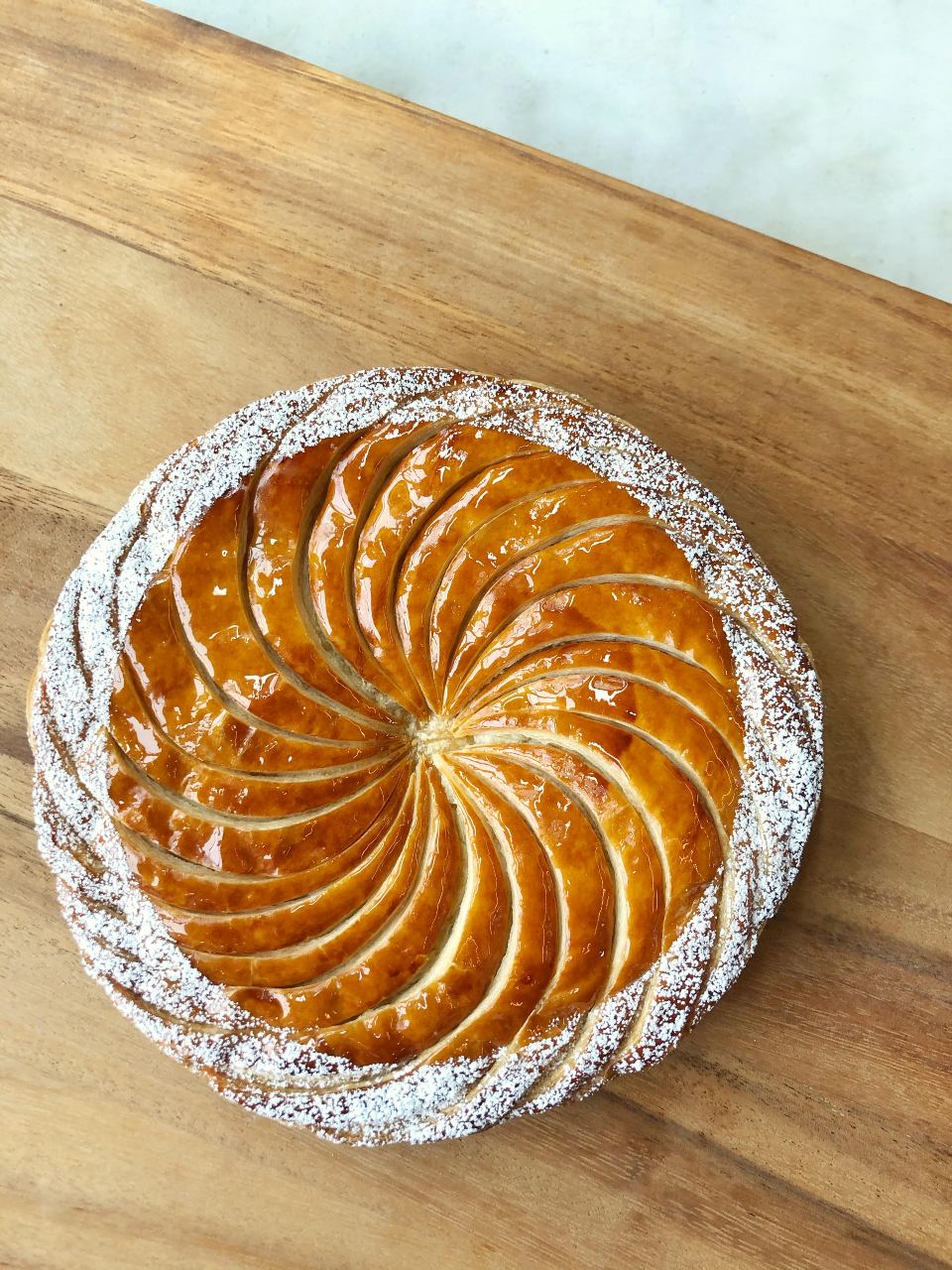
If you’ve ever been in France during the month of January, surely you’ve noticed the blossoming of galettes des rois in the window of every bakery and pastry shop. A puff pastry pie garnished with a buttery filling, it is the traditional confection with which the Epiphany is celebrated*; I have written in more detail about this tradition in this post, so I invite you to go and read that first. I’ll wait right here.

La galette, and the fun ritual that determines who will be king or queen for the day (allow me to insist you read this post if you don’t yet know about the fève thing), bring back many a happy childhood memory for me. Aside from the two years I spent in California, I have partaken of at least one galette a year for as long as I can remember.

I used to buy them from the pastry shop, like most French people do, but I started making my own a few years ago. My deep attachment to this confection should have compelled me to do so years earlier, but the Epiphany is theoretically celebrated on January 6 — though this is extended to the whole month of January nowadays — and I always felt a bit too tuckered out after the holidays to tackle the project. But that inaugural year was different. We were celebrating my parents’ 40th wedding anniversary one Saturday, my sister, brother-in-law and nephew were visiting from London for the occasion, and my mother had asked if I could bring the dessert for our celebratory lunch. It seemed the perfect opportunity to share a galette with my family, and I had just enough time to make it myself.

My initial intention was to make my own puff pastry, using this easy puff pastry formula, but I didn’t quite have it in me so I decided to use store-bought puff pastry. Not just any store-bought puff pastry, mind you, but Madame François’ puff pastry, which is produced in Sologne with butter from the Charentes, farine de gruau (fine wheat flour) and zero additives. I got it from G. Detou, where it is sold in slabs of 3 kilos, ready to be divided, shared and/or frozen; it can also be ordered on their website**. (Read more.)
Share

Friday, January 2, 2026

Queen Charlotte and Christmas in Georgian England

From Nancy Bilyeau:

Some people cherish an image of Victorian Christmas as the peak of all celebrations. This was when the Christmas tree first found its way into English homes, thanks to Prince Albert, and when families gathered to "make merry" and give thanks for their good fortune, just as they did in Charles Dickens' A Christmas Carol. 
Um, that's not quite right. 
While there is a strong belief that Albert brought with him from Saxe-Coburg the tradition of a Christmas tree, the honors belong to Queen Charlotte, wife of George III. She was raised in Mecklenburg-Strelitz, and it was following her marriage to George in 1761 that the tree tradition found its way to England.... 
At first Queen Charlotte confined her importing of German Christmas traditions to mounting a decorated yew branch, but in 1800 she threw a memorable party at Windsor for the kingdom's leading families, showing off an entire tree. Dr John Watkins wrote with some awe of how "from the branches of which hung bunches of sweetmeats, almonds and raisins in papers, fruits and toys, most tastefully arranged; the whole illuminated by small wax candles." He said that "after the company had walked round and admired the tree, each child obtained a portion of the sweets it bore, together with a toy, and then all returned home quite delighted." 
Before long, anybody who was anybody wanted a Christmas tree. (Read more.)
Share

Wednesday, December 31, 2025

Happy New Year!

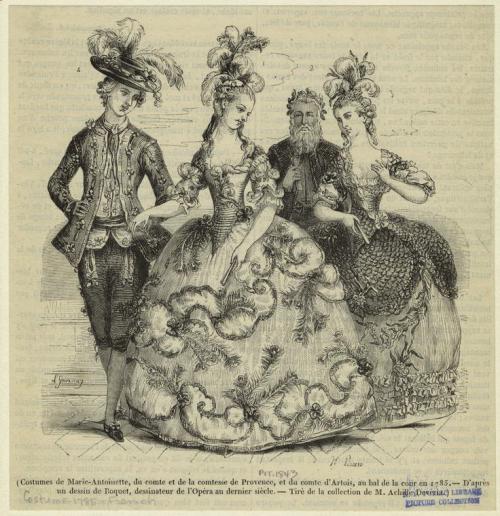
Marie-Antoinette (center) accompanied to a costume ball by Artois, Monsieur and Madame.


Wishing all the readers of Tea at Trianon a New Year of blessings and joy! Share

Wednesday, December 24, 2025

Irish Christmas Blessings and Carols

From Ireland Calling:
Carols are also important in an Irish Christmas. Ireland has its fair share of original carols such as The Wexford Carol and While Shepherds Watched Their Flocks by Night. Many others have been translated into Irish and performed by leading artists. These are some of Ireland’s best known Christmas blessing and carols.

The Wexford Carol is one of the most famous and most popular hymns to come out of Ireland. Its origins are uncertain but it certainly dates back several centuries. It originated in Co Wexford and first came to wider prominence due to the work of William Grattan Flood who was the organist at St Aidan’s Cathedral in Enniscorthy. He first came across the carol when he heard it being sung by a local singer in Wexford in the 19th century. He started to perform it at Christmas services in the cathedral and it was later published in the Oxford Book of Carols. It soon became a standard in carol books across the world. (Read more.)
Share

Monday, December 22, 2025

What Is Figgy Pudding?

From NPR:
This holiday season, one popular Christmas carol has been raising some questions here at NPR headquarters. Namely: "Oh, bring us some figgy pudding, oh, bring us some figgy pudding, oh — "
Wait. What is figgy pudding? First of all, it's "absolutely delicious," says Debbie Waugh, who recently served the dish at a tea at the Historic Green Spring House in Alexandria, Va.
Figgy pudding — also known as plum pudding or Christmas pudding — is a staple of the British Christmas table, she says. "It resembles something like a cannonball, and it maybe feels a bit like a cannonball when it hits your stomach, but it's tradition and we love it," Waugh tells NPR's Michel Martin. And despite its moniker, the dessert features neither figs nor plums. (Read more.)
Share

When Massachusetts Banned Christmas

 It was banned in England, too, under Cromwell. From History:

After the Puritans in England overthrew King Charles I in 1647, among their first items of business after chopping off the monarch’s head was to ban Christmas. Parliament decreed that December 25 should instead be a day of “fasting and humiliation” for Englishmen to account for their sins. The Puritans of New England eventually followed the lead of those in old England, and in 1659 the General Court of the Massachusetts Bay Colony made it a criminal offense to publicly celebrate the holiday and declared that “whosoever shall be found observing any such day as Christmas or the like, either by forbearing of labor, feasting, or any other way” was subject to a 5-shilling fine.

Why did the Puritans loathe Christmas? Stephen Nissenbaum, author of The Battle for Christmas, says it was partly because of theology and partly because of the rowdy celebrations that marked the holiday in the 1600s. n their strict interpretation of the Bible, the Puritans noted that there was no scriptural basis for commemorating Christmas. “The Puritans tried to run a society in which legislation would not violate anything that the Bible said, and nowhere in the Bible is there a mention of celebrating the Nativity,” Nissenbaum says. The Puritans noted that scriptures did not mention a season, let alone a single day, that marked the birth of Jesus. 

 Even worse for the Puritans were the pagan roots of Christmas. Not until the fourth century A.D. did the church in Rome ordain the celebration of the Nativity on December 25, and that was done by co-opting existing pagan celebrations such as Saturnalia, an ancient Roman holiday of lights marked with drinking and feasting that coincided with the winter solstice. The noted Puritan minister Increase Mather wrote that Christmas occurred on December 25 not because “Christ was born in that month, but because the heathens’ Saturnalia was at that time kept in Rome, and they were willing to have those pagan holidays metamorphosed into Christian [ones].” According to Nissenbaum, “Puritans believed Christmas was basically just a pagan custom that the Catholics took over without any biblical basis for it. The holiday had everything to do with the time of year, the solstice and Saturnalia and nothing to do with Christianity.” (Read more.)


Cromwell and Christmas, HERE.


Here is a defense of the traditional date of Christmas:

The Catholic Church, from at least the second century, has claimed that Christ was born on December 25. However, it is commonly alleged that our Lord Jesus Christ was not born on December 25. For the sake of simplicity, let us set out the usual objections to the date of December 25 and counter each of them.

Objection 1: December 25 was chosen in order to replace the pagan Roman festival of Saturnalia. Saturnalia was a popular winter festival and so the Catholic Church prudently substituted Christmas in its place.
 
Reply to Objection 1: Saturnalia commemorated the winter solstice. Yet the winter solstice falls on December 22. It is true that Saturnalia celebrations began as early as December 17 and extended till December 23. Still, the dates don’t match up.
 
Objection 2: December 25 was chosen to replace the pagan Roman holiday Natalis Solis Invicti which means “Birthday of the Unconquered Sun.”
 
Reply to Objection 2: Let us examine first the cult of the Unconquered Sun. The Emperor Aurelian introduced the cult of the Sol Invictus or Unconquered Sunto Rome in A.D. 274. Aurelian found political traction with this cult, because his own name Aurelianderives from the Latin word aurora denoting “sunrise.” Coins reveal that Emperor Aurelian called himself the Pontifex Solis or Pontiff of the Sun. Thus, Aurelian simply accommodated a generic solar cult and identified his name with it at the end of the third century.
 
Most importantly, there is no historical record for a celebration Natalis Sol Invictus on December 25 prior to A.D. 354. Within an illuminated manuscript for the year A.D. 354, there is an entry for December 25 reading “N INVICTI CM XXX.”  Here N means “nativity.” INVICTI means “of the Unconquered.” CM signifies “circenses missus” or “games ordered.” The Roman numeral XXX equals thirty. Thus, the inscription means that thirty games were order for the nativity of the Unconquered for December 25th. Note that the word “sun” is not present. Moreover, the very same codex also lists “natus Christus in Betleem Iudeae” for the day of December 25. The phrase is translated as “birth of Christ in Bethlehem of Judea.”[i]
 
The date of December 25th only became the “Birthday of the Unconquered Sun” under the Emperor Julian the Apostate. Julian the Apostate had been a Christian but who had apostatized and returned to Roman paganism. History reveals that it was the hateful former Christian Emperor that erected a pagan holiday on December 25. Think about that for a moment. What was he trying to replace?
These historical facts reveal that the Unconquered Sun was not likely a popular deity in the Roman Empire. The Roman people did not need to be weaned off of a so-called ancient holiday. Moreover, the tradition of a December 25th celebration does not find a place on the Roman calendar until after the Christianization of Rome. The “Birthday of the Unconquered Sun” holiday was scarcely traditional and hardly popular. Saturnalia (mentioned above) was much more popular, traditional, and fun. It seems, rather, that Julian the Apostate had attempted to introduce a pagan holiday in order to replace the Christian one! (Read more.)

Share

Sunday, December 21, 2025

The Nutcracker

 
 In the hundred years or so since its debut, Tchaikovsky's The Nutcracker has become a delightful aspect of modern Christmas celebrations. Composed during the "Silver Age" of Russian ballet, The Nutcracker is based upon a fairy tale by the German romantic writer E.T.A. Hoffman, whose stories also inspired Delibes' Coppelia and Offenbach's Tales of Hoffman. It is one of the few ballets that is not a love story, although later stagings have tried to make it into one. The music, however, is powerful enough for any story of a great romance. In college, I helped my sister Andrea, who was still in high school, with a project; we were listening to the "Pas de Deux" of the Sugar Plum Fairy and her cavalier. Andrea said, "That must be from a really great love story." "No, it's just from The Nutcracker," I replied. It is a simple story, full of childhood's innocent, but very real, hopes and fears. To watch or listen to The Nutcracker is to enter into a dream, a dream which comes to life even after so many years, and all wars and revolutions which have tormented the world.
Share

Saturday, December 20, 2025

Mistletoe

Here is some historical background on the pagan plant which has long been pleasantly associated with Christmas.

Many folks know that the berries and leaves are toxic, but less known, I suspect, is that the shrub grows high in the branches of trees. Where does it put its roots? They wander under the skin of its host, supping from the tree's veins. One or two mistletoe bushes in an otherwise healthy tree will deplete it, though not to the point of death. Look hard in the canopy of maples and oaks: That squirrel's nest, if green, may be a mature mistletoe working its macabre magic.

This sinister trait has resonated in cultures through the ages. In Greek mythology, Persephone unlocked the gates to the underworld with a wand of mistletoe. The ancient druids venerated mistletoe for its powers and held that when the plant was growing on oak trees, as opposed to apple, it was particularly sacred. The tradition of kissing beneath it, based loosely on Celtic lore, became popular in the 19th century along with other yuletide rituals. (Read more.)


Share

Friday, December 12, 2025

The Hidden History of Carols

It seems that in the Middle Ages caroling parties could be a bit wild. Most people do not realize that carols were not just for Christmas but every feast day had its carols, and some were more bawdy than religious. To quote:
 The story of Christmas caroling is full of unexpected surprises. The practice itself has gone through many changes over the centuries, and our perception of caroling today is based only on the very recent history. We think of Christmas caroling as a wholesome, and even religious, activity. Caroling seems to speak of the beauty, innocence, and magic of the Christmas season. However, in researching this practice, I have discovered that caroling was not as innocent as we might think. In fact, the act of caroling was actively combatted by the Church for hundreds of years.

Uncovering the origins of caroling has proven difficult. Some sources give the 14th or 15th centuries as the earliest date for caroling. I believe the reason for this is because this is the period when caroling began to be adopted by the church, and this is when carols first began to be written down. However, there is much evidence that caroling was around long before that. We don’t have written carols from the early periods, but what we do have are edicts from the Church and recorded sermons which make reference to caroling. (Read more.)
Share

Friday, November 28, 2025

Holiday Etiquette Tips

From Kitchn:

When to arrive at a party?

If you live by the motto that it’s “better late than never,” you may be on to something. Although Martha doesn’t suggest showing up to parties two hours late, she does say that not showing up at the time it is scheduled to start is just fine. “A little past call time is always nice for the host because they’re never quite ready,” Martha suggested.

How long you should wait for a tardy guest before serving dinner?

“Not too long,” said Martha. “Just leave the plates — actually, push their plates to the end of the table.” (Note to self: Do not arrive late to Martha’s party.)

If you can move place cards if you don’t like the person you’re seated next to?

“No,” warned Martha. “You’re not allowed to. On Thanksgiving, my daughter moved all the place cards without my knowledge. That didn’t go over so well.” Check out the full segment below, along with Martha’s recipe for molasses-ginger crisps. We think they make a thoughtful gift, even if the eggs you use come from the grocery store. (Read more.)


More tips, HERE.


The comfort of scruffy hospitality, from Treehugger:

My friends Dana and John perfectly practice what the Rev. Jack King referred to as "scruffy hospitality." Their kitchen is small. The wood cabinets are dark and a few decades old. Spices and jars for sugar and flour line the countertops because there's nowhere else to put them. A tall, round table shoved in a corner has mismatched bar stools crammed around it.

The sliding glass doors in the kitchen lead to a back deck with a well-used chiminea, an outdoor table and a large variety of chairs and cushions, many of them bought at yard sales. We circle the chairs around the chiminea on weekend nights during all four seasons, whenever Dana and John put out a simple call out through text or Facebook that says, "Fire tonight!"

There will always be food, but like the bar stools and deck chairs, the food is mismatched. Our hosts provide some food; John may have the urge to make jalapeño poppers or Dana may put together some version of salsa with whatever's fresh from the garden, but there's not a formally prepared meal. Everyone just brings something. It's perfectly acceptable — encouraged even — to bring odds and ends of foods that need to get used up. I often bring wedges of cheese that have already been cut into or half a baguette to slice up and toast to dip in hummus. Everyone brings a little something to drink. And it's a glorious feast.

This kitchen and deck won't be featured in Better Homes and Gardens anytime soon, but maybe they should be. They are two of the most hospitable spaces I know. By opening up their home as-is, Dana and John are the most gracious hosts I know. I almost wrote "by opening up their home with its imperfections," but that's not accurate. Their home is perfect — just like it is. (Read more.)
Share

Thursday, November 27, 2025

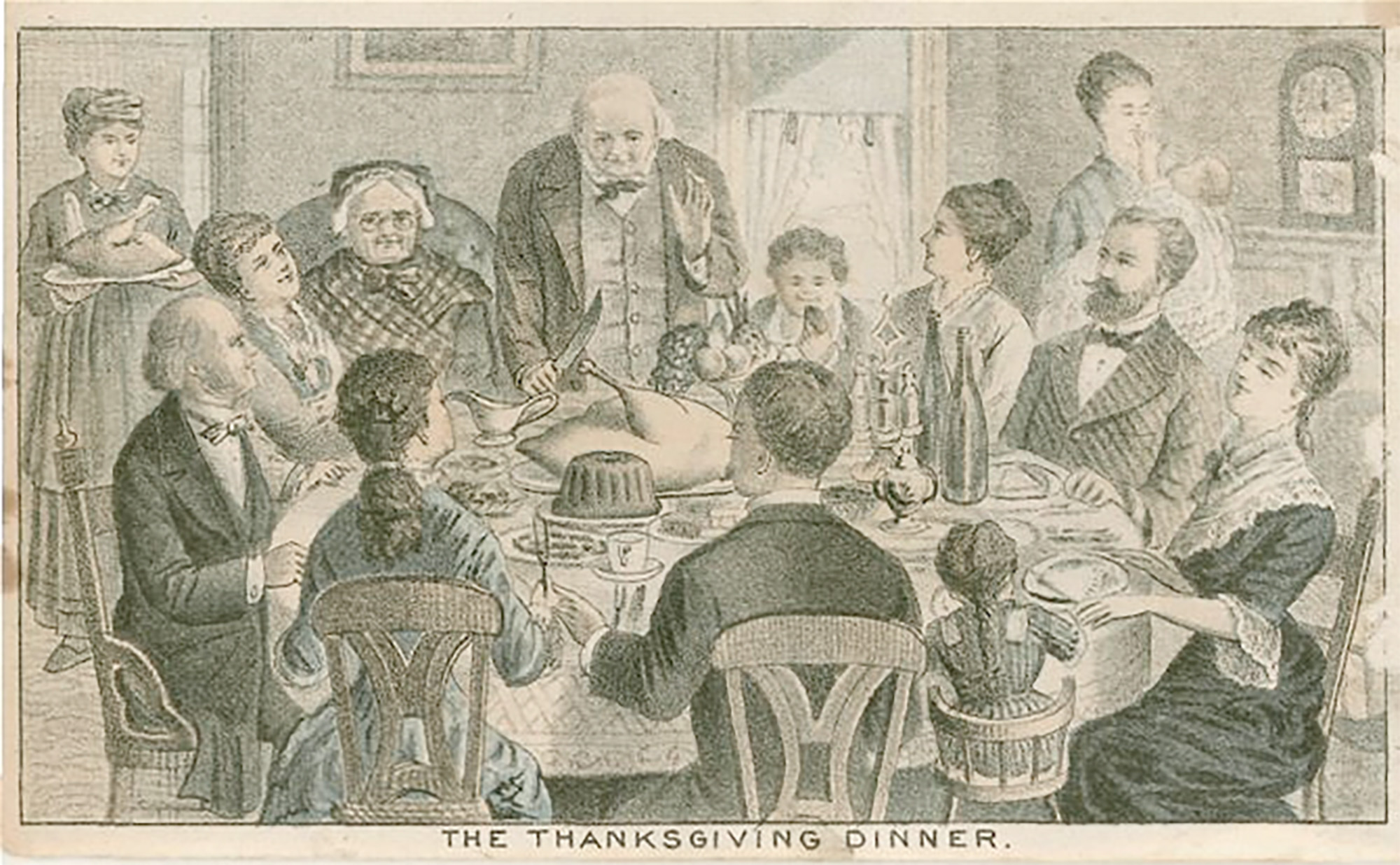
The Pumpkin

The image “http://www.printsoldandrare.com/thanksgiving/010thnk.jpg” cannot be displayed, because it contains errors.
Oh, greenly and fair in the lands of the sun,
The vines of the gourd and the rich melon run,
And the rock and the tree and the cottage enfold,
With broad leaves all greenness and blossoms all gold,
Like that which o'er Nineveh's prophet once grew,
While he waited to know that his warning was true,
And longed for the storm-cloud, and listened in vain
For the rush of the whirlwind and red fire-rain.
On the banks of the Xenil the dark Spanish maiden
Comes up with the fruit of the tangled vine laden;
And the Creole of Cuba laughs out to behold
Through orange-leaves shining the broad spheres of gold;
Yet with dearer delight from his home in the North,
On the fields of his harvest the Yankee looks forth,
Where crook-necks are coiling and yellow fruit shines,
And the sun of September melts down on his vines.
Ah! on Thanksgiving day, when from East and from West,
From North and from South come the pilgrim and guest,
When the gray-haired New Englander sees round his board
The old broken links of affection restored,
When the care-wearied man seeks his mother once more,
And the worn matron smiles where the girl smiled before,
What moistens the lip and what brightens the eye?
What calls back the past, like the rich Pumpkin pie?
Oh, fruit loved of boyhood! the old days recalling,
When wood-grapes were purpling and brown nuts were falling!
When wild, ugly faces we carved in its skin,
Glaring out through the dark with a candle within!
When we laughed round the corn-heap, with hearts all in tune,
Our chair a broad pumpkin,--our lantern the moon,
Telling tales of the fairy who travelled like steam,
In a pumpkin-shell coach, with two rats for her team!
Then thanks for thy present! none sweeter or better
E'er smoked from an oven or circled a platter!
Fairer hands never wrought at a pastry more fine,
Brighter eyes never watched o'er its baking, than thine!
And the prayer, which my mouth is too full to express,
Swells my heart that thy shadow may never be less,
That the days of thy lot may be lengthened below,
And the fame of thy worth like a pumpkin-vine grow,
And thy life be as sweet, and its last sunset sky
Golden-tinted and fair as thy own pumpkin pie!
By John Greenleaf Whittier (Via Recta Ratio)
The image “http://www.printsoldandrare.com/thanksgiving/009thnk.jpg” cannot be displayed, because it contains errors. Share