Showing posts with label Henrietta Maria. Show all posts

Friday, September 25, 2026

She Almost Won


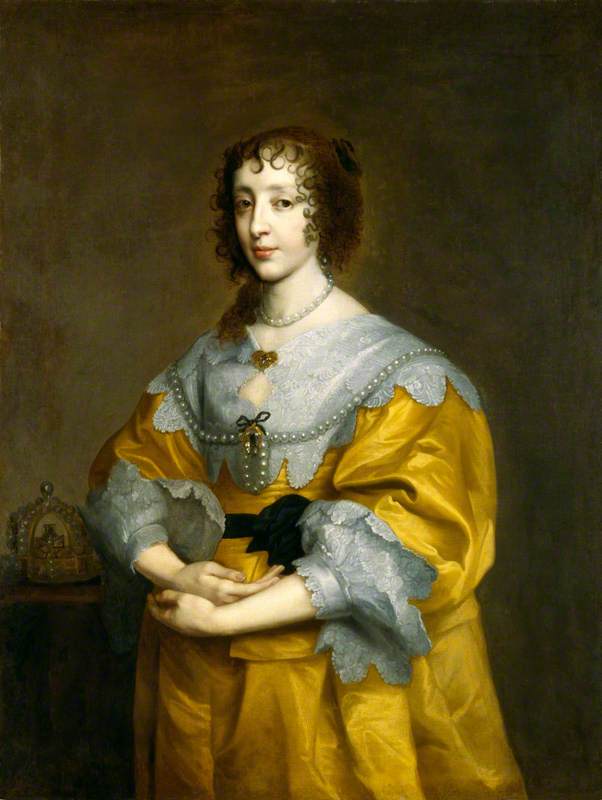
 Henrietta Maria came very close to helping her husband and Prince Rupert win the English Civil Wars. From Atlas Obscura:

Around midday on July 4, 1643, in the countryside just north of Birmingham, Queen Henrietta Maria was in her battle tent. Outside, shells exploded. Musket balls* zoomed past. Anxiously, the Queen of England waited. Taking Burton-Upon-Trent, a strategic town with a river crossing connecting northern and southern England, was her army’s first real challenge. Defeat was not an option. But the fighting had already raged for five hours—how much longer would it take to deliver a victory? Three hours later, the queen got her answer. Her royalist army had finally broken through the town’s defenses. Victory was secured.

Eighteen years earlier, the queen had arrived on English shores as a 15-year-old French bride. And now, at 34, she was a warrior queen. The queen would jokingly call herself “she-majesty generalissima.” Lines from a contemporary poem, its author unknown, portrayed her as not just defeating but unmanning Parliament’s forces, literally: “Tis here a woman leads; but one would swear, the armies did consist of women there.” Her skill garnered wide respect from diplomatic elites; the Venetian ambassador observed, “Without [the queen’s] encouragement and aid the king would never have put himself into a position to resist.” During the English Civil War, Queen Henrietta Maria was, it seems, all that stood between King Charles’s sure defeat at the hands of Parliament. (Read more.)

Henrietta Maria and her household hiding in a ditch during the bombardments at Bridlington in 1643

Henrietta Maria hiding from Parliamentarians during her escape to France in 1644


The novel Generalissima is available HERE.

Share

Thursday, September 24, 2026

The Mystery of the ‘Real’ Milady de Winter


Yet another descendant of Mary Boleyn. From History Extra:

In the preface to The Three Musketeers, Dumas claims that he was researching Louis XIV in the Bibliothéque nationale de France when he happened upon the first volume of The Memoirs of M. d’Artagnan. This is not entirely true: he found the book in the public library in Marseilles, borrowed it and never returned it.

The Memoirs of M. d’Artagnan is a first-person pseudo memoir written by a former soldier, Gatien de Courtilz de Sandras, and first published in 1700. It tells the story of d’Artagnan, a young man setting out on his journey to become a musketeer. As well as d’Artagnan, Dumas discovered Athos, Porthos and Aramis, who would eventually become major characters in The Three Musketeers. He also found Milady de Winter. Courtilz never gives Milady’s name. Instead, she is referred to simply as ‘Milady’ followed by a dash or asterisks where her name should be. She is introduced as a maid of honour to Henrietta Maria, queen to the executed Charles I of England, whose exile in France Milady shares.
The daughter of an English peer, Milady has as much wit as beauty, and d’Artagnan thinks her the most beautiful woman he has ever seen. He promptly falls in love with her. There then follows a complicated sexual intrigue, one of several for Courtilz’s d’Artagnan. Once it is over, Milady is never heard from again. This is the episode that Dumas adapted for The Three Musketeers. The affair of the queen’s diamonds is absent from Courtilz, but at least part of the story as Dumas told it is supported by several contemporary memoirs. Those of Françoise Bertaut de Motteville, Pierre de La Porte and Henri-Auguste de Loménie, Comte de Brienne – all of whom served at the royal court of France – each provide an account of the Duke of Buckingham’s visit to France in 1625. Buckingham had been sent to escort Henrietta Maria, then Charles I’s new queen, to England. While in France, he ostentatiously courted the queen, Anne of Austria.
None of these memoirs, however, mention the diamonds that Anne was said to have given to the duke. For this part of the story, it is necessary to consult the memoirs of Henri-Auguste's son, an obscure publication known as Recueil A, and the memoirs of François de La Rochefoucauld. Louis-Henri de Loménie, Comte de Brienne served Louis XIV as secretary of state, a position he inherited from his father. He left a memoir, which was published in the early 19th century. Certain editions, particularly that edited by Jean François Barrière, include an account of the queen’s diamonds.

It does not form part of Brienne’s original narrative – he was not even born at the time of the alleged diamond affair. Instead, it is mentioned in an introductory essay, written by the editor, explaining the manners and customs of 17th-century France. It is then related in full in an appendix, Éclaircissements historiques, or ‘historical clarifications’. In this version, the diamond thief is named as Lady Clarik. However, the story was lifted word-for-word from Recueil A, and inserted into the memoir. Recueil A is the first volume of a large collection published in the 18th century. It comprises an assortment of documents, including extracts of memoirs, concerning the history of France. The author of the account of the diamond affair is enigmatically identified as ‘M. le M. de T’. Behind these initials, according to the anonymous editor of the Recueil, is René de Froulay, Comte de Tessé.

The Comte de Tessé was a real person. Born in 1651, he was a military man, diplomat and courtier. He did indeed leave a memoir, but the diamond affair does not appear in it. The story as found in Recueil A and later inserted into the memoir by Brienne is, therefore, unreliable. What then of La Rochefoucauld? In his memoir, the lady who stole the diamonds was not Lady Clarik but the countess of Carlisle. In fact, Lady Clarik did not exist – but Lady Carlisle certainly did. (Read more.)


Read about the Countess of Carlisle in my Henrietta Maria novels, HERE and HERE.

Share

Wednesday, September 16, 2026

Chloridia

 Image 

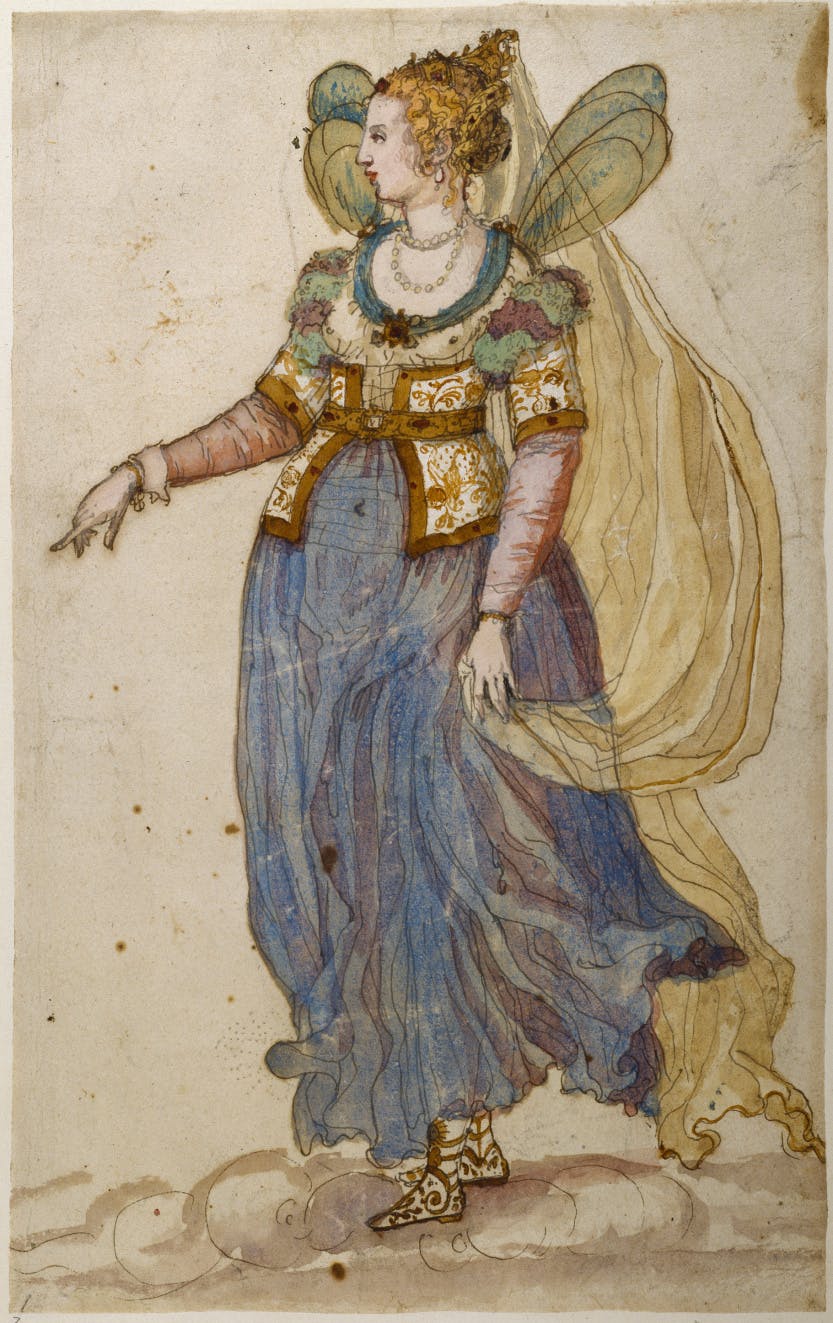
From Tony Riches: "Time travel back to the court of King Charles I with a glimpse of my research - the fascinating full text of Chloridia : rites to Chloris and her nymphs, a Shrovetide masque performed by the queen at Whitehall Palace." (Complete text HERE.)

Costume sketch for masque by Inigo Jones for Henrietta Maria

More on masques, HERE.

Queen Henrietta Maria


Share

Monday, September 14, 2026

Henrietta Maria and Her Mother, Marie de’ Medici


 My guest post for Tony Riches.

First of all, I would like to thank Tony Riches for opening his popular blog to other historical writers so that we may share our research. I am the author of a biography of Marie-Antoinette as well as six historical novels. The latest two novels are about Queen Henrietta Maria, wife of Charles I and they are entitled My Queen, My Love and Generalissima. They are part of an unfinished trilogy; the third installment Avalon will be out sometime in 2027 or 28. 

In my readings about Henrietta of France, I have found that her mother Marie de’ Medici played an enormous role not only in her upbringing but in her ongoing political decisions, as well as shaping her faith, her love of the arts, of music, theater, and architecture. Queen Marie has ended up playing a much larger role in my novels than I originally would ever have imagined, due to the sheer force of her personality as much as to her real adventures, which included leading rebellions against her son, climbing out of windows to escape the royal guards, and hiding with her entourage of dwarves in a German brewery. All of this followed a glittering career of being Queen Mother Regent of France. Most of the Queen’s life is captured in the spectacular series of twenty-four huge paintings by Rubens, now at the Louvre. (Read more.)


Books available HERE.

Share

Saturday, August 29, 2026

'A Very Regal Look at Palace Intrigue'


A review of My Queen, My Love by Julie Sara Porter at Bookworm Reviews:

This Historical Fiction novel tells of the tumultuous years in English history preceding the Civil War through the eyes of Queen Henrietta Maria of France, the Catholic wife of King Charles I. This book tells of Henrietta Maria’s early years and her marriage to Charles. It also recounts her rivalry with George Villiers, the Duke of Buckingham and the king’s best friend. The Queen and the Duke vie for the king’s attention, ear, and heart. 

This book is a chess match between two formidable opponents who differ in personalities, religion, ideologies, and views. Henrietta Maria is motivated by her history as a Medici and her Catholic faith. Her family line taught her about palace intrigue, how to play the court games, and to be wary of potential rivals for influence. Her faith not only gives her solace but gives the British Catholics much longed for representation. 

Villiers also has his own motivations. He had a history of developing connections with Charles’ family. He had been the friend and lover of Charles’ father James I. He thinks of the younger king as a kid brother who needs his influence. He also is incredibly ambitious and wants to move upwards in society. Henrietta Maria and George Villiers are equally matched opponents with Charles and the entire kingdom in the middle. 

My Queen My Love is a very regal look at palace intrigue and the love and loyalties of the monarch and those around them. It begins with a rivalry between two individuals and eventually will escalate into a war that will envelop the whole country. (Read more.)


Share

Friday, August 28, 2026

"Engrossing and Beautiful"

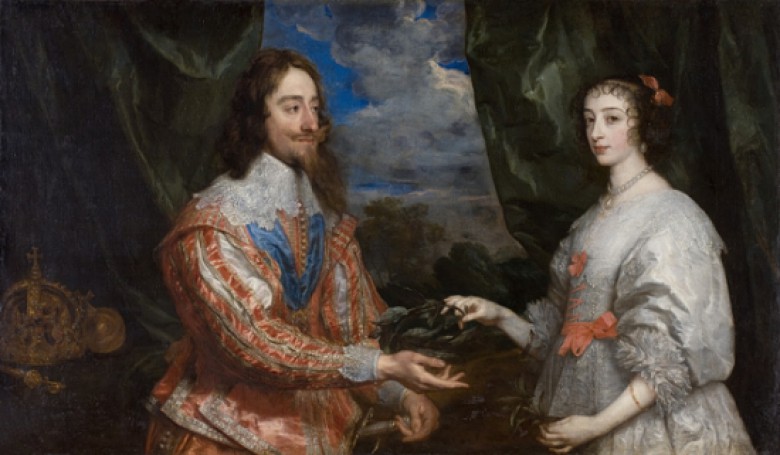
 Charles I and Henriette-Marie de France
   
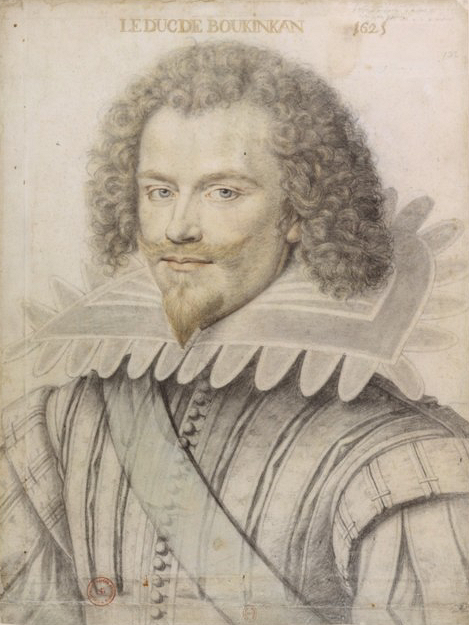
George Villiers, Duke of Buckingham

 A most eloquent review of My Queen, My Love.

If you read this book, be prepared to obsess over the characters like you would with any engrossing fictional story . . . only to be reminded that they are, in fact, real.  After doing so, you may just scour the Internet for photos of your new "friends."  Be prepared also to lie awake wondering what REALLY happened regarding a matter of court intrigue, asking your husband when you should be sleeping if he thinks that so-and-so poisoned so-and-so before the story started. While you're at it, you should also expect to wonder whether or not you should really google the villain and behold his countenance.

But, of course, you will. After all, you HAVE to know if he really, truly existed.

Then, once you know that he WAS, in fact, real, you will fervently wish for a time machine so that you can go back to warn everyone about him.

. . . or maybe that's just me. ;)  After all, I was crying over Giuliano de' Medici a few months ago.

MY QUEEN, MY LOVE: A NOVEL OF HENRIETTA MARIA by Elena Maria Vidal reminded me of why I love history (and even revitalized that love): that is to say, it is not a simple list of dates and facts, but, rather, a compelling story, alive with rich "characters" that have the power to stay with you. Vidal masterfully wove together a literary tapestry that tapped into real-life events in a way that inspired the reader to keep turning the page. There was beauty, there was tragedy, there was romance . . . and, much to my surprise, the plot was also layered with key characteristics of a mystery novel. Since I didn't know much about this particular "story" going in, it truly was similar to reading a completely fictional work where there still exists uncertainty and suspense.

Yet, despite the strong elements of intrigue and mystery, at the center of the entire narrative is a love story: that of a king and his queen and the Love that transcends their world.

From early on in the novel, I fell in love with the love story of Henrietta Maria and King Charles I. Rather than compose more coherent sentences, I have decided to instead include my "freak-out" gushing below. Unprofessional or not, it accurately reflects my state of mind when delving into the story and may perhaps best inform potential readers:
------------------------------------------------
HE FELL IN LOVE WITH HER WHEN SHE WAS DANCING---NOT ATTRACTION, BUT REAL LOVE AT FIRST SIGHT WHERE HE SAW THE DEPTHS OF WHO SHE TRULY WAS.
 
BUT SHE DIDN'T KNOW HE WAS THERE AS HE WATCHED FROM AFAR.

And then she fell in love with HIM through his letters, which is SO BEAUTIFUL AND ROMANTIC, too!!! AHHHH. Because she has SUCH a pure heart, like Cinderella and her prince when they first meet in the live action movie.

AND THEN THERE IS THIS EMOTIONAL BUILD-UP OF STORY TENSION because they have to still MEET. And the reader just needs it to happen asap!

And then they meet . . . and it is a Moment with a capital M!

But there be villainy afoot. ;) 
------------------------------------------------
Vidal's writing skill shone through once again in her brilliant introduction of the villain of the story through the eyes of one who regarded him as a close friend. Without going into detail, he could have been mistaken as a flawed comic relief, before his true nature became clear. Not only did this make the story-line more compelling and unpredictable, but it served as a rather profound commentary on evil relevant to today. In the presence of some, evil masquerades as Cool Guy, charming everyone with his jokes. But, when only some are watching, the mask just might come off.

As a Catholic, I was particularly drawn to the historical depiction of events as concerns the persecution those of my faith faced in England at the time. It was important for me to learn more about their plight, and my heart broke for those who suffered, much like that of Henriette, just as it rejoiced at moments when they received better treatment.  Yet the pain and suffering is balanced also with Light, the reason for which they are fighting.  Through vivid and sometimes ethereal descriptions, as well as profound reflections, Vidal was able to illustrate what we love so dearly.

The writing style in general is both detailed and engaging, rich with beautiful imagery that is, at times, quite lyrical. I found a kindred spirit in the romantic way that Vidal chose to describe figures, scenery, and events and likewise enjoyed the sprinkling of Arthurian legend in the novel. It was lovely to see Henrietta and Charles share a mutual love of these old stories, which not only added depth to their relationship and to them as individuals, but also seamlessly tied into the plot and foreshadowing of future events.

In terms of the characters on an individual level, I found myself bonding quite a lot with Henrietta, between her innocent romanticism, deep love of her faith, and moments of wit and humor.  But, on another level, I wondered at times if she were a saint and found her on the whole to be an inspiring figure. While there were moments in which the reader was called to be frustrated with Charles for being blinded as to certain individuals, I came to care a great deal for him and deeply admire his nobility of heart and desire to do what was right. The reader may also sympathize with the long-seated pain that he experienced, which is slowly revealed within this man of a pure and childlike nature yet confident, regal bearing.

While there were difficult moments to read throughout the novel, beginning with the tragic backstory of Henriette's mother, Marie de' Medici, the beauty of the center characters continued to illuminate the pages. Without going into detail, I will say that the intrigue of the novel also remains until the very end. Just like with a true mystery story, there are revelations at the conclusion that truly took me by surprise.  At the same time, the final pages served as a "bookend" in more than one way.  I'll leave it at that.

The reader should bear in mind that there may be occasional phrasings or actions with which he or she may not agree, even concerning supporting characters with a great deal of good.  However, such may also be found in real life, and it is likely that Vidal wished to present people and events with as much historical accuracy as possible while simultaneously putting forth a compelling narrative.  The meticulous research conducted for this book is abundantly clear from the detailed historical facts imbued into the text (as well as the lengthy works cited), although the novel format also allows for some speculation and presumably fleshing out of characters and situations.
(Read more.)

Share

Wednesday, August 26, 2026

Court Masques

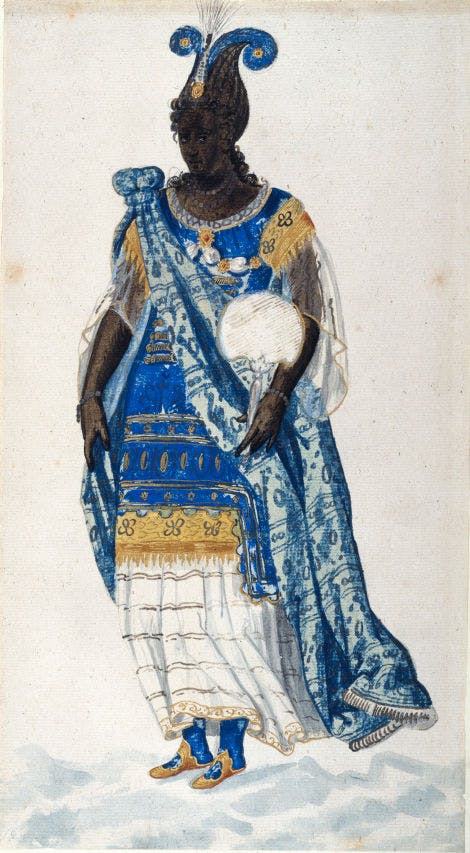
Costume design by Inigo Jones for Queen Anne's "Masque of Blackness"                                                                                                                     

Another design by Inigo Jones for one of Henrietta Maria's masques

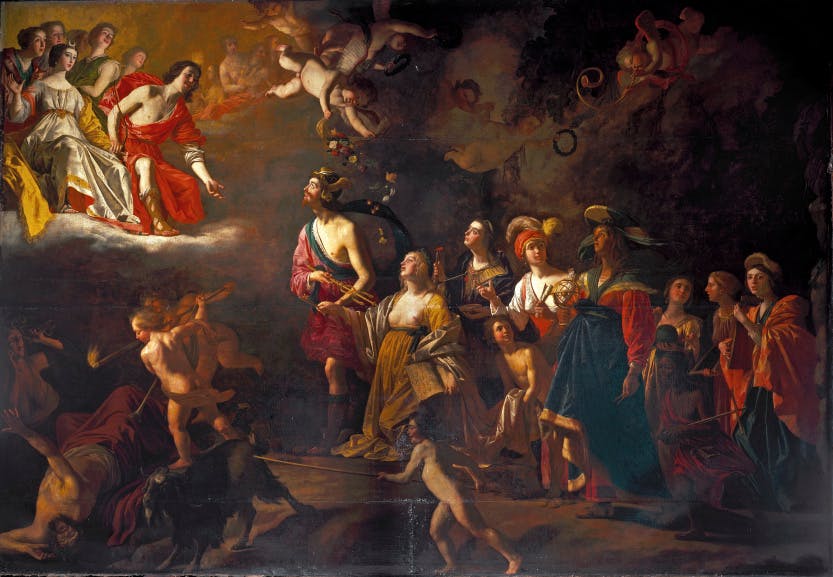
The court of Charles I in costume in a classical fantasy, Buckingham and his life Katherine are staring up at Charles I and Henrietta Maria.

Henrietta Maria of France

Masques were a big part of court life in both the English and French courts of the seventeenth century, especially during Shrovetide. From Historic Royal Palaces:

The masque began as an improvised performance at court in the 16th century during which courtiers and even royals would disguise themselves for play acting, fun and dancing. 

Masques were staged at Whitehall and Hampton Court Palaces for the Stuarts, with singing, acting, music, dialogue, amazing costume and above all, ‘special effects’ and moving scenery. By the early 1600s, under masque-loving monarchs James I and his queen Anne of Denmark, it became really elaborate. 

A Banqueting House was built specifically for the performance of masques at Whitehall Palace in 1608, but this burnt down in 1619, and was replaced by the present building, designed by Inigo Jones and completed in 1622. 

The Stuart Masques were mostly created by the brilliant partnership of playwright Ben Jonson and set and costume designer Inigo Jones. These temperamental artists quarrelled over whose contribution was more important, and after 1632, Jones worked with less argumentative (and less talented) poets.

The masques were a heady combination of opera, theatre, ballet and ball. They were always allegorical, featuring gods and goddesses from mythology and British history. Their purpose was to demonstrate the wisdom, and God-given right to rule, of the Stuart monarchs. There was always an ‘anti-masque’, featuring wild and outlandish dancers, who symbolised the chaos of a kingdom before the Stuarts. This was followed by the masque proper portraying the idealistic world of peace and harmony under divine kingship. At the end of the masque, the King would dance, and then the courtiers. Masques were performed for, rather than by, the court, although sometimes the queen and her ladies danced. 

A masque was also a place to see and be seen. They were incredibly expensive to produce; some of the most lavish were staged by affluent lawyers. But despite the cost, they weren’t always the most comfortable of shows to attend, for either actors or audiences. The crowded room was stifling hot, and smoke from the hundreds of torches must have been oppressive. Sometimes there was a long delay before the performance began. The chaplain to the Venetian Ambassador wrote of his experience after attending a masque in 1618: ‘So crowded and uncomfortable that had it not been for our curiosity we would have given up or expired … every box was filled notably with the most noble and richly arrayed ladies… During the two hours of waiting we had leisure to examine them again and again.’ (Read more.)

From Luminarium:

HAD Ben Jonson never lived, the English masque would scarcely need to be chronicled among dramatic forms. For despite the fact that mumming, disguising, and dancing in character and costume were pastimes in England quite as old, if not older, than the drama itself, it is to Jonson that we owe the infusion of dramatic spirit into these productions, together with the crystallization of their discordant elements into artistic unity and form. Generically, the masque is one of a numerous progeny, of more or less certain dramatic affiliation. Specifically, a masque is a setting, a lyric, scenic, and dramatic framework, so to speak, for a ball.1  It is made up of "a combination, in variable proportions, of speech, dance, and song;" and its "essential and invariable feature is the presence of a group of dancers . . . called masquers."2   These dancers — who range in number from eight to sixteen — are commonly noble and titled people of the court. They neither speak nor sing, nor is it usual to exact of them any difficult or unusual figures, poses, or dances. Their function is the creation of "an imposing show" by their gorgeous costumes and fine presence, enhanced by artistic grouping, and by the aids which decoration and scenic contrivance can lend to the united effect. On the other hand, the speech of the masque, whether of presentation or in dialogue, and the music, both vocal and instrumental, were from the first in the hands of the professional entertainer, and developed as other entertainments at court developed. The masque combined premeditated with unpremeditated parts. The first appearance of the masquers with their march from their "sieges" or seats of state in the scene, and their first dance — all designated the "entry" — was carefully arranged and rehearsed; so also was the return to the "sieges" or "going cut," and this preparation included sometimes the preceding dance. The "main," too, or principal dance, was commonly premeditated, as in Jonson Masque of Queens, where the masquers and their torchbearers formed in their gyrations the letters of the name of Prince Charles. Between the "main" and the "going out," two extemporal parts were interpolated, the "dance with the ladies" and the "revels," which last consisted of galliards, corantos, and la voltas. It was in the development of the "entry" and the "main" that the growth of the masque chiefly consisted. (Read more.)

From Dr. Lawrence Shafe:

There was an Italian tradition, particularly a Florentine tradition, called the intermezzi. These were entertainments designed to fill in the gap between plays. The key series was in 1589 when the Grand Duke got married. They were trying to recreate a Roman theatre with classical allegory in the form of an entertainment. Bernado Buontalenti was the architect engineer of these displays.

A 1600 Florentine drawing shows a mountain rising from a stage, at the top is Pegasus with Apollo and the Muses below and Poetry below them. Clouds float in with people in them and they have trees that sprout leaves. Light boxes were used containing multiple candles made brighter with mirrors and the theatres were not darkened as much as ours. This event was publicized across Europe and news came back to Henry, Prince of Wales. His friend John Harrington was in Florence and wrote back describing them.

The intermezzi increased the scale and the engineering (trap doors, revolving stages) and it was these the Stuart court wanted to emulate.

Ben Johnson and Inigo Jones were the great double act although they eventually fell out.

Caroline masques in England had a stage with a proscenium arch (first developed in the 16thC in Florence and picked up by Jones). The stage tilts at an angle and it has slots in the sides for scenery. In 1635 Inigo Jones a country scene for The Temple of Love. 1609 Jones, [at] The Masque of Queens for Anne of Denmark [made] a machine with a round arch doorway and a revolving section on top with seats. The machine was called machina versitilis.

Anne of Denmark was the prime mover to create these spectacular masques. She loved dancing and was the leading dancer. She singled out Ben Johnson but the ideas were unfortunately hers so they were all a bit thin. All the music and choreography has been lost, in fact the scenery was pulled down and destroyed as soon as the masque was over. They were modelled on the French ballet do corps where the dancers formed a complex pattern. James I never ever took part. (Read more.)


 HERE is the original program for the ballet danced by Henrietta Maria at the Louvre when Charles first saw her.

An article on the masques of Queen Henrietta Maria, HERE.

More on the stage props created by Inigo Jones, HERE.

My novel on Henrietta Maria, HERE.
Share

Monday, August 24, 2026

La Reine Margot and the St. Bartholomew's Day Massacre

A first hand account from a notorious lady, who nevertheless saved the life of her husband Henri de Navarre, the future Henri IV. Henri IV, through his second marriage to Marie de' Medici, was the father of Queen Henrietta Maria.
Five or six days afterwards, those who were engaged in this plot, considering that it was incomplete whilst the King my husband and the Prince de Conde remained alive, as their design was not only to dispose of the Huguenots, but of the Princes of the blood likewise; and knowing that no attempt could be made on my husband whilst I continued to be his wife, devised a scheme which they suggested to the Queen my mother for divorcing me from him. Accordingly, one holiday, when I waited upon her to chapel, she charged me to declare to her, upon my oath, whether I believed my husband to be like other men. "Because," said she, "if he is not, I can easily procure you a divorce from him." I begged her to believe that I was not sufficiently competent to answer such a question, and could only reply, as the Roman lady did to her husband, when he chid her for not informing him of his stinking breath, that, never having approached any other man near enough to know a difference, she thought all men had been alike in that respect. "But," said I, "Madame, since you have put the question to me, I can only declare I am content to remain as I am;" and this I said because I suspected the design of separating me from my husband was in order to work some mischief against him....(Read more.)
Share

Wednesday, August 12, 2026

Charles I and Henrietta Maria Departing for the Chase

File:Daniel Mytens (c. 1590-1647) - Charles I and Henrietta Maria Departing for the Chase - RCIN 404771 - Royal Collection.jpg
 From The Royal Collection Trust:

 In this ambitious large scale double portrait by Daniel Mytens the King and Queen are depicted on a terrace as they prepare to depart on a hunting excursion. Surrounded by lively dogs, they are attended by the court dwarf, Jeffrey Hudson and an African servant who brings their horses. The unusual composition, in which the two main figures are set off to the left hand side serves to emphasise the informality of the image. The couple are depicted in fashionable dress rather than court regalia and the strength of their loving relationship is commemorated through their intimate pose - they are shown holding hands - while a winged cherub showers flowers upon them. (Read more.)


More HERE.


Share

Sunday, August 9, 2026

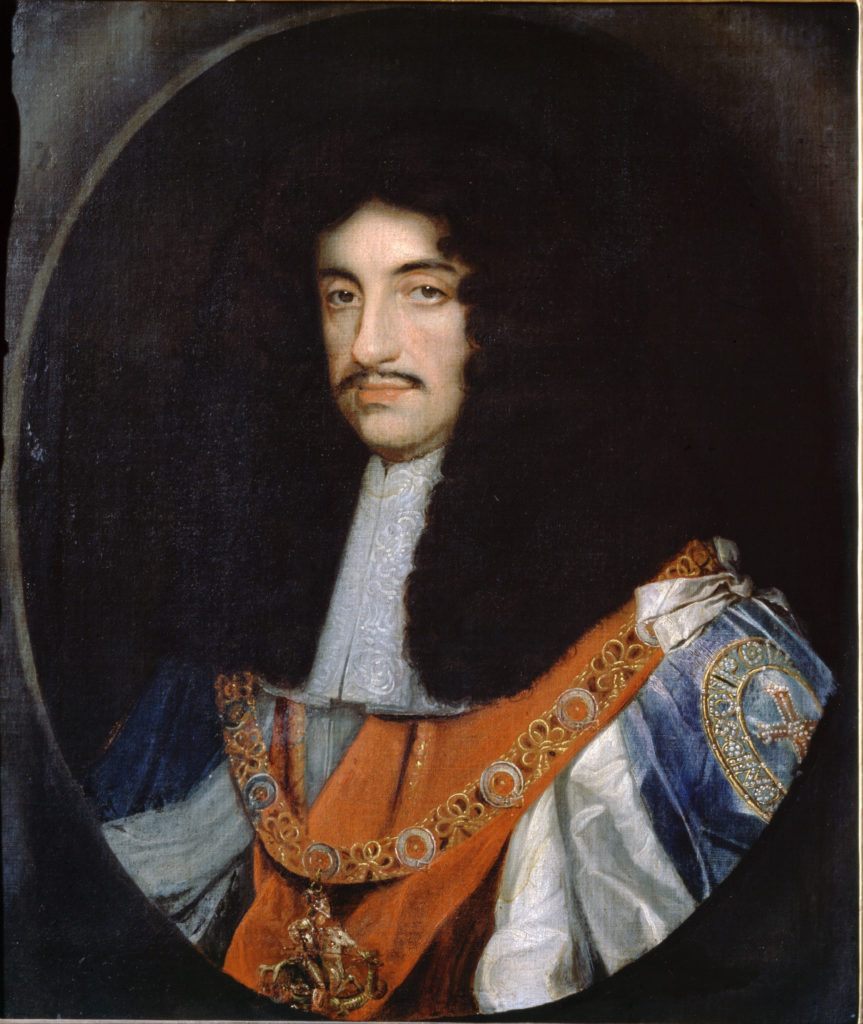
Charles II: The Great Fire of London’s Forgotten Hero


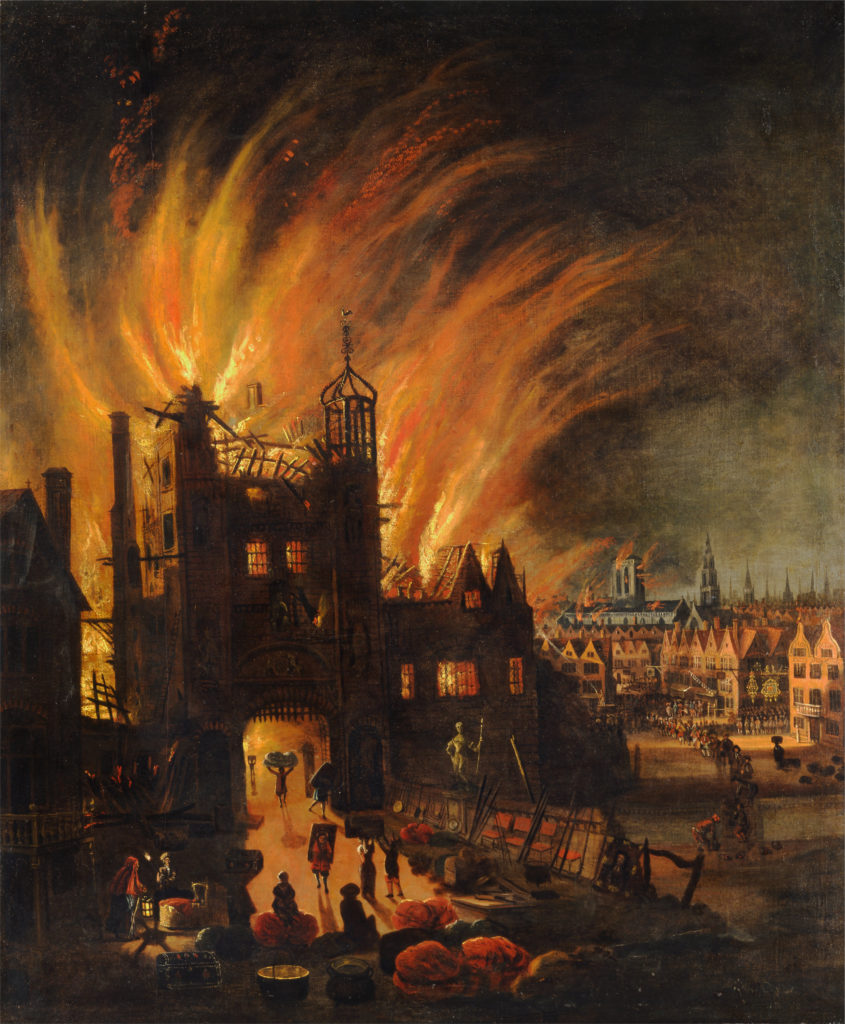
In the small hours of Sunday 2 September 1666, Samuel Pepys, Secretary to the Navy, was roused from his bed with news of a fire burning several streets away. He went to a window of his house close by London’s east wall and looked out over the city. There was, indeed, a conflagration over towards Billingsgate, but these outbreaks were quite common in the narrow streets and timber-framed houses of the capital. Pepys decided that there was nothing to worry about and returned to bed. He needed his sleep. He – and England – had enough problems to worry about without a little fire in overcrowded London city. 
After all, the nation was divided and discontented and the existing government was highly unpopular. More than six years had passed since the return of Charles II from exile in Europe and the restoration of the monarchy after the republican rule of Oliver Cromwell. The myth of England being delivered from gloomy, oppressive Puritan rule by the ‘Merry Monarch’ is well ensconced in popular perception but it is a myth. It did not take long for the mood of the capital and the country to change as the policies of the new government were implemented. 
If a week is a long time in politics, six years may seem like an eternity. Throughout the country people had seen royalist landowners settling scores with neighbours and tenants who had sided with the parliamentarians in the Civil War. The bishops, now installed or re-installed in their dioceses, rigorously enforced the new religious settlement and, as a result, 2,000 clergy who could not accept the ‘high church’ doctrines and ceremonies of the new regime were turfed out of office. Charles, who had learned his politics the hard way, was not totally behind the policies of the Restoration Parliament. He knew the importance of toleration. The French, among whom he spent most of his adult life, had a saying: ‘ne reveillez pas le chien qui dort’ – ‘don’t rouse the sleeping dog’ – and it expressed a philosophy close to Charles’ heart. However, too many of his followers were set on revenge. (Read more.)
Share

Wednesday, August 5, 2026

The Private Life of James II

 I have posted about Justine Brown's biography of James II, HERE and HERE; I am happy to say that I have at last been able to read it for myself. It really is the best book I have ever read about James. For one thing it does not trash everyone else in his family as some biographies do. And it explores the walking contradiction that was James II, second son of Charles I and Henrietta Maria, whose very real virtues were overshadowed by his principal vice, that of lust, leading to several torrid extramarital love affairs and a handful of illegitimate offspring. I have often wondered if the obvious sex addictions which ruled Charles II and James II were a result of the traumas suffered when they were young and witnessed the bloodshed of war, resulting in the judicial murder of one beloved parent with long separations from the other beloved parent. Or maybe it was just that they took after their grandfather Henri IV, le vert galant. Their first cousin Louis XIV resembled le bon roi Henri as well, when it came to women, without the excuse of having witnessed the horrors of war as a child, although he came close enough. While James was handsomer than his brother Charles, he possessed neither his earthy charm nor his uncanny ability for double-dealing. James, a military man, was forthright and blunt, seeing the world in black and white, which some have characterized as bigotry, although his ideas of freedom of conscience as applied to the law were revolutionary for his time. Ironically, James is seen as a tyrant and absolutist, when all he wanted was for Catholics and non-conformist Protestants to enjoy the same religious liberties as Anglicans. He had the makings of a great king but was betrayed by his own flesh and blood, changing the course of history and plunging Ireland and Scotland into another century of persecution.

People have mocked James for throwing the Great Seal of England into the Thames before fleeing his kingdom. However, after reading Justine's book it becomes clear why he did so. He was emotionally devastated by the betrayal of his beloved daughters, as well as by his sons-in-law, one of whom was also his nephew, only child of his beloved sister Mary, the Princess Royal. In all the upheavals of the English Civil Wars, James' immediate family had always remained loyal to his father Charles I and to each other. While they had been sundered by miles, illness, imprisonment and death, they never betrayed each other. For James to have his throne stolen by his own children, with the help of the Churchills, to whom he had given everything, was like a knife in the heart. I think he also knew that the ancient monarchy was over and that kings and queens would no longer rule but merely reign.

Perhaps James' main mistake was, other than underestimating the ruthlessness of his daughters Mary and Anne, was underestimating the hatred of Catholicism that the Whig party was intent upon keeping alive in England. During his exile and army career, James had visited Catholic countries; he was married to an Italian and his sister-in-law was Portuguese. He thought that seeing the open practice of Catholicism would wean the populace from their worn-out prejudices. But the fear of popery that erupted into violence, forcing his Queen and his newborn son to escape to France, showed him that he had miscalculated.

James II emerges from the book as a tragic but fascinating personality. He was one of the last Kings of England to have had personal experience of warfare. As Duke of York he built up the British navy, preparing it to be the mega-force which was to rule the seas in the next century. He was a patron of the lively Restoration theater and of all the arts. He was a patron of Catholic shrines, reopening defunct Catholic places of pilgrimage during his short reign. He possessed basic familiarity with his Celtic realms, having lived for several years in Scotland as Duke of Albany. He is patriarch of a European dynasty, the Fitz-James Stuarts, and also has many descendants in the United Kingdom to this day, including the current Prince of Wales. In his last years, exiled in France, the founder of the Trappists, Abbot Armand Jean le Bouthillier de Rancé was his father-confessor. For anyone interested in English history The Private Life of James II by Justine Brown is a must-read.

The biography may be purchased, HERE. An interview with the author is HERE. My novel about James' mother, Queen Henrietta Maria, is HERE.

Share

Friday, July 31, 2026

"Beautiful Love Story"

Henrietta Maria with two of her Children

Charles I and Henrietta Maria with Charles Prince of Wales and Mary the Princess Royal

The Queen doing Penance at Tyburn

A glowing review from Pursuing Stacie:
I have a huge love for classics. Little Women, Jane Eyre, Anne of Green of Gables…I will reach for these novels again and again, and then sigh happily about 3, 428 times throughout the story. This was exactly my experience while reading My Queen, My Love: A Novel of Henrietta Maria. It just has that rare classic, cozy, wholesome feel. Mind you, there’s plenty of suspense and intrigue. But the story is just so good!

The author skillfully fleshes out the characters and story of Charles and Henrietta, allowing her readers to sink into the novel. When I was about three chapters in, I realized with a start that I had not only completely missed my bedtime, but had forgotten altogether that I was reading a book, so engrossed was I in the story. (Have you ever read a book that feels like a movie?) (You’re about to.)

While the author set a scene masterfully, she also brought these historical characters to life in rich detail. (Might I suggest Googling their names as you meet them, by the way? So fun to put a face to the new friend that you’ve just made.) I adored Henrietta and will carry her with me always. But truly, each character was dynamic and real. From the beautiful love story to the suspense that only villainy can bring, this novel is perfect from beginning to end. (Read more.)

Because the two of them worked hard to make their marriage work, they ended up deeply in love with each other which made it satisfying. There is plenty of drama, politics, and courtly intrigue that will engage the reader to keep turning the page! I can’t wait to read the next book in the series to learn what comes next for Queen Henrietta Maria of England! I recommend this for fans of Jean Plaidy, Alison Weir, and Philippa Gregory! My Queen, My Love is a promising start to an enthralling series on one of England’s most tragic queens! (Read more.)

My Queen, My Love and Generalissima are available from Amazon.
Share

Wednesday, July 29, 2026

Henrietta Maria: Constructing and Reconstructing Early Modern Royal Motherhood and Confessional Identity

 
From Dr. Amy Saunders:

This article examines representations of Henrietta Maria’s (1609-1669) Catholicism and motherhood in a variety of artistic mediums and analyses how these objects are now reinterpreted within heritage sites and museum spaces in England. Henrietta Maria’s patronage, agency, motherhood, pregnancy, and confessional and foreign identity are often omitted from these heritage reconstructions despite the centrality of these themes within the artworks themselves. Her confessional and foreign identity places her in a liminal position within heritage spaces, where she is situated in opposition to Protestant queen regnants and queen consorts who are represented as more admirable or ‘successful’, due to their politics, identities, and activities. Furthermore, this article suggests that the continuation of a Protestant monarchy in England into the twenty-first century has influenced these representations with Henrietta Maria’s narrative not aligning to retrospectively applied ideals of the later royal family. (Read more.)

My novels on Henrietta Maria, HERE and HERE.

Share

Sunday, July 19, 2026

My Guest Post for Tony Riches


 My thanks to Tony for such a wonderful opportunity! From The Writing Desk:

Wife of the ill-fated Charles I, the colony named for her was intended to be a refuge for Roman Catholics, the Catholic religion being forbidden in the Three Kingdoms. In my room as a teenager there was a print of the Van Dyck portrait of Henrietta Maria, the original of which is in the National Gallery of Art in Washington, D.C. Called “Mary” by her subjects, the second Stuart queen of England peers down from the portrait with her black eyes, which contemporaries described as large, sparkling and beautiful. Her dark curls with auburn highlights contrast against the deep marine blue shimmer of a silk dress, with the salmon-pink bows and elaborate white cuffs and high starched collar. A wide-brimmed plumed black hat was of the type made famous by the cavaliers who later fought for her husband in the English Civil Wars. 

The white plumes are reminiscent of the one made famous by her father Henri IV of France, which he wore into battle so that his men could always find him. Like her father, Henrietta Maria was not afraid to stand out, remaining a devoted Catholic in a land where her faith was banned, becoming the number one lawbreaker, while also striving to be a traditionally obedient wife, as was expected. But the expectations placed upon her made her life a tightrope walk which almost broke her.

The life of Henrietta Maria of France (1609-1669) was turbulent from the beginning. Half-Bourbon and half-Medici, her father, the famous Henri IV, was assassinated when she was an infant. Brought up by her mother, the Queen Regent Marie de’ Medici, to be a devout Catholic, she also mastered ballet, singing, and acting, skills which she would use in masques to entertain the Bourbon Court and later the Stuart Court. At fifteen she was sent to marry Charles Stuart, grandson of Mary Queen of Scots, who had just succeeded his father James I to the throne of the Three Kingdoms. 

While Charles I never converted to Catholicism, as had been hoped by many, his relationship with his wife was profoundly spiritual, enhancing the intense physical passion between them. After the initial clashing of cultures and personalities, theirs became one of the most devoted in the history of royal marriages, and was blessed with nine children. During the troubles which led to the English Civil War, Henrietta Maria became a liability to Charles because of her religion and her meddling, both perceived and actual. But her courage and her devotion fuelled the royalist cause, as she sold her jewels to raise money for arms and led soldiers to aid her husband. 

The challenges the royal couple faced in their early years of marriage are told in Book 1 of the Henrietta of France trilogy, My Queen, My Love. Book 2 will deal with the Civil Wars and Book 3 will be about the Queen’s widowhood as well as the adventures of her surviving children.

My view of historical fiction is that the author attempts to paint a portrait of the past with words. A historical novel is like a portrait come to life, allowing the reader to step into the past. Authenticity is vital, and that comes only from thorough research. While it is not always possible to visit the historical places that play a part in the novel, it helps. 

The internet has been a gift to historical fiction writers, making accessible old documents, manuscripts, pictures and books that one once had to travel far to find. I found the original program of the 1623 masque performed by Anne of Austria and Henrietta of France at the Louvre during Shrovetide. It was at the rehearsal of the masque that Charles Stuart first saw Henrietta during his incognito visit to Paris. Such primary sources, like the Queen’s letters, are indispensable for creating a living portrait.

So much of what people think they know about Henrietta Maria has been filtered secondhand through multiple writers, some of whom view her as a frothy but tiresome fanatic who led her husband into ruin. This is often accompanied by the perception of the Queen as a dangerous seductress, who used her French wiles in the boudoir to subject Charles to her will. 

And others decide that Charles was not enough for her but she had lovers such as Henry Jermyn who actually told her what to do, while fathering her children. Just as her enemies called her the “popish brat of France,” she has been portrayed erroneously either as a sex fiend soaked with crazed religiosity, or as a shy, pious pawn. (Read more.)

Novel available HERE.

Share
Saturday, July 11, 2026

"A Lush, Passionate Portrait"


  From BookLife:

In the first of her Henrietta of France trilogy, Vidal (Marie-Antoinette, Daughter of the Caesars) paints a lush, passionate portrait of the life of Henriette-Marie, a seventeenth century French princess descended from the Bourbons and Medicis. Wed to King Charles I of England at the tender age of fifteen, Henriette is determined to bring Catholicism back to England, despite her Protestant husband and the country’s “hatred of Catholicism.” Often buffeted by political and social forces beyond her control, Henriette, known in England as Queen Mary, faces the challenges she encounters with the courage and resolve that she draws from her deep Catholic faith.

Firmly grounded in real historical events and settings, Vidal breathes life into Henriette’s era through extensive, evocative descriptions of its clothing, food, and palaces. This attention to detail offers a tantalizing immersion in this royal world, from the elaborately-costumed “masques” she and courtiers create to entertain the King at holiday celebrations to her beloved spaniel, Hebe. Vidal also illustrates the complexity of royal life through her careful elaboration of the complicated web of marriages, kinships, and associations. Some readers will be overwhelmed by the many branches of the royal family tree, but the text’s clear exposition and strong narrative arc offer clarity and guidance.

Vidal highlights the most important characters through her vivid depiction of their personalities and motivations. Antagonist George Villiers, the Duke of Buckingham, creates a true sense of menace as he threatens Henriette and works to disempower her. Although she is pure and steadfast in her intentions, Henriette’s struggles to balance her devotion to her husband and to her faith will earn readers’ respect and sympathy, even if they do not share her allegiance to the Catholic church. Offering insight into the passions behind the protocols, My Queen, My Love infuses these historical figures with humanity.

Takeaway: Readers of historical fiction will appreciate the depth and nuance Vidal brings to this often overlooked historical figure. (Read more.)


"Elena Maria Vidal brings history to life again with the story of Queen Henriette Marie, complete with an unlikely but true love story of the Queen and King Charles I of England, a formidable personal enemy in the menacing Duke of Buckingham, lots of well-researched period details, and the matters of Christian faith behind many of the conflicts. An antidote to the Whiggish story that is often passed off as history in America, with its anti-monarchical bias. Though Henriette Marie is not nearly as well known as another maligned consort, Marie Antoinette, Americans should learn her story because, coming after Jamestown's founding, she was their queen." —John Beeler, A Conservative Blog for Peace


Available HERE.

Share

Monday, July 6, 2026

The King's Spy (The Rebellion Series, Book 1)


When I asked Mark Turnbull to write the forward of my novel Generalissima, I was impressed by his credentials as both a novelist and biographer, as well as his vast knowledge of the period known as the Wars of the Three Kingdoms aka the English Civil Wars. As an American who grew up near a battlefield of our own Civil War, I have friends who know the details of every conflict, of every regiment, of who died where and how, and so on. Mark Turnbull is similarly familiar with the highly complicated warfare amid shifting alliances that comprised the English Civil Wars. He also has the ability to tell a riveting story while building fascinating characters. The King's Spy, a thriller of a novella, is the first of a trilogy about the Wars of the Three Kingdoms, The Rebellion Series. Mark is also author of the award-winning novel Allegiance of Blood, likewise about the English Civil Wars. I enjoyed and reviewed his biography of Charles I and look forward to the new biography of Prince Rupert.
 

14th June 1645. The Battle of Naseby is set to decide the outcome of the civil war in England.

The armies of King Charles I face those of Parliament and its untested New Model Army. Yet amidst the carnage, an intensely personal battle takes place between two men.

Captain Maxwell Walker is a royalist cavalry officer, widower and father. Loyal and brave, but haunted by his grief, Maxwell thirsts for revenge. His life has never been the same since his encounter with the parliamentarian Gervase Harper, a man whose ruthless streak sees him prosecute the war with vigour. Harper cuts down anyone who gets in his way. Maxwell’s wife was no exception.

The outcome of Naseby causes Maxwell to be tasked with a royal rescue mission. The King’s most personal possession must be retrieved. His cypher would allow Parliament to decode captured royal correspondence and that would deal a major blow in the propaganda war.

The soldier must play the spy.

His actions, however, earn him the enmity of both sides. The hunter becomes the hunted.

Facing a murder charge, as well as a great siege, Maxwell makes a discovery that might just save himself and the King’s remaining cavalry.

However, all of this rests upon his next encounter with Gervase Harper. (Read more.)
A most moving scene is of an aged Anglican pastor after he and his church have been attacked by the Puritan army. The Puritans hated altars, vestments and stained glass, all the things Charles I insisted upon having in his churches. Such vignettes convey the religious upheavals which seared the souls of the populace, along with the other atrocities.
 
Since The King's Spy begins with a description of Naseby and the immediate fallout after the battle, I waited to read it until now when I am researching the final volume in the Henrietta of France Trilogy. It is an excellent book for young readers as a politically incorrect, non-woke introduction into the Wars of the Three Kingdoms. Because, as I have found, well-researched historical fiction tends to challenge our contemporary preconceptions, giving us a glimpse into a lost world. Share