Thursday, September 23, 2021

Hatshepsut

 From Historical Eve:

Hatshepsut is often remembered as one of the few women who achieved the rank of pharaoh. She did so against all the laws and customs of the Egyptian State, taking advantage of a series of dynastic circumstances that allowed her to channel her ambition for power. Daughter of Thutmose I and his main wife, Queen Ahmose, her marriage to her stepbrother Thutmose II made her queen consort and, after being soon a widow, assumed the regency until her stepson Thutmose III–Son of Thutmose II and one of his secondary wives– reached the necessary age to rule.

After seven years she changed her name to Maatkare Hatshepsut and began to show herself as the sole sovereign of Egypt, adopting the attributes of a pharaoh – the false beard and the nemes headdress – and the royal male epithets of King of Upper and Lower Egypt and Lord of the Two Lands. Not even when Thutmose III came of age did Hatshepsut renounce power. Thus, for almost two decades Egypt had two pharaohs, the mother and the stepson, who reigned jointly without apparent conflict, although it was Hatshepsut who held the reins of the country. As pharaoh, Hatshsepsut occupied the center of a brilliant court based in the country’s capital, Thebes. In it, in addition to the members of the royal family and their servants, there were a large number of courtiers and officers who performed civil, religious and military functions. We know the names of some, such as Maya, responsible for the prophets (priests); Mentekhenu, in charge of the security of the palace, or Satepihu, in charge of the priests of Tanis.

The three most powerful characters in the Theban court, however, were Hapuseneb, Senenmut, and Djehuty. The most important position in the Egyptian administration was that of vizier. Equivalent to a current head of government, the vizier served directly with the king and all other positions were under his responsibility. We know that Hatshepsut had several viziers throughout her reign. She inherited the one that Thutmose II already had, Ineni, also a royal architect, whom he soon relegated. Useramum, for his part, was apparently closer to Thutmose III. The one who played the most prominent role during Hatshepsut’s reign was undoubtedly Hapuseneb. As high priest of Amun, administrator of the temples and head of the prophets of Upper and Lower Egypt, he assured her of the support of the powerful clergy of Amun. He was also responsible for the construction of the tomb of the sovereign in the Valley of the Kings. Hapuseneb concentrated in his person the highest judicial power. (Read more.)


Share

Wednesday, September 22, 2021

Marie-Antoinette in a Straw Hat

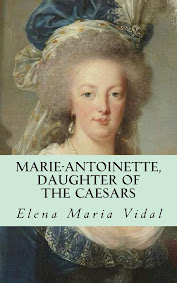
Here is a portrait of Marie-Antoinette, Queen of France, by Joseph Ducreux, now at the Royal Palace Museum of Turin. I am guessing it was a gift for the Queen's sister-in-law Clotilde of France, Queen of Sardinia and Piedmont.

Share

Paris Diary

 From The European Conservative:

Under Socialist mayor Anne Hidalgo and her Red-Green coalition, saving the environment has meant uprooting trees on Place de la Contrescarpe; cutting down a sprawling wisteria that shaded the diners at Chez Plumeau on Place du Calvaire in Montmartre (and before them, in the 19th century, the guests at the modest Auberge Coucou, in the days of Toulouse-Lautrec and Picasso). It has also meant destroying countless city parks, some designed under Napoléon III, by refusing to water them; and forbidding weeding on the wastelands thus created.

The mayor—a crafty machine politician (a possible presidential candidate next year with barely a chance of even making it to the second round), and a one-time close protégée of François Hollande—was re-elected by 17% of registered voters last year against a split opposition during the COVID crisis. She can only stay in power if her Green allies are allowed to wage their ideological war on bourgeois beauty under the sadly familiar newspeak of ‘inclusiveness,’ ‘climate-friendly policies,’ ‘direct democracy,’ and other weasel words. She has embraced it all to burnish an image of Green champion that plays well in The New York Times and The Guardian (whose correspondents she always has time for).

 This enables media coverage to ignore the downside of such horrors as the Jeff Koons installation of ‘tulips’ near the Grand Palais (a monumental bouquet of multicoloured plastic-tinted aluminium flowers held tight by a somewhat obscene pink fist) or the destruction of the elegant Lalique crystal fountains of the Place Marcel Dassault at the intersection of Avenue Montaigne and Avenue des Champs-Élysées. The fountains, which were wilfully allowed to break down over recent years, were once surrounded by some of the most beautiful flowerbeds in the world (they were the labour of love of the Gaullist councillor Françoise de Panafieu, appointed by Jacques Chirac and his successor Jean Tibéri). But they were placed by a €6.3 million abomination of steel tubes that look like 13-metre-tall, Swarovski crystals-encrusted leaking pipes, pointlessly revolving over a spare expanse of sad, sad grass. (Read more.)


Share

Five Legendary Lost Cities

 From Ancient Origins:

In 1906, the Royal Geographical Society, a British organization that sponsors scientific expeditions, invited Fawcett to survey part of the frontier between Brazil and Bolivia.  He spent 18 months in the Mato Grosso area and it was during his various expeditions that Fawcett became obsessed with the idea of lost civilizations in this area. In 1920, Fawcett came across a document in the National Library of Rio De Janeiro called Manuscript 512.  It was written by a Portuguese explorer in 1753, who claimed to have found a walled city deep in the Mato Grosso region of the Amazon rainforest, reminiscent of ancient Greece.  The manuscript described a lost, silver laden city with multi-storied buildings, soaring stone arches, wide streets leading down towards a lake on which the explorer had seen two white Indians in a canoe.  Fawcett called this the Lost City of Z.

In 1921, Fawcett set out on his first of many expeditions to find the Lost City of Z, but his team were frequently hindered by the hardships of the jungle, dangerous animals, and rampant diseases.  Percy’s final search for Z culminated in his complete disappearance.  In April 1925, he attempted one last time to find Z, this time better equipped and better financed by newspapers and societies including the Royal Geographic Society and the Rockefellers.  In his final letter home, sent back via a team member, Fawcett sent a message to his wife Nina and proclaimed “We hope to get through this region in a few days.... You need have no fear of any failure.”  It was to be the last anyone would ever hear from them again. (Read more.)


On Atlantis, also from Ancient Origins:

The recent study not only decisively placed Atlantis in the Mediterranean Sea, but, it concluded with the discovery and identification of a submerged prehistoric island that in every way matches Plato's Atlantis. While in the past finding Atlantis was thought to be more difficult than winning the lottery, now there is a tangible site where all the physical characteristics of the given description match. The topography, the given chronology, the volcanic geology, the flora and fauna in that period, the island's destruction by a great flood, the presence of an unknown prehistoric civilization in the area, and DNA evidence all point to a genuine discovery.

More specifically, the study shows that around 9600 BC, when according to Plato Atlantis was above water, the modern Cyclades Islands were connected by the Cyclades Plateau, a flat terrain (now 400 feet below sea level,) that formed the body of a huge island. When this prehistoric island is compared to Plato's Atlantis, it immediately becomes evident that this must have been the land Plato was talking about. Its northern region was comprised of mountains that reached the shores. Below the mountainous region there was an oblong valley measuring 555 Km 2. Below the oblong valley there was a smaller valley, 2/3 the size of the oblong valley that measured 370 Km 2. This was the primary island. Nine kilometers away from the primary island, and precisely as Plato depicted, lies the island of Santorini, a circular island with a flooded core and a small island in its center (Santorini, an island within an island setting, a sea volcano with a collapsed center, prior to the volcanic eruption of 1600 BC had a single opening on its outer ring that allowed ships to enter its watery caldera). (Read more.)


Share

Tuesday, September 21, 2021

A Brief History of Depression Glass

 From Apartment Therapy:

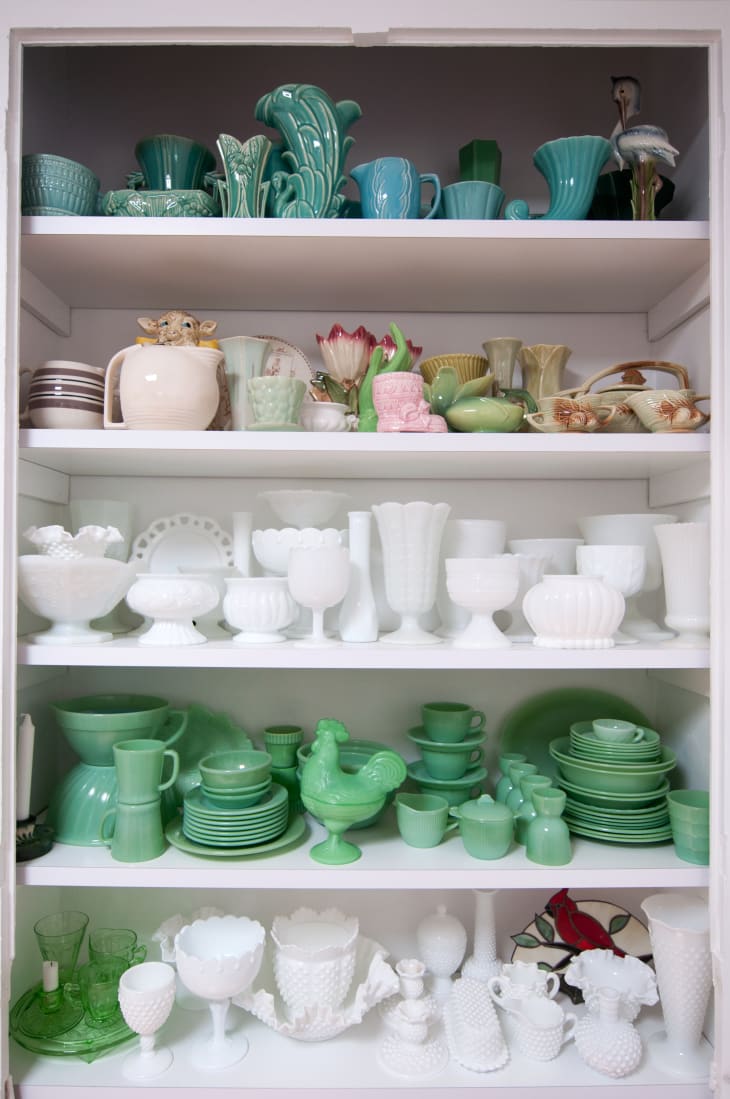
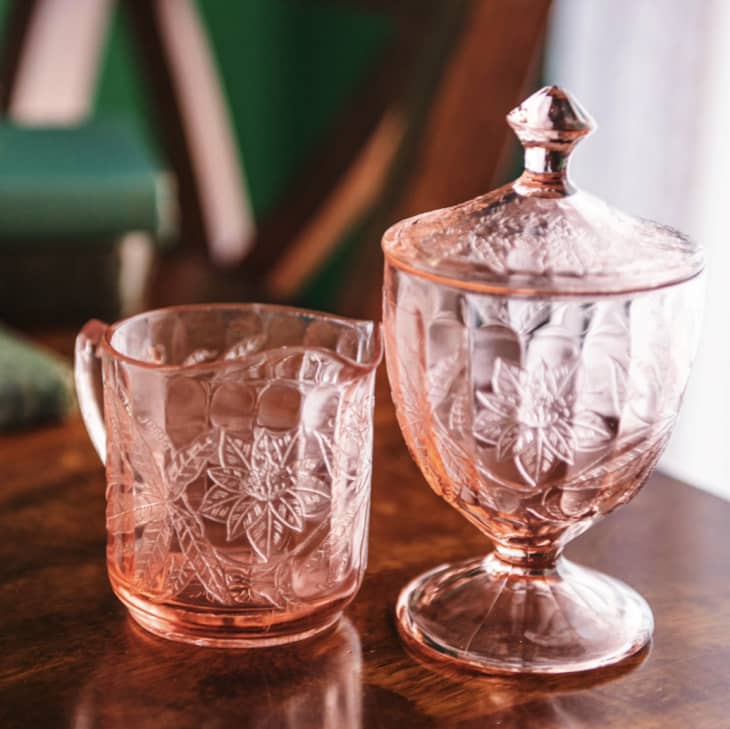
As the pandemic taught many people firsthand, little inexpensive indulgences can help to keep morale up, and that’s exactly the role Depression Glass played almost a century ago. Pieces came in a riot of hues, including pink, amber, jadeite (Martha Stewart’s favorite), royal ruby, and even uranium green. Color not only disguised the lesser quality of the glass, but it also provided a little bit of extra cheer. “Color was very important in Depression Glass because those were such dark days,” Dixie Davis, the president of the Arizona Depression Glass Club, told The Arizona Republic in 1986. “L.E. Smith made black glass. But my mother never let dark colors in our house. She thought color perked us up.”

Colored dishware may have also helped to make plain, meager meals look more appetizing. With economic strife often comes lackluster dishes, but even beans and bread looked almost restaurant-worthy on pink glass plates. “In the present era, with glass so pronounced a vogue, it is not difficult for the homemaker to have the dining table as refreshing in appearance as in substance,” the Lincoln Journal Star reported in 1931. “Color of glass serving dishes can lend zest to otherwise plain viands and aid in making them appeal to the appetite.” (Read more.)


Share

The Smug Self-satisfaction of the Met Gala

 From The Spectator:

The point of the event, where tickets sell for a suitably jaw-dropping $30,000, is nominally to raise money for selected good causes, and to mark the opening of the museum’s major costume exhibition. Yet every year, the invited celebrities become more absurd, and their outfits more demonstrative and performative. It’s less cutting-edge fashion than a desperate exercise in one-upmanship, as has-beens, never-beens and genuine stars jostle alongside each other, all seeking to attract the greatest attention on the red carpet.

Sartorial faux pas can be excused, on the grounds that few of the guests are seeking to keep a low profile. Credit must therefore go to the actor Adrien Brody, whose classic tuxedo ensemble stood out as remarkable because it was simply a well-tailored, well-cut suit, rather than a childish exercise in ostentation. But if you wanted the latter, there was plenty on display. The perpetually sulky-looking Cara Delevingne wore an outfit saying ‘Peg The Patriarchy’, and commented that it was about ‘sticking it to the man’.

This is the same Cara Delevingne, I presume, whose father Charles is a multimillionaire property developer; whose great-grandfather Hamar Greenwood, Viscount Greenwood, sent the Black and Tans into Ireland; and whose maternal grandfather is English Heritage chairman Sir Jocelyn Stevens. That is an awful lot of patriarchy in one family, and an awful lot of sticking it to the man. I fear for Ms Delevingne’s stamina, but bottoms up.

And so it continues. Much of the absurdity of the Met Gala lies in the disparity between celebrity perceptions of themselves and banal reality. Witness, for instance, Kim Kardashian spending an eternity having make-up painstakingly applied, only to take to the red carpet with a fetish mask over her face. (Read more.)


Share

The Ceremonial Centre of the Nazca

 From Heritage Daily:

Cahuachi is a large ceremonial complex built by the Nazca, located in the basin of the Rio Grande in the Central Andes of Peru. The Nazca emerged as a distinct archaeological culture around 100 BC from the preceding Paracas culture, having settled in the valley of the Rio Grande de Nazca drainage, and the Ica Valley. The culture is characterised by its pre-fire slip polychrome pottery, that demonstrates a shift from the Paracas post-fire resin method. The Nazca are most widely known today for the Nazca lines, a series of giant linear features and geoglyphs, and the construction of large underground aqueducts called “puquios” to provide water in the arid environment. (Read more.)

Share

Monday, September 20, 2021

Marie-Antoinette's Bracelets

From Daiji World:

A set of 112 diamonds, originally belonging to Queen Marie-Antoinette of France (1755-1793), will go under the hammer on November 9. Presented in their current form, the 112 diamonds are set as a historic pair of bracelets, estimated to sell for between as massive $2,000,000-4,000,000 or Rs 14.7-29.4 crores. They will be auctioned under the live Magnificent Jewels Auction in Geneva by the auction house Christie's.

In 1776, Marie Antoinette had been Queen of France for two years and was already recognised as the queen of elegance and style. According to the auction house, the same year she bought these two diamond bracelets for 250,000 livres, a huge sum at the time.

According to Count Mercy-Argenteau, Austria's Ambassador to France, they were paid partly in gemstones from the Queen's collection and partly with funds the Queen received from King Louis XVI, says Christie's. The Ambassador later took office in Brussels and in January 1791, received a letter from Queen Marie-Antoinette, then a prisoner in the Tuileries in Paris, after the French Revolution overthrew the monarchy.

"It announced that a wooden chest would be sent to him for safekeeping. Mercy-Argenteau stored it unopened for the next couple of years. In October 1793, Marie Antoinette was guillotined and in February next year, Emperor Francis II of Austria ordered the chest to be opened in Brussels and an inventory to be made."

"It read as ‘Item no. 6 – A pair of bracelets where three diamonds, with the biggest set in the middle, form two barrettes; the two barrettes serve as clasps, each comprising four diamonds and 96 collet-set diamonds'. Madame Royale, the surviving daughter of the late queen, received these jewels in January 1796 upon her arrival in Austria," said the auction house.

In a 1816 portrait, Madame Royale is wearing a pair of diamond bracelets consistent with the Brussels inventory. Madame Royale died childless on in 1851. Her will stated that the entirety of her jewellery collection – including Marie Antoinette's jewels – was to be divided among her three nieces and nephews. (Read more.)


More HERE.

Madame Royale in 1816

Share

Confuciaphobia

 From Crisis:

Confucianism clearly is not a religion; it is but a dedication to the sayings of a wise man, a wisdom rooted primarily in natural law. And yet, it was perceived as a threat by the Red Guard, who saw all culture as a threat to the new culture, that is, the teachings of Chairman Mao. They desecrated the tomb of Confucius and burned his books. And now, with its Confucius Institutes creeping into all the right places, the Chinese Communist Party would have us believe that they seek only a renewal of Chinese culture. But the world’s greatest purveyors of monoculture are less than convincing.

The first dictionary definition of monoculture is that of the cultivation of a single crop on a farm or in a region or country, and the second is that of a single, homogeneous culture without diversity or dissension. In regard to the second, one is soon led to admit the absolute brilliance of the demonic, for only they would or could lead an assault on diversity in the name of diversity. 

Everywhere we turn we see this phenomenon at work. Women weightlifters make the roster of weightlifters more diverse, while laying waste to the natural diversity of maleness and femaleness. Extreme exercise makes men more virile, while the same makes women stop ovulating and lays waste to that lovely subcutaneous fat layer that softens their curves. Simply put, extreme exercise makes women more virile. How is that more diverse? (Read more.)

Share