From
Historic UK:
Carols flourished throughout Tudor times as a way to celebrate
Christmas and to spread the story of the nativity. Celebrations came to
an abrupt end however in the seventeenth century when the Puritans
banned all festivities including Christmas. Surprisingly carols remained
virtually extinct until the Victorians reinstated the concept of an
‘Olde English Christmas’ which included traditional gems such as While Shepherds Watched Their Flocks By Night and The Holly and the Ivy as well as introducing a plethora of new hits – Away in a Manger, O Little Town of Bethlehem – to mention but a few.
The twelve days of Christmas would have been a most welcome break for
the workers on the land, which in Tudor times would have been the
majority of the people. All work, except for looking after the animals,
would stop, restarting again on Plough Monday, the first Monday after
Twelfth Night.
The ‘Twelfths’ had strict rules, one of which banned spinning, the
prime occupation for women. Flowers were ceremonially placed upon and
around the wheels to prevent their use.
During the Twelve Days, people would visit their neighbours sharing
and enjoying the traditional ‘minced pye’. The pyes would have included
thirteen ingredients, representing Christ and his apostles, typically
dried fruits, spices and of course a little chopped mutton – in
remembrance of the shepherds.
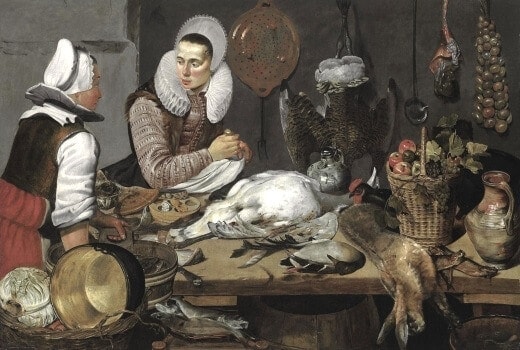
Serious feasting would have been the reserve of royalty and the
gentry. Turkey was first introduced into Britain in about 1523 with
Henry VIII being one of the first people to eat it as part of the
Christmas feast. The popularity of the bird grew quickly, and soon, each
year, large flocks of turkeys could be seen walking to London from Norfolk, Suffolk and Cambridgeshire on foot; a journey which they may have started as early as August.
A Tudor Christmas Pie was indeed a sight to behold but not one to be
enjoyed by a vegetarian. The contents of this dish consisted of a Turkey
stuffed with a goose stuffed with a chicken stuffed with a partridge
stuffed with a pigeon. All of this was put in a pastry case, called a
coffin and was served surrounded by jointed hare, small game birds and
wild fowl. Small pies known as chewets had pinched tops, giving them the
look of small cabbages or chouettes. (Read more.)
Defense for the traditional date of Christmas, HERE.
Share