Thursday, July 23, 2020

Tolkien’s Mythic Plan for England

From Unherd:
This trick of Tolkien’s, of taking the familiar and making it into the stuff of high fantasy, is one of the subjects explored in considerable depth in John Garth’s The Worlds of J. R. R. Tolkien. Given the bewildering array of influences that fed into Tolkien’s work — personal, geographical, historical, linguistic and poetic — it is no mean task to gather up the threads and create a coherent narrative of how different parts of Tolkien’s life and work fed into the creation of what Tolkien eventually called his “legendarium”.

By this he meant not just The Lord Of The Rings and The Hobbit, but the entire fictional universe he created which forms the background for those stories. The sheer scale of Tolkien’s creative endeavour is indicated by the fact that after his death, his son and literary executor Christopher published not just The Silmarillion — a sprawling blend of creation story and epic history — but also 12 volumes in a series known as The History Of Middle Earth, based on his father’s notes and unpublished manuscripts, as well as a stand-alone novel, The Children of Hurin.

Garth makes clear that Tolkien’s approach was that of the magpie. Rather than drawing on one particular place or one particular tradition, he drew on all sorts of landscapes and legends. For example, the existence in Middle Earth of a quasi-heavenly enchanted land far across the Western sea – Valinor, the Undying Lands – echoes the beliefs in such places found all across Europe. (Read more.)
Share

Wednesday, July 22, 2020

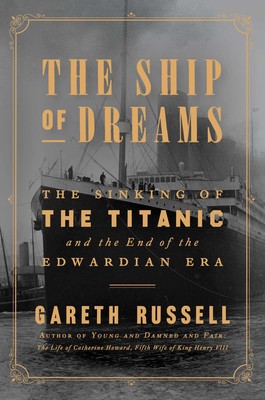
The Ship of Dreams: The Sinking of the Titanic and the End of the Edwardian Era

One of the best historical writers in the English-speaking world right now is Gareth Russell. A playwright and a novelist as well as an Oxford-educated historian, Gareth brings his gifts of description and of character analysis, in addition to a scrupulous historicity, to all of his works. I still think that his biography of Catherine Howard Young and Damned and Fair, is one of the best Tudor biographies ever. I also loved his book The Emperors. Gareth's latest book Ship of Dreams reveals the Titanic tragedy as a microcosm of Edwardian society, on the brink of a disaster known as World War One. From Simon and Schuster:
A riveting account of the Titanic disaster and the unraveling of the gilded Edwardian society that had created it. In April 1912, six notable people were among those privileged to experience the height of luxury—first class passage on “the ship of dreams,” the RMS Titanic: Lucy Leslie, Countess of Rothes; son of the British Empire, Tommy Andrews; American captain of industry John Thayer and his son Jack; Jewish-American immigrant Ida Straus; and American model and movie star Dorothy Gibson. Within a week of setting sail, they were all caught up in the horrifying disaster of the Titanic’s sinking, one of the biggest news stories of the century. Today, we can see their stories and the Titanic’s voyage as the beginning of the end of the established hierarchy of the Edwardian era. 
Writing in his elegant signature prose and using previously unpublished sources, deck plans, journal entries, and surviving artifacts, Gareth Russell peers through the portholes of these first-class travelers to immerse us in a time of unprecedented change in British and American history. Through their intertwining lives, he examines social, technological, political, and economic forces such as the nuances of the British class system, the explosion of competition in the shipping trade, the birth of the movie industry, the Irish Home Rule Crisis, and the Jewish-American immigrant experience while also recounting their intimate stories of bravery, tragedy, and selflessness. 
Masterful in its superb grasp of the forces of history, gripping in its moment-by-moment account of the sinking, revelatory in discounting long-held myths, and lavishly illustrated with color and black and white photographs, this absorbing, accessible, and authoritative account of the Titanic’s life and death is destined to become the definitive book on the subject. (Read more.)
It is said that when Marie-Antoinette was in the Conciergerie awaiting her trial she read about famous shipwrecks and sea voyages to distract herself from her dire situation. In the midst of a pandemic and civil upheavals, reading Ship of Dreams was a refuge for me on many levels. The vivid descriptions of the floating palace that was the Titanic make it live again more than any movie ever could. The accounts from actual passengers, woven together in a flowing narrative, give an in-depth view of manners, customs, dress and human trauma, surpassing any novel. As an historical researcher I am in awe of the author's investigation and use of primary sources which take the reader from the shipyards of Belfast to the Deep South to Imperial Russia and many other places.

Most moving to me is the story of Leo and Ida Strauss, the elderly couple who refused to be separated as the ship was sinking. Leo Strauss was from a prominent Jewish family and had been a blockade runner during the Civil War. He became a prosperous businessman with a large family and he and Mrs Strauss traveled extensively for business and pleasure. They were returning early from a European sojourn to settle some business in New York City, which was their home. Their courage and dignity during the disaster was commented on by many of the survivors. I am also struck by the courage of Lady Rothes, who was the ranking British aristocrat on board. Lady Rothes, a truly great lady, comforted and encouraged the other passengers. After her rescue she immediately got to work making clothes from the blankets of the Carpathia for the freezing Irish children. The Carpathia was the ship that rescued the survivors of the Titanic.

Gareth clears up many myths and legends about why the Titanic sank and why so many people died, especially the lifeboat issue, which always surfaces when discussing the calamity. Any rumors about shoddy workmanship are dispersed as well. The sinking of the ship can be attributed to nothing but the foolishness of the captain who insisted on surging full speed ahead through an iceberg field, which he had been warned about. The White Star Line had promised passengers that safety was to be put ahead of speed and those passengers were betrayed in the most hideous manner possible. The shocking loss of life due to one man's folly is just as sickening now as it was over a hundred years ago. The sinking of the Titanic was almost an opening salvo for the debacles which were to characterize the twentieth century, which would include wars, tyranny and an unprecedented loss of life. As the beauty that was the Titanic foundered in the Atlantic, so did the gilded age of prosperity, glamour and invention perish in the conflagration of the Great War.

(The book was sent to me by the publisher in exchange for my honest opinion.)

Share

The King Cyrus Prophecy

Interesting. From The Stream:
But, in keeping with the policy of Cyrus, rather than subjugate the exiled peoples, as a foreign king would normally do, he restored them to their homelands and even funded the rebuilding of their temples. This way, he could rule over them more peacefully, extract taxes and revenues, and keep his trade routes open without continual warfare.

And so, when it was time to release the Jewish exiles, Cyrus wrote this (as recorded in the Bible): “This is what Cyrus king of Persia says: ‘The Lord, the God of heaven, has given me all the kingdoms of the earth and he has appointed me to build a temple for him at Jerusalem in Judah. Any of his people among you may go up, and may the Lord their God be with them.’” (2 Chronicles 36:23) (Read more.)

The Catholic prophecy about Trump is HERE. Share

The Surprising History of Ice Cream Trucks

From Cheapism:
Ohioan Harry Burt is widely credited with inventing both the Good Humor bar, a chocolate-encased ice cream bar on a stick, as well as the ice cream truck. Announcing his bars as "the new clean convenient way to eat ice cream," he started selling them from a truck in the 1920s. A 2005 magazine article in the national archives credits Burt as a marketing visionary. "At a time when standardization of products was relatively unknown," it reads, "Burt wanted to create a national brand name product that would retain the same ingredients and flavor in all markets." (Read more.)
Share

Tuesday, July 21, 2020

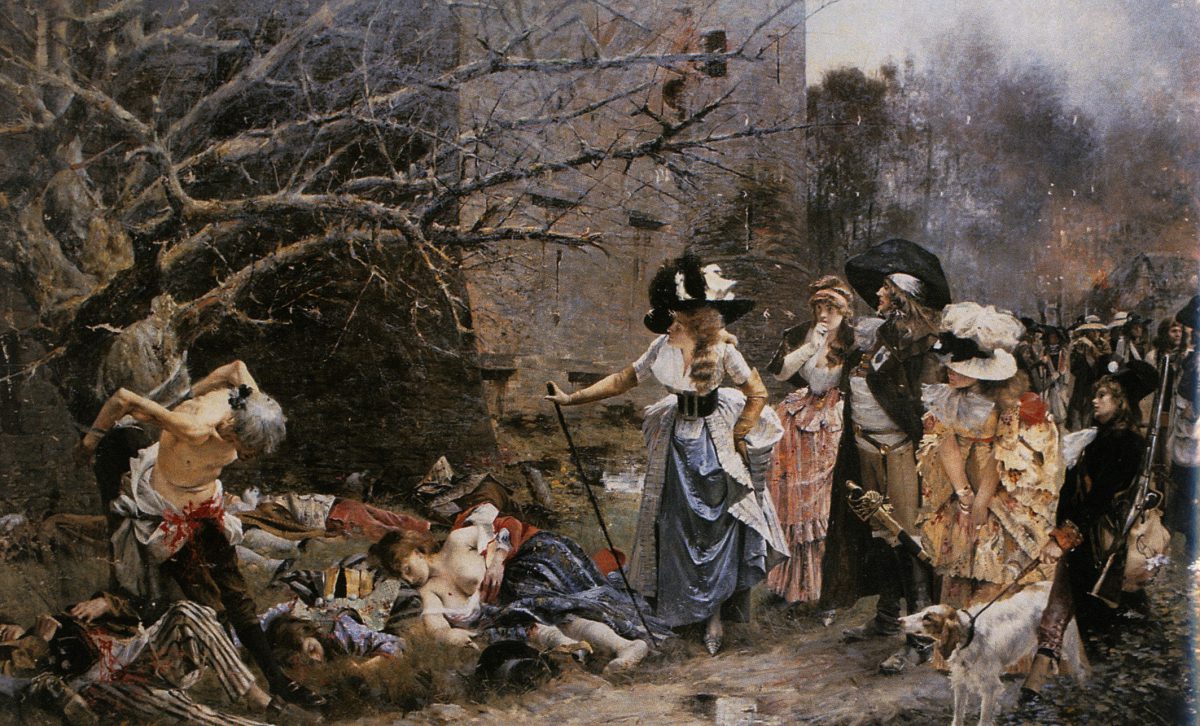
The Secret History of the Vendée

Massacre de Machecoul
From Quillette:
The Vendée is a region in the west of France whose residents became renowned for their piety after Protestants were driven out of the area in the wake of King Louis XIV’s Edict of Fontainebleau (1685). Throughout the 18th century, the Vendée was, culturally, politically and economically, a backwater. The closest major city, Nantes, remains noted for its role in the slave trade.

Vendéens seem to have welcomed the French Revolution, at least initially. Everybody was annoyed with high levels of taxation. Even the pious were fed up with what they had to pay to the Church. The problem was not so much with the clergy as with parish assemblies (fabriques), which controlled parish finances. Vendéens had little quarrel with the local nobility, who as a rule stayed in the region and knew the peasantry well. Few of them spent any time in Paris, Versailles or even Nantes. The nobles too resented centralized administration. 
On November 2 1789, the newly-created National Constituent Assembly (NCA) in Paris (formerly the National Assembly) declared that all revenue-generating Church property in France was to be nationalized. On April 19 1790 Revolutionary legislators decided to help themselves to the rest of the Church’s property. It would be sold; the wealth would be redistributed by the Revolutionary government. On July 12 the NCA passed a law, the Civil Constitution of the Clergy, that completely subordinated the Catholic Church to the Revolutionary government, and forbade Catholic allegiance to any foreign authority (for example, the Vatican, or the Pope). 
There would be no more recognizing the authority of bishops who had been appointed by non-French powers. Clergy were also ordered to swear allegiance to the Revolutionaries. They were now to be made civil servants, completely subject to the new French state. Most priests and bishops not only condemned the new Civil Constitution of the Clergy, but refused to swear the oath that would subject them to civil officials. Revolutionary authorities were concerned that people were still loyal to the clergy rather than them. In October the Directory of the Lower Loire was compelled to remind the clergy that they were being stubborn and had to do as they were told. But most priests remained disobedient.

On November 10 1790, 103 priests from the diocese of Nantes signed a sharply-worded letter of protest to the NCA condemning their authoritarianism. Legislators were shocked and angry at the ingratitude. A few months later the Bishop of Nantes ordered his clergy to reject the Civil Constitution. Nine out of ten did not need to be told. The Revolutionary authorities had no choice but to appoint new bishops from among those few priests who had sworn to subject themselves to the NCA. 
On June 26 1791, the NCA declared its right to deport or exile “refractory” clergy who had refused to swear the oath. Only obedient “constitutional” clergy who had pledged their allegiance to the NCA were allowed to carry out any duties. Soon there was a shortage of priests; most parishes now had nobody legally to carry out baptisms, weddings, or funerals. Churches were locked up by authorities. Yet citizens continued to show up to church on Sundays, even when the doors were sealed and the priest was imprisoned or in hiding. Force was necessary to maintain the NCA’s new regulations on religion. 
The people refused to show up to Masses celebrated by “constitutional” priests. Indeed the “constitutional” clergy were widely ridiculed as cowards, traitors and infidels. Frequently they were subjected to physical assault. But they were public officials now, and could be protected by the armed forces if necessary, particularly when the faithful showered them with dirt, manure and rocks, or kicked them and spat in their faces. 
On September 20 1792, the National Convention (NC) replaced the NLA, which had supplanted the NCA, which had been formed in July 1789 from the original National Assembly (established in June 1789). The Revolutionaries’ position on the clergy remained consistent. They did not want good priests, or intelligent priests, or well-educated priests, or priests who knew their parishes and the needs of their parishioners: they wanted priests who would obey them, follow orders and not talk back. The clergy stood in the way of their plans to conscript three hundred thousand men for the Revolutionary army. 
On March 6 1793, all Catholic churches not served by “constitutional” clergy were permanently closed. On March 7, a recruitment law went into effect. Revolutionary leaders, legislators, municipal authorities, administrators and government functionaries in general were of course exempt from military service. 
In the Vendée, the NC’s call for conscription was not received with universal enthusiasm. When the District Commissioner at Thouaré tried to announce the official decree to the people, he was met with forty peasants armed with sticks who chanted “holy freedom, sacred freedom.” One of them shouted:
You have killed our king, you have chased away our priests, and you have sold off the property of our Church. Where is the money? You have spent it all. Now you want our bodies? No! You will not have them!
(Read more.)
Share

Not All Black Lives Matter to Black Lives Matter

From Ben Shapiro at Townhall:
This week, CNN's Don Lemon, who has spent the last few weeks bashing the supposed thoroughgoing systemic racism of the United States, hosted black actor Terry Crews. He then proceeded to browbeat Crews, who had committed the great sin of tweeting, "#ALLBLACKLIVESMATTER 9 black CHILDREN killed by violence in Chicago since June 20, 2020." Lemon specifically objected to Crews' hashtag. After Lemon humbly informed Crews that he has skin "as tough as an armadillo," he then lectured: "The Black Lives Matter movement was started because it was talking about police brutality. ... But that's not what Black Lives Matter is about. It's not ... all-encompassing ... The Black Lives Matter movement is about police brutality and injustice in that matter, not about what's happening in black neighborhoods."

This, of course, is largely false. The Black Lives Matter movement did indeed begin with protests about police brutality but quickly morphed into broader debates over the validity of looting and rioting, tearing down historic statues, slavery reparations and defunding the police. And Black Lives Matter, as Crews correctly pointed out, has never restricted its mandate to the question of police violence: It has announced that its focuses also include police brutality, transgender rights, gay rights, disrupting the nuclear family and freeing Palestine, among other diverse topics. So why is Lemon so deeply invested in preventing conversations about black lives? Why, in fact, do only some black lives matter, rather than all? (Read more.)

From The Federalist:
New York City is one of many school systems in the United States set to roll out Black Lives Matter (BLM)-themed lesson plans this fall. According to the NYC Department of Education, teachers will delve into “systemic racism,” police brutality, and white privilege in their classrooms. 
North Carolina’s largest school system in Wake County launched a website this summer that provides BLM lessons for teachers to use in classrooms and for parents to use at home. The website, created by the school system’s Office of Equity Affairs, encourages teachers to “address the injustices that exist beyond education by the conversations we have with others, by speaking up when we see hate, by supporting efforts that oppose racism and oppression, and by directly engaging in advocacy work.” 
Encouraging people to identify and condemn racism is an undeniably laudable undertaking by these school administrators. That’s not what’s really happening, however. By bringing BLM into the classroom, activist educators are allowing the most radically divisive movement in modern American history to warp children’s worldviews. 
Wake County’s BLM teaching resource is dressed up as a legitimate civics education resource, complete with tips for fostering civil discourse and a section on teaching historical facts about America’s civil rights movement. But closer inspection reveals it to be a deliberate Trojan Horse conceived to incubate, amplify, and channel the movement’s attitudes for political ends. 
The site lays out a cult-like recruiting process for students to follow. Step one: Recognize your white privilege. Step two: Learn the dos and don’ts of being an ally. Step three: Recruit more members to learn steps one and two. Step three of the recruitment process posits, “Racial equity accountability must be tied to specific outcomes.” What, exactly, are these outcomes? The obvious answer is activism on behalf of the BLM movement.
(Read more.) 

Also from The Federalist:
The Black Lives Matter protests are radical, they are violent, and they have claimed innocent lives all over the country. This isn’t a surprise: We’ve watched this movement played out before by many of the exact same leaders and even under the exact same name. Now, through a combination of political foolishness, public amnesia, and willful media gaslighting, America gets to live it all again — and more civilians and police officers are being attacked and even killed. 
The Black Lives Matter movement isn’t new at all. It’s the same loose collection of good-thinking people concerned over police violence and violent, anti-police and anti-family radicals as it was when it first gained national prominence in 2014. As a refresher, the group was founded in 2013, during President Barack Obama’s second term and after the fatal shooting of Trayvon Martin in Florida. It wasn’t until a rash of viral police-related deaths the next year that its national profile began to rise, including protests over the killing of Michael Brown in Ferguson, Missouri, Eric Garner in New York City, and then the following year Freddie Gray in Baltimore and Walter Scott in North Charleston, South Carolina. 
It was cheered on at the time by the media for all the same reasons it’s being cheered on today: Some of the viral videos and events convincingly depicted unjustified killings of black suspects by police, and despite the clear and radical politics of the founders, their name conveys an obvious truism. Unfortunately, it quickly showed its violent and intolerant side then, just as it has today. 
Americans likely most clearly recall Ferguson’s protests, where for days black-owned businesses were torched and looted. Over the next few years, we watched in horror as Baltimore’s years-long revival was stopped in its tracks, block after block burned, and families attending an afternoon baseball game were set upon by screaming mobs. 
As editor in chief of The Daily Caller News Foundation then, I oversaw our broader Baltimore 2015 riot coverage. As two in the morning approached on April 28, I turned off the police scanner, confident our guys were OK and looking forward to a few hours’ sleep before an early workday. Minutes later, our man running the coverage on the ground texted, “We are alright,” which indicated to me that they were not alright at all. Indeed, my friend was in the emergency room with two of our young reporters, who had been beaten and robbed by the rioters. 
“When I saw the guy heading our way with a hammer in his hand and a bandanna covering his face, I knew he meant business,” a New York Daily News reporter who ran to their aid and then drove our guys through the mob to safety wrote later that morning. By the time they escaped, Caller reporter Casey Harper was struggling to stay conscious with a severe concussion, broken eye socket, and stolen phone, while his colleague Connor Wolf got off with a broken nose (and managed to hold onto his blood-stained notebook throughout). The two had been targeted for being white. No one slept until after we were back in the newsroom and their story was filed. (Read more.) 

From Breitbart:
But, how did we get here, Mr. Biden? You have been in power longer than just about anybody else alive. You were in the United States Senate for more than 35 years. You fondly recall yukking it up with racist segregationists in your own party for decades. For 47 years, you have been at the highest echelons of power. You were chairman of two of the most powerful committees in Congress, one of which gave you unrivaled authority to shape the federal judiciary.
In your final eight years of power, you were in the White House. There you served as the wise elder statesman over the executive branch of government — a post you want voters to return you to. Such White Privilege. At the very least, Mr. Biden, you are responsible for the racist hellhole that you claim is half of America. Why would anyone expect you to fix a mess you are responsible for, a mess you refuse to even take responsibility for? White Privilege. Most troubling of all, why should anyone expect you to fix a mess that you have either ignored or proved yourself incapable of fixing during the 47 years you have lorded over every branch of the federal government? Sheer, unadulterated White Privilege. (Read more.)
Share

Cromwell's Marian Bonfire

From Supremacy and Survival:
This is almost too timely: as statues of the Blessed Virgin Mary on church grounds, as well as public, not necessarily religious statues of Saint Junipero Serra and Saint Louis of France are threatened, defaced, desecrated, and destroyed, we have an historical example from the English Reformation to remember.

According to the Walsingham Blog's Facebook page today is the anniversary of the burning of many statues of the Blessed Virgin Mary--perhaps even including Our Lady of Walsingham--in 1538:

On the 14th of July 1538 Prior Vowell of Walsingham Priory reported to Thomas Cromwell that the royal commissioners had take the image of Our Lady from the chapel. 
On July 18th the Image that had for centuries been loved and venerated in its Holy House, and where so much prayer and pleading had poured forth, reached London, along with statues of Our Lady of Basingstoke, Caversham, Ipswich, Penrhys, Willesden, Worcester and others. They were taken to the residence of the Lord Privy Seal , Thomas Cromwell, Chelsea Manor, where they were burnt in the presence of the Lord Privy Seal himself.
Chelsea Manor had been Saint Thomas More's home. It was no accident Cromwell chose that location. (Read more.)
Share

Work and Adolescence in the Middle Ages

From Thought.com:
Teens in peasant families were most likely to work instead of attending school. Offspring could be an integral part of a peasant family's income as productive workers contributing to the farming operation. As a paid servant in another household, frequently in another town, an adolescent could either contribute to the total income or simply cease using the family resources, thereby increasing the overall economic standing of those he left behind.
In the peasant household, children provided valuable assistance to the family as early as age five or six. This assistance took the form of simple chores and did not take up a great deal of the child's time. Such chores included fetching water, herding geese, sheep or goats, gathering fruit, nuts, or firewood, walking and watering horses, and fishing. Older children were often enlisted to care for or at least watch over their younger siblings.
At the house, girls would help their mothers with tending a vegetable or herb garden, making or mending clothes, churning butter, brewing beer and performing simple tasks to help with the cooking. In the fields, a boy no younger than 9-years-old and usually 12 years or older, might assist his father by goading the ox while his father handled the plow. (Read more.)
Share

Monday, July 20, 2020

In Defense of St. Louis IX

I think the statue is glorious and totally captures the spirit of the warrior king. It is almost impossible to judge a medieval saint and ruler by contemporary American standards. St. Louis IX did much that we would find utterly appalling. All that can be said is that in those days, heresy and blasphemy were seen as leading to spiritual death. Spiritual death was seen as bad or worse than murder of the body, because it was murder of the soul. The king saw it as his duty to protect his people, body and soul. Anyone or anything that threatened the spiritual or material well-being of France were punished or destroyed. To our post-Enlightenment eyes much of what was done in the Middle Ages as a matter of course is seen as outrageous. From First Things:
 Left unmentioned by Louis’s modern detractors is his lifelong devotion to issues of social justice in a world that cared little for such ideas. At his own expense, he continually paid to feed and clothe hundreds of Paris’s poor. Every evening he shared the royal table with local homeless and usually insisted that he wash their feet before they left. He established several hospitals for the poor and homes for battered women and ex-prostitutes. He personally visited lepers and washed their sores. After his humiliation in Egypt, Louis refused to don the rich regalia of the French crown, dressing simply and living humbly for the rest of his life. He was the sort of person, like Mother Teresa or John Paul II, whose reputation for piety and virtue was so great that contemporaries had no doubt he would one day be a saint. He was canonized in a record 27 years. (Read more.)

Here is a magnificent defense of St. Louis from a direct descendant His Imperial Highness Prince Bertrand of Orleans-Braganza. I once had the honor of being presented to the prince. From TFP:
We need the good and strong Saint Louis in these days of weak leadership and cowardly surrender. Saint Louis was renowned for his passion for justice. He was a statesman who pursued peace with the nations surrounding France by negotiating generous and equitable solutions to complex disputes. He also knew how to be firm in upholding the Catholic Faith. That is why he fought to free the Holy Land from the hands of its Muslim occupiers and stop their brutal and unjust persecution of Christians.
Such was Saint Louis’s reputation that, when imprisoned by the Muslims during the Crusade, an emir asked to be dubbed a knight by him. Saint Louis answered: “Become Christian, and I’ll make you a knight.” Other Muslims would bring their cases before him to be judged. During his reign, he sent officials throughout the realm to announce in every city that anyone who had complaints against present or past royal officers and judges, for corruption or injustice, to come forward so that justice could be rendered and the tainted public officials removed from office.
He was also famous for his Christian charity, especially towards the poor. He truly believed that the peace and blessings of the realm came through the proper care of the poor. He was a true father to his people and was beloved by them. He had dinner with beggars, washed their feet and ministered to their needs. He set up hospitals, schools and institutions to take care of the sick, poor and blind.
The most important quality of my ancestor was his sanctity. Saint Louis IX was a holy king who loved God and the Blessed Mother. He avoided all sin and practiced heroic virtue. He spent long hours in prayer, fasted, and prayed much. The king said that he prayed long into the night so that France might sleep tranquilly. Everywhere he encouraged the practice of the Faith and endowed religious institutions and churches.
As a descendant of Saint Louis, I was profoundly moved to hear that Catholics frequently gather at his monument in Forest Park, St. Louis, to pray the rosary and defend this symbolic and historical landmark. By remembering him with a statue, we do more than honor his memory. We recognize humbly that, through God’s mercy, good and holy leaders can exist again. Saint Louis challenges us to act with wisdom and courage.
Let us keep the statue, lest we lose the highest of standards—those of Christian civilization—and tumble into chaos and anarchy. (Read more.)
Share