Sunday, March 22, 2020

Why So Many Of Us Are Fat

From Pocket:
A 2016 study published in the journal Obesity Research & Clinical Practice found that it’s harder for adults today to maintain the same weight as those 20 to 30 years ago did, even at the same levels of food intake and exercise. The authors examined the dietary data of 36,400 Americans between 1971 and 2008 and the physical activity data of 14,419 people between 1988 and 2006. They grouped the data sets together by the amount of food and activity, age, and BMI.
They found a very surprising correlation: A given person, in 2006, eating the same amount of calories, taking in the same quantities of macronutrients like protein and fat, and exercising the same amount as a person of the same age did in 1988 would have a BMI that was about 2.3 points higher. In other words, people today are about 10 percent heavier than people were in the 1980s, even if they follow the exact same diet and exercise plans.
“Our study results suggest that if you are 25, you’d have to eat even less and exercise more than those older, to prevent gaining weight,” Jennifer Kuk, a professor of kinesiology and health science at Toronto’s York University, said in a statement. “However, it also indicates there may be other specific changes contributing to the rise in obesity beyond just diet and exercise.”
Just what those other changes might be, though, are still a matter of hypothesis. In an interview, Kuk proffered three different factors that might be making harder for adults today to stay thin.
First, people are exposed to more chemicals that might be weight-gain inducing. Pesticides, flame retardants, and the substances in food packaging might all be altering our hormonal processes and tweaking the way our bodies put on and maintain weight.
Second, the use of prescription drugs has risen dramatically since the ‘70s and ‘80s. Prozac, the first blockbuster SSRI, came out in 1988. Antidepressants are now one of the most commonly prescribed drugs in the U.S., and many of them have been linked to weight gain.
Finally, Kuk and the other study authors think that the microbiomes of Americans might have somehow changed between the 1980s and now. It’s well known that some types of gut bacteria make a person more prone to weight gain and obesity. Americans are eating more meat than they were a few decades ago, and many animal products are treated with hormones and antibiotics in order to promote growth. All that meat might be changing gut bacteria in ways that are subtle, at first, but add up over time. Kuk believes the proliferation of artificial sweeteners could also be playing a role. (Read more.)
Share

Saturday, March 21, 2020

A Granddaughter of Grace Kelly

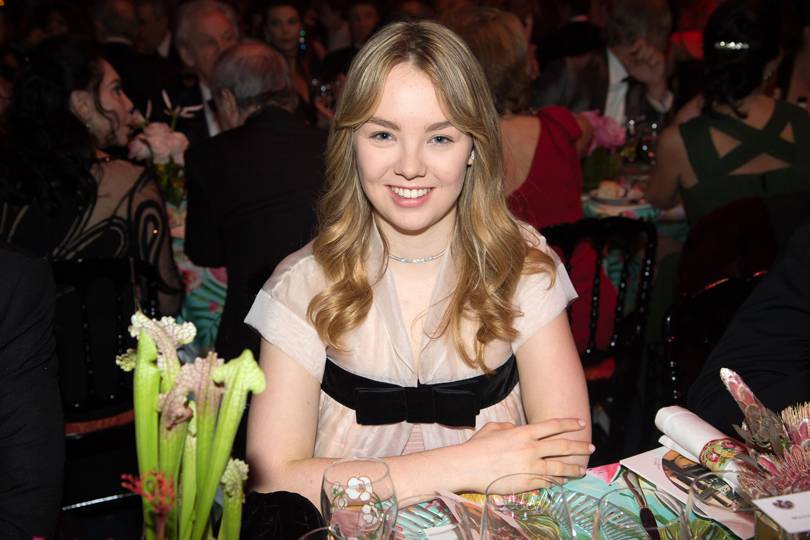
Princess Alexandra of Hanover is one of the loveliest of Princess Grace's grandgirls. From Tatler:
Born on the cusp of the millennium, Alexandra is the only child of Prince Ernst August of Hanover and Princess Caroline of Monaco, who were married in 1999. She has 2 half siblings on her father's side, Hereditary Prince Ernst August and Prince Christian of Hanover, and 3 on her mother's side Andrea, Pierre and Charlotte Casiraghi. She grew up in Austria and is 12th in line to the Monagesque throne, although she gave up her distant claim to the British throne when she converted to Catholicism in October 2018.

 From the age of ten, the young royal has been a keen figure skater, competing in many national competitions and even representing Monaco at the European Youth Olympics but over time she has made another interest of hers very apparent; fashion. (Read more.)
Share

Biden's Lies

From The American Thinker:
Joe Biden's gaffes, plagiarism, fantasies, brain farts, inchoate gibberings, and meltdowns about himself are well known, but there's also his propensity to lie about others — calmly, matter-of-factly, and quite outrageously. He's using that creepy ability to lie repeatedly on the campaign trail, spreading a string of false information about President Trump. Based on his recent behavior, Biden wouldn't have any trouble telling us the sky is yellow or water is dry, given the size of his whoppers. It's most obvious in his nakedly false claims around the coronavirus crisis, something whose supposed nonpartisanship is something Biden makes a mockery of.
According to PJMedia's Tyler O'Neil:
During the Democratic debate on Sunday, Democratic frontrunner and former Vice President Joe Biden accused President Donald Trump of refusing coronavirus test kits from the World Health Organization (WHO). This accusation was flat-out false, but it was not the first time Biden has lied to politicize the coronavirus crisis.
(Read more.)
Share

Hiding in Plain Sight

From Science:
MAYA TRAVELERS visiting Teotihuacan during the fourth century would have encountered a city like no other they had ever seen. Three enormous pyramids loomed over the main street, now known as the Avenue of the Dead, their shapes reflecting snow-capped volcanoes visible in the distance. An orderly grid of roads extended from the avenue, and the city’s 100,000 residents—far more than in even the largest Maya cities of the time—lived in comfortable, standardized apartment complexes. Economic inequality was strikingly low. Depictions of warriors in Teotihuacan’s art, as well as human sacrifices entombed in military regalia, spoke of the city’s military might. Merchants from far-flung places such as Oaxaca to the southeast and the Gulf Coast brought goods for Teotihuacan’s markets, and pilgrims flocked to the city for religious ceremonies. 
Some of those foreigners settled here and set up ethnic enclaves that archaeologists can identify from their foreign household goods and burial practices. “Teotihuacan was a great urban center, almost like Los Angeles or New York City. People from all over Mesoamerica were there,” says Karl Taube, an archaeologist at the University of California (UC), Riverside. 
Teotihuacanos were likely just as fascinated by the Maya area, about 1000 kilometers away in what is now southern Mexico, Guatemala, Belize, and Honduras. It lay as far to the east as one could get in Mesoamerica, linking it to the mythologically potent rising Sun. Although the cultures shared staples such as maize, the luxury goods prized in Teotihuacan, such as jade, cacao, and brightly colored quetzal feathers, all came from the tropical jungles of the Maya lowlands. “It was a source of wealth and abundance,” Taube says. When seen from the chilly, high-altitude plain of Teotihuacan, the lush Maya area would have looked like a paradise replete with elegance and luxury. (Read more.)
Share

Friday, March 20, 2020

On Crusade with Louis VII and Eleanor of Aquitaine

From National Geographic:
The Crusades were a series of European military expeditions to the Holy Land. Starting in 1095, the First Crusade aimed to recapture sites under the control of Islamic rulers. It culminated when European forces took the city of Jerusalem in summer 1099. After declaring the Crusade a success, many European commanders and forces departed for home, which left the conquered territories vulnerable to attack and reconquest. During the early 12th century, Muslim forces began to regroup in Aleppo and Mosul. When they took the Armenian city of Edessa in 1144 (today Urfa), the papacy and European powers grew alarmed that Muslim emirates would unite and take back more territories in the region.

Pope Eugene III organized an expedition to safeguard the former conquests in the East and “rescue” Edessa. The designated leader was German king Conrad III. Louis VII decided to help lead the Crusade, and Queen Eleanor would join him. People from her lands made up the bulk of the French forces, and she accompanied them as their leader, the Duchess of Aquitaine.

The pair departed for the Holy Land in June 1147. Critics of Eleanor delighted in spreading rumors about her, detailing her excesses and blaming her for military failures. Many of these misconceptions have lingered until this day. One of the most popular is that she brought 300 ladies-in-waiting with her, whose caravan stretched for miles and allegedly slowed the mission’s progress.

After passing Constantinople, the mission encountered hostilities in Asia Minor. The first battles were a disaster for the French. In early 1148 the royal couple arrived in Antioch and were welcomed by Raymond of Poitiers, Eleanor’s paternal uncle. The atmosphere was tense: Raymond wanted to attack Aleppo and move to liberate Edessa from there, but Louis insisted on going to Jerusalem first.

Eleanor openly sided with her uncle and threatened to annul the marriage to Louis if he did not heed Raymond’s counsel. Their marriage had shown signs of strain before, but tensions over the Crusade pushed it to the breaking point. Malign rumors about the queen began to circulate: many chroniclers, possibly to cover the king’s incompetent strategy, falsely accused Eleanor of incest with her uncle. In an uncharacteristic act of defiance against Eleanor, Louis forced her to go to Jerusalem. (Read more.)
Share

The Media and the Coronavirus

From American Thinker:
The mainstream media are disgusting. That sentence could open every article about the mainstream media in a time of coronavirus. The media's hostility to Trump is so extreme that there is no lie they won't tell to damage him — never mind that doing so might destroy the American economy or cause other unimaginable harm to the American people.

In addition to lies, the media's other line of attack is to call everything Trump says or does "racist." When it comes to the coronavirus, the media have a friend in the Chinese Communist Party that started this epidemic. The communists would also like Trump to be "racist," because attacking him deflects attention from the party's disgraceful and deadly behavior in hiding the coronavirus from the world to keep the Chinese government looking good.

This anti-Trump bias had led to the latest media meme, which is that the phrases "Wuhan Virus" and "Chinese Virus" are racist. Naturally, Trump doubled down, for he now speaks only of the Chinese Virus. The problem for the media is that they, just a month ago, used the words "Chinese" and "Wuhan" nonstop when referring to the virus. Reporters, therefore, know they're on shaky ground when attacking Trump on this point. (Read more.)

From Crux Now:
Amid the scramble to find a cure for the coronavirus and, in the meantime, to enforce restrictive measures to try to slow down its expansion, there’s been relatively little attention to the underlying factors which may explain why some places have been harder hit, more quickly, than others. One emerging hypothesis, however, is that there may be a correlation between declining fertility rates and rapidly rising elderly populations in many societies around the world, and the extent to which those societies have been impacted by the coronavirus. For the Catholic Church, which has sounded alarms about declining fertility for decades, the situation could offer a grim confirmation of its diagnosis that a rapidly aging society places its future in jeopardy - though no one’s likely to celebrate that it’s required a global pandemic which, to date, has claimed more than 7,000 lives, to put the issue back on the table. (Read more.)
Share

“Little Foot”

From Heritage Daily:
The meticulous excavation, cleaning and scanning of the skull of the ~3.67 million-year-old fossil specimen has revealed the most complete Australopithecus adult first cervical vertebra yet found. A description of the vertebra by Wits University researchers Dr Amélie Beaudet and the Sterkfontein team was published in the Scientific Reports. This research program is supported by the the Centre of Excellence in Palaeosciences, Scientific Palaeontological Trust, National Research Foundation, University of the Witwatersrand and the French National Centre for Scientific Research through the French Institute of South Africa. 
The first cervical vertebra (or atlas) plays a crucial role in vertebrate biology. Besides acting as the connection between the head and the neck, the atlas also plays a role in how blood is supplied to the brain via the vertebral arteries. By comparing the atlas of “Little Foot” with other fossils from South and East Africa as well as living humans and chimpanzees, the Wits University team shows that Australopithecus was capable of head movements that differ from modern humans. 
“The morphology of the first cervical vertebra, or atlas, reflects multiple aspects of an organism’s life,” says Beaudet, the lead author of the study. “In particular, the nearly complete atlas of ‘Little Foot’ has the potential to provide new insights into the evolution of head mobility and the arterial supply to the brain in the human lineage.” The shape of the atlas determines the range of head motions while the size of the arteries passing through the vertebrae to the skull is useful for estimating blood flow supplying the brain. 
“Our study shows that Australopithecus was capable of head movements that differ from us. This could be explained by the greater ability of Australopithecus to climb and move in the trees. However, a southern African Australopithecus specimen younger than ‘Little Foot’ (probably younger by about 1 million years) may have partially lost this capacity and spent more time on the ground, like us today.” (Read more.)
Share
Thursday, March 19, 2020

The House That Inspired 'Peter Pan'


From last fall, but still interesting. From Tatler:
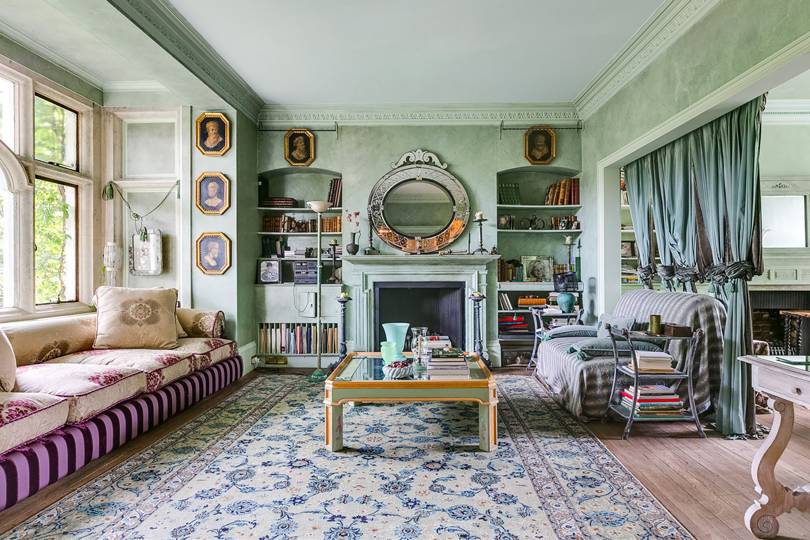
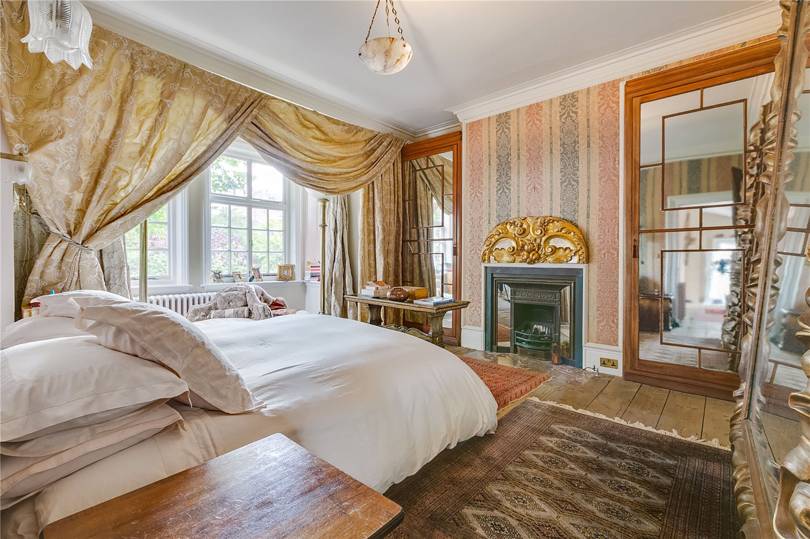
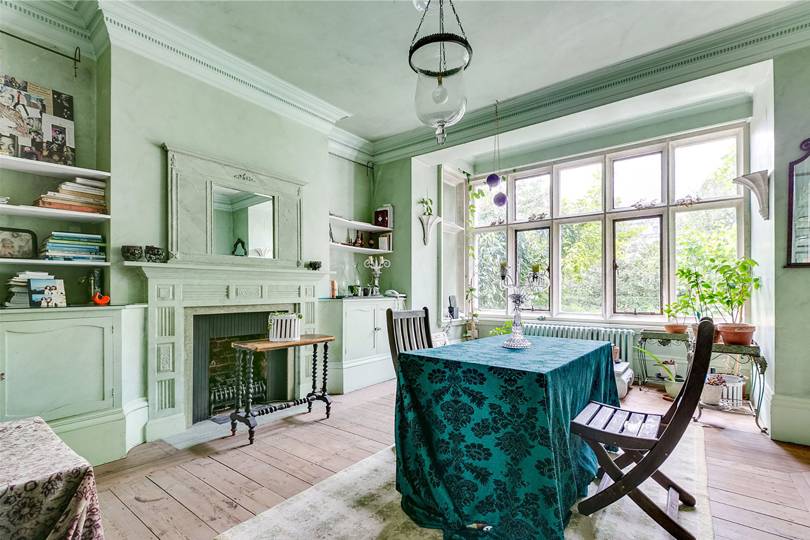
The former home of Peter Pan playwright J.M. Barrie in leafy South Kensington is looking for a new owner - and all you need is £8.5m. Barrie lived in this six-bedroomed home in 1890 and legend has it, the top floor balcony inspired a scene in his play (FYI Peter Pan was a play before it was turned into a children's novel) where Wendy and Peter stand before flying off to Neverland. The house is arranged over four floors and has heaps of period features - including ornate cornicing, high ceilings and original wood flooring with sweeping reception rooms and grand bedrooms at the back of the house overlooking the pretty Hereford Square. (Read more.)

Share

The Sexual Revolution as Primal Cause

From The Library of Economics and Liberty:
Eberstadt sees identity politics emerging as a desperate and ill-fated attempt to make up for the loss of familial bonds. She writes, “Humanity does not gravitate toward anonymous or ‘forced’ packs any more than our fellow creatures do.” 
When a tribe is formed out of families, members feel secure in their status. One’s identity is established as a father, mother, sibling, uncle, aunt, or grandparent. In contrast, when a “forced pack” is constructed out of isolated individuals, there are constant struggles to resolve the uncertainty over who belongs and where members fit in relation to one another. Eberstadt suggests that under such circumstances:
… some people, deprived of recognition in the traditional ways, will regress to a state in which their demand for recognition becomes ever more insistent and childlike. This brings us to one of the most revealing features of identity politics: its infantilized expression and vernacular.
On the latter point, she refers to “the bizarre behavior of protesters at various controversial public talks—the crying, the chanting and stomping, the seeming inability in case after case to respond to authority and reason.” 
Because of this Great Scattering, more people are isolated and lonely. They reach old age with no familial source of companionship. Eberstadt refers to a description of elderly people in Japan dying alone, resulting in “a new industry: firms that clean out the apartments of the isolated dead, because no family members remain to do it.” (Read more.)
Share