Wednesday, January 23, 2019

Why Men Are Falling Behind in Schools

From Minding the Campus:
North American universities have been taken over by women. Men are decreasingly university students, professors, and administrators. “Gender equality,” a feminist war chant, apparently does not apply when females dominate. 
In the United States, women outnumber men in colleges and universities — by 2026, the Department of Education estimates, 57 percent of college students will be women. In Canada, according to the “2001 Census, universities had clearly become the domain of women, as they made up 58% of all graduates. And according to the 2006 Census, women accounted for 60% of university graduates between the ages of 25 and 29.” Women also dominate in British universities. The same imbalance is seen in universities around the world. 
On average, across all disciplines, there are substantially more females than males. But the imbalance is even more impressive in particular fields of study. In education, psychology, social work, and health, the predominance of females is between 75% and 80%. In English, foreign languages, communications, journalism, and art, and also in biology, females comprise between 60% and 75% of the students. Males predominate only in math, physical sciences, engineering, and computer science. Some 60% of Ph.Ds in sociology, anthropology, and linguistics were awarded to females.
[Why Are So Many Campus Feminists Anti-Male?] 
However, the predominance of women in the social sciences is much greater in undergraduate students than among Ph.Ds. In the anthropology classes I taught during the last decade, there was usually a sprinkling of males among the large majority of females. But by 2017 my senior seminar on immigration and culture was populated by 18 female students and zero males. (Read more.)
Share

A Lack of Babies

From Human Defense:
The problem of falling fertility rates in the U.S. is, of course, a multivariate one. Some, like Professor Donna M. Strabino from Johns Hopkins Bloomberg School of Public Health, point to women becoming more educated and career-driven while putting off children until later in life. Others have suggested a fear of economic stability which stems from the recession. Younger adults know what it was like during the most recent recession and how hard it was on families; therefore, they are choosing to wait until they have consistent stability and finances before having a family.

Another reason for the falling birth rate could be the mistreatment of pregnant mothers by some employers. The law firm Morrison Foerster was recently sued for putting women on the “mommy track,” which apparently led to unfair treatment and fewer opportunities. It would seem some women believe they have to choose between career advancement and motherhood, which could be a contributing factor in the continuous decline in annual birth rates.

These are all valid explanations for America’s declining births each year; however, one cannot overlook the effect abortion has had. There has been a decline in the number of abortions over the past few years, but that number remains astronomical at close to one million in 2014 and over 60 million since Roe v. Wade. (Read more.)
Share

Tuesday, January 22, 2019

Marie-Antoinette, 1790

A 1790 miniature of Marie-Antoinette, based on the formal portrait of Dumont. Share

Overturning Roe Has Just Begun

From The Federalist:
Both abortion and slavery rely on the ability of someone with power deciding that someone weaker should be at his mercy. William Wilberforce is one of the most prominent figures of the anti-slavery movement. His wisdom on the subject of slavery translates perfectly to reflect the struggles facing the pro-life movement.

“A trade [slavery] founded in iniquity, and carried on as this was, must be abolished, let the policy be what it might,” notes Wilberforce. “Let the consequences be what they would, I […] determined that I would never rest till I had effected its abolition.” When there’s a grave injustice going on, especially when it is enshrined in public policy, the stakes are that much higher.

The enslavement of Africans was an entrenched institution in the United States for 224 years. Two hundred and twenty-four years of our country owning and abusing other human beings by staunchly maintaining that slaves were not “persons” (sound familiar?). It took more than two centuries of brave activism, protesting, forming anti-slavery organizations, lobbying, and even war just to solidify that African-Americans were people with equal rights.

Frederick Douglass, one of the most famous abolitionists, knew strife was not reason enough to surrender. He makes that clear in a speech he gave in 1857: “If there is no struggle, there is no progress. Those who profess to favor freedom and yet deprecate agitation are men who want crops without plowing the ground. They want rain without thunder and lightning. They want the ocean without the roar of its mighty waters.” (Read more.)
Share

Women and Medieval Manuscripts

It has long been known that many nuns were makers of books in the Middle Ages. From Archaeology News Network:
In a study published in Science Advances, an international team of researchers led by the Max Planck Institute for the Science of Human History and the University of York shed light on the role of women in the creation of such manuscripts with a surprising discovery -- the identification of lapis lazuli pigment embedded in the calcified dental plaque of a middle-aged woman buried at a small women's monastery in Germany around 1100 AD. Their analysis suggests that the woman was likely a painter of richly illuminated religious texts.
 
 As part of a study analyzing dental calculus -- tooth tartar or dental plaque that fossilizes on the teeth during life -- researchers examined the remains of individuals who were buried in a medieval cemetery associated with a women's monastery at the site of Dalheim in Germany. Few records remain of the monastery and its exact founding date is not known, although a women's community may have formed there as early as the 10th century AD. The earliest known written records from the monastery date to 1244 AD. The monastery is believed to have housed approximately 14 religious women from its founding until its destruction by fire following a series of 14th century battles. (Read more.)
Share

Monday, January 21, 2019

Manliness Needed

From The Federalist:
The American Psychological Association has released a report that says “traditional” masculinity is the cause of an array of pathologies, including sexual abuse, murder, mental illness, and even suicide. Masculinity, it claims, “encourages men to adopt an approach to sexuality that emphasizes promiscuity and other aspects of risky sexual behavior, such as not learning a partner’s sexual history or engaging in sex without protection from pregnancy or disease transmission. Indeed, heterosexual men’s adherence to traditional, sexist aspects of masculinity has been connected to sexual assault perpetration, as well as decreased condom use and increased casual ‘hook-up’ sex.”

This description of “traditional masculinity” is far from the truth. Yet it’s the premise psychologists, educators, activists, and politicians use to form judgments about men and masculinity—judgments that affect not only policy but relationships. The truth is, masculinity is good—or at least morally neutral. Men’s physical strength, sexual drive, emotional reticence, and raw competitiveness are simply natural traits that can be exercised for good or bad. The same is true with feminine traits. A woman’s sexual power, emotional awareness, intuition, and guarded competitiveness are merely aspects of her femaleness. They can be noble or degraded, according to how they’re applied. (Read more.)
Share

Can Christianity Change the World?

Some thoughts from an Orthodox deacon on living the Christian faith in the world. While many are called to give public witness, prayer must always give precedence. From Pravmir:
 This way of life is known to be a struggle, requiring preparation, training, ascesis, and the gift of the Holy Spirit. This is the needed role of the Church.

When we examine how the early church grew and shaped a new culture over many years, we find that Christians lived a life based on the way Christ lived. They were different in how they lived. Many even sacrificed their life to stay true to their faith. It was their faithfulness to His way, His teachings, and their exemplary love for all humankind that made them different. They lived in a very difficult time that was in great odds with Christian teachings. Even so, they did not seek to overthrow or change the government, but lived by the Spirit, as Saint Paul says. They understood that the kingdom sought was not of the world but of the Kingdom of Heaven. They trusted in God and relied on the work of the Holy Spirit. They were faithful in all things. Their efforts were aimed at becoming like Christ, humble, obedient to His teachings, compassionate, accepting that we are all sinners knowing we are all made in God’s image....

1. Praying Daily: Have a regular prayer rule that includes morning and evening prayer.
2. Worshiping and Participating in the Sacraments: Attend and participate in the Divine Liturgy receiving Holy Communion regularly as well as regular participation in Confession.
3. Honoring the Liturgical Cycle: Follow the seasons of the church and participate in the fasts and feasts of the Church.
4. Using the Jesus Prayer: Repeat the Holy name whenever possible throughout the day or night.
5. Slowing Down and Ordering Your Life: Set priorities and reduce the stress and friction caused by a hurried life.
6. Being Watchful: Give full attention to what you are doing at the moment.
7. Taming the Passions: Overcome your habits, attachment to your likes and dislikes, and learn to practice the virtues.
8. Putting Others First: Free yourself from your selfishness and find joy in helping others.
9. Spiritual Fellowship: Spend time regularly with other Orthodox Christians for support and inspiration.
10. Reading Scripture and writings of the Church fathers. (Read more.)
Share

Sunday, January 20, 2019

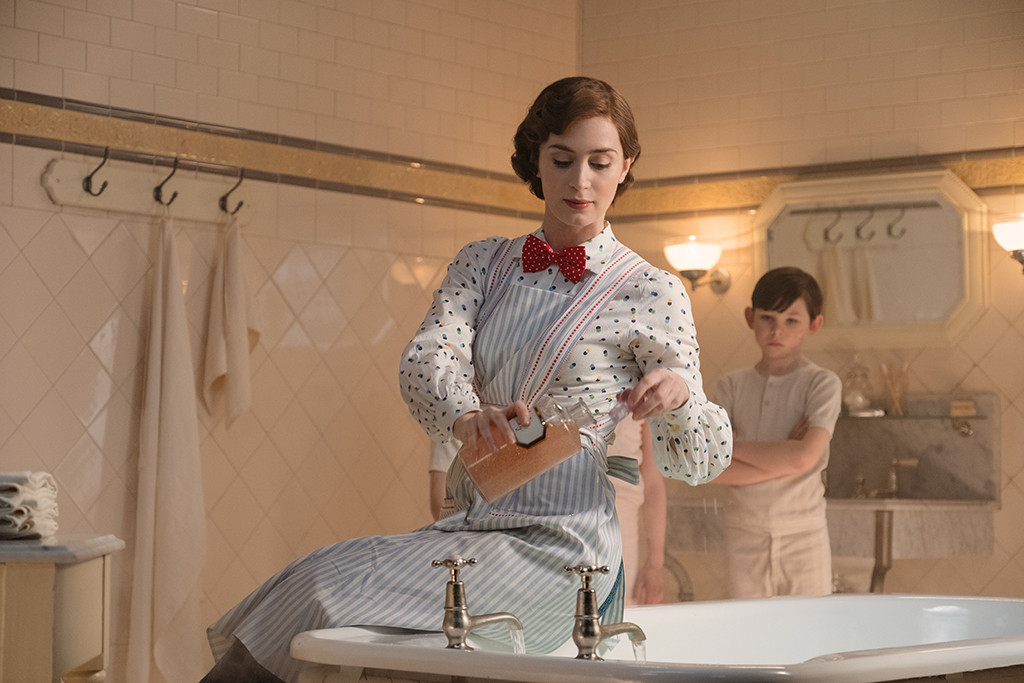
Mary Poppins Returns (2019)

In 2015 the present film went into development, having received the green light from Travers’ estate. Mary Poppins Returns was directed by Rob Marshall, who is best known for Chicago and Into the Woods. The first film took place before World War One. The story has moved to the 1930s, with grownup Jane Banks (Emily Mortimer) and Michael Banks (Ben Whishaw) living in the old house, but with challenges to deal with.
In the film, little Georgie Banks (Joel Dawson) goes to a park, chasing an old kite carried away by the wind. He grabs the string, and the string pulls him. Before he can be swept off, he is brought down to earth by Jack (Lin-Manuel Miranda), a friendly lamp lighter. Together they reel in Mary Poppins, played by Blunt. “I was flying a kite and it got caught on a nanny!” Georgie declares. (Read more.)

More HERE. And HERE. Share

Make America Smoke Again

From Spectator USA:
The number of American adults who smoke has fallen to the lowest level ever recorded, a mere third of what it was 70 years ago. Decades of aggressive public health campaigns and advertising bans are responsible for this remarkable decline. As norms and mores changed, smoking became situated somewhere between bear baiting and regularly dining at Cracker Barrel as a form of utterly deviant behavior. 
Those who continue to smoke belong to the struggle towns and junklands of Middle America. They are usually adult men without much of an education, living below the poverty line; they are the very backbone of Trumpism. Of course during the golden age of American smoking in the years after World War II, Marlboro men were just as easily found in Madison Avenue and Wall Street as they were in Texas Hill Country or Youngstown. Smoking – before its deleterious effects on health were properly known – was a truly egalitarian practice that bound the country together as much as compulsory civics education ever did. Big Tobacco even played a surprising and largely forgotten role in the emancipation of women in the 20th century. (Read more.)
Share