Sunday, October 23, 2022

Myths About In-Person Work

 From Harvard Business Review:

Employee engagement has reached frightening lows in just about every industry, which understandably has leaders deeply worried and looking for answers to see them through the Great Reshuffle. All of this trouble started, so the logic often goes, when the pandemic forced many into remote work and we stopped being together. Surely bringing people back to working side by side and returning to in-person gatherings like learning events is the magical solution. Right?

Not quite. For starters, surveys consistently show that people are looking for more flexibility and choice about where they work, not less. The ability to work remotely has become more valued than ever before, and that’s not going away, particularly given that these trends are significantly stronger among younger workers.

Even in organizations that remain committed to offering employees significant remote or hybrid work, there is often a desire among leaders to foster togetherness with a return to in-person learning events.

But as learning professionals, we hear many myths when it comes to what in-person learning — or in-person experiences more generally — can actually achieve. Here, we’ll dispel the ones we hear most often and show you how to maximize connection from in-person learning events.

Myth #1: In-person learning is more effective

There is something sneaky about this one. If they were being honest, most people who repeat this myth don’t care all that much about learning effectiveness — they just want to bring people physically together, and “learning” seems like a solid justification. However, the idea that learning is more effective in person is demonstrably false. In fact, because it rarely affords opportunities for meaningful practice and feedback, in-person learning often is less impactful than well-designed virtual live learning and eLearning. (Read more.)

Share

Saturday, October 22, 2022

Bucktown General Store


One of the oldest general stores in America in continuous operation. It is also the store where Harriet Tubman was severely injured by an attacker. Not far from where we live now. From Only in Your State:

There are endless historic places in Maryland, especially when it comes to the eastern shore area. That’s where you’ll find the Harriet Tubman Byway, and along that byway is the following historic general store in Maryland. This place has been open since before the Civil War and you can still tour it today. Read on, and consider seeing this fascinating spot in person.

Bucktown General Store is one of the oldest general stores in the United States. You'll find it at 4303 Bucktown Road in Cambridge, Maryland. This old store dates back to the 1830s and it's known as being an important piece of history when it comes to Harriet Tubman. Sometime between 1834 and 1836, teenage Harriet Tubman tried to assist an enslaved man inside of the store. She took the enslaved man's side rather than help the overseer re-capture him. Filled with rage, the overseer threw a two-pound weight, hitting Tubman in the head. This caused a skull fracture, and she was left with health problems, mainly epilepsy, the rest of her life due to the blow. (Read more.)

Share

Spies Who Lie

 A must-listen for responsible voters.

Share

South Africa May Soon Take Land Without Compensation

 From Zero Hedge:

South Africa’s National Assembly passed a bill on Sept. 28 that would allow the government to seize land without paying the owners, a practice known as ‘expropriation without compensation.’

This thing is emotional. We cannot deny it,” said South African farmer Herman J. Roos in a Sept. 29 message to The Epoch Times. He noted that the law would not change Article 25 of South Africa’s constitution—a more radical move that the ruling African National Congress (ANC) has frequently advocated. The Expropriation Bill, the latest gesture toward land reform in a racially and economically divided nation, still awaits approval from the National Council of Provinces.

It would then need the signature of President Cyril Ramaphosa, who has publicly supported expropriation without compensation for years. The bill passed over the objections of several minority parties. Notably, the National Assembly is dominated by the country’s ruling party, the left-wing ANC. It controls over 57 percent of seats in the 400-seat chamber. The second-largest party, the centrist Democratic Alliance, controls under 21 percent of seats, followed by the openly communist Economic Freedom Fighters at a little under 11 percent of seats. The right-populist Freedom Front Plus, known for its opposition to expropriation without compensation, has just 2.38 percent of the body, or 10 seats.

Groups representing black farmers in the country have typically favored expropriation without compensation, as noted in a report from the United States Department of Agriculture. That’s against the backdrop of mass landlessness among the supermajority of South Africans who are black or colored (a specific multiracial category in the country). Years after the end of apartheid and its racial restrictions on land ownership, much of South Africa’s land remains concentrated in the hands of white farmers. (Read more.)
Share

A Medieval Ring in Sherwood Forest

 From The Archaeologist:

Mark discovered the ring, engraved with images of St Elizabeth of Hungary and the infant Christ, in 2016. Mark Thompson, who spray paints fork lift trucks, was in the famous Nottinghamshire woodland for just 20 minutes when his metal detector sounded. The 34-year-old, who had only taken up the hobby 18 months ago, was expecting to find something innocuous. But as he shovelled the dirt, a glint of gold emerged on ornate piece of jewellery with a precious sapphire. 

Mr Thompson said: "I had been out metal detecting with a group for about 20 minutes when I heard the signal...I was really excited when I saw that it was gold, but I didn't realise at that point just how significant it might be." It is believed the ring, which is engraved with an infant Christ on one side and a female saint on the other, dates from the 14th century. (Read more.)

Share

Friday, October 21, 2022

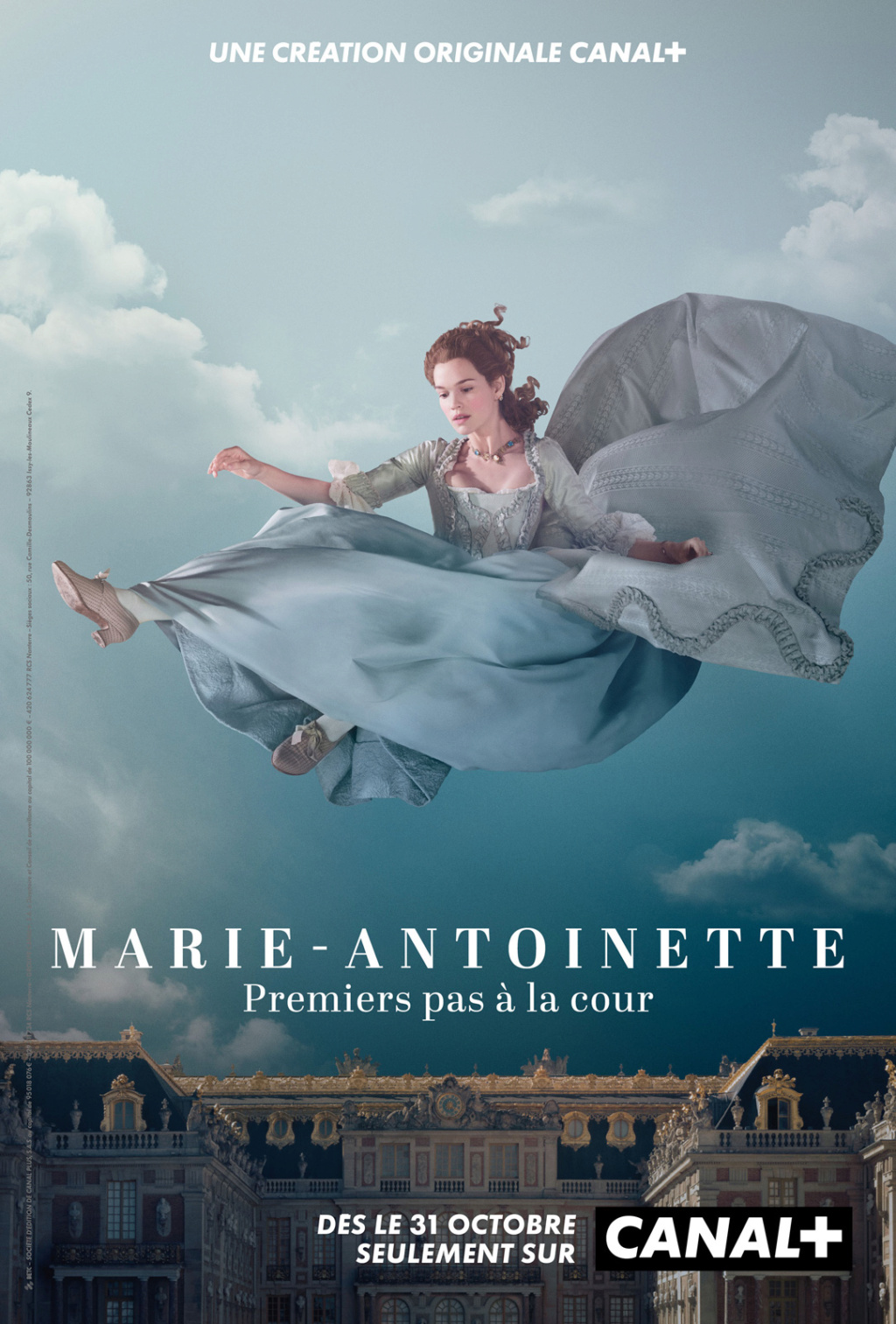
Making ‘Marie Antoinette’ Their Own

 Emilia Schüle (Marie Antoinette), Louis Cunningham (Louis)


 That's for sure. Because she is not the Marie-Antoinette that I have read, wrote and studied about. Brown eyes! Oh, come on! But some of the costumes are lovely. Louis XVI is well-cast and at least Madame du Barry is portrayed as a blonde. Otherwise, it appears to be a disaster.  Where is Artois and his wife? Where is Madame Elisabeth? Only two Mesdames Tantes again? It looks like they kept all the mistakes of the Coppola film. I hope I am mistaken. From WWD:

 “She was such a queen of fashion,” said costume designer Marie Frémont of Marie Antoinette, the iconic and ill-fated last monarch of France. Despite her doomed end, Marie Antoinette continues to reign as a cultural figure, influencing designers including John Galliano during his time at Dior, and Vivienne Westwood, and as the subject of Sofia Coppola’s 2006 Oscar-winning film. Now, the petulant princess is being reexamined by Oscar-nominated screenwriter Deborah Davis in an eponymous series starring German actress Emilia Schüle. The lavish, 23 million euro English-language production from CanalPlus follows the young Austrian as she’s sent away from her family at 14 years old and thrust toward the throne, through her first decade in France.

“Our writer made a choice to distance the narrative from everything we already know about Marie Antoinette and her passion for beautiful things,” Schüle said. “People see her as this party girl and this icon that just cared about wigs and dresses, but we are going to portray her in a much more emancipated and modern way because that’s what she truly was.” Schüle flew to Paris shortly after being cast, and the experience set the tone for the German actress. “We had to get started with wardrobe right away, so suddenly I’m in this room full of French people. Most of them don’t speak English — I don’t speak any French. So I felt like a foreigner just like Marie Antoinette did when she arrived from Austria.”

Fittings were stiff as she had to stand still for hours, which initially made her so uncomfortable she fell ill — another parallel with the young queen. “It helped me get into character because just like Marie Antoinette, I did feel like uncomfortable with the corsets. And with loads and loads of fabric, I had to adapt to an entirely new existence,” she said. Schüle said being tightly trussed upended her eating habits, required assistance going to the bathroom, and made her completely dependent on other people dressing and undressing her.

“It just gave me another insight of what life must have been like back then for women and how it was an obstacle. I don’t know if this getting too political, but it was also a means to suppress women because you can’t even run with this kind of dress. This is why we need trousers,” she joked.

To further mimic Marie Antoinette’s sense of displacement, production decided against etiquette training, particularly on how to sit and stand in such a getup, adding a sense of awkwardness with this new weight on her. Wigs were designed to be hollow and light, but, along with makeup, it could take up to five hours a day to complete the look.

Marie Antoinette’s private apartments were rebuilt with all the gilt and glamour on a soundstage on the outskirts of Paris, with other interiors shot at chateaus and palaces, including some scenes at Versailles. “I was living in a bubble, the bubble of perfection with perfect rooms and perfect dresses,” said the Berliner, who admits to preferring a “certain note of edge” in her personal style outside of set. On the red carpet, she’s worn Gucci, Chanel and Dior.

Dior also designed two costumes for key scenes, including when Marie Antoinette was being presented in Paris for the first time and another when she attends a ball. That collaboration came about when Frémont and Schüle were discussing scenes during one of their many long fittings, and decided that the Parisian occasions called for special gowns. Schüle was fitted in the Dior atelier. There have been so many famous takes on her fashion, that it was a challenge to create a new approach, added Frémont.

“Of course a big reference was Sofia Coppola’s ‘Marie Antoinette,’ but we wanted to do something of our own and everybody wanted it to be modern. Deborah [Davis]’s vision is quite modern because it’s a woman’s vision, a really interesting perspective. We also wanted to keep it quite historical because sometimes when you want to modernize, you see the show a few years later and it can be seen as dated,” Frémont said.

Frémont looked to the writings of Marie Antoinette’s lady-in-waiting Jeanne Louise Henriette Campan, and plumbed the depths of Paris’ fashion museum Palais Galliera. It holds more than 1,600 garments from the century, which gave Frémont new ideas on fabrics, dyes and textiles. She kept the historic codes while adding in lighter materials, exploring leaner silhouettes and brighter colors. “Of course, there were a lot of ‘It’ girls in the 18th century, which invented very fun things and fantasy, so you can go quite far,” Frémont said.

Each character was given their own color palette, with Marie Antoinette’s in blues, greens and grays. “Some of the blues are quite strong and not the pale pastel we are accustomed to. It’s more a reflection of the truth of the time — deeper blues and greens, Prussian blue, duck blue,” Frémont said. The colors get bolder throughout the series as Marie Antoinette grows in power and inner strength.

There are deep purples, and even a bright apple green for the character of the Count of Provence, which stemmed from a find in the Palais Galliera which Frémont called “astonishing.” The costume team hand-dyed many of the fabrics in order to get a richness of color, and a winter shoot allowed them to play with heavier textiles, such as velvets for added depth.

Still, Frémont lobbied to keep the tight corset. “I fought for it because I think the lines of the 18th century need to be carried. Of course we used more modern fabrics to make it a little bit more comfortable,” she said. Marie Antoinette was required to wear a more rigid version called the grand corps, which was considered an honor at the time not bestowed on lower women of the court, but she complained about in private letters written at the time. Frémont did decide to forgo this strict shape and use a standard corset.

“I was so happy the day we stopped filming that I wouldn’t have to wear those corsets again,” Schüle added.

The first series required 140 complete outfits handcrafted for the principals, as well as dressing dozens of extras. The production rented some costumes for the background actors from across France, Italy, Spain and the U.K.

One of the unusual aspects of filming during the pandemic was that several productions that had been temporarily halted were now back up and running — all at the same time. “The racks of the rental houses were quite empty. We were lucky [with some pieces] but there was really not a lot of things left,” Frémont said. “But even without this challenge we decided we wanted to make our own costumes for the extras to give our own tone to the stock. It was a bit of an issue, but we were prepared.”

Before the next installment of the series, which is slated for three seasons, Schüle is taking an acting sabbatical to attend film school in London to study directing. The next seasons will be more transformational as the young queen becomes more confrontational against the system and moves to the Petit Trianon, she said.

“I know this is not the view that most people have of her, but she was fighting to preserve her freedom and her personal space. And that was, after all, something that enabled her enemies to undermine her and eventually destroy her. Because she was not adapting, she was fighting against the rules of the court, she found them ridiculous,” added Schüle. “She was stubborn and wanted to change things. She was a rebel.” (Read more.)


To quote from Yahoo:

Nicknamed “the beloved,” at the end of his 58-year reign, Louis XV — accused of corruption and debauchery, and battling public opinion over his relationship with du Barry, a former prostitute he fell in love with and brought to court — lost much of his popularity. Purefoy, who embraced his role, says Louis XV was a “rule-breaker” living an “extremely eccentric life.”

“When I first read Deborah’s script, I thought, ‘Mad. They are all mad,’” says Purefoy. “But you have to imagine that every morning when he would wake up, 150 people would be in his bedroom.”

Observing the “perfectly shaped Versailles gardens” made him realize that Louis XV was most likely a “total control freak who was used to nothing being out of place.” When Marie-Antoinette comes along and “things start going out of place, there’s a sense of chaos and panic,” says the actor.

The French protocols, then called “etiquette,” were created by Louis XIV, the “Sun King” who was portrayed in the series “Versailles,” produced by the same team as “Marie-Antoinette”: Claude Chelli at Newen-owned Capa Drama, Banijay Studios France and Canal+’s Creation Originale label.

“In ‘Versailles,’ we showed how Louis XIV invented the etiquette, and in ‘Marie-Antoinette’ we show how the queen destroyed Versailles stone by stone and arranged to have her own life,” says Chelli, who produced the series with Stephanie Chartreux and Margaux Balsan. “It’s a very powerful story of emancipation.”

The series also introduces lesser-known real characters including Joseph Bologne de Saint-George, a Creole virtuoso violinist and conductor who was part of Marie-Antoinette’s entourage. “He was a very close friend of Marie-Antoinette and everybody was shocked because he was Black but she didn’t care,” says Chelli.

Aside from Bry-sur-Marne, the series shot on location at the Versailles Palace, the Chateau de Fontainbleau and the Chateau de Vaux le Vicomte. The crew consists of 780 people with top-notch artists such as costume designer Marie Fremont, costume artistic designer Madeline Fontaine and production designer Pierre Queffelean, assisted by Clovis Weil.

During his time on “Versailles,” Chelli learned the time-consuming process it takes for period dramas, since simply changing costumes and wigs could take nearly two hours. “Marie-Antoinette” took the challenge to a whole other level because she would “change wardrobe every 10 minutes.”

Many of the outfits in the show are made by hand, and several of those craftspeople also work at haute couture houses, including Chanel. Fremont’s team faced a shortage of period costumes in France because of the large number of dramas currently in production, so they searched for fabrics in Italy, England and Spain. The fabrics were then dyed to create a wide-ranging palette of colors and fake embroideries were applied by hand. “We decided on a color palette for each of them; it’s a saving strategy because we can mix and match outfits more easily and it creates a rich look and effect with less costume,” says Fremont.


Louis Cunningham (Louis), Emilia Schüle (Marie Antoinette)

Do visit Le Boudoir for expert commentary, HERE.

And Frock Flicks always has an entertaining and accurate assessment, HERE.

</div>
Share

Biden DHS Hands Out Cell Phones

 From American Greatness:

Breitbart reports that the data was published by the DHS, as part of the department’s broader Alternatives to Detention (ATD) program, which seeks other methods of handling illegals besides simply apprehending and deporting them. The DHS claims that the purpose of the cell phone scheme was to be able to track their locations using the phones.

To this end, the over 255,000 phones were given to illegals over a one-year period between October 1st, 2021, and September 30th, 2022. The phones themselves are allegedly incapable of making calls or searching the internet. The program costs approximately $360,000 per day. In Fiscal Year 2021, only about 26,000 illegals were given cell phones in the same fashion, thus indicating an 880 percent increase in 2022.

Since Biden first took power and implemented an “open-borders” policy on immigration, the number of illegals who have entered the United States currently exceeds 2.2 million; this includes those who have made the border crossing without being detected by Border Patrol agents, which are known as “gotaways.” Since January of 2021, at least 1.35 million illegals have ultimately been released into the country after being apprehended. The DHS’s designated “non-detained docket” has released over 3.3 million illegals. (Read more.)
Share

Beryl Markham on Life in the Bottomless Night

Beryl was friends with Baroness Blixen and Denys Finch-Hatton. In the film Out of Africa she was depicted as the character "Felicity." From The Marginalian:

“For a moment of night,” Henry Beston wrote in his exquisite century-old love letter to darkness, “we have a glimpse of ourselves and of our world islanded in its stream of stars — pilgrims of mortality, voyaging between horizons across eternal seas of space and time.”

No one has written more lusciously about that pilgrimage, nor undertaken it with more elemental daring, than Beryl Markham (October 16, 1902–August 3, 1986). Known to the world as the first person to fly solo across the Atlantic from East to West with the sweep of night, against headwinds and storms particularly ferocious in that direction, she is Amelia Earhart without the pomp, Thoreau with muscle and humor, a luckier Shackleton of the sky. (Read more.)


Share

Thursday, October 20, 2022

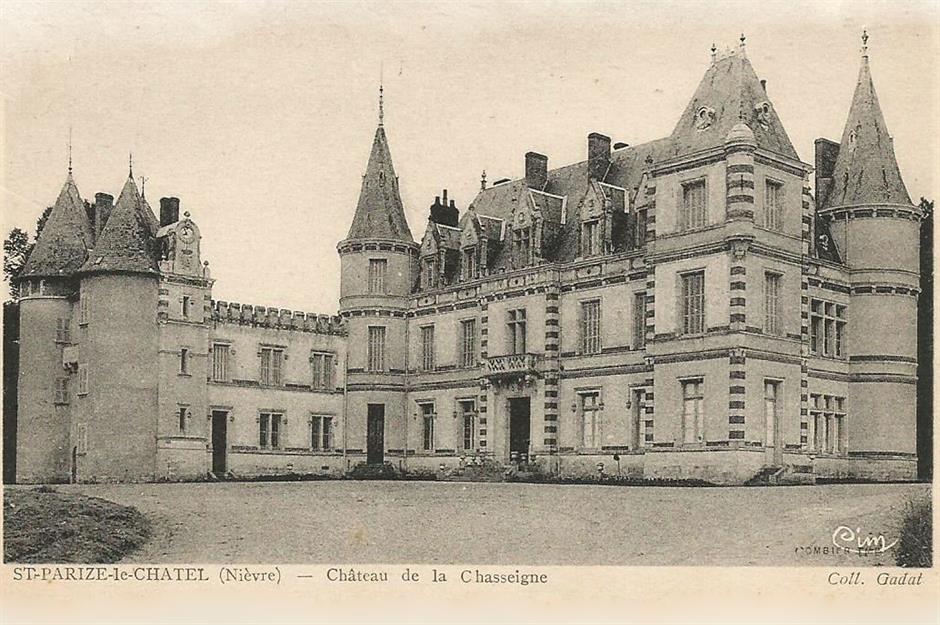
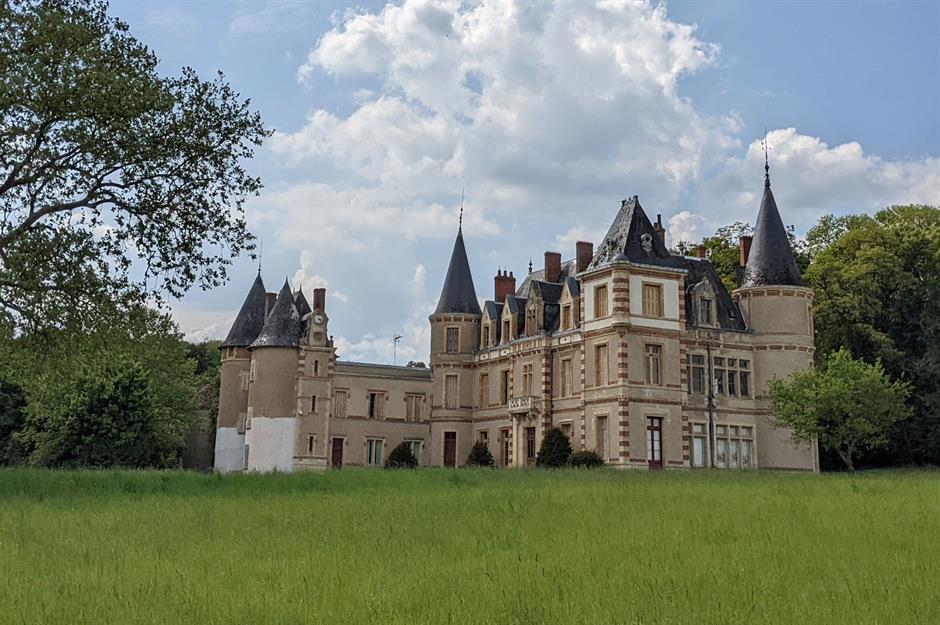
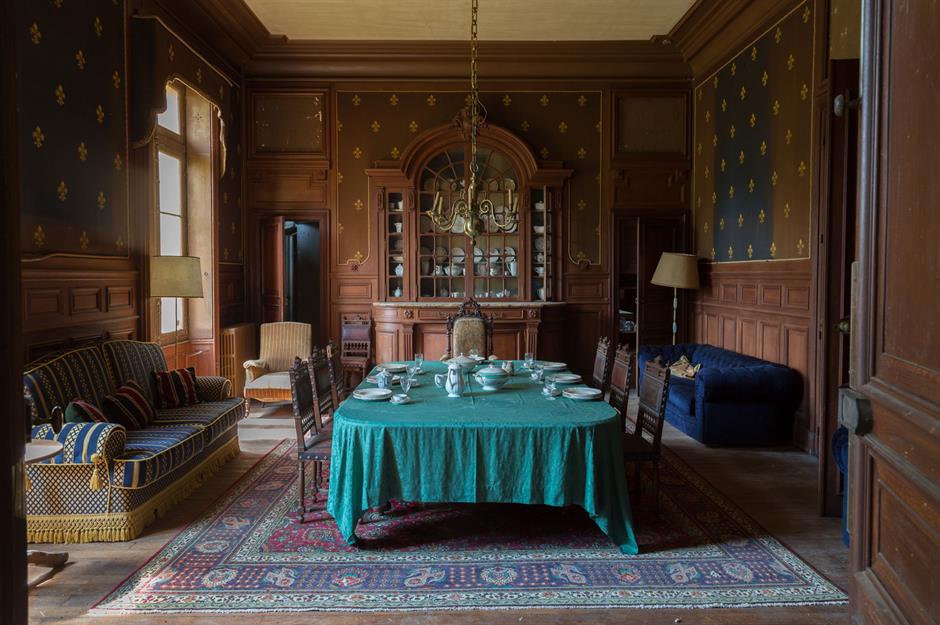
Château de la Chasseigne


From Love Property:

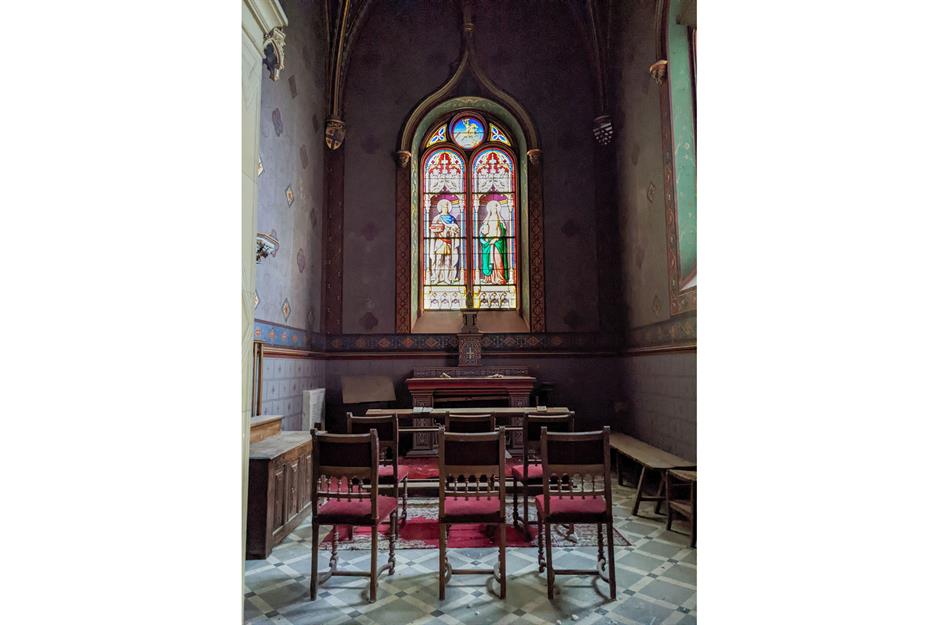
Dating back to the 15th century, this heart-stoppingly gorgeous "secret" château in France's Burgundy region became a favourite among urbex explorers after it was forsaken by its owners in 2017. The property is now out of bounds to intrepid adventurers, but renowned photographer Bryan Sansivero, author of American Decay, was able to capture it in all its faded grandeur when he ventured across the pond this past summer. Click or scroll through for a look around the château, find out why this beguiling piece of history was left to rot and discover what's being done to save it. Known as the "secret château" among the urbex community, who managed to keep its location largely under wraps for a time, the Château de la Chasseigne is fittingly tucked away in a grove of oak trees outside the village of Saint-Parize-le-Châtel in Burgundy's Nièvre department. Approaching the storybook château, you may notice that the two fat round towers and connecting arched gallery to the left seem older than the rest of the property. Built way back in the 15th century by the namesake first owner, nobleman Robert de la Chasseigne, they are all that remains of the original château. (Read more.)


Share