Thursday, July 22, 2021

The 4 Pillars Of Literary Fiction

 From Writers Write:

Literary Fiction is often touted as the gold standard for fiction. This is because, supposedly, it defies genre conventions and formulae. But if that’s true… how do you identify literary fiction? I mean, we know something belongs to the Horror or Romance genres because they contain certain genre-specific tropes. Is your story about an ordinary protagonist in an isolated, disempowering setting with a dreadful past? Do they face a monstrous force? Cool— that’s a Horror story! See how handy that is?

So, how do you know which stories are Literary? What are its defining features? What are the pillars of literary fiction? I’ve spent almost a decade in academia reading, analysing, and dissecting exemplars of the Literary movement. In workshops, I’ve practiced implementing the techniques favoured by literary writers in my own work. Over that period of study, I’ve developed a theory of how to define Literary fiction I find satisfying.

I realised the source of confusion is that people use the term Literary Fiction to refer to a few different things, and to various combinations of those things. Many use it as a catch-all term to mean ‘superior quality fiction’. But this is a pretty hazy, subjective application of the term. So, you know what? We are going to set that definition aside and dig a little deeper. (Read more.)
Share

Wednesday, July 21, 2021

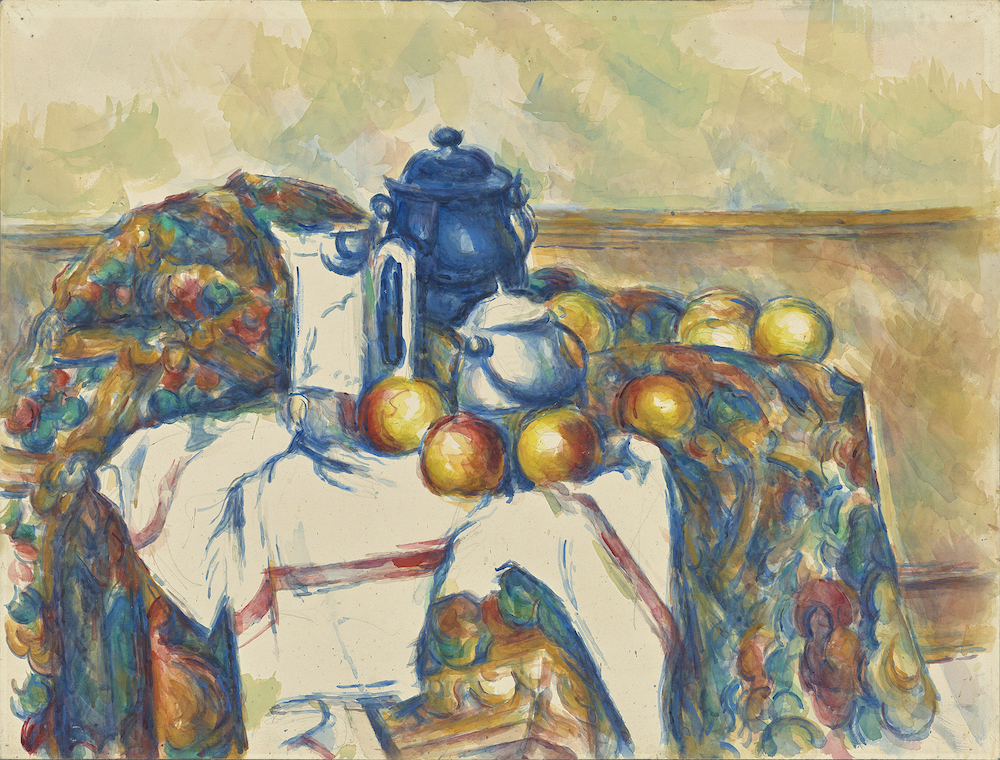
Cézanne on Paper

 From The Paris Review:

Although he’s best known for his lush, technically miraculous oil paintings, Paul Cézanne held his sketchbook near and dear. In a 1904 letter to the Fauvist painter Charles Camoin, Cézanne wrote, “Drawing is merely the configuration of what you see.” Thousands of his works on paper have survived. More than two hundred fifty of these rarely shown pieces form the basis of “Cézanne Drawing,” which will be on view at the Museum of Modern Art through September 25. A selection of images from the show appears below. (Read more.)

Share

Capitol Police to Use Army Surveillance

 From America Military News:

U.S. Capitol Police will start using Army surveillance equipment to monitor Americans as part of a larger effort to improve security and turn the force into “an intelligence-based protective agency” in the wake of the storming of the U.S. Capitol on January 6.

Last week, the USCP took possession of eight Persistent Surveillance Systems Ground – Medium (PSSG-M) units, fulfilling a request that Defense Secretary Lloyd Austin approved on June 2. The units capture high-definition video and include night vision, but do not feature facial recognition capabilities. (Read more.)


From TK News:

The NSA story took a turn on the morning of July 7th last week, when Carlson went on Maria Bartiromo’s program. He said that it would shortly come out that the NSA “leaked the contents of my email to journalists,” claiming he knew this because one of them called him for comment. On cue, hours later, a piece came out in Axios, “Scoop: Tucker Carlson sought Putin interview at time of spying claim.”

In a flash, the gloating and non-denial denials that littered early coverage of this story (like the NSA’s meaningless insistence that Carlson was not a “target” of surveillance) dried up. They were instantly replaced by new, more tortured rhetoric, exemplified by an amazingly loathsome interview conducted by former Bush official Nicolle Wallace on MSNBC. The Wallace panel included rodentine former Robert Mueller team member Andrew Weissman, and another of the networks’ seemingly limitless pool of interchangeable ex-FBI stooge-commentators, Frank Figliuzzi.

Weissman denounced Carlson for sowing “distrust” in the intel community, which he said was “so anti-American.” Wallace, who we recall was MSNBC’s idea of a “crossover” voice to attract a younger demographic, agreed that Carlson had contributed to a “growing chorus of distrust in our country’s intelligence agencies.” Figliuzzi said the playbook of Carlson and the GOP was to “erode the public’s trust in their institutions.” Each made an identical point in the same words minus tiny, nervous variations, as if they were all trying to read the same statement off a moving teleprompter. (Read more.)


Share

Shakespeare and the Sciences of Emotion

 From OUPblog:

Rhetoric knows the passions by tracing them to their circumstances. That is, it knows them narratively, and it construes narrative as a means of producing knowledge about passions in their particularity. This way of knowing is evoked in Francis Bacon’s Advancement of Learning: “poets and writers of Histories” have been passion’s “best Doctors”—that is, best scholars—because in them we find depicted “how affections are kindled and incited: and how pacified and refrained: and how again contained from act and further degree: how they disclose themselves, how they work, how they vary, how they gather and fortify, how they are enwrapped one within another, and how they do fight and encounter.”

Bacon wants a natural history of the passions to displace this unsystematic poetic and historical knowledge. It is tempting to say that this is exactly what happened in the next two centuries, as forms of empirical psychology took over a space that once belonged to rhetoric. But it matters that these psychologies reoccupied rhetoric’s terrain. The knowledge they offer is closer to the one Bacon ascribes to poets and historians than to scientia: in the sphere of the passions, rhetoric is the forerunner of an empirical knowledge of particulars. One can trace its continuing if hidden influence on new psychologies from Locke—who recommended Aristotle’s Rhetoric as part of the study of the passions—to Hume and Smith, whose models of the mind echo the psychology of the vivid image articulated by Hamlet and the circumstantial analysis of passions practiced by Wright. Scholars sometimes claim that a “psychological” approach to Shakespeare is anachronistic, because his period had no psychology. That is not entirely accurate, but the main point is that, in a sense, the period’s literature was its psychology: a circumstantial, open-ended, narrative knowledge of the passions grounded in rhetoric. That knowledge, which thrives beyond the limits of any system, still has something to tell us about how we know the emotions now—not as experts, but as people engaged in everyday life. (Read more.)


Share

Tuesday, July 20, 2021

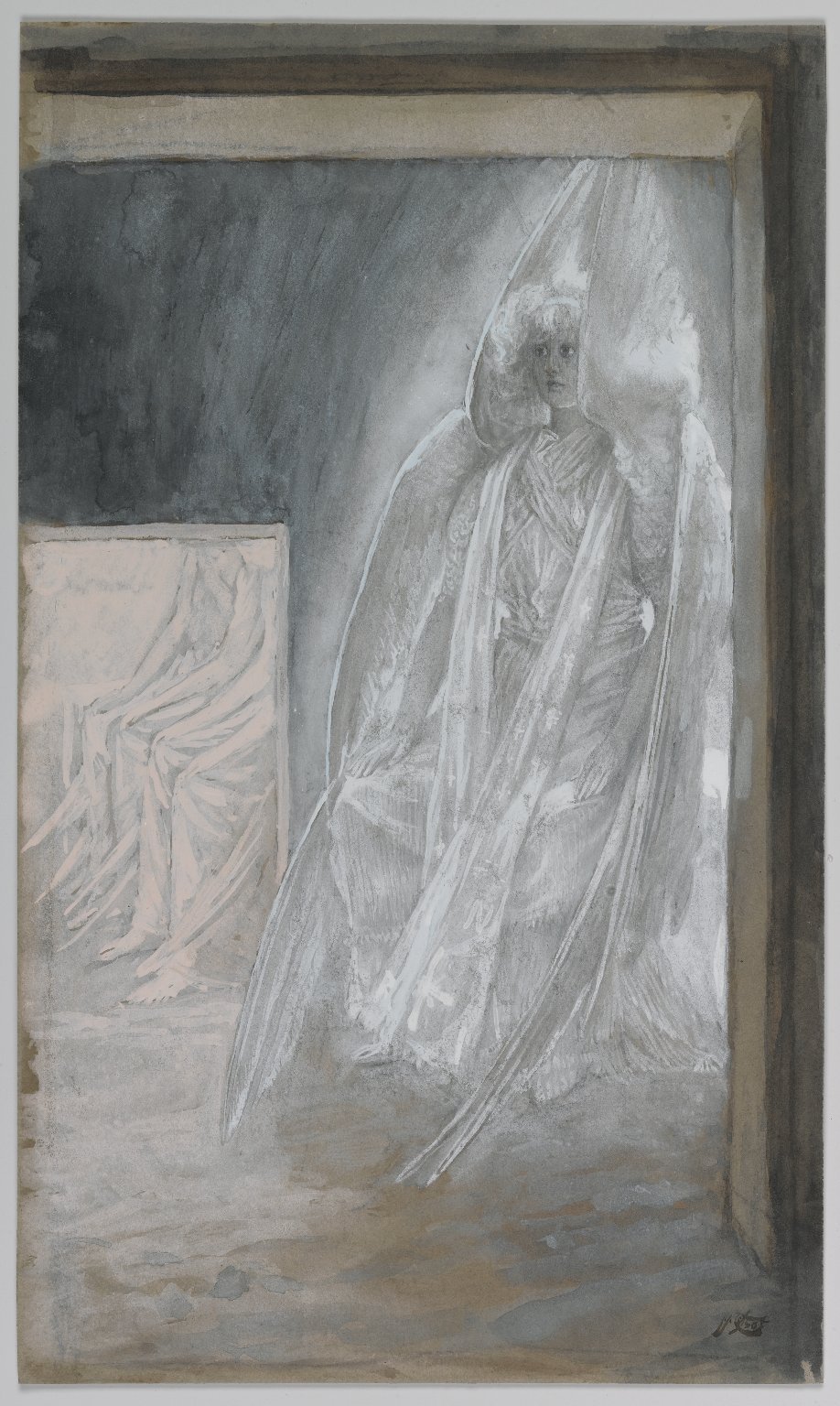
The Angel Seated on the Stone

 I love Tissot's angels. Via East of the Sun, West of the Moon.

Share

The Axiomatic God of Freedom

 From Andrew Klavan at The American Mind:

Whether or not Donald Trump wins his suit against the big tech firms that censor him, he is right in principle. No matter the difficulties, paradoxes, and technicalities, these companies’ assaults on free expression have to be stopped by law.  

These outfits are not local cake makers who mustn’t be forced to celebrate what they find unholy. They are multi-national outfits with the wealth and power of sovereign states. When Twitter, Facebook, and YouTube act in concert to deny access to the President of the United States, or when a functioning monopoly like Amazon pulls a book for political reasons—as it did with When Harry Became Sally, Ryan T. Anderson’s thoughtful look at transgenderism—they are making it next to impossible for certain ideas and opinions to be widely expressed and known. That is a danger to our right to free speech. 

And that right has to be protected by the government because it is given to us by God. 

This is not, in other words, a First Amendment issue. The First Amendment protects our free speech from the government. But the government is still responsible for protecting those rights from other threats as well. It says so in the Declaration of Independence. 

It was Abraham Lincoln who most fully understood and expressed the fact that, while our Constitution is the law of the land, the “sacred principles” in the Declaration of Independence—“that immortal emblem of Humanity”—give the Constitution its philosophy and its purpose. Governments, the Declaration proclaims, “are instituted among men” to secure the rights endowed in mankind by their Creator. 

If this is so, then whether the threat to our God-given rights comes from private entities or from government itself, government is responsible for making those rights secure from that threat.  

Recently, on my Daily Wire podcast, I made this argument to Alan Dershowitz, an expert in constitutional law. This was part of his response: “I don’t think I’ve ever said this before, but Abraham Lincoln was wrong… I don’t think you can derive rights from God because there are too many gods, there are too many interpreters of God, there are too many ways in which God has been misused.” 

With all respect to Mr. Dershowitz, I side with Mr. Lincoln. (Read more.)

Share

Reginald Pole Refuses to Return to England

 From Jane Wertman:

Reginald Pole was the third son of Countess Margaret Pole – one of the few surviving members of the Plantagenet dynasty after the War of the Roses, and one of only two women in 16th-century England to be a peer in her own right (the other was Anne Boleyn…). As was true of many younger sons, he joined the Church, with much of his education funded by Henry VIII. Pole waffled a bit when Henry asked him to support his divorce from Aragon, but his refusal quickly escalated into real opposition. He published a treatise, Pro ecclesiasticae unitatis defensione, which utterly rejected Henry’s position and denied the authority of the English church. Of course, he was smart enough to do this from a safe distance – he was in Italy, and out of Henry’s grasp. Henry tried to get him to return, but this letter delivers his clear reply.

A brief summary of the consequences of this letter are in order here. Henry’s anger at this letter only spurred Reginald Pole on. Because of his royal blood, he was seen as a possible claimant to the throne – especially if he married the Lady Mary; this became an underlying element of all his machinations. The Pope named him a cardinal in 1536, then in 1537 put him in charge of organizing assistance for the Pilgrimage of Grace (and related rebellions). In 1539, Pole was given the task of trying to organize an embargo against England, which would presumably spur additional rebellions that would place him (and Mary) on the throne. For a while, Henry tried to have him assassinated but was unsuccessful. By 1541, Henry had enough and simply took his revenge on Margaret Pole, whose botched execution was one of the worst examples of Henrician justice (you can read about it in my May 27 blog post). Reginald was relatively quiet after that, though when Mary did come to the throne, she named him Archbishop of Canterbury to replace the disgraced (and reformist) Thomas Cranmer….(Read more.)


Share

Monday, July 19, 2021

Animals in Jane Austen’s Novels

 From Jane Austen's World:

Animals in the countryside in which Austen lived sounded out familiar noises – the crowing of roosters, clucking of chickens, honking of geese, mooing of cows, neighing of horses, squealing of pigs, meowing of cats, and barking of dogs. Austen must also have intimately known their smells, their antics when they were young, and their drama from birth to death. They were part of her childhood in Steventon and formed the background for the rural locations in her novels, albeit more as indicators of a character’s status and wealth than as characters in their own right. Their literary presence marked their service of their owners who fed them.

Jane mentioned cats once in a minor quote from Mrs Jennings in Sense and Sensibility: “Lord! we shall sit and gape at one another as dull as two cats,” so I shall quickly move on to their jobs as hunters of mice and rats in barns and houses, and of moles and voles in gardens. They “earned” their living, although I am certain no child could resist the continuous litter of kittens produced by these feral creatures.

Purebred dogs specifically bred for desired features and purposes belonged largely to aristocrats and the gentry. Farmers and peasants owned more common curs. With their sensitive noses, ability to run alongside their masters for hours, loyalty, and willingness to serve and please, dogs were essential in too many jobs to count. As herders they were essential helpmeets for shepherds and drovers. As fearless terriers, they could dig any animal out of a hole, their tails providing a handy means for pulling them out of predicaments. Dogs protected livestock, barked warnings at intruders, defended their masters, pulled down large animals, acted as nanny dogs for children, etc. One suspects that many individuals who worked with dogs learned to love them more as companions than as workers, such as Willoughby, who “bred hounds for pleasure” (Shearer). (Read more.)

Share

War Cries in Cuba

 From First Things:

This sudden eruption of dissent was caused by a perfect storm of calamities, all of which have revealed the Big Lie of the revolution. Lately, life in Cuba has become more unbearable than ever for just about every Cuban. The crisis is due to a long string of blunders and catastrophes, linked like beads on a rosary from hell: The loss of revenue from Venezuela, a collapsed economy, gargantuan foreign debt, a disastrous sugar harvest, uncontrolled inflation, a plague that is intensifying in Cuba rather than abating, a crumbling health care system, medication shortages, food shortages, water shortages, electricity blackouts, and increased repression, to name but a few. Never mind the sanctions by the United States or the so-called embargo that Cuba’s military junta and many of the world’s news outlets are blaming for the current crisis. These are inconsequential factors, a decoy skillfully manipulated by the oligarchs in order to distract from their own ineptitude and the congenital defects of the communism they embraced. These protesters know the ultimate cause of their distress is their lack of freedom in all spheres of life, which is nothing new.

They also know what they are up against. They know that their country’s repressive regime does not tolerate dissent of any sort. And they have had some brave predecessors, all of whom have been crushed, such as the Ladies in White (Damas de Blanco). Beginning in 2003, these women gathered every Sunday at churches and processed down the streets after Mass. In total silence, with flowers in their hands, they called attention to the plight of Cuba’s prisoners of conscience, many of whom were their relatives. Even though they attracted international attention and were awarded the Sakharov Prize for Freedom of Thought in 2005, they were constantly harassed, beaten, imprisoned, or kept under house arrest. Ever since President Obama’s visit to Cuba in 2016, the Ladies have been permanently prevented from staging their silent processions. 

This week's young protestors might have also heard of the men and women who staged a protest march in Havana on August 5, 1994, on the city’s long seafront boulevard, the Malecón. That event came to be known as the “Maleconazo,” thanks to the useful Spanish suffix “azo,” which signifies a blow when added to any noun. The Maleconazo was a relatively small outburst, as protests go, but it was nonetheless a significant symbolic blow struck against the personal rule of Castro during the “special period” of severe shortages caused by the dissolution of the Soviet Union and the loss of its mammoth subsidies. Until that day, Cubans had been too afraid to express their dissatisfaction collectively in the open. Those who dared to take part were immediately pounced upon, hauled away, and forever branded as ungrateful wretches.   

What this week’s outburst of discontent will lead to is impossible to predict. Police in costly riot gear—surely a luxury for a bankrupt nation—have already shot some protesters. The list of those who have disappeared or been arrested grows longer, and the Internet remains turned off for everyone on the island. The vice minister of the interior has suddenly resigned due to “health reasons.” No one knows what will happen next. There is no playbook, no plan at the moment other than to demand radical change.  

While the size and intensity of the protest is unprecedented in Cuba, much larger events of this sort have taken place elsewhere, often with dire results. Venezuela comes to mind immediately, where Cuban advisers have made it possible for dictators Hugo Chavez and Nicolas Maduro to increase repression despite huge and violently-suppressed protests that involved millions of Venezuelans in multiple cities. Then there is China. Consider what happened in Hong Kong recently. And who could ever forget Tiananmen Square in Beijing between April and June of 1989, especially the tragic final act in which thousands were slaughtered?

As I watched the protests in Cuba this week, an image came to mind: Tank Man, also known as the Unknown Rebel. Anyone who saw him facing a long line of tanks on Tiananmen Square back in 1989, as events were unfolding, or has seen him subsequently in videos or photos, will find it hard to forget him. He reifies everything loathed by repressive regimes: individuality, dissent, fearlessness, free will, and countless other virtues that challenge herd mentalities and the brute force with which they are maintained. Today, suddenly, Cuba is full of Tank Men and Tank Women, even Tank Children. (Read more.)


Share