Sunday, June 9, 2013

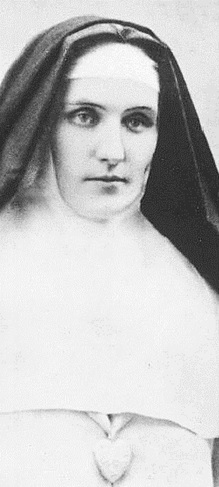
The Oblation of Saint Thérèse

On June 9, 1895, at the Carmel of Lisieux, Saint Thérèse made the Act of Oblation to Merciful Love. In her autobiography she said: "I received the grace to understand, more than ever, how much Jesus desires to be loved." Instead of offering herself as victim to the justice of God, as did other religious, taking upon themselves the "punishment reserved for sinners," Saint Thérèse decided to offer herself as a victim to the Merciful Love of God. She asked to be consumed as a holocaust in the fire of the Sacred Heart, in order to console that Heart and save souls. "Fire transforms all things into itself, " the saint wrote in her Act of Oblation. "I know that the fire of love is more sanctifying than the fire of Purgatory."
 
With her Act of Oblation, Saint Thérèse did not expect sufferings to go away. "I wish to suffer for Love's sake and for Love's sake even to rejoice...I will sing always, even if my roses must be gathered among thorns...." In a letter to her sister Celine, she explained: "The burden of our song is suffering. Jesus offers us a chalice of great bitterness. Let us not withdraw our lips from it, but suffer in peace. He who says peace does not say joy, or at least sensible joy....Do not think we can find love without suffering...."

Through her Oblation to Merciful Love, Saint Thérèse gained a deep insight into her Carmelite vocation. "I understand that love embraces all vocations, that it is all things, and that it reaches out through all ages, and to the uttermost limits of the earth, because it is eternal....In the heart of the Church my Mother, I will be love." She prayed that after her death she be allowed to "return to earth" to keep saving souls. She said: "I want to spend my heaven doing good upon earth."

"You will look down from Heaven, will you not?" asked her sister when Saint Thérèse was mortally ill.

"
No," replied the dying young woman. "I will come down." Another time she said: "After my death, I will let fall from Heaven a shower of roses."


On September 30, 1897, in great mental and physical agony, the twenty-four year old nun, gasping for breath, proclaimed: "I do not regret having surrendered myself to Love." A few hours later, her last words were: "My God, I love You."

The miracles which followed her death took the Church and the world by storm.

(All quotations are from the book Soeur Thérèse of Lisieux, The Little Flower, 1912)
Share

Queen-making in Early Medieval France and England

From Medievalists.net:
This thesis compares the functions of queen-making and the concepts of queenship in Anglo-Saxon England and West Francia in the early medieval period. The urge to inaugurate the king’s wife ritually to her position, in particular to anoint her as part of a rite of passage, seems to have arisen among the two peoples at more or less the same time. The present work assesses the significance of queen-making for both peoples, the possible exchange of coronation orders [ordines], and any cross-Channel influence which may have created conditions in which developments occurred. It addresses such questions as whether a concept of queenship existed, whether queenship was regarded as an office, and if there was any interdependence between queen-making rites and concepts of queenship. The work follows the chronological development of queen-making rites, surveying the entire early medieval period, from the conversions of both peoples to the late eleventh century. It takes as its starting point the period when a woman became a queen simply by virtue of the fact of her marriage with a king. We know of one queen’s consecration in the mid-eighth century, that of Bertrada, though the more regular consecrations of queens, including an element of unction, began in the mid- to late ninth century. The earliest queen-making rites were developed in Francia and were quickly adopted by the Anglo-Saxons who continued to use and develop them until the Conquest. The West Franks were more conservative in developing their king and queen-making rites and from the early tenth to the early twelfth centuries appear to have left their royal inauguration rites unchanged. The thesis analyses the ordines used in order to assess the purposes, and the political and religious significance, of queen-making. It surveys the surviving manuscripts containing the ordines, and the printed texts of those ordines for which no manuscripts survive. (Read entire post.)
Share

Irish Monks and Climate Change

From The Irish Times:
Could the writings of ancient Irish monks and scribes hold a key to our cold weather patterns? A group of Irish and international researchers think so. Studying descriptions of weather in the medieval Irish writings and comparing them with measurements taken from ice cores, researchers have successfully linked the climatic aftermath of volcanic eruptions to extreme cold weather events here over a 1,200-year period. Researchers from universities including Harvard, UCC, UCD, Trinity College and Queens University Belfast assessed over 40,000 Irish and Latin entries in the Irish annals. Kept by educated scribes in monastic centres until the 13th century and by historians until 1649, the annals describe major events in Ireland’s history. (Read entire post.)
Share

Saturday, June 8, 2013

Blessed Maria Droste zu Vischering

A saint who took care of needy and forsaken girls. To quote:
At the age of twenty-five she joined the congregation of Our Lady of Charity of the Good Shepherd, in Munster. She was given the name, Sr. Mary of the Divine Heart. In 1891, she devoted herself to the girls sent to the Good Shepherd Sisters in Munster for rehabilitation and care. With an ardent love for youth ministry, she maintains: “the most needy, the most miserable, the most forsaken are the children I love best.”
In 1894, at the age of 31, she was transferred to Portugal and appointed superior of Oporto, Portugal. While there she reported some messages from Jesus Christ in which she was asked to contact the pope, requesting the consecration of the world to the Sacred Heart of Jesus. (Read entire post.)
Share

What Elizabeth Bennet Knew

Jane Austen's Pride and Prejudice is 200 years old this year. To quote Daniel McInerny:
In the passage we have been considering, Elizabeth chastises herself for a want of discernment (lack of prudence), an overestimation of her abilities (improper pride), and a blindness to her defects (lack of humility). A similar moral accounting is made later in the novel by Darcy. The central narrative arc of the novel is thus a movement on the part of each of these characters from appearance to reality, from “first impressions” (Austen’s original title for the novel) to “full-fledged knowledge of who they really are.” And in coming to a clearer self-recognition, both Elizabeth and Darcy take the first step toward that friendship based on virtue that is the life’s blood of their romance.

In this year 2013, we celebrate the 200th anniversary of the publication of Pride and Prejudice. There are many qualities that make the novel great and its television and film adaptations so enjoyable. Audiences for 200 years have been captivated perhaps above all by Elizabeth and Darcy’s romance. But while their romance is indeed overwhelmingly charming, we miss the entire point of Austen’s novel if we fail to see that it is first and foremost a story of moral transformation that begins with self-knowledge. (Read entire post.)
Share

Friday, June 7, 2013

"The French Queen" and the Duke of Suffolk

Susan Abernethy discusses Mary Tudor and Charles Brandon. To quote:
Mary was Suffolk’s third wife. Due to the debt they owed Henry, they seemed to suffer financial problems throughout their married life. He had two daughters from his second marriage that Mary brought up as her own children. Together, Mary and Suffolk had four children. Henry Brandon was born in 1516 but died in 1522. They had another son, also named Henry born in 1523 and he also died in 1534. Their two daughters, Frances and Eleanor, born in 1517 and 1519, both survived and made successful marriages. Frances married Henry Grey, Marques of Dorset and had three daughters, Jane, Catherine and Mary. Lady Jane was to reign as Queen of England for nine days. We will visit her story later. Eleanor Brandon married Henry Clifford, Earl of Cumberland and had one daughter.

While Mary lived, she was never called the Duchess of Suffolk but “the French Queen”. She spent most of her time at her private home Westhorpe Hall in Suffolk. Mary’s relationship with King Henry was strained in the 1520’s because she didn’t support Henry’s efforts to divorce his first wife, Catherine of Aragon whom Mary had known for many years. She never liked Anne Boleyn. She basically lived a quiet life away from court. (Read entire post.)
Share

Myths about Corsets

From Gio:
Over the years, corsets have been credited with causing a whole litany of health problems. It’s been said that they misshape internal organs and cause cancer. Other illnesses attributed to corsets were fake, sexist conditions, like “hysteria.” There’s also no record of a woman having a rib surgically removed so she could better fit into a corset, which is a particularly absurd myth, given how deadly surgery was in the 1800s.

Of course, they weren’t exactly the healthiest things to wear every day, either. They did force organs to shift around, cause indigestion and constipation, and eventually weakened back muscles. And they didn’t leave a lot room for pregnant women’s fetus-incubating bellies. But deadly they were not. They also didn’t prevent women from doing their work—any more than, say, stiletto heels do.

Most people today think corsets were extremely dangerous and caused all kinds of health problems, from cancer to scoliosis,” Steele says. “And that’s quite inaccurate. Most of the diseases that have been credited to corsets, in fact, had other causes. Corsets did not cause scoliosis, the crushing of the liver, cancer, or tuberculosis. It doesn’t mean that corsets were without any health problems, but it does mean that most modern people are wildly naive in believing the most absurd antiquated medical accusations about corsetry.
(Read entire post.)
Share

Google Glass

Some privacy concerns. To quote Unveiling the Apocalypse:
With the future addition of facial recognition technology however, this would take this invasion of privacy to a whole new level, allowing anyone wearing these glasses to instantly access the online information of anyone standing in front of them. With the introduction of facial recognition technology, a wearer of Google Glass would be able to immediately access information such as a person's Facebook account, just by looking at them, and have all their personal data floating around in their field of vision. Although Google have stalled their plans on incorporating facial recognition on Google Glass for now, it is widely believed that the future introduction of this technology is inevitable - especially if it is being offered by competitors.

It is easy to imagine how this technology could be exploited by a future dystopian government - being used not only to gather and disseminate personal information, but also to spy on anyone in the immediate vicinity of someone wearing these devices.(Read more.)
Share

Thursday, June 6, 2013

Queen Victoria Visits Petit Trianon

From tiny-librarian:
This small painting by Karl Girardet is the first sketch for a watercolour commissioned by Queen Victoria in 1855 and which is still in the British royal collections. It commemorates the visit of the Queen and Prince Albert, accompanied by the imperial couple, to Trianon on Tuesday 21 August 1855 during the British sovereign’s stay in Paris.

The two sovereigns can be clearly identified in an open carriage stopped in front of the house of Marie-Antoinette, while the Emperor and the Prince Consort are on horseback on either side of it. The escort is made up by Cent-Gardes and postilions of the Emperor’s Household in full dress uniform. Under the gallery linking the Queen’s House to the Billiards House is the band of the Guides of the Imperial Guard who played during the lunch taken by the two couples. (Read more.)
Share