A place for friends to meet... with reflections on politics, history, art, music, books, morals, manners, and matters of faith.
A blog by Elena Maria Vidal.
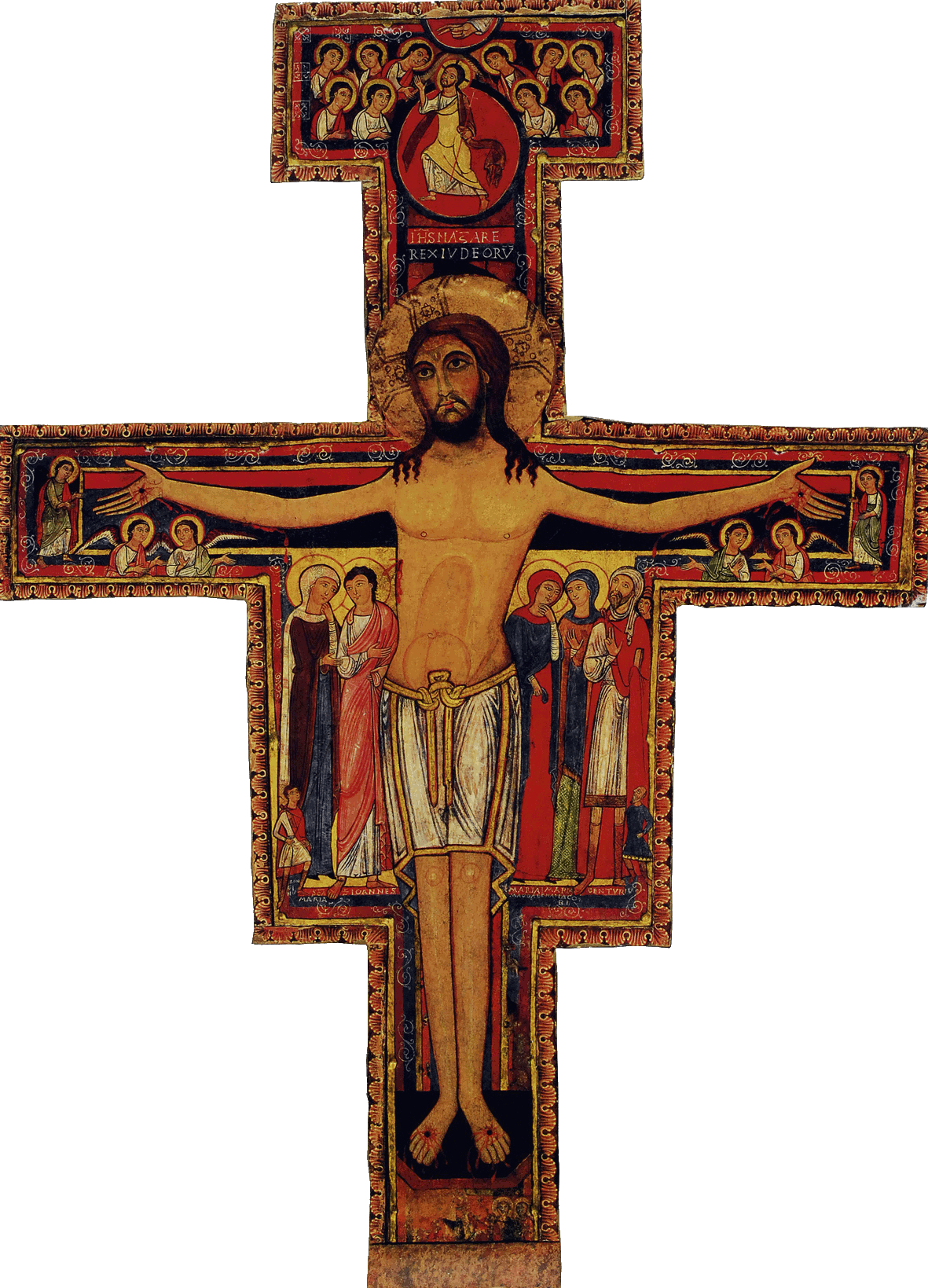
These icons were in the line of a movement that started in the 12th
century of showing the physical and real suffering and death of Christ
on the cross that led to the naturalistic depictions of the crucifixion
we’re familiar with today. The intention is to generate an emotional
response of pity, empathy, sorrow and repentance in the viewer. And this
is part of a greater spiritual movement that was later to be
popularised by the new mendicant orders, Franciscans and Dominicans, who
emphasized the importance of Christ's human and physical suffering and
our own ability to “enter into” and participate in it through our
affections. Of course, the creation of sacred art is a key component of
this kind of evangelisation.
[...]
As such, the artistic development of these paintings over the
following 200 years would be part of a larger and permanent change in
the way Christians thought about Christ, their ideas of having a genuine
affective relationship with a real person, who knew pain and understood
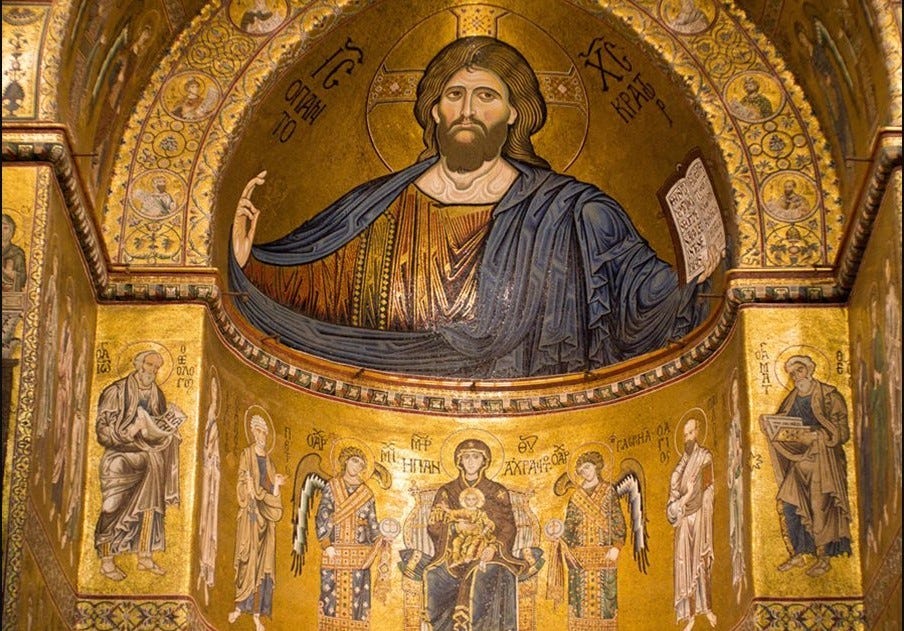
them at a visceral level. The Italo-Byzantine and Duecento panel
paintings showing Christ in agony only intensified as more natural
looking figures were created.
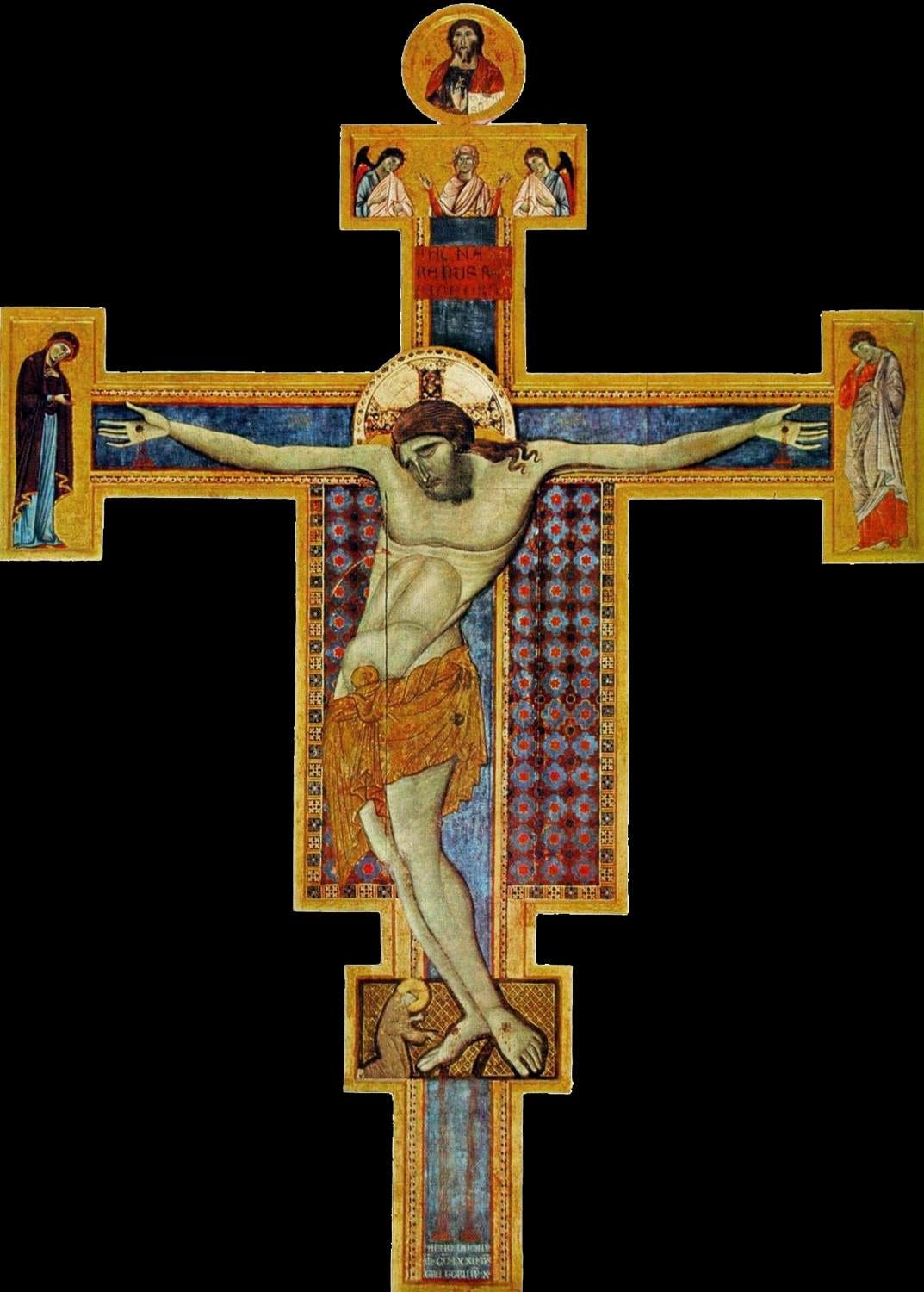
Master
of St. Francis. Perugia National Gallery. It’s impossible for a photo
to do justice to it. It smacks you in the head when you walk into the
very large room it’s housed in. At least 12 feet tall. You have to stand
on the other side of the room to take the whole thing in.
And
this movement, in both spirituality and art, is thought by some
scholars as a response to the materialist ideas of the Cathar heresy1
that was spreading in Northern Italy and southern France at the time.
In the early 12th century the idea that Christ was just a man and His
death was of no redemptive significance, were growing.
The
Cathars adopted the ancient Manichaean dualistic ideas of two gods; an
evil god who created material reality and a good god who created
spiritual beings like angels and human souls. The soul was entrapped in
the material body and had to be released by a process of spiritual
purification and ultimately death. Catharism rejected Catholic
sacraments and authority, including the Bible, and its popularity
ultimately threatened the political and economic stability of Europe.
Of
course this all meant that the Cathars also rejected the redemptive
value of the crucifixion, holding that Jesus was just a human being,
perhaps inspired by the Holy Ghost, and that the only way to be “saved”
was to free the soul from the evil material world. (Read more.)
Courteous comments are welcome. If a comment is not published, it may be due to a technical error. At any rate, do not take offense; it is nothing personal. Slanderous comments will not be published. Anonymity may be tolerated, but politeness is required.
I would like to respond to every comment but my schedule renders it impossible to do so. Please know that I appreciate those who take the time to share their thoughts.
No comments:
Post a Comment
Courteous comments are welcome. If a comment is not published, it may be due to a technical error. At any rate, do not take offense; it is nothing personal. Slanderous comments will not be published. Anonymity may be tolerated, but politeness is required.
I would like to respond to every comment but my schedule renders it impossible to do so. Please know that I appreciate those who take the time to share their thoughts.