A place for friends to meet... with reflections on politics, history, art, music, books, morals, manners, and matters of faith.
A blog by Elena Maria Vidal.
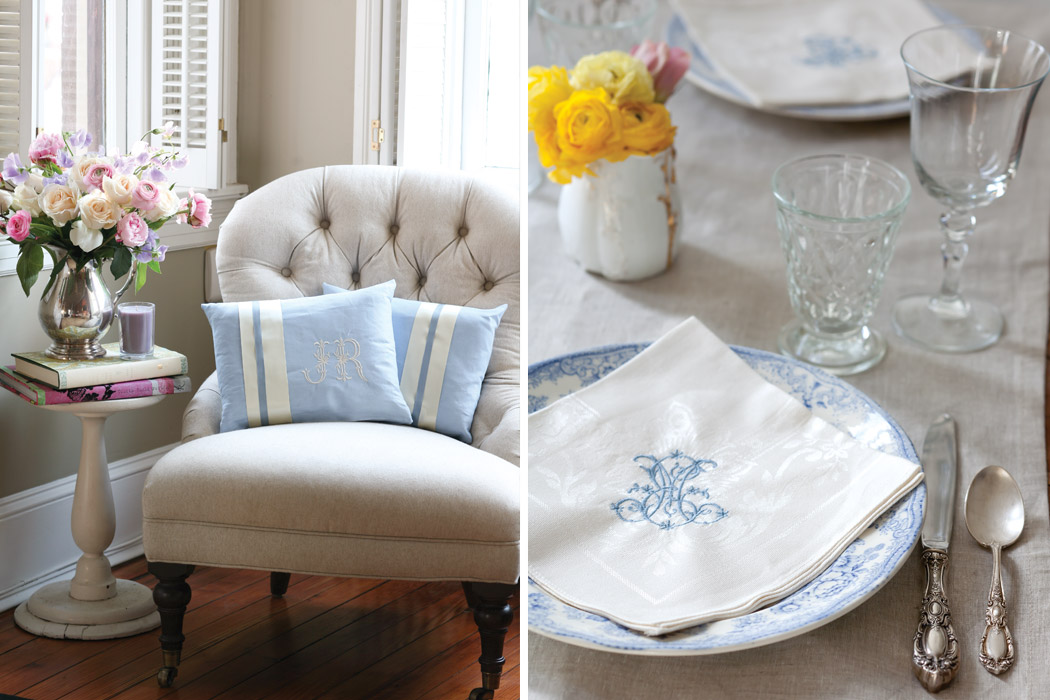
It is difficult to put into words the allure of a monogram. Is it
found in the beauty of hand-engraved script on polished silver, in the
loops and flourishes of letters intertwining to transform a simple
series of initials into fine art? Is the answer etched in
history—marking the rise and fall of kingdoms through royal insignias on
coins and crests? Perhaps the appeal stems from pride of family and an
innate need for connection. Or, as evidenced by artists of old who used
Phoenician letterforms to sign their creations, is the value derived
from the satisfaction of self-expression?
We find the imprint of monograms throughout history, but for many
centuries, the practice was a rite reserved for the privileged few.
During the Middle Ages, this script conveyed prestige for people of
wealth, nobility, or royalty—a favor denied lower echelons in
fourteenth-century England. Gradually, the accessibility of monograms
expanded, and by the time of Queen Victoria’s reign, all classes
embraced the custom with increasingly elaborate interpretations.
Given their eternal popularity and historical prevalence, perhaps
there is little need to explain the affection for monograms, after all.
Whether appreciated for its intrinsic beauty, regal heritage, or
ancestral significance, the art form continues to flourish. And with so
many options for creating a custom cipher, the splendor of a monogram
simply speaks for itself. (Read more.)
Courteous comments are welcome. If a comment is not published, it may be due to a technical error. At any rate, do not take offense; it is nothing personal. Slanderous comments will not be published. Anonymity may be tolerated, but politeness is required.
I would like to respond to every comment but my schedule renders it impossible to do so. Please know that I appreciate those who take the time to share their thoughts.
No comments:
Post a Comment
Courteous comments are welcome. If a comment is not published, it may be due to a technical error. At any rate, do not take offense; it is nothing personal. Slanderous comments will not be published. Anonymity may be tolerated, but politeness is required.
I would like to respond to every comment but my schedule renders it impossible to do so. Please know that I appreciate those who take the time to share their thoughts.