Thursday, November 22, 2018

The True Story of Thanksgiving

Squanto, the pilgrims and the pope. (Via Esther.) To quote:
The Puritan Pilgrims were not always considered the survivors of religious persecution American history made them out to be. Writer, H.L. Mencken described Puritanism as “the haunting fear that someone, somewhere, may be happy.” And G.K. Chesterton once famously remarked:
“In America, they have a feast to celebrate the arrival of the Pilgrims. Here in England, we should have a feast to celebrate their departure.”
(Read more.)
Capitalism made Thanksgiving possible. From Red State:
 Once Governor Bradford provided each family with a private portion of land, and allowed each family to keep the vast majority of the fruits of its own labor, prosperity came to the Colony. The starvation and stagnation of the first two years in the new world were reversed when freedom came flooding in. Gone were the days of the sluggards, who sought to survive off the sweat of their neighbors. In were the days of industrious self-reliance, which brought a rising tide to lift all boats. The real meaning of Thanksgiving is that the LORD of Providence provides for His people. The sub-theme, however, is that He used freedom to provide for those in need. The Apostle Paul had it right when he told the early church: “if a man will not work, he shall not eat” I, for one, believe that these words of Paul are just as inspired as the others that he preached. (Read more.)
Share

Thanksgiving Sale


We are having a Thanksgiving sale of the skin care products which make great gifts for mothers and grandmothers. Everything is 50% off! The sale lasts from now to November 30
, 2018.  The 50% off coupon code is: THANKSGVG2018 or click HERE . Please do visit the online shop to learn more. There is also a health and beauty blog with information about skincare and healthy habits of living.
 
Marie-Antoinette de Lorraine d'Autriche
Share

Biased Federal Judges

From USA Today:
There has been a lot of careless commentary about the alleged threat that President Donald Trump poses to the constitutional order, that he is a budding despot. During his nearly two years in office, Trump has occasionally attempted to stretch presidential powers, such as his promised executive order to abolish birthright citizenship. However, no more so than did President Barack Obama, and arguably considerably less so. So far, however, Trump has accepted the checks on his ability to act imposed by Congress and the courts. He has operated within the constitutional order. In fact, the greatest threat to the constitutional order during his tenure has actually come from the federal bench. Judges have relegated Trump to being a second-class president. Because the judges disapprove of Trump’s character and behavior, they hold that he cannot exercise the authority that the constitution and federal law grant to his office. (Read more.)
Share

Camille Paglia on Post-Structuralism in the Universities

From Quillette:
The silence of the academic establishment about the corruption of Western universities by postmodernism and post-structuralism has been an absolute disgrace. First of all, the older generation of true scholars who still ruled the roost when I arrived at the Yale Graduate School in 1968 were not fighters, to begin with. American professors, unlike their British counterparts, had not been schooled in ferocious and satirical debate. They were courtly and genteel, a High Protestant middlebrow style. Voices were hushed, and propriety ruled at the Yale department of English: I once described it as “walking on eggs at the funeral home.”

An ossified New Criticism was then still ascendant. I had been trained in college in that technique of microscopic close analysis of the text, and it remains a marvelous tool for cultural criticism: I have applied it to everything from painting to pop songs. However, my strong view at the time (from my early grounding in archaeology) was that literary criticism had to recover authentic historical consciousness and also to expand toward psychology, which was still considered vulgar. Harold Bloom and Geoffrey Hartman (whose Yale careers had begun amid tinges of anti-Semitism) were moving in a different, more conceptual direction, heavy on European philosophy.

By the early 1970s, when I was writing my doctoral dissertation (Sexual Personae, directed by Bloom), change suddenly arrived from outside: deconstruction was the hot new thing, hastened along by J. Hillis Miller, who left Johns Hopkins for Yale. I thought Derrida and DeMan and the rest of that crew were arrant nonsense from the start, a pedantic diversion from direct engagement with art. About the obsequious Yale welcome given to the pratlings of one continental “star” visitor, I acidly remarked to a fellow grad student sitting next to me, “They’re like high priests murmuring to each other.”

The New Criticism desperately needed supplementation, but that opaque hash (so divorced from genuine art appreciation) was certainly not it. I was disgusted at the rapid spread of deconstruction and post-structuralism throughout elite U.S. universities in the 1970s, when I was teaching at my first job at Bennington College. The reason it happened is really quite prosaic: a recession hit in the 1970s, and the job market in academe collapsed. Fancy-pants post-structuralism was the ticket to ride for ambitious, beady-eyed young careerists on the make. Its coy, showy gestures and clotted lingo were insiders’ badges of claimed intellectual superiority. But the whole lot of them were mediocrities from the start. It is doubtful that much if any of their work will have long-term traction.

As I argued in my long attack on post-structuralism, “Junk Bonds and Corporate Raiders: Academe in the Hour of the Wolf” (Arion, Spring 1991; reprinted in my first essay collection, Sex, Art, and American Culture), Lacan, Derrida, and Foucault were already outmoded thinkers even in France, where their prominence had been relatively brief. There was nothing genuinely leftist in their elitist, monotonously language-based analysis. On the contrary, post-structuralism was abjectly reactionary, resisting and reversing the true revolution of the 1960s American counterculture, which liberated the senses and reconnected the body and personal identity to nature, in the Romantic manner. It is very telling that Foucault’s principal inspiration, by his own admission, was Samuel Beckett’s Waiting for Godot, which I loathed as a college student for its postwar passivity and nihilism. (As a teacher, I admire Godot as a play but still reject its parochial and at times juvenile world-view.) (Read more.)

Meanwhile, the battle of empty minds continues. From TFP:
The rash of violence leading up to the elections has given way to the spinning of narratives to explain the sad state of the nation. While ignoring all violence from their side, the left has become especially adept at turning every violent incident involving anyone even remotely conservative into an ideological statement of hate. Liberals say that violent acts (or even words) reflect a culture of backward opinions that have yet to be eradicated by more progressive thought. To them, acts of hate fit into the debate framed by the classic class struggle dialectic that never seems to age.

Thus, commentators increasingly lay the blame for social ills on what they call white nationalism—especially that practiced by males. Those who adhere to this undefined ideology are supposedly resentful toward anything foreign that threatens jobs or American identity. They oppress those who challenge their privilege and status.

Never mind that most white males have no idea what the liberal media are talking about. Never mind that many news commentators denouncing this trend are white males themselves. The conclusion is deemed so obvious that it need not be proven. Thus, an organized dominant ideology of hatred reigns, and it must be vehemently hated by tolerant people everywhere. Most observers only see this hatred and call it an ideology. They do not look beyond the hatred and seek out its causes. (Read more.)
Share

Wednesday, November 21, 2018

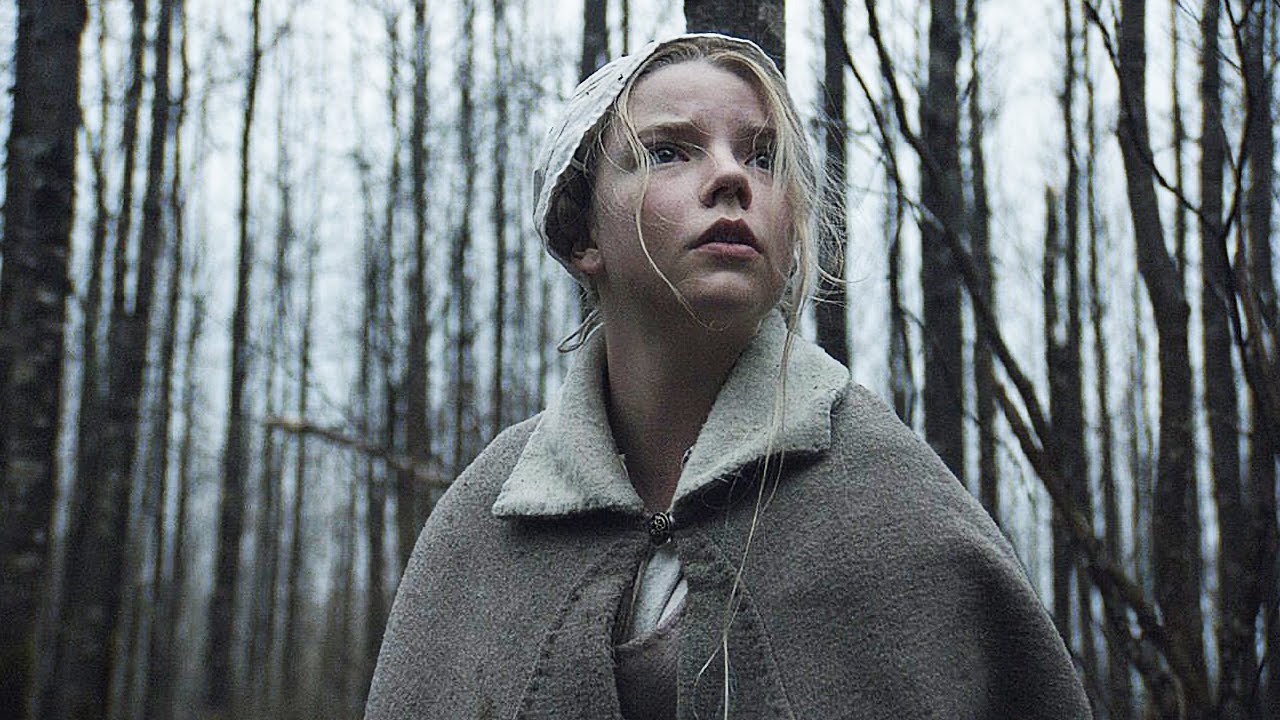
The VVitch (2015)


 William: We will conquer this wilderness. It will not consume us.~from The Witch (2015)
 [Spoilers Alert] I am not a big fan of horror movies, not by a long shot, although I have seen a few. Historically authentic films are a weakness of mine, especially films which pull the viewer into the past like a time machine. In The Witch (2015), written and directed by Robert Eggers, the clothes are handmade; the wood is hewed by hand; the speech is circa 1630; the only light is from sun or candles. Probably one of the most historically accurate films ever made, as well as one of the most haunting, it is almost, but not quite, a combination of The Exorcist (1973) and The Village (2004). The Witch surpasses both films in stark simplicity but it is the realism which renders it unsettling. Truthfully, I would not recommend watching it with anyone under eighteen within hearing since even the background music is unnerving. The film is disturbing on many levels and not for young people.

According to Viddy Well:
Robert Eggers floored audiences with his chilling tale of 17th century folklore, The Witch. However, it wasn't solely the Puritan nightmare that wowed the crowds, but Eggers' painstaking attention to detail and the film's historic authenticity. Being a production and costume designer before turning writer/director, research is no new concept to Eggers. He researched the film over the course of four years while simultaneously juggling costume design and other projects, going so far as to work directly with museums and historians, who helped compile an expansive collection of primary sources, which comprised of volumes of period fashion, animal husbandry, agricultural techniques, firsthand accounts and journals, religious texts, and folklore.

This research permeated the screen in various shapes and forms, be it the dialogue, the dress, or the very farm the family resides on, all of it necessary for the final product. It helps to suspend any disbelief, helping the audience to lose themselves and become transported to 17th century New England.

As Eggers mentions in the Salem Panel Q&A, which appears on the film's digital release, “I was trying to understand how the Salem witch trials happened, how the witch holocaust in Europe happened, and, I think, because today, when we think of evil witches — and I’m not talking about white witches and Wiccans and contemporary witches — but when we think of evil witches, it’s as if it never existed… But to actually understand that in the early modern period for everyone, except for a few people in the extreme intelligentsia, the real world and the fairytale world were the same thing, and if someone called you a witch, they really thought that you were a supernatural being capable of doing the things that the witch does in this film. So, if I’m gonna get audiences to actually go along and accept that, we have to be transported to the 17th century, we have to be in the mindset of the English Calvinists, or it’s never going to work.” (Read more.)
The film begins with a Puritan family being banished for heresy from what one assumes is the Plymouth Plantation in New England. Now the "Pilgrims" of Plymouth fame were a splinter group of the Puritan movement called "Separatists." Separatists were to the Calvinists what the Sedevacantists are to Catholicism. So Separatists kicking out a family for heresy would be like a Sedevacantist group expelling a St. Pius X family for being too liberal. In The Witch, we do not know what William, the father of the Puritan family, said that was considered "heretical" but he refuses to budge. William, his dour, devout wife Katherine and their four young children leave the safety of the settlement. They  build a farm in a clearing surrounded by forests, which pretty much describes all of Massachusetts at the time. The story is seen mostly through the eyes of the oldest daughter Thomasin, a remarkably lovely teenage girl, prayerful and obedient. She encapsulates the only bit of beauty in the bleak surroundings

The film flashes forward several months or a year. It is late autumn. A new baby, Sam, has been born; a thatched cabin has been built and a barn is partially constructed. The corn is afflicted with a black rot and the family face possible starvation in the winter, especially since William's skills as a hunter leave much to be desired. Thomasin is caring for Baby Sam when he vanishes, never to be found. William blames the tragedy on a wolf, while the rest of the family are convinced that a witch from the forest stole the baby for her own gruesome purposes. Thomasin's mother thinks that Thomasin herself is to blame and wants to send her back to Plymouth.

One can tell from the family's conversations that the Calvinist obsessions with sin, damnation and the devil are utmost in their thoughts. There seems to be no grey area in their thinking but all is black and white; everything that happens is either from God or the devil. No allowances are made for the fact that the members of the family are being victimized not by the devil but by poor diet, back-breaking work, social ostracism  and loneliness. They are without diversion, recreation, holidays, or even other Puritans for company. But grief, hardship and fear of starvation are soon the least of their problems.

The family is shown breaking bread at supper; one assumes it is rye bread since William later mentions how in the future he would like to plant wheat. If the corn is afflicted then is the rye as well? While the family of William and Katherine blame everything that goes wrong on the devil and witchcraft, perhaps the source of their troubles is ergot on the rye, a substance which can cause convulsions, hallucinations, delusions, mania, gangrene and death in both humans and animals. After the baby is taken, then reality becomes blurred. There is a horrific scene, shrouded in darkness so a bit unclear, of a nude crone disposing of the baby in an evil rite. Is that scene Thomasin's hallucination, since she is tormented by guilt at the loss of the baby, a guilt which is reinforced by her mother's blame? From that point on, the family slowly but surely unravels, and the farm animals, too.

Then the oldest son Caleb has an encounter with a witch in the woods, leading to his death. Was he hallucinating? Were his convulsions and death a result of ergotism? The distraught family see themselves as being taken over by the devil; they all blame Thomasin, accusing her of having sold herself to Satan. Thomasin, on the other hand, blames her younger twin siblings, whom she claims have been conversing the the billy goat, Black Philip. By the end of the film, everyone has died or vanished except Thomasin and Black Philip. The former follows the latter into the woods where a  coven of witches are dancing around a cauldron. Naked and in ecstasy, Thomasin joins them and floats into the air. A feminist reading of the finale is that by throwing off the yoke of patriarchy and family obligations, Thomasin has achieved liberation. If such is the case, then "liberation" has been achieved only through the blood of infants and the destruction of the family. The new found "freedom" is actually a form of slavery, in which her body and soul are the price paid for fleeting pleasures.

My guess is that Thomasin has totally lost her wits and, consumed by ergotism, is about to die alone in the forest. What is most scary is not the alleged witchcraft but the fragility of human life in the wilderness, where one disaster such as a crop failure can make a difficult existence almost impossible, whereas several disasters can mean annihilation. Although some may be called to the hermit existence, Christian life, especially family life, is best lived in community. We are meant to help each other and receive help. It can require a large dose of humility, but without humility pride conquers, and we die alone in the wilderness. Share

The Women’s March and Anti-Semitism

From The New York Post:
With the Pittsburgh shooting so fresh and anti-Semitism (alas) so necessary a topic, it’s time for a reckoning with the Women’s March. This January, women who say they stand with Jews need to boycott the Women’s March. The first year of the march, it made sense that many otherwise normal people would attend. It was just two months after Donald Trump’s shocking victory. Many were dazed and upset. The march was quickly organized by people whose names were not yet known to everyone.

Linda Sarsour is one of the leaders. Articles soon sprang up about terrible comments she made: She supported the radical Muslim Brotherhood. She praised Sharia law, which, among other things, includes second-class status for women. She was open about her fandom of Louis Farrakhan, the leader of the Nation of Islam. In 2012, she tweeted: “When we write the history of Islam in America, the Nation of #Islam is an integral part of that history.”

Perhaps she didn’t know Farrakhan said “Hitler was a very great man” in a 1984 speech or that in 1985 he warned Jews: “And don’t you forget, when it’s God who puts you in the ovens, it’s forever!” Maybe she was ignorant of his 1996 remark about “fake Jews,” that is, Jews who disapprove of his anti-Semitic comments: “You are the synagogue of Satan, and you have wrapped your tentacles around the US government, and you are deceiving and sending this nation to hell.”

People change, goes the argument, and comments Sarsour made were several years ago, before she became a high-profile political figure on the left. Perhaps she’s more responsible now. But in September, Sarsour said American Muslims shouldn’t “humanize” Israelis. There was no overwhelming response from the left to remind her that Israelis are actually human. American Jews who ignore this hatred are fooling themselves. Anti-Semitism is specifically about dehumanizing Jews until their murder makes sense.

In July, she tweeted birthday wishes at a fugitive cop-killer. This is not a woman who has done a lot of introspection and changed her views. Why stand with her? Then there’s Women’s March co-president Tamika Mallory. In a February 2018 speech, Farrakhan said, “Jews were responsible for all of this filth and degenerate behavior that Hollywood is putting out, turning men into women and women into men. White folks are going down. And Satan is going down. And Farrakhan, by God’s grace, has pulled the cover off of that Satanic Jew, and I’m here to say your time is up, your world is through.”

Mallory attended the speech. She once posted a picture of herself embraced by Farrakhan, referring to him as “the GOAT” (Greatest Of All Time). So when she pointedly refused to condemn Farrakhan’s anti-Semitic and anti-LGBT comments after being asked, it was no surprise. The Women’s March organization issued a tepid statement, without any apology or condemnation of Farrakhan, saying it wouldn’t “tolerate anti-Semitism.” But it is doing exactly that.

What’s the point of a march run by leaders who effectively condone comments like Farrakhan’s? One of the March’s “Unity Principles” is: “We firmly declare that LGBTQIA Rights are Human Rights and that it is our obligation to uplift, expand and protect the rights of our gay, lesbian, bi, queer, trans or gender non-conforming brothers, sisters and siblings. We must have the power to control our bodies and be free from gender norms, expectations and stereotypes.” Yet when faced with someone pushing a vile stereotype, Mallory & Co. do nothing.

Why march with such women? And note: While “Black women, Native women, poor women, immigrant women, disabled women, Muslim women, lesbian queer and trans women” are all specifically mentioned in the “Unity Principles,” Jewish women are not. Meanwhile, anti-Semitic attacks account for more than half of all hate crimes in the US. Maybe it’s not a coincidence. (Read more.)
Share

Emily Brontë Reappraised

From Historia:
Emily, the elusive Brontë sister, is often portrayed as antisocial, difficult, perhaps even slightly unhinged. Two centuries of Brontë scholarship have created an inscrutable image of this singular woman; Emily as enigma has become integral to Brontë myth making. Academic Claire O’Callaghan agrees. “We have next to nothing from Emily about Emily – other than her poetry and only novel,” she says. “We have a void of sorts that readers and fans of the family rightly want to fill; we all want to know Emily better because we can’t fully know her.”

In Emily Brontë Reappraised, O’Callaghan sets out to explore our impressions of the author from a 21st century perspective. “There were two drivers behind the book,” she tells me. “The first was the space opened up by Sophie Franklin’s companion title on Charlotte, that aimed to look back at her life and work 200 years after her birth, and I was inspired to do the same with Emily. Secondly, I wanted to pick up some of the pioneering work done by Lucasta Miller in The Brontë Myth and show that a lot of what we think about Emily isn’t wholly true – and what we do know has been distorted again and again. Emily is, like Charlotte, one of the most loved authors of all time, and yet she’s also presented as a really strange woman – an idea that’s based on falsehoods, myths, and a set of second hand Chinese whispers. So the book was a chance to revisit that territory and work through some of those issues.”

It’s a timely release from Manchester based independent publisher, Saraband. Emily’s bicentenary, coming mid-way through five years of celebrations at the Brontë Parsonage Museum, has seen a spike of renewed interest in all things Brontë; a modern, alternative view – as this book is billed – is most welcome. O’Callaghan clearly knows her stuff, but this is not a heavy scholarly work revisiting primary sources, rather a reassessment of the output of those who have gone before. It leans on established Brontë scholars, such as Juliet Barker, Lucasta Miller and John Sutherland, as well as Emily’s literary output.

It’s particularly strong on examining how our impressions of Emily have depended on hearsay, filtered first by her sister, Charlotte, and then Elizabeth Gaskell, who never met Emily, but presented a strongly fictionalised version of her in The Life of Charlotte Bronte. It’s clear that Charlotte’s decisions and actions after Emily’s death, however well meant, still colour our view. Another stand out chapter examines onscreen representations of Emily and her work. I nodded in agreement at O’Callaghan’s assessment of Sally Wainwright’s To Walk Invisible, to my mind the most convincing and rounded portrayal of the Brontë family to date. The book has a lot in common with that work, and might be criticised for placing 21st century contexts on Victorian woman, but this is exactly what O’Callaghan sets out to do. Assertions that, had Emily been alive today, she would have been a passionate environmental and animal rights activist, and that she was indeed a staunch feminist, might ruffle a few feathers, but O’Callaghan makes it very clear that this is conjecture, even while backing up her convincing argument.

I particularly enjoyed the final chapter, which aims to dispel ‘fake news’ stories about Emily. Presented in a numbered list that just begs for column inches, O’Callaghan presents a consumer friendly summation of the evidence and, in ambiguous cases, takes sides – it’s lighthearted but not irreverent. (Read more.)
Share

Tuesday, November 20, 2018

Fall Floral Arrangements


From Victoria:
In fall, nature bestows her blessings with reckless abandon, leaving remembrances scattered throughout the land. When the majesty unfurls, gather up favorite items—multicolored foliage, lush flowers, and branches laden with berries—to create displays of fall florals that enhance your Thanksgiving décor with the treasures of the moment. Vegetables become still life in our classic grouping. Sweeping left to right, the eye moves from frilly ruffles of flowering kale to gently scalloped rosettes of ornamental cabbage. Artichokes echo the subdued palette of sage and plum, while a handful of dahlias and calla lilies lends drama to the composition. (Read more.)
Share

Has Russia Emerged as an International Conservative Leader?

From Sputnik News:
Sputnik reached out to Glenn Diesen, a professor at the Higher School of Economics (Moscow), and author of "The Decay of Western Civilisation and Resurgence of Russia: Between Gemeinschaft and Gesellschaft," asking him to comment on the role of the rising Right, Russia and Donald Trump's US on Europe's future.

Sputnik: The recent elections in Bavaria, Germany, have indicated that the country's major parties are giving way to the right-wing opposition and the Greens. Likewise, in Italy, Sweden, Austria, the Netherlands and elsewhere, conservative opposition is gaining ground. What's behind the recent trend? Is it in any way connected to Brussels' migration policy, which envisages spending millions on refugees amid a looming economic crisis?

Glenn Diesen: These new right-wing opposition figures can be referred to as populists or classical conservatives, and they represent a reaction to the excessive political and economic liberalism since the 1980s and 1990s. The rapid demographic changes caused by refugees and migrants have created concerns about societal security, which is the ability of societies to reproduce their culture, traditions, and distinctiveness. Brussels and Berlin were already promoting the EU federalism as an effort to transcend and deconstruct the nation-state, and their open-border policies amplified existing discontent by classical conservatives. However, the radical economic liberalism of globalism is also a source of anger. Europe and the US have traditionally balanced free-market capitalism with state intervention to support strategic industries and protect communities vulnerable to overwhelming market forces.

Sputnik: Is Russia a natural ally of European conservatives? What's your take on Donald Trump's fight against the globalist establishment? What do you think about the possibility of some sort of "alliance" between European right-wing forces, Russia and Trump's America? Why has Trump found himself in opposition to both Europe and Moscow?

Glenn Diesen: The European conservatives are not identical, and they present both challenges and opportunities. A commonality is that most of them reject the artificial redrawing of ideological borders after the Cold War. Trump and the rest do not divide the world into liberal democracies versus authoritarian states; rather, they see the fight for civilization to be between globalists and nationalists or cosmopolitans versus patriots.

Russia, therefore, switches from being an adversary to an ally, as Russia has emerged as an international conservative leader that stands up for traditional European culture, Christianity, traditional values, and the family unit. Russia has returned to its pre-communist role as the go-to country for Western classical conservatives. The opportunity for Russia is obviously that the new Right are prepared to stop NATO/EU expansionism towards Russian borders and finally reach a post-Cold War settlement.

At the moment, the West is fighting itself to correct its liberal delusion, and any efforts to establish an "alliance" will be counter-productive, as it would augment the perception of Russian being behind every populist movement. Moscow should also be aware that Trump's "America First" doctrine does not entail withdrawing from the world. He is pragmatic and wants to make America's global influence more durable by converting vassals into allies and the end of ideological and expensive military adventurism. Relations between the US and Russia will, however, not improve under Trump as the establishment seeks to balance his rapprochement efforts. Trump is a transitional figure, and opportunities for US-Russian relations may emerge after Trump. (Read more.)
Share