Wednesday, May 9, 2012

The Réveillon Riots

From author Leah Marie Brown:
The Réveillon Riot, which took place on this day in 1789, was one of the first violent outbreaks of the French Revolution.  A mob of outraged workers and skilled-laborers destroyed the Réveillon Wallpaper Factory in the Saint-Antoine district in Paris.  They also destroyed the stately home of Jean-Baptiste Réveillon, the owner of the factory, looting his wine cellar and setting fire to his possessions.  The rioters also directed their fury at other prosperous local businesses, including the saltpetre manufacturer Henriot.  The infantry and artillery were dispatched to disperse the mob.  At the end of the riot, many people lost their lives (tallies ranged from 25-900) and several businesses and homes had been destroyed. (Read entire post.)
Share

Tuesday, May 8, 2012

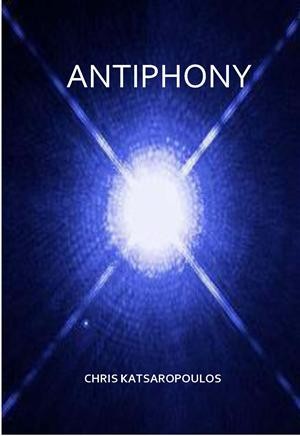
Antiphony

Recently I had the pleasure of reading Chris Katsaropoulos' new novel, Antiphony. The following is a synopsis from the publisher's website:
Theodore Reveil is one of the leading lights in String Theory physics, on his way to present his latest research at a triumphant meeting of his colleagues from around the world, when he realizes he has lost the notes for his presentation. At the podium, in the midst of his distraction and confusion, he poses the question: “What if the universe, instead of being a giant machine, is really a giant thought?”
Then he crosses a line which he can never step back over again, saying, “The infinities and singularities in these equations may be telling us that what we are missing is unknowable in terms of physical science. These unsolvable terms in our equations may be roadsigns pointing to consciousness—to God—as the missing piece of the puzzle."
Antiphony traces the downward spiral of Theodore’s career in the wake of what he has said, and the remarkable transformation that leads him into the depths of madness . . . or the revelation of the Final Theory, the ultimate secret of the universe.
As in his previous novel Fragile,  Mr. Katsaropoulos has crafted a work of literary fiction in which the poetry overflows into the prose. Unlike Fragile, which has a deliberately fractured structure, Antiphony is like a running stream of consciousness, drawing into itself the mysteries of the universe. After a lifetime of scientific study, fully absorbed in the created world, Theodore Reveil has a mysterious experience which makes him for the first time ponder the metaphysical. One is not quite certain if he is having a mild stroke or a psychotic break or a vision; whatever it is, it results in an epiphany which points to God as the source of all science, wisdom, and beauty. Theodore finds that to dare to mention the possibility of God to his colleagues is to bring his career to a screeching halt. He becomes an example of a man who loses his life but saves his soul. Combining the transcendent with the mundane, the author explores the metamorphosis which occurs when modern man is forced to acknowledge the Divine.


(*Note: This book was sent to me by the author in exchange for my honest opinion.)

Share

The Cult of Human Rights

To quote Paul Gottfried: "The cult of human rights has... become an obvious successor religion to Christianity [that] selectively incorporates Christian notions of universality and the sacredness of the person, but without Christian theology..." (Read entire post.) Share

Monday, May 7, 2012

The Duc and Duchesse de Berry


From the memoirs of Madame Vigée Le Brun, a passage about the nephew of Louis XVI and his wife who was the great-niece of Marie-Antoinette:
 As for the Duke de Berri, if he had not quite the same courtesy as his father, he was as clever, especially in that timely quickness of wit so useful to princes. I select one example out of a thousand. The first time he reviewed some troops he heard a few cries from the ranks of "Long live the Emperor!" "Quite right, my friends," was his immediate remark; "every one must live." Upon which the same soldiers exclaimed, "Long live the Duke de Berri!"

His goodness of heart went so far that not only did he interest himself in everything that concerned his friends, but behaved toward the domestics of his household as the father of a family might have done. He was worshipped by his servants, and employed his influence to encourage them in good conduct and in making whatever savings they could. One day, as he was about to enter his carriage, a little kitchen scullion came running up to him with, "Your Highness, I have saved fifteen francs this year!" "Well, my boy, that makes thirty," said the Duke, giving him the sum the boy had mentioned. The Duke de Berri kept his revenues in good order; his heaviest expenses were occasioned by his taste for the arts, a predilection shared by his amiable wife. The Duchess de Berri was fond of encouraging young artists; she would buy their pictures and often order more. Her liberality in paying never made her forget the duty of politeness incumbent upon rank. She showed model civility in all her dealings with men of talent.
(Read entire post.)

Share

Pacem in Terris

Joshua Snyder reports on the effects of the encyclical fifty years later.
James W. Douglass' masterpiece, JFK and the Unspeakable: Why He Died and Why It Matters, explains how this encyclical perhaps saved the human race, having sparked a dialogue between John F. Kennedy and Nikita Khrushchev, both of whom were ousted by their countries' military establishments for their secret correspondence. (Read more.)
Share

Sunday, May 6, 2012

Father Kapaun

Warrior and priest.
When American officers ordered the able-bodied to retreat, Father Kapaun, a 35-year-old captain, refused to leave the wounded. As the Chinese soldiers began lobbing grenades into the dugout, Kapaun negotiated a surrender.

"Father Kapaun had several chances to get out," Warrant Officer John Funston later told a Catholic priest who collected accounts of Father Kapaun's actions in Korea, "but he wouldn't take them."

His capture and forced march northward with hundreds of other American prisoners was merely the beginning of Father Kapaun's trial, an ordeal that ended in his death from starvation, cold and lack of basic medical care at a prison camp in North Korea six months later. For his heroism, a group of Kansas politicians is pushing to have him awarded the Medal of Honor, America's highest military decoration. Reports of Kapaun's selfless bravery have got him shortlisted for another rare high honour: the Catholic Church has named Kapaun Servant of God, the first step toward sainthood, and the Vatican has opened a formal inquiry into whether he merits canonisation. (Read entire article.)
Share

Prince and Martyr: Msgr. Vladimir Ghika

The Romanian Orthodox prince who became a martyr of the Catholic faith.
When Prince Ghika was five years of age, his family moved to France after living two years in Moldavia. Some years afterwards, Prince Ghika felt the appeal of the spiritual life offered by a Church other than the Rumanian Orthodox. Although he was a descendent of Rumanian royalty, Prince Ghika became a Catholic. When he did so, it unleashed a veritable tempest. Princess Alexsandrine, his mother, considered it a calamity. The newspapers treated him as a renegade, as if he had committed a crime. He meekly accepted this criticism and continued to deepen his faith in God, which prepared him for his vocation to the priesthood and, much later, his embrace of martyrdom. As a Catholic, the prince loved Rumanian Orthodoxy; he respected it. That is why he often said, "I became a Catholic in order to become a better Orthodox." (Read entire post.)
Share

Saturday, May 5, 2012

Grits Like Never Before

A Southern staple emerges with new possibilities.
Grits are hot, and I'm not just talking heat. We've watched this humble breakfast side move to center stage in fabulous entrées. Menus everywhere feature grits in dishes ranging from easy to elaborate and elegant to unusual, but they're always good.

Simmer grits in your choice of water, broth, milk, or cream. Then have fun pairing them with toppings that go far beyond butter and brown gravy. All that's left is to enjoy every scrumptious bite. (See entire post.)
Share

The Raven (2012)

Author Nancy Bilyeau is interviewed after seeing the new film. (This interview is more entertaining than the film might prove to be.)
Nancy: John Cusack is a great actor, and there’s a germ of a good idea in this, to do a film on Poe and use his own eerie poems and frightening stories. But instead we’re left with a misbegotten mess. It’s like when bad movies happen to good actors–and good ideas.

Bruce:The premise is a serial killer is using Poe’s ideas to commit real crimes, but the movie is like a vile mix of Sherlock Holmes, with Cusack channeling Robert Downey Jr. and the Saw franchise, with gory, torture-porn violence. (Read entire interview.)
Share