From
Medieval Books:
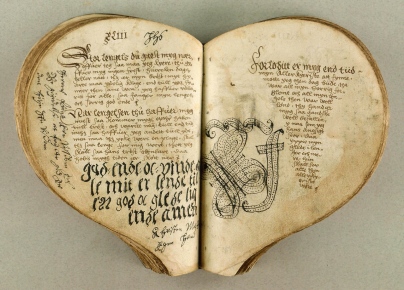
Written by hand, medieval manuscripts are very different from printed
books, which started to appear after Gutenberg’s mid-fifteenth-century
invention of moving type. One difference in particular is important
for our understanding of manuscripts. While printed books were produced
in batches of a thousand or more, handwritten copies were made one at
the time. In fact, medieval books, especially those made commercially,
came to be after a detailed conversation between scribe and reader, a
talk that covered all aspects of the manuscript’s production. This is
the only way the scribe could ensure the expensive product he was about
to make was in sync with what the reader wanted. Consequently, while
printed books were shaped generically and according to the printer’s
perception of what the (anonymous) “market” preferred, the medieval
scribe designed a book according to the explicit instructions of its
user. (Read more.)
More strange old books,
HERE. (Strange but not medieval, in spite of what the article says.)
When I think of what a nuisance it was to make a typo back in the day of using carbon paper to produce multiple copies....
ReplyDelete